
Former Shaolin Temple Abbot Sentenced to 24 Years for Embezzlement
(Global 1 News) The Sentencing of Shi Yongxin and Case Details The former abbot of the Shaolin Temple, Shi Yongxin, received a 24-year prison sentence from a court in Henan province for embezzlement and bribery. Court records indicate that he misappropriated temple assets valued at more than 282 million yuan between 2003 and 2025, while also obtaining additional funds through h
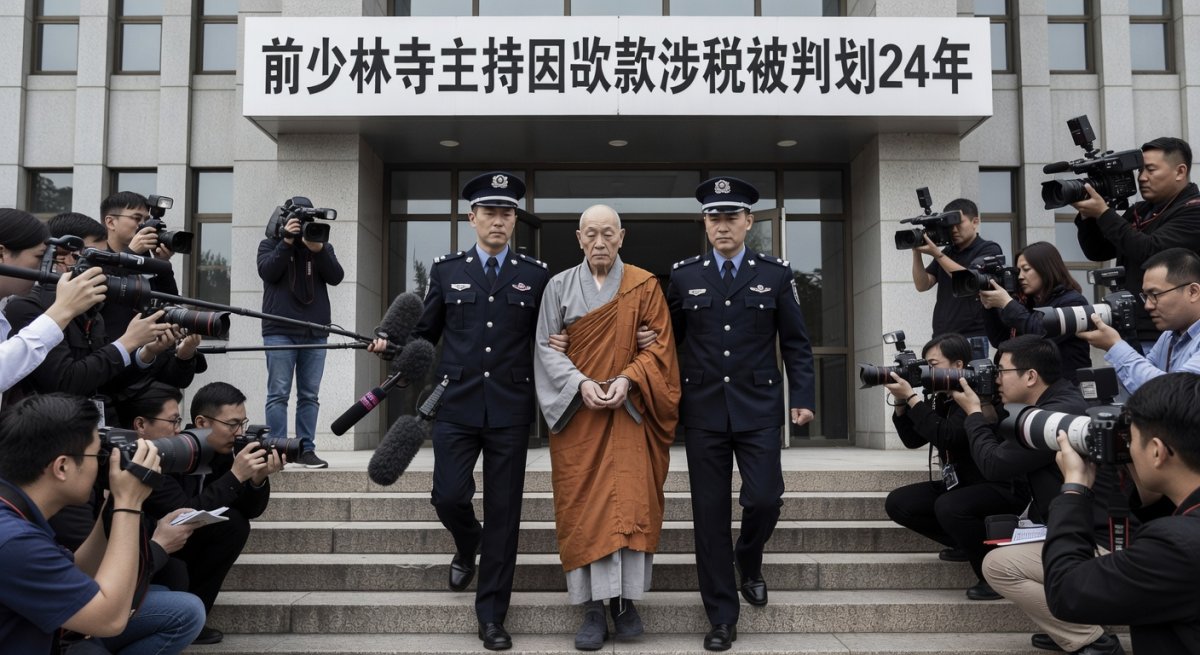
The Sentencing of Shi Yongxin and Case Details
The former abbot of the Shaolin Temple, Shi Yongxin, received a 24-year prison sentence from a court in Henan province for embezzlement and bribery. Court records indicate that he misappropriated temple assets valued at more than 282 million yuan between 2003 and 2025, while also obtaining additional funds through his position in temple construction projects and directing bribes to officials.
Shi Yongxin, born Liu Yingcheng, had served as abbot since 1999 and had previously admitted guilt according to reports from Xinhua. He stated on Friday that he would not appeal the verdict. The Buddhist Association of China defrocked him last year following the investigation.
Context Within China's Anti-Corruption Framework
Chinese authorities have conducted sustained investigations into officials and institutional leaders across multiple sectors since the early 2010s. This case involving the Shaolin Temple aligns with those efforts, targeting financial misconduct in organizations that operate under state oversight. The Henan provincial court handled the proceedings, consistent with the division of responsibilities between central directives and local judicial bodies.
Previous scrutiny of Shi Yongxin occurred in 2015 on separate allegations, from which he was cleared at the time. The current outcome reflects continued application of legal standards to religious and cultural institutions that generate substantial revenue.
Relations Between the Communist Party and Religious Institutions
The Communist Party maintains regulatory authority over religious organizations through bodies such as the Buddhist Association of China. This structure requires religious sites to align their operations with national policies on management and financial transparency. The Shaolin Temple, located in Henan province and recognized for its historical and cultural significance, falls within this regulatory scope.
Under Shi Yongxin's leadership, the temple expanded into international schools and performance tours while retaining its status as a state-protected heritage site. The sentencing underscores that such expansions do not exempt leaders from accountability under national laws governing public assets.
Accountability in State-Aligned Cultural Organizations
Institutions like the Shaolin Temple function at the intersection of religious tradition and commercial activity. The court's findings on misuse of temple funds illustrate the expectation that leaders of these entities adhere to the same financial regulations applied to other state-linked bodies. This approach addresses risks associated with rapid commercialization of cultural assets.
Henan province authorities processed the case through established judicial channels, demonstrating consistency with practices applied to other public institutions. The outcome signals that revenue-generating activities, including those involving international outreach, remain subject to domestic oversight.
Implications for Governance of Perceived Corruption
This development contributes to the broader pattern of addressing financial irregularities in organizations tied to state interests. By applying legal measures to a prominent religious figure, authorities reinforce expectations of compliance across sectors that blend cultural heritage with economic operations. The decision not to appeal suggests finality in the judicial process for this matter.
Analysts observe that such cases reinforce the priority placed on institutional integrity within China's governance system, extending to entities with historical prominence and global visibility. Continued application of these standards may shape management practices in similar organizations.
By Prof. Marcus Chen, Staff WriterThis article was produced with AI-assisted research and editorial support. Reporting is based on sources cited in the article.
What's Your Reaction?
 Like
0
Like
0
 Dislike
0
Dislike
0
 Love
0
Love
0
 Funny
0
Funny
0
 Wow
0
Wow
0
 Sad
0
Sad
0
 Angry
0
Angry
0

World Politics Analyst at Global1.News. Based in Beijing, covering US-China relations, global trade, and geopolitical strategy. Brings deep analytical perspective to the power dynamics shaping international affairs.















Comments (0)