
Filipino Trust in News Suffers Record Plunge — What This Means for Democracy and the Ordinary Juan
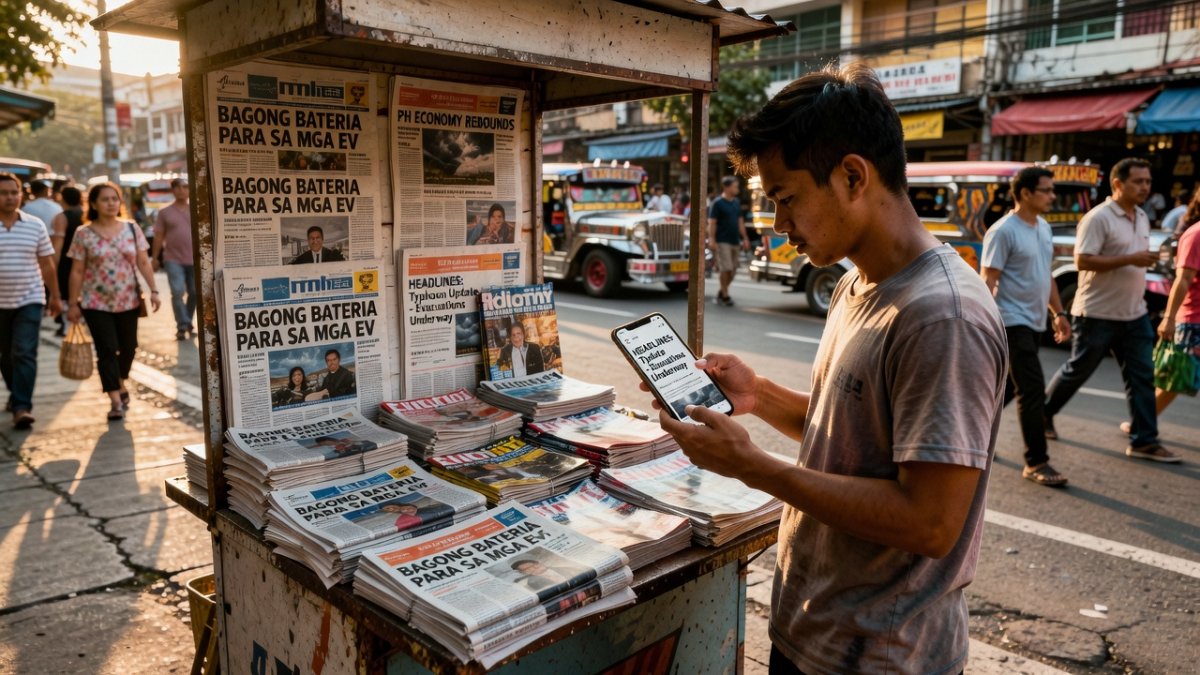
Filipino Trust in News Suffers Record Plunge — What This Means for Democracy and the Ordinary Juan The Sharp Decline in News Trust Among Filipinos The latest Digital News Report reveals a steep drop in how much Filipinos trust the news they encounter. Only 28 percent of respondents said they trusted most news most of the time, down from 38 percent the previous year. This fall i
Filipino Trust in News Suffers Record Plunge — What This Means for Democracy and the Ordinary Juan
The Sharp Decline in News Trust Among Filipinos
The latest Digital News Report reveals a steep drop in how much Filipinos trust the news they encounter. Only 28 percent of respondents said they trusted most news most of the time, down from 38 percent the previous year. This fall is steeper than the drops recorded in Ireland, Thailand, Peru, and Poland.
The survey, now in its 15th year, drew on responses from more than 97,000 adults across 48 markets, including 2,021 people in the Philippines. Conducted online by YouGov for the Reuters Institute for the Study of Journalism at the University of Oxford, the findings place the country below the global average of 37 percent, the lowest level recorded since tracking began in 2015.
Trust had climbed from 27 percent in 2020 to 38 percent the year before, only to slip back. The report warns against viewing the decline solely as a judgment on newsrooms, pointing instead to political instability, divisive elections, and a noisier information environment in the hardest-hit countries.
Who Bears the Brunt: Income and Education Gaps
Lower-income and less-educated Filipinos feel the loss of trust most sharply. Just 23 percent of low-income respondents said they trusted most news most of the time, compared with 43 percent of those with higher incomes. Among respondents with lower education levels, trust stood at 21 percent, while university graduates reached 32 percent.
These gaps matter in everyday life. A tricycle driver in Quezon City trying to decide whether fare hikes are justified or a market vendor in Cebu checking if rice prices will rise needs reliable information. When trust erodes unevenly, those with fewer resources are left more exposed to confusion.
Concern about false or misleading information online stayed near its peak, with 66 percent of Filipino respondents expressing worry, almost unchanged from 67 percent the year before. This steady anxiety shows that many families continue to sift through claims without clear anchors.
Political Turbulence and Disinformation Fueling Distrust
The Philippines matches several conditions the global report links to falling trust. From the Duterte years into the current Marcos administration, the public sphere has featured political polarization, disinformation during elections, red-tagging, lawfare, online harassment, media criticism, and killings of journalists.
These pressures now meet a platform-driven setting where professional reporting competes with partisan and influencer-driven content. Ordinary citizens, from students checking social media between classes to farmers following weather and price updates, encounter this mix daily.
Brand trust tells a more nuanced story. Trust in specific news outlets remained broadly stable from the previous year, with most brands shifting only within a narrow range of about three points. Over the longer term, however, most tracked brands sit below their earlier scores, with drops of roughly three to 10 points. Even so, individual brands still score in the high 50s to mid-60s, well above the 28 percent overall trust figure.
From Daily News to Avoidance: Changing Habits
Interest in news has slipped. The share of Filipinos who described themselves as extremely or very interested fell from 49 percent to 43 percent, a steep slide from 69 percent in 2020. News lovers dropped from 22 percent to 19 percent, while casual or passive users rose from 26 percent to 32 percent.
The shift appears sharper among younger people. Among 18- to 24-year-olds, 42 percent now count as casual or passive users, compared with just 20 percent of those aged 55 and older. Access has also become less frequent, with the share checking news several times a day falling from 50 percent to 45 percent.
Active avoidance grew as well. In 2026, 51 percent said they often or sometimes deliberately avoided news, up from 48 percent. Avoidance reached 55 percent among low-income respondents, higher than the 42 percent recorded among higher-income groups. For many households, this means turning away from updates that once helped plan daily budgets or community decisions.
Platforms Take Over as Trust in Traditional Sources Wanes
Across the markets surveyed, social media and video networks overtook television and news websites as sources of news for the first time. In the Philippines the pattern is already advanced. Social media and video networks rose from 66 percent to 70 percent as weekly news sources, the only major category to grow.
Meanwhile, television fell from 46 percent to 42 percent, print from 13 percent to 10 percent, radio from 17 percent to 14 percent, and news websites and apps from 50 percent to 42 percent. Since 2020 the declines have been even steeper across traditional channels.
This platform-led environment reaches jeepney drivers checking routes on their phones, students following campus issues, and families in provinces relying on short videos for national updates. The shift brings convenience but also fragments the shared facts that communities once used to discuss local concerns.
What This Means for Filipino Communities and Democracy
Declining trust and engagement arrive at a time when reliable information remains essential for daily decisions. Families weighing school expenses, workers tracking job opportunities, and farmers monitoring market prices all feel the effects when news feels less dependable.
The combination of lower interest, more avoidance, and platform dominance creates a more volatile setting. Individual news brands still hold higher trust scores than news overall, suggesting that many Filipinos continue to value particular outlets even as broader confidence slips.
Rebuilding connection will require steady attention to the conditions that shape public life, from political discourse to the online spaces where most people now meet information. For ordinary Filipinos, the stakes are personal: the ability to navigate daily realities with clearer sight.
By Bella Reyes, Staff WriterThis article was produced with AI-assisted research and editorial support. Reporting is based on sources cited in the article.
What's Your Reaction?
 Like
0
Like
0
 Dislike
0
Dislike
0
 Love
0
Love
0
 Funny
0
Funny
0
 Wow
0
Wow
0
 Sad
0
Sad
0
 Angry
0
Angry
0

Philippines/Southeast Asia Correspondent at Global1.News. Manila-based journalist covering Philippine politics, environment, maritime security, and social issues. Passionate about marine conservation and the communities protecting the Philippines' natural heritage.












Comments (0)