
Farmers Welcome Tougher Hare Coursing Sentences as New UK Sentencing Guidelines Take Effect
The new sentencing guidelines for hare coursing offences came into force on 1 June 2026, giving courts in England and Wales sharper tools to punish those who treat rural farmland as their personal racetrack. Behind the blood sport lies a web of organised criminality that stretches across county borders and into overseas gambling rings. For farmers in Essex and beyond, the chang
The new sentencing guidelines for hare coursing offences came into force on 1 June 2026, giving courts in England and Wales sharper tools to punish those who treat rural farmland as their personal racetrack. Behind the blood sport lies a web of organised criminality that stretches across county borders and into overseas gambling rings. For farmers in Essex and beyond, the change arrives after years of intimidation, crop damage and personal violence.
New Sentencing Guidelines Target Hare Coursing Networks London, UK – 22 June 2026 The Sentencing Council published the definitive guideline on 14 May 2026 following a twelve-week public consultation. The Lady Chief Justice and Lord Chancellor gave formal consent, ensuring every court applies the same framework from 1 June. Four offences fall under the new rules: trespass with intent to search for or pursue hares with dogs; being equipped for searching for or pursuing hares with dogs; trespass in the daytime in search of game; and taking or destroying game by night. Aggravating factors now include the use of social media to record and promote offences, offending in the presence of children, and breach of a community protection notice. The Police, Crime, Sentencing and Courts Act 2022 already raised maximum penalties and introduced specific “going equipped” offences. Courts may now disqualify offenders from owning or keeping dogs and order them to reimburse kennelling costs for seized animals. The Hunting Act 2004 remains the foundation, carrying an unlimited fine or up to six months in prison.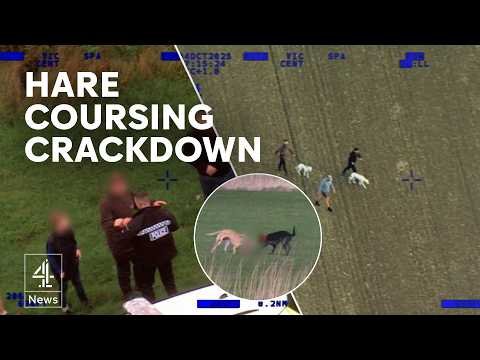
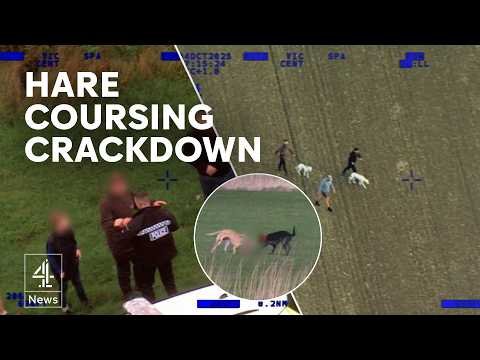
New Sentencing Guidelines Target Hare Coursing Networks London, UK – 22 June 2026 The Sentencing Council published the definitive guideline on 14 May 2026 following a twelve-week public consultation. The Lady Chief Justice and Lord Chancellor gave formal consent, ensuring every court applies the same framework from 1 June. Four offences fall under the new rules: trespass with intent to search for or pursue hares with dogs; being equipped for searching for or pursuing hares with dogs; trespass in the daytime in search of game; and taking or destroying game by night. Aggravating factors now include the use of social media to record and promote offences, offending in the presence of children, and breach of a community protection notice. The Police, Crime, Sentencing and Courts Act 2022 already raised maximum penalties and introduced specific “going equipped” offences. Courts may now disqualify offenders from owning or keeping dogs and order them to reimburse kennelling costs for seized animals. The Hunting Act 2004 remains the foundation, carrying an unlimited fine or up to six months in prison.
The Organised Crime Reality Behind the Sport
Hare coursing is not a quaint rural pastime. It is a structured criminal enterprise that moves across police force boundaries and links to wider offending. High-stakes gambling, often live-streamed to audiences in China and elsewhere, drives the activity. Offenders intimidate farmers, gamekeepers and their families to secure access to flat, open land. The British Association for Shooting and Conservation, the National Farmers’ Union and multiple police forces have documented the pattern. Vehicles travel in convoys, dogs are transported in modified vans, and lookouts monitor rural roads.
Daily Fear in Essex Farming Communities
In Lindsell, Uttlesford, North Essex, farmers speak only on condition of anonymity. One reported nearly 200 incidents in a single season after harvest. Another suffered a broken jaw after being struck with an iron bar. Two-thirds of Essex is rural, and the isolation that once defined village life now works against those who live there. Arable farmer Matthew Register, near Dunmow, endured more than 200 incidents in eight months. He was assaulted eleven times, shot at with catapults, pinned against a tree and knocked from his bicycle. Damage to crops and equipment reached £30,000. “Nobody goes out on the farm on their own now,” he told Farmers Weekly in May 2026. Gates, ditches and cameras have not stopped the incursions. The impact reaches beyond individual holdings. Rural communities report reduced willingness to report incidents, strained relationships with local police, and rising insurance costs. Mental health services in East Anglia have noted increased anxiety among farming families who feel under siege.Operation Galileo and Strengthened Policing
Police forces have responded with Operation Galileo, a dedicated cross-border effort. The National Police Chiefs’ Council maintains a rural and wildlife crime lead, while the Rural and Wildlife Crime Strategies 2025–28 list hare coursing as a priority. Essex Police now deploys drones, thermal cameras and automatic number plate recognition. Since August 2025 the force has seized seven vehicles and issued multiple warnings and enforcement notices. The National Wildlife Crime Unit has created a digital training academy, supported by a £40,000 contribution from the BASC Legacy Fund. Ed Ford, vice-chairman of Essex NFU, said: “You are dealing with people who don’t care about your safety.” The union continues to press for better resourcing of rural policing and urges farmers to report live incidents on 999 and non-emergencies on 101 or Crimestoppers.
The Bottom Line — What Comes Next
The guidelines provide consistency, yet success depends on sustained enforcement and resources. Rural crime teams are expanding, but demand already outstrips capacity in many counties. Farmers in Lincolnshire, Norfolk and the West Midlands watch Essex closely, hoping the new framework deters offenders who have operated with relative impunity. If the Sentencing Council’s approach is applied rigorously and police forces maintain cross-border coordination, the balance may shift. For now, the message from the countryside is clear: the law has changed, but the fields remain contested ground. By Erica Thornton, Staff WriterThis article was produced with AI-assisted research and editorial support. Reporting is based on sources cited in the article.
What's Your Reaction?
 Like
0
Like
0
 Dislike
0
Dislike
0
 Love
0
Love
0
 Funny
0
Funny
0
 Wow
0
Wow
0
 Sad
0
Sad
0
 Angry
0
Angry
0

Erica Thornton
US Politics and Policy Correspondent at Global1.News. Based in Washington DC, covering American politics, policy, elections, and the courts. Knows how the system works and tells you what it actually means.















Comments (0)