
Erdoğan leads Eid prayer, calls for unity, Gaza solidarity
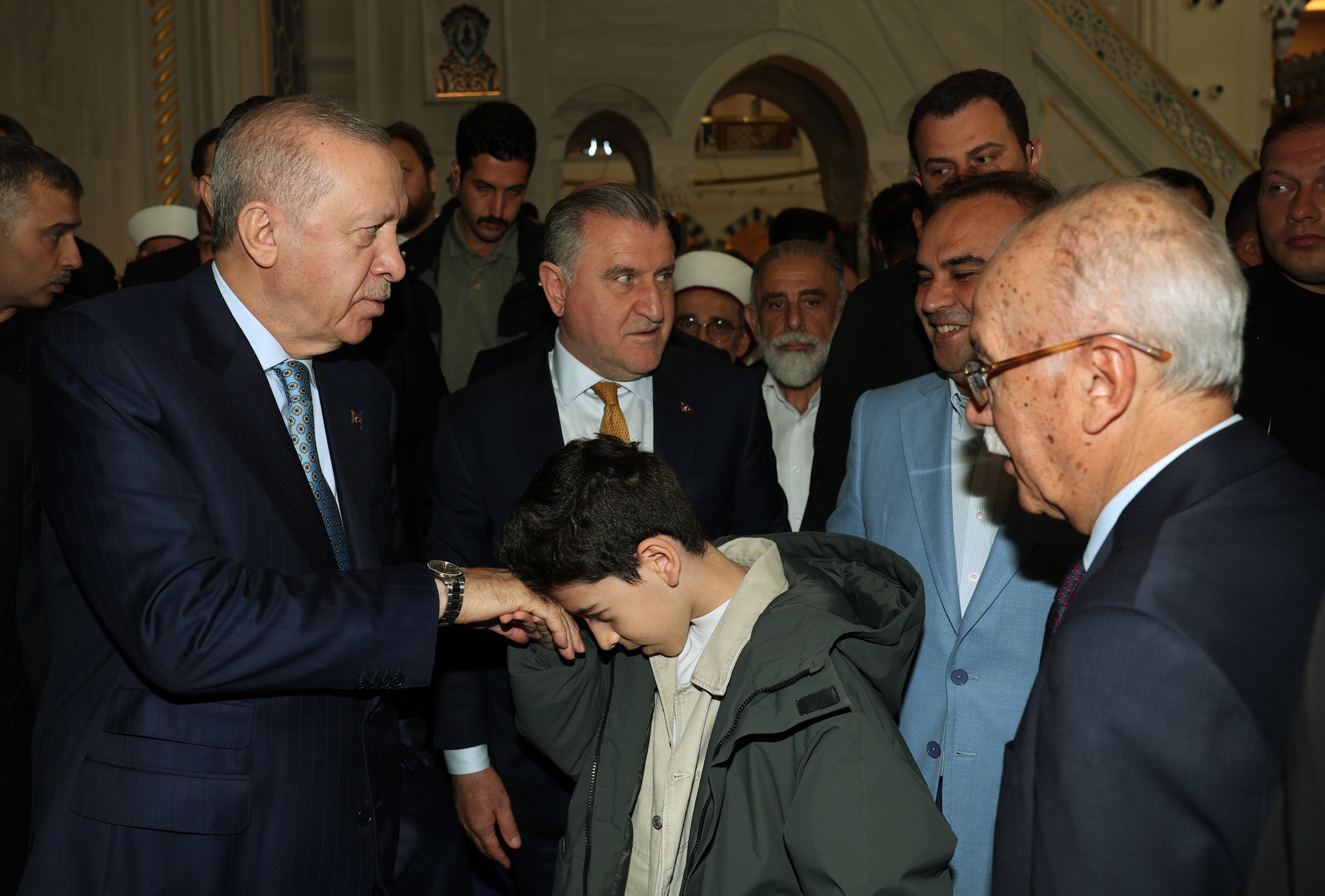
Erdoğan Leads Eid al-Adha Prayers in Istanbul, Urges Muslim Unity and Renewed Solidarity with Gaza
ISTANBUL — President Recep Tayyip Erdoğan led Eid al-Adha prayers on Wednesday at the Grand Çamlıca Mosque, delivering a sermon that blended religious observance with pointed political messaging on national cohesion and Palestinian resistance. The event, held amid Turkey’s ongoing economic strains and the protracted Gaza conflict, drew tens of thousands of worshippers and underscored Erdoğan’s continued effort to position Turkey as a central voice in the Muslim world.
The Setting at Grand Çamlıca
The Grand Çamlıca Mosque, inaugurated in 2019 on Istanbul’s Asian side, served as the symbolic stage. Its six minarets and capacity for over 60,000 worshippers reflect the scale of state-backed religious infrastructure built during Erdoğan’s two decades in power. Security was tight, with police cordons and drone surveillance, yet the atmosphere remained orderly as families arrived before dawn. Erdoğan, dressed in a dark suit and white shirt, took his place in the front row alongside his son Bilal and senior AKP figures, including Interior Minister Ali Yerlikaya.
The prayer itself followed the standard Hanafi rite, but the khutba delivered by Diyanet President Ali Erbaş carried explicit references to Gaza. Erbaş condemned Israeli operations as “genocide” and called on Muslims to increase humanitarian support. Erdoğan later addressed the congregation directly, extending the religious message into the political sphere.
Core Themes: Unity at Home, Steadfastness Abroad
Erdoğan’s remarks focused on two pillars. Domestically, he stressed “national unity” in the face of inflation that reached 71.6 percent year-on-year in May and lira depreciation that has erased more than 80 percent of the currency’s value since 2018. He avoided naming opposition parties but warned against “those who sow discord,” a phrase frequently used by AKP officials to describe Kurdish political movements and secular critics ahead of next year’s local elections.
On Gaza, Erdoğan repeated Turkey’s recognition of Hamas as a legitimate resistance movement and reiterated calls for an immediate ceasefire. He announced that Turkey would channel an additional 50 million dollars through the Turkish Red Crescent for reconstruction in Khan Younis and Rafah, building on earlier shipments of medical supplies coordinated with Qatari and Egyptian authorities. The president framed Palestinian steadfastness as a test of the broader ummah, stating that “silence in the face of oppression is complicity.”
Political Context Inside Turkey
The Eid appearance comes six months after municipal elections in which the opposition CHP secured major gains, including Istanbul and Ankara. Erdoğan’s emphasis on unity serves as an attempt to reconsolidate the conservative base while signaling to nationalist allies in the MHP that the government remains focused on security issues. Analysts note that religious holidays have long functioned as platforms for AKP messaging; similar Eid addresses in 2016 and 2020 coincided with military operations in Syria.
Economic hardship remains the dominant concern for most Turkish households. Food prices have doubled in two years, prompting sporadic protests in provincial cities. By linking economic resilience to religious solidarity, Erdoğan seeks to recast material difficulties as a collective test rather than a policy failure. Opposition figures, including CHP leader Özgür Özel, countered that such rhetoric distracts from governance shortcomings.
Foreign Policy Implications
Turkey’s Gaza stance has produced mixed results. While it has strengthened ties with Hamas leadership based in Doha and Istanbul, it has complicated relations with Israel, with which trade volumes still exceed 5 billion dollars annually despite diplomatic downgrades. Erdoğan’s government has balanced rhetorical support for Palestinians with pragmatic energy deals involving Israeli gas fields. The latest aid pledge signals continuity rather than escalation, preserving room for future mediation roles alongside Qatar and Egypt.
Regionally, the message resonates differently across sectarian lines. Sunni-majority states such as Saudi Arabia and the UAE have pursued normalization with Israel, creating friction with Ankara’s more confrontational posture. In Lebanon, where Hezbollah maintains close coordination with Hamas, Erdoğan’s words find sympathetic echoes among Sunni constituencies in Tripoli and Sidon, though Shia communities view Turkish policy through the prism of Syria’s civil war.
Lebanese Perspectives and Regional Echoes
From Beirut, reactions split along familiar lines. Sunni political figures, including former prime minister Saad Hariri’s Future Movement, welcomed the emphasis on Gaza. Shia-led Amal and Hezbollah circles remained muted, noting Turkey’s earlier support for anti-Assad rebels. Civil society groups organizing aid convoys to southern Lebanon observed that Turkish shipments via the port of Mersin have occasionally supplemented Iranian and Syrian routes when Mediterranean access is restricted.
Palestinian factions based in Lebanon’s camps, particularly in Ein el-Hilweh and Rashidieh, issued statements praising Erdoğan’s consistency since the 2009 Davos confrontation with Shimon Peres. Yet some camp leaders privately expressed concern that Turkish aid remains modest compared with Iranian funding channeled through Hezbollah’s networks.
Expert Assessments
Turkish political analyst Ayşe Kadıoğlu, speaking from Istanbul, described the Eid sermon as “classic Erdoğan choreography—merging piety, nationalism, and foreign policy assertiveness at a moment when domestic approval ratings have dipped below 40 percent.” She added that the unity appeal targets swing voters in central Anatolia ahead of potential snap elections.
Beirut-based Middle East researcher Karim Makdisi noted that Erdoğan’s Gaza rhetoric “fills a vacuum left by Arab states that signed the Abraham Accords,” yet cautioned that Turkey’s capacity to translate rhetoric into material change on the ground remains limited without broader Arab coordination. Palestinian economist Samir Abdullah, based in Ramallah, highlighted the practical value of Turkish medical supplies but stressed that reconstruction requires lifting the blockade, an outcome beyond Ankara’s unilateral reach.
These assessments converge on one point: Erdoğan’s Eid address was less about immediate policy shifts and more about narrative control—sustaining Turkey’s image as defender of Muslim causes while managing internal pressures.
The day concluded with Erdoğan hosting foreign dignitaries, including representatives from Azerbaijan and Pakistan, for traditional bayram visits. Discussions reportedly touched on joint energy projects and coordinated diplomatic initiatives at the upcoming OIC summit. As worshippers dispersed across Istanbul’s hills, the political signal was clear: Turkey’s president intends to keep Gaza and unity at the center of both religious and electoral calendars.
This is Malik Hassan for Global1 News, reporting from Beirut. 🇱🇧
This article was produced with AI-assisted research and editorial support. Reporting is based on sources cited in the article.
What's Your Reaction?
 Like
0
Like
0
 Dislike
0
Dislike
0
 Love
0
Love
0
 Funny
0
Funny
0
 Wow
0
Wow
0
 Sad
0
Sad
0
 Angry
0
Angry
0

Middle East Correspondent at Global1.News. Based in Beirut, covering politics, conflict, energy, and society across the Middle East. Brings context and depth to a region often reduced to headlines.










Comments (0)