
Ukraine's Air Defence Crisis: Interceptor Shortage Exposed as Russian Missiles Rain Down on Kyiv
In a recent BBC News report from Kyiv, Sarah Rainsford and Jamie Whitehead documented the aftermath of a devastating Russian missile attack that exposed a critical shortage of interceptor missiles in Ukraine's air defence arsenal. Ukraine's Air Defence Crisis: Interceptor Shortage Exposed as Russian Missiles Rain Down on Kyiv Kyiv, Ukraine – 6 July 2026 — The Ukrainian Air Forc
In a recent BBC News report from Kyiv, Sarah Rainsford and Jamie Whitehead documented the aftermath of a devastating Russian missile attack that exposed a critical shortage of interceptor missiles in Ukraine's air defence arsenal.
Ukraine's Air Defence Crisis: Interceptor Shortage Exposed as Russian Missiles Rain Down on Kyiv
Kyiv, Ukraine – 6 July 2026 — The Ukrainian Air Force has acknowledged that a severe shortage of interceptor missiles left the capital defenceless against Russia's latest ballistic missile barrage, with none of the 23 Iskander-M missiles fired at Kyiv on Sunday night successfully shot down. The admission comes as Ukraine heads into a critical NATO summit this week with an urgent plea for air defence systems.
The Attack: A Night of Terror in the Capital
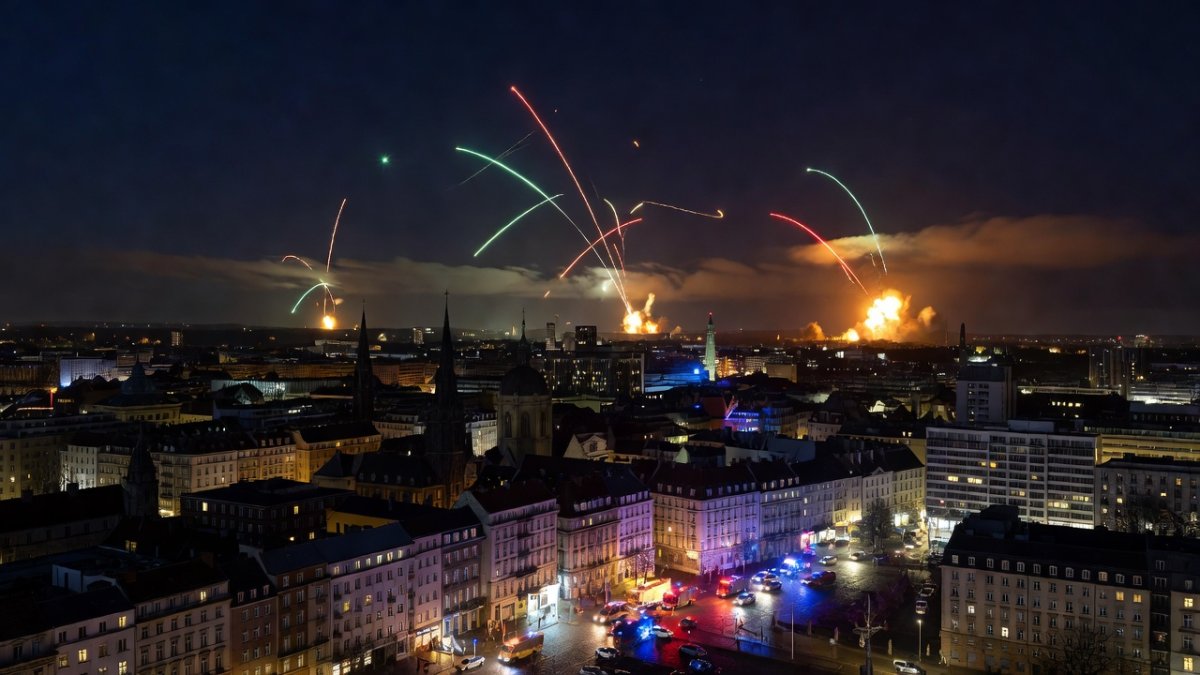
Sunday night's assault on Kyiv was one of the most devastating in recent months. According to Ukrainian President Volodymyr Zelensky, Russia launched a total of 68 missiles and 351 strike drones against Ukraine, with the capital bearing the brunt of the attack. The Ukrainian Air Force reported that it managed to shoot down or suppress 37 missiles and 326 drones — but crucially, not a single ballistic missile was intercepted. The scale of the barrage reflected a deliberate Russian strategy to saturate Ukrainian defences through simultaneous waves of different munitions. Iskander-M systems launched from positions in Crimea and southern Russia arrived in tight clusters, reducing reaction time for ground-based radars. Ukrainian officials noted that the combination of ballistic and hypersonic weapons created overlapping threats that existing Patriot batteries could not address simultaneously. The Air Force Command in Kyiv issued an immediate statement confirming the complete failure to engage the ballistic component of the attack. This outcome marked a sharp departure from earlier defensive successes when interceptor stocks were higher. Residents across multiple districts described hearing successive sonic booms followed by impacts that shook entire neighbourhoods. The State Emergency Service mobilised additional units from surrounding oblasts to assist with search and rescue. President Zelensky addressed the nation on Monday morning, stressing that the absence of sufficient interceptors had left civilians exposed. He reiterated that the attack formed part of a broader Kremlin effort to pressure Ukraine ahead of the NATO gathering in Ankara. The Ukrainian Defence Ministry later released updated casualty figures showing that fatalities were concentrated in areas where direct hits collapsed multi-storey structures. International observers monitoring the situation from NATO headquarters noted that the pattern of targeting residential zones indicated an intent to maximise psychological impact alongside physical destruction. The failure to intercept any of the 23 Iskander-M missiles has prompted urgent internal reviews of ammunition allocation procedures within the Ukrainian military.
Scenes of Devastation: Rescue Operations in Podilskyi and Darnytskyi
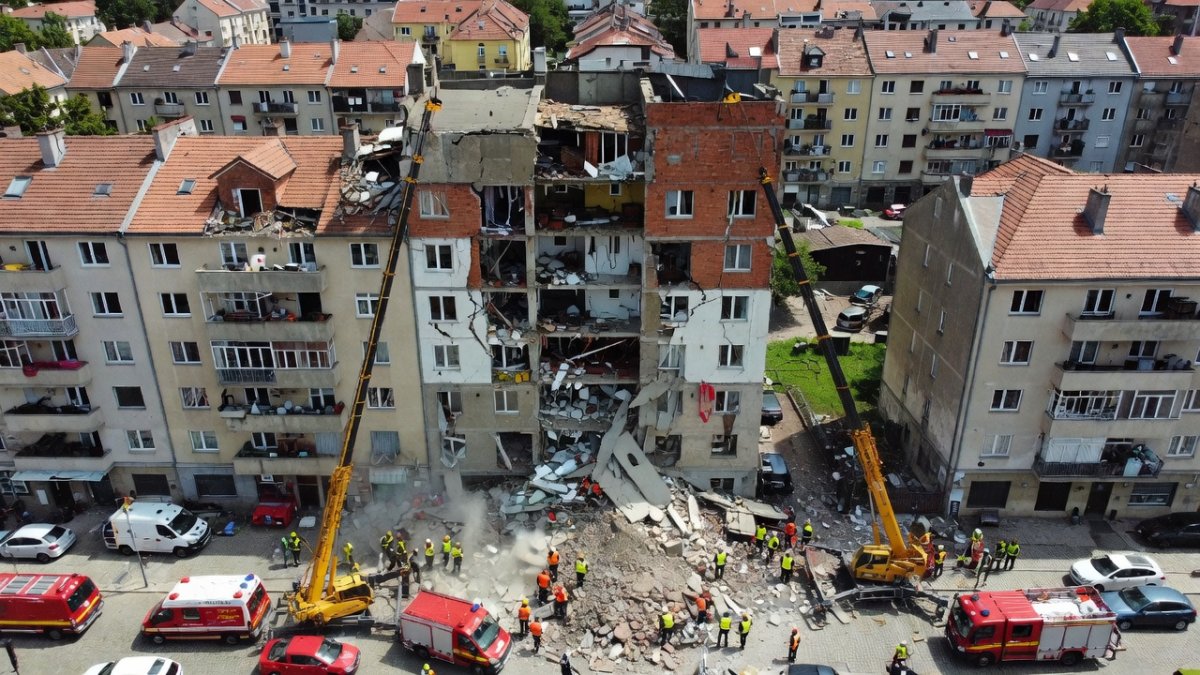
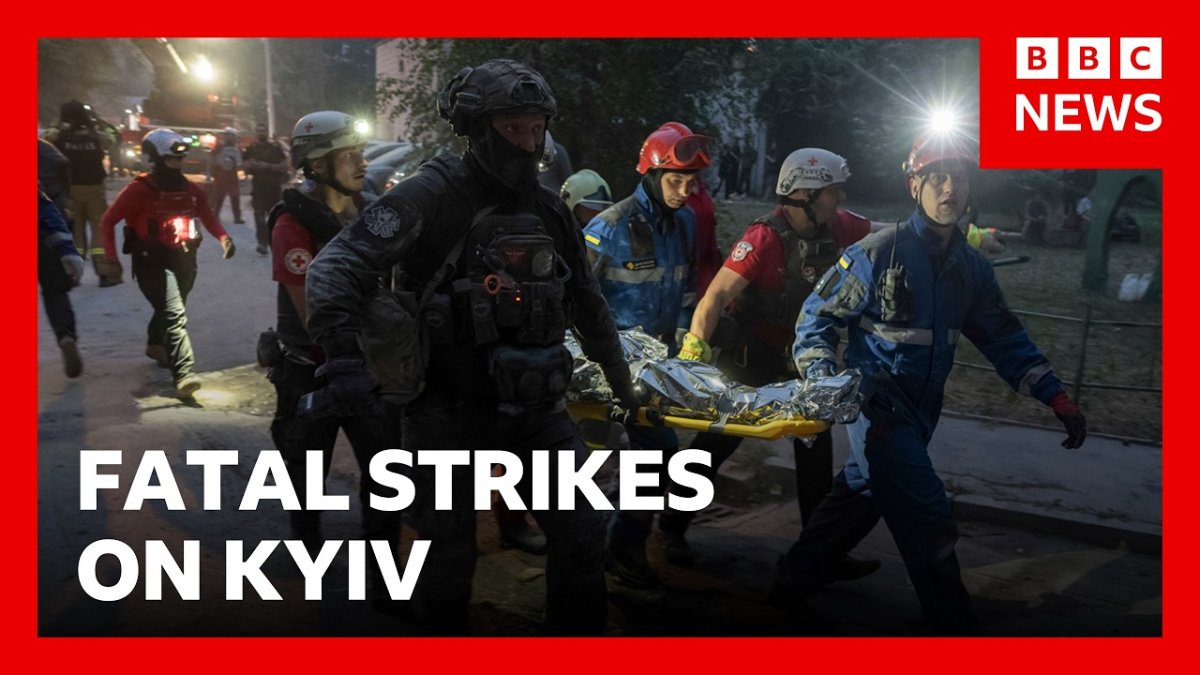
In the Podilskyi district of northern Kyiv, rescue teams have been working around the clock in the ruins of an apartment block that suffered a direct hit. A massive hole has been blown through the middle of the building, with entire floors pancaked on top of each other. Specialist teams have deployed sniffer dogs to search for survivors among the wreckage, as cranes carefully lift giant slabs of concrete, sending bricks and debris crashing to the ground. The BBC spoke to residents who have lost everything, queuing to register their losses with police. One woman, whose flat was on the eighth floor — a floor that has now vanished entirely — began to speak only to turn away as she sobbed. Local residents, already drained by four punishing years of war, described how the aerial attacks are intensifying. "After the first blast, nearby, the glass shattered and hit us, almost on our heads. Then everything was shaking," a resident named Olena told the BBC. She admitted she had not gone to the bomb shelter when the sirens wailed because she was exhausted and wanted to sleep before work. "I feel like I have calmed down, but I am still trembling all over." In the south-eastern Darnytskyi district on Kyiv's left bank, a five-storey residential building was also struck. The attack came just hours after Zelensky had publicly warned that Moscow was preparing a second "massive strike" on the capital, following an attack on Thursday that had killed 30 people. The timing suggests a deliberate escalation by the Kremlin, launching a major strike despite — or perhaps because of — the impending NATO summit. Emergency workers in both districts coordinated with local hospitals to prioritise treatment for children and elderly victims. The State Emergency Service reported that heavy machinery had to be brought in from neighbouring regions because local equipment proved insufficient for the volume of debris. Families gathered at cordoned-off perimeters, waiting for updates on missing relatives. Ukrainian officials emphasised that the strikes hit civilian infrastructure with no evident military value nearby. International aid organisations based in Kyiv began distributing emergency supplies of food and clothing to displaced residents. The scenes underscore the direct human cost of Russia's sustained campaign against Ukrainian cities.
The Missile Deficit: Why Ukraine Cannot Stop Ballistic Missiles
The failure to intercept a single ballistic missile has raised urgent questions about the state of Ukraine's air defence stockpiles. Western-supplied Patriot systems, manufactured by Raytheon in the United States, are Ukraine's most capable defence against ballistic missiles — but each interceptor missile costs approximately $4 million, and stockpiles globally are limited. Ukraine's Air Force spokesperson confirmed that the country is experiencing a "serious shortage" of these critical munitions, a problem compounded by a broader global shortage of interceptor missiles. Ukrainian Defence Minister Mykhailo Fedorov announced that he would hold urgent talks with counterparts from countries that possess Patriot interceptor stocks, urging them to transfer munitions to Kyiv. The urgency is underscored by Russia's changing tactics: Moscow has been increasing its use of ballistic missiles, which travel at hypersonic speeds and are far harder to intercept than cruise missiles or drones. The Iskander-M, which can reach speeds of Mach 6-7 during its terminal phase, gives defenders only seconds to react once detected. Ukraine has repeatedly called for more Patriot systems and other advanced air defence platforms throughout the war. While the United States, Germany, and the Netherlands have delivered several Patriot batteries, the number of interceptor missiles allocated to Ukraine remains insufficient to handle large-scale salvos. Sunday's attack, with 23 ballistic missiles fired in a single wave, appears designed specifically to overwhelm Ukraine's limited interceptor capacity. Russian defence industry production of Iskander missiles has reportedly accelerated in facilities near Omsk, allowing sustained high-volume launches. Ukrainian analysts have warned that without immediate resupply, similar barrages could recur with increasing frequency. NATO military planners have acknowledged the strain on global missile inventories caused by the conflict.
NATO Summit: A Pivotal Moment for Ukraine's Air Defence
The deadly strike comes at a critical diplomatic moment. NATO leaders are gathering in Ankara, Turkey, for a summit beginning Tuesday — an event that was already expected to be dominated by the war in Ukraine. President Zelensky is expected to attend and has confirmed he will meet with US President Donald Trump on the sidelines of the summit. In a post on X following Sunday's attack, Zelensky described it as "critically important" that the US and European partners arrive at the summit "with strong decisions in support of our air defense, and thus the protection of ordinary people's lives." "The United States and Europe have enough power to stop this terror," Zelensky wrote, warning that Moscow would continue targeting residential buildings as long as Patriot missiles "remain in our allies' stockpiles" rather than being deployed to Ukraine. European Commission President Ursula von der Leyen confirmed that Ukraine's urgent need for additional air defence systems would be discussed at the summit, describing the strikes as "another grim reminder" that Russia would "stop at nothing to terrorise Ukraine." The summit in Ankara represents perhaps Ukraine's best opportunity to secure additional air defence commitments. NATO allies have already supplied billions of dollars in military aid since February 2022, but political dynamics in Washington and European capitals have complicated additional funding. Trump's upcoming meeting with Zelensky will be closely watched for signals about continued US support, particularly given the President's previous statements questioning the scale of American assistance to Ukraine. Russian officials have dismissed the summit as irrelevant to the battlefield reality.
Ukraine's Response: Striking Back at Russian Energy Infrastructure
Even as Kyiv reeled from Sunday's strikes, Ukraine continued its campaign against Russian energy infrastructure. The Ukrainian military reported that it struck three Russian oil refineries, including the country's largest facility in Omsk — a target more than 2,414 kilometres from Ukrainian territory, making it one of the longest-range strikes Kyiv has conducted inside Russia. The attack is part of a sustained Ukrainian drone campaign aimed at disrupting Russia's fuel supply lines and undermining its war economy. Kyiv has intensified its long-range drone operations against Russian energy facilities in recent months, seeking to impose costs on the Kremlin for its continued assault on Ukrainian cities. Power was temporarily cut off in the city of Sevastopol in Russian-occupied Crimea as a result of Ukrainian strikes, according to local officials. Russia's Ministry of Defence claimed that Ukraine had launched 625 long-range strike drones in total and that Russian forces had shot down 613 of them. Ukraine accused Moscow of deliberately targeting civilian areas in Sunday's attack — a charge the Kremlin denies. Russia stated that its military had struck military and energy bases in retaliation for Ukrainian strikes on Russian territory. The tit-for-tat escalation underscores the mutually destructive cycle that has come to define the fourth year of the full-scale war, with each side seeking to inflict maximum damage on the other's infrastructure and civilian population. Ukrainian long-range capabilities have forced Russian air defence units to redeploy assets away from the front lines.
Analysis: A Strategic Vulnerability Exposed at a Critical Juncture
Sunday's attack has exposed a strategic vulnerability that could reshape the trajectory of the war. Ukraine's ability to defend its cities — particularly Kyiv, the political and administrative heart of the nation — has been a cornerstone of its wartime resilience. If Russia has discovered that it can overwhelm Ukrainian air defences by massing ballistic missiles, the calculation on both sides changes fundamentally. For Moscow, it opens the prospect of systematically degrading Ukraine's will to fight by targeting urban centres with impunity. For Kyiv, it makes the case for Patriot transfers more urgent than ever. The timing — on the eve of the NATO summit — is almost certainly deliberate. By demonstrating Ukraine's vulnerability at the moment its leaders are pleading for more support, Russia signals that it has no interest in de-escalation and is betting that allied patience will fray before its own military capacity does. The fact that Russia launched a similar large-scale attack just days earlier suggests a deliberate pattern of intensification designed to test both Ukraine's defences and NATO's resolve. For the residents of Kyiv, the arithmetic is grim. Four years into a war that has killed tens of thousands and displaced millions, the sound of explosions overhead has become a feature of daily life. But the realisation that the missiles can no longer be stopped — that the air defence umbrella has holes large enough for 23 ballistic missiles to pass through — represents a psychological as well as a military blow. As Olena, the Kyiv resident, put it: "It seems we have nothing to intercept them with. So where are our partners? What's happening?" That question will be asked in Ankara this week, and the answer may determine the course of the war.
By Irina Volkov, Staff Writer
This article was produced with AI-assisted research and editorial support. Reporting is based on sources cited in the article.
What's Your Reaction?
 Like
0
Like
0
 Dislike
0
Dislike
0
 Love
0
Love
0
 Funny
0
Funny
0
 Wow
0
Wow
0
 Sad
0
Sad
0
 Angry
0
Angry
0

Russia/Eastern Europe Correspondent at Global1.News. Covering Russian politics, energy, security, and the shifting dynamics of the post-Soviet space. Provides clear-eyed analysis on one of the world's most opaque regions.















Comments (0)