
Gulf of Paria Widens: Venezuela Demands Compensation from T&T Over Oil Spill
The waters that have long connected Trinidad and Tobago with its neighbour across the Gulf of Paria are once again at the centre of tension. An oil spill first detected on 1 May 2026 has escalated into a formal diplomatic demand for compensation from Venezuela, raising fresh questions about how small island developing states manage shared marine resources in an era of climate p
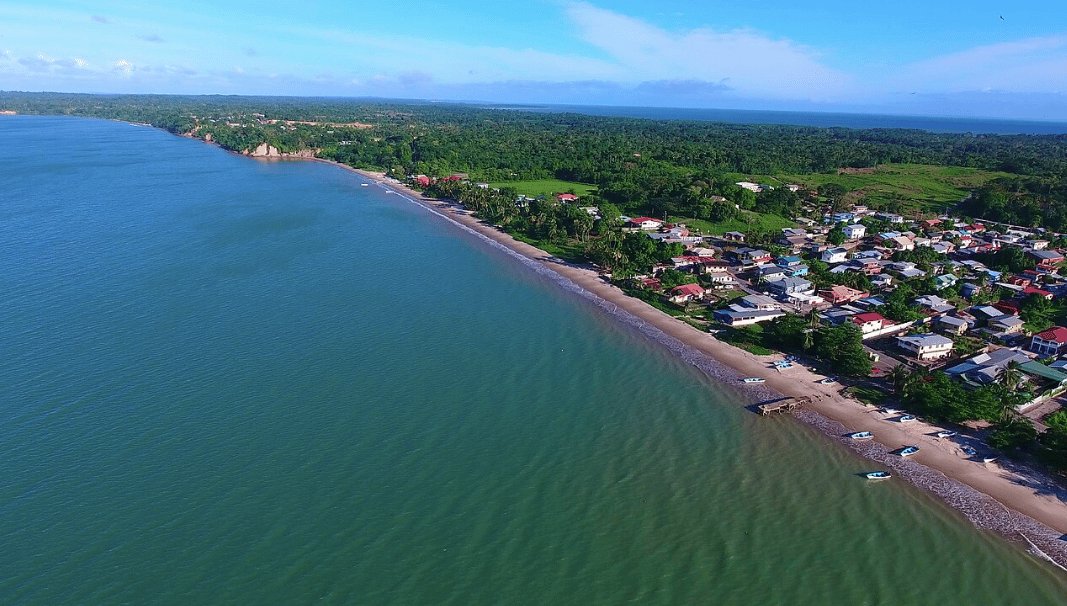
The waters that have long connected Trinidad and Tobago with its neighbour across the Gulf of Paria are once again at the centre of tension. An oil spill first detected on 1 May 2026 has escalated into a formal diplomatic demand for compensation from Venezuela, raising fresh questions about how small island developing states manage shared marine resources in an era of climate pressure and energy transition.
Spill Detection and Trinidad’s Initial Assessment
Heritage Petroleum Limited identified the spill at 07:25 hrs on 1 May 2026 in the Main Field of the Gulf of Paria. Trinidad Energy Minister Dr Roodal Moonilal immediately characterised the incident as minor, involving roughly 10 barrels that were quickly contained. Local crews moved swiftly to limit further spread, reflecting the routine operational vigilance that has become second nature in Trinidad’s long-standing offshore energy sector.
Yet the timing of the detection, coming just days after satellite imagery later cited by Venezuelan authorities, has already prompted scrutiny over reporting timelines. Fishing communities along Trinidad’s western coast, already stretched by rising fuel costs and fluctuating market prices, watched the response with quiet concern, aware that even contained spills can affect livelihoods for weeks.
The Gulf of Paria has served as a vital energy corridor for generations, supporting both Trinidad’s petrochemical industry and the daily catch of artisanal fishers. Any incident here carries immediate resonance for households dependent on both sectors, especially as global energy prices continue to influence the cost of living across CARICOM states.
Port of Spain has maintained that the spill posed no lasting threat to the marine environment on the Trinidad side. Officials emphasised rapid containment measures and ongoing monitoring, underscoring the technical capacity developed over decades of operating in these waters.
Venezuela Issues Formal Compensation Demand
Venezuela’s Foreign Minister Yvan Gil has formally demanded compensation from Trinidad and Tobago, framing the spill as a cross-border environmental incident requiring accountability. The demand marks a significant escalation in bilateral maritime relations that have otherwise seen periods of pragmatic cooperation despite wider regional tensions.
Gil warned that the spill could affect 1,625 sq km across Venezuela’s 12 strategic wetland systems. This scale of potential impact transforms what Trinidad described as a contained event into a matter of national ecological security for Venezuela, touching sensitive coastal zones already stressed by climate variability.
The compensation claim arrives at a moment when both nations are navigating complex energy transitions. Trinidad continues to rely on its natural gas reserves while Venezuela seeks to stabilise its own petroleum sector, making any perceived environmental liability a sensitive political issue on both sides of the Gulf.
Diplomatic channels remain open, with Port of Spain stating that dialogue with Venezuelan officials continues and that Trinidad and Tobago remains committed to cooperation. This measured response reflects the long-standing recognition that shared waters demand shared stewardship, even when incidents test that principle.
Threats to Venezuelan Wetlands and National Parks
Four Venezuelan national parks stand at risk according to the warnings issued by Minister Gil. These protected areas represent critical biodiversity reservoirs that support both ecological balance and local tourism economies already challenged by post-pandemic recovery and shifting visitor patterns.
The potential reach across 1,625 sq km of wetland systems highlights how even modest spills can travel through interconnected marine and coastal environments. Mangrove forests, which act as natural buffers against erosion and storm surges, face particular vulnerability in a region experiencing intensifying climate impacts.
SIDS across the Caribbean have repeatedly called for stronger mechanisms to address transboundary pollution precisely because ecosystems do not respect maritime boundaries. This incident underscores the urgency of those appeals as rising sea levels and changing ocean currents alter how pollutants disperse.
Venezuelan authorities have stressed that the affected wetlands form part of strategic national patrimony. Their protection is viewed not only through an environmental lens but also as a matter of food security and cultural continuity for communities that have depended on these waters for centuries.
Fishing Livelihoods Under Pressure
Over 500 fishermen’s livelihoods are now at risk on the Venezuelan side of the Gulf. These are not abstract statistics but real families whose daily income depends on the health of fish stocks already pressured by overfishing concerns and warming waters linked to climate change.
Trinidad’s own fishing communities have voiced solidarity, recognising that any prolonged disruption in the shared Gulf affects both nations. Artisanal fishers on the Trinidad coast have long navigated the same currents and seasonal patterns, making the spill a reminder of their common vulnerability.
The economic ripple effects extend beyond immediate catch losses. Processing facilities, market vendors, and transport operators tied to the fishing value chain all face uncertainty, compounding existing cost-of-living pressures felt across Caribbean households.
Regional bodies such as CARICOM have previously highlighted the need for joint fisheries management protocols. Incidents like this one reinforce why such frameworks must move from discussion to practical implementation if coastal communities are to thrive amid environmental uncertainty.
Satellite Imagery and Questions of Timely Reporting
Minister Gil displayed April 28 satellite images that Venezuela claims show the spill originating from Trinidad. These images form the core of Caracas’s argument that the incident began earlier than Trinidad’s 1 May detection report and that notification should have occurred sooner.
Venezuela maintains that Trinidad and Tobago did not immediately report the spill. Multiple communiqués were sent to the Trinidad and Tobago government, yet Gil states that no substantive information was shared in response, deepening mistrust at a time when transparency is essential for effective containment.
The exchange highlights longstanding challenges in real-time data sharing across maritime borders. While both nations maintain technical cooperation in other areas, environmental incident protocols appear to require strengthening if future events are to be managed without diplomatic friction.
Port of Spain continues to describe the spill as minor and quickly contained, pointing to operational logs from Heritage Petroleum Limited. The differing narratives illustrate how the same incident can be perceived through distinct national security and environmental priorities.
Venezuela’s Multi-Agency Response Coordination
Venezuela is coordinating its response through the Ministries of Ecosocialism, Fisheries, PDVSA, INEA, and the Navy. This whole-of-government approach reflects the seriousness with which Caracas views the potential ecological and economic consequences along its coastline.
PDVSA’s involvement signals the intersection of environmental protection with Venezuela’s petroleum infrastructure, while the Navy’s participation underscores maritime security dimensions. Such integrated mobilisation is familiar to nations that have faced repeated oil-related incidents in the Caribbean basin.
The Ministries of Ecosocialism and Fisheries bring expertise in ecosystem restoration and livelihood support, areas that will prove critical if affected wetlands require rehabilitation. Their combined efforts aim to limit long-term damage to the 140-plus fish species identified as vulnerable.
Trinidad and Tobago has acknowledged these coordinated efforts while reiterating its own containment success. Both sides appear to recognise that unilateral action cannot fully address pollution that moves with ocean currents across the Gulf of Paria.
Regional Implications for CARICOM and SIDS
The incident carries implications beyond the two nations directly involved. CARICOM member states have long advocated for stronger regional mechanisms to manage shared marine spaces, particularly as climate change increases the frequency of extreme weather that can exacerbate spill impacts.
Small island developing states face disproportionate risks from environmental incidents because their economies often depend heavily on fisheries and coastal tourism. A spill that threatens mangroves and fish stocks directly challenges the resilience strategies these nations have developed over decades.
Energy sector cooperation within CARICOM has historically provided a foundation for dialogue even during periods of political divergence. This latest development tests whether that cooperation can extend to robust environmental safeguards that protect the most vulnerable communities on both sides of the Gulf.
Climate change adds another layer of complexity, as shifting currents and rising temperatures alter how pollutants behave in tropical waters. Regional organisations may need to revisit existing agreements to ensure they account for these evolving environmental realities.
Historical Context of Shared Gulf Stewardship
The Gulf of Paria has witnessed decades of energy development alongside traditional fishing practices. Both Trinidad and Tobago and Venezuela have extracted resources from these waters while attempting to balance economic needs with ecological limits, a tension that has occasionally flared into diplomatic exchanges.
Past incidents have prompted bilateral discussions on notification procedures and joint monitoring, yet implementation has varied. The current demand for compensation revives questions about how effectively those earlier lessons have been institutionalised.
Trinidad’s energy sector has provided employment and revenue that support social programmes across the country, while Venezuelan coastal communities have similarly relied on the Gulf for generations. This shared history creates both the incentive and the obligation for constructive engagement.
Community voices on both coasts have consistently called for greater transparency and joint patrols, recognising that the health of the Gulf ultimately determines the wellbeing of families who have called its shores home for centuries.
Path Forward Through Sustained Dialogue
Trinidad and Tobago has reaffirmed its commitment to continued dialogue with Venezuelan officials. This stance aligns with the pragmatic approach that has characterised relations even during periods of broader regional strain, prioritising practical cooperation over confrontation.
Any resolution will likely require technical assessments involving both nations’ environmental agencies alongside independent verification. Such joint fact-finding could help bridge the gap between Trinidad’s description of a minor, contained spill and Venezuela’s concerns over wider ecological reach.
The fishing communities of the Gulf will watch these developments closely, hoping that diplomatic processes translate into tangible protections for their livelihoods. Their voices, grounded in daily experience of the waters, offer a reminder that policy decisions ultimately affect real people and real families.
As the Caribbean navigates energy transition and climate adaptation together, incidents like this one underscore the need for stronger regional protocols. The Gulf of Paria remains a shared inheritance that demands careful stewardship if future generations are to benefit from its resources without repeating past harms.
By Sharon Sahatoo, Staff WriterThis article was produced with AI-assisted research and editorial support. Reporting is based on sources cited in the article.
What's Your Reaction?
 Like
0
Like
0
 Dislike
0
Dislike
0
 Love
0
Love
0
 Funny
0
Funny
0
 Wow
0
Wow
0
 Sad
0
Sad
0
 Angry
0
Angry
0

Caribbean Correspondent at Global1.News. Based in Port of Spain, Trinidad, covering Caribbean politics, economy, energy, climate, and culture. Amplifying the voices and stories of the Caribbean region.












Comments (0)