
Draft bill seeks labour rights for sex workers in Thailand
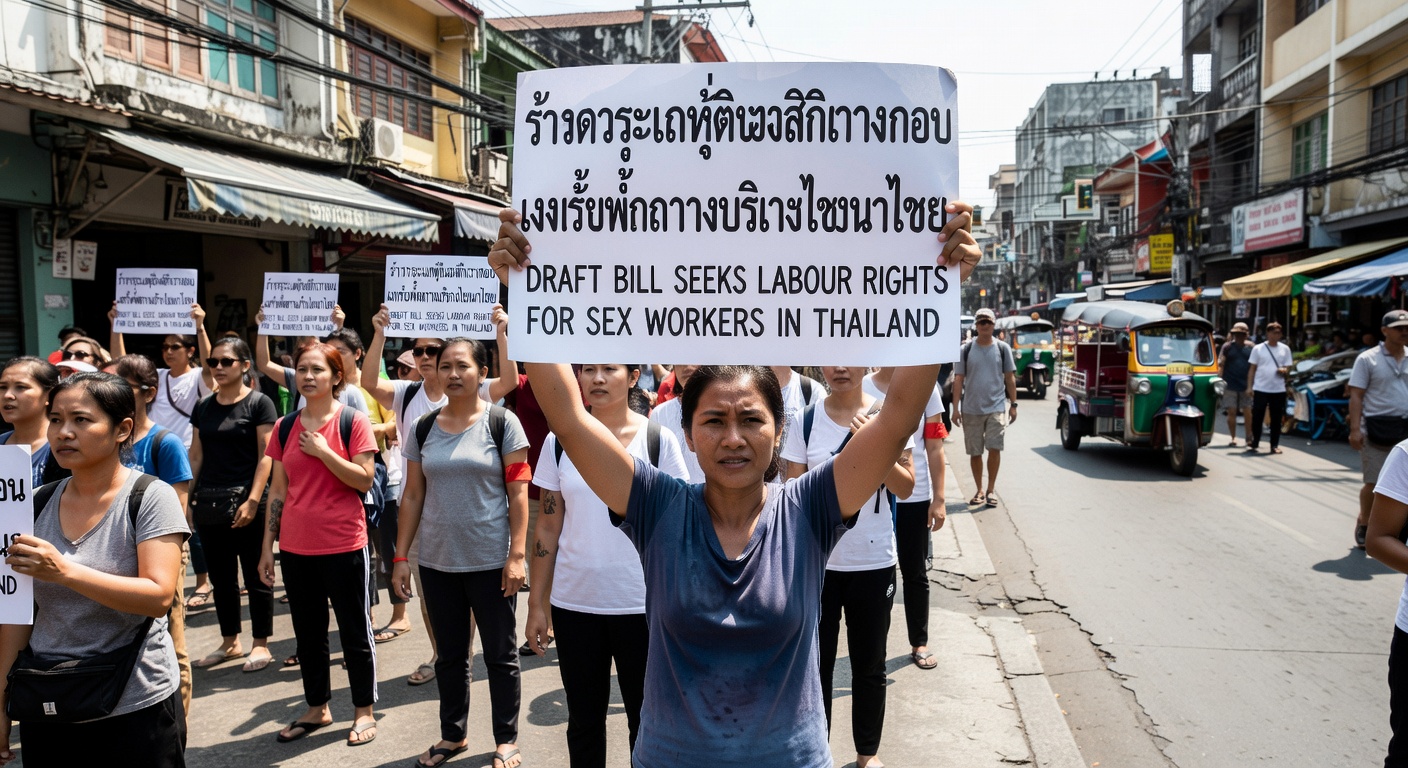
Empower Foundation Submits Landmark Draft Bill to Secure Labour Rights and Decriminalise Sex Work in Thailand
The Moment of Submission at Parliament
On a humid Thursday morning in Bangkok, representatives from the Empower Foundation walked into the House of Representatives carrying a thick folder containing the Sex Service Provider Protection Act. At precisely 10:30 a.m., they formally presented the draft legislation that seeks to remove criminal penalties for consensual adult sex work while granting workers the same labour safeguards afforded to other professions. The quiet ceremony in the parliamentary lobby marked the culmination of years of consultations with sex workers across Thailand’s provinces.
The foundation, long embedded in communities from Bangkok’s red-light districts to the border towns of Mae Sai, framed the bill as an essential step toward recognising the dignity and economic contributions of an estimated 250,000 to 300,000 people engaged in sex services. Current Thai law under the 1996 Prevention and Suppression of Prostitution Act treats most aspects of the trade as illegal, pushing the industry underground and leaving workers without contracts, minimum wages, or recourse against exploitation.
What the Proposed Act Contains
The 42-page draft bill outlines clear mechanisms for registration of sex service providers as independent contractors or employees. It mandates written agreements that specify working hours, compensation floors aligned with the national minimum wage of 300-400 baht per day depending on the province, and mandatory contributions to social security and health funds. Health and safety provisions require regular STI screenings funded by the state, access to PrEP and PEP medications, and workplace standards for lighting, emergency exits, and client screening in entertainment establishments.
Critically, the legislation decriminalises the act of selling sexual services between consenting adults while maintaining penalties for trafficking, coercion, and involvement of minors. It also creates an independent oversight committee that includes elected representatives from sex worker networks, labour ministry officials, and public health experts to monitor implementation and resolve disputes.
Current Realities for Workers in Thai Communities
Many sex workers in Thailand operate within a grey zone of bars, massage parlours, and freelance arrangements. Without legal recognition, they face routine extortion by police, inability to report violence without risking arrest, and exclusion from COVID-19 relief packages during the pandemic. Data from the Ministry of Public Health shows that sex workers experience HIV prevalence rates roughly three times higher than the general population, largely because fear of prosecution discourages consistent condom use negotiation and clinic visits.
In Chiang Mai’s night markets and Pattaya’s beachfront communities, families often rely on remittances from sex work to pay school fees and medical bills. The bill’s supporters argue that formal labour status would allow workers to open bank accounts, secure loans, and build retirement savings—measures that strengthen entire households rather than isolating individuals in stigma.
Voices from the Ground and the Foundation
Ms. Malee, a 34-year-old worker from Udon Thani who has been active with Empower for eight years, described the bill’s potential in personal terms. “Right now, if a client refuses to pay or becomes violent, I have no paper to show anyone,” she said softly during a community meeting last month. “With this law, I could have a contract and call the labour inspector instead of hiding.”
Empower Foundation director Ms. Noi Aurapan echoed this sentiment at the parliamentary handover. “We are not asking for special treatment,” she told assembled reporters. “We are asking that the labour protections already written into the Thai constitution apply to every citizen who earns their living through honest work. Decriminalisation is the first brick in building safer workplaces.”
Expert Perspectives on Health, Economics and Rights
Public health researchers at Chulalongkorn University have modelled the likely outcomes of decriminalisation. Their analysis projects a 25-40 percent reduction in new HIV infections among sex workers within five years if the bill passes, citing New Zealand’s 2003 Prostitution Reform Act as a comparable case where reported violence dropped sharply after legal change. Thai economists note that formalising the sector could bring an estimated 40-60 billion baht in taxable income annually, funds that might support expanded social services in rural provinces where many workers originate.
Labour rights advocate Dr. Somchai from the Thai Labour Solidarity Committee emphasised the bill’s alignment with international conventions. “Thailand has ratified ILO core standards on freedom of association and the elimination of forced labour,” he observed. “Extending those standards to sex workers closes a glaring gap that currently leaves one of the country’s most precarious workforces unprotected.”
Broader Social and Cultural Implications
Thailand’s Buddhist cultural emphasis on compassion and reducing suffering offers a natural frame for considering the bill’s merits. Community leaders in Isan villages, where seasonal migration into sex work is common, have begun quiet conversations about how legal recognition might reduce family shame and allow daughters to return home without fear of arrest records. The legislation also addresses migrant workers from Myanmar and Laos, who comprise nearly 30 percent of the workforce and currently face compounded risks of deportation alongside exploitation.
Tourism operators in Phuket and Bangkok have expressed cautious interest, noting that clearer regulations could improve Thailand’s international image as a destination that prioritises visitor and worker safety alike. Conversely, some conservative parliamentarians have signalled resistance, citing concerns over public morality and the potential impact on traditional family structures.
Challenges on the Legislative Path Ahead
Passage is far from assured. The draft must navigate readings in both the House and Senate, possible amendments, and public hearings that will likely draw vocal opposition from religious groups. Yet the timing coincides with Thailand’s ongoing review of its penal code and growing civil society momentum around gender and labour reforms. International bodies including UNAIDS and the World Health Organization have already signalled support for the approach outlined in the Empower draft.
Should the bill advance, implementation would unfold over three years, beginning with pilot registration programs in Bangkok and Chonburi before nationwide rollout. Training for police and labour inspectors on the new framework is budgeted at 120 million baht, a modest investment relative to the projected gains in public health and reduced court caseloads.
The submission of the Sex Service Provider Protection Act represents more than a policy proposal; it is a community-driven assertion that every worker deserves safety, fairness, and the chance to contribute openly to Thai society. As parliamentarians begin their review, the voices of those most affected will remain central to the conversation.
This is Ann Srisawat for Global1 News, reporting from Bangkok. 🇹🇭
This article was produced with AI-assisted research and editorial support. Reporting is based on sources cited in the article.
What's Your Reaction?
 Like
0
Like
0
 Dislike
0
Dislike
0
 Love
0
Love
0
 Funny
0
Funny
0
 Wow
0
Wow
0
 Sad
0
Sad
0
 Angry
0
Angry
0

Southeast Asia Correspondent at Global1.News. Based in Bangkok, covering Thai and Southeast Asian politics, economy, technology, and culture. Deep regional perspective on one of the world's most dynamic regions.















Comments (0)