
DFA: Philippines law enforcers not targeting Chinese
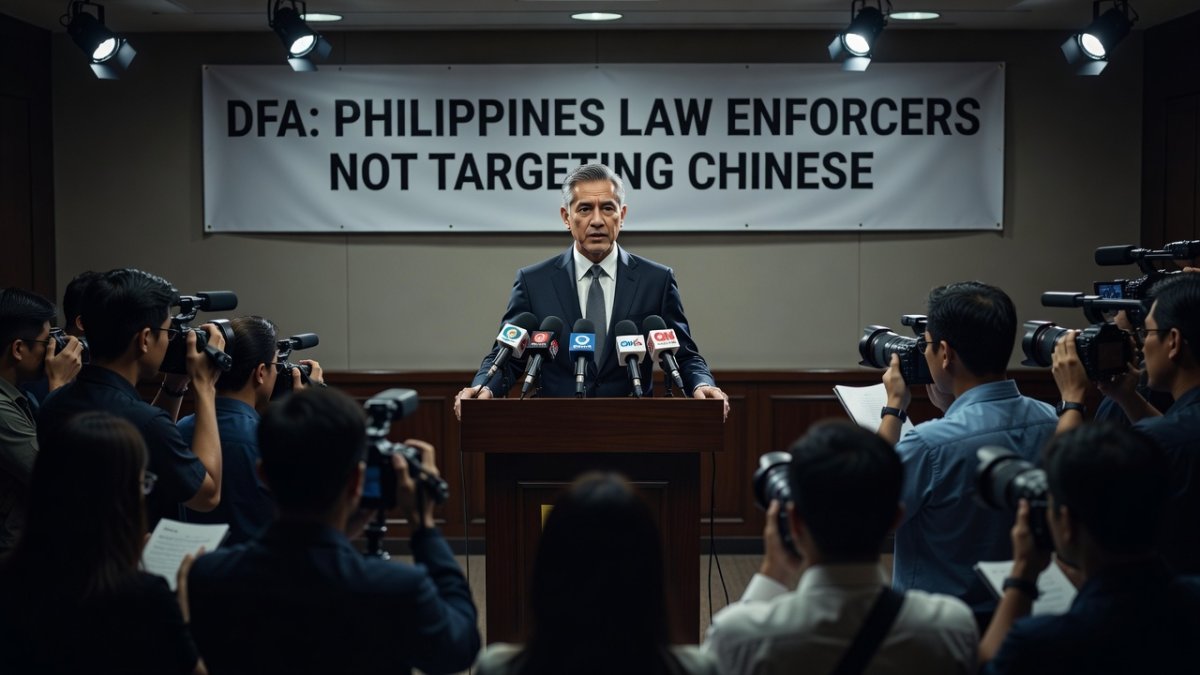
DFA: Philippine Law Enforcers Not Targeting Chinese Nationals, Reassures Embassy Over Apprehension Concerns
DFA Statement Addresses Bilateral Tensions
The Department of Foreign Affairs issued a clear statement yesterday affirming that Philippine law enforcement operations follow evidence-based protocols rather than nationality. DFA spokesperson Teresita Daza emphasized that operations target criminal activity, including cyber-enabled scams and illegal gambling rings often linked to Philippine Offshore Gaming Operators. This response directly addressed a formal note from the Chinese embassy expressing worry over what it described as “frequent” detentions of its citizens.
Daza stated, “Philippine authorities act in accordance with our laws and international obligations. No operation is directed against any specific nationality.” The clarification comes amid heightened scrutiny of foreign nationals involved in organized crime networks operating from rented condominiums and industrial parks in Metro Manila and Central Luzon.
Recent Operations and Arrest Data
Philippine National Police records show that from January to October this year, authorities conducted 47 coordinated raids on suspected scam hubs, resulting in 612 foreign nationals taken into custody. Of these, 478 were Chinese passport holders, 89 were Vietnamese, and the remainder came from other Southeast Asian countries. Charges filed include estafa, violation of the Anti-Cybercrime Act, and illegal possession of telecommunications equipment used for large-scale fraud targeting victims in China, the United States, and Europe.
These figures reflect a deliberate pivot by law enforcement toward dismantling online fraud syndicates that have proliferated since the easing of pandemic restrictions. Intelligence shared with the National Bureau of Investigation indicates that many of the targeted locations functioned as “scam compounds” where workers were reportedly recruited under false pretenses and later coerced into running romance or investment schemes.
Chinese Embassy Raises Formal Concerns
In its diplomatic note dated October 12, the Chinese embassy highlighted 23 specific cases involving its nationals who claimed they were detained without immediate consular access. Embassy officials requested clearer communication channels and assurances that due process would be observed. Philippine officials confirmed that consular notification occurred within the 48-hour window required under the Vienna Convention on Consular Relations, though language barriers and documentation issues occasionally delayed initial contact.
Chinese Ambassador Huang Xilian has publicly called for “fair treatment” while acknowledging the need to combat transnational crime. The embassy’s statement stopped short of accusing Philippine authorities of ethnic profiling, focusing instead on procedural transparency.
Context of POGO Regulation and Crackdowns
The Philippines began licensing offshore gaming operations in 2016 to generate revenue and employment. By 2019, the industry employed an estimated 200,000 workers, many of them Chinese nationals on temporary work visas. Following multiple exposés linking POGOs to money laundering and human trafficking, the government imposed a nationwide moratorium on new licenses in 2023. Existing operators face stricter monitoring by the Philippine Amusement and Gaming Corporation and the Bureau of Immigration.
Immigration data reveals that 14,872 Chinese nationals were deported or voluntarily repatriated between 2022 and mid-2024 after their visas were canceled for involvement in unlawful activities. These enforcement actions occur alongside broader efforts to regulate foreign ownership in gaming and real estate sectors.
Expert Perspectives on Rule of Law
Constitutional lawyer Antonio Panganiban noted that equal application of statutes remains the cornerstone of democratic governance. “When evidence points to a syndicate operating from a particular location, authorities have both the right and duty to act, regardless of the suspects’ passports,” he said. Panganiban added that selective enforcement claims require concrete proof of discriminatory intent, which has not surfaced in court records.
Security analyst Maria Santos from the University of the Philippines argued that framing routine policing as nationality-based targeting risks undermining public confidence in institutions. “The Philippines must demonstrate that its justice system operates without fear or favor, especially at a time when regional relations are already strained by maritime disputes,” she stated.
Implications for Philippine-Chinese Relations and Domestic Policy
Diplomatic observers see the DFA statement as an attempt to de-escalate rhetoric while preserving operational autonomy. Bilateral trade reached $45.2 billion last year, with China remaining the Philippines’ top trading partner. Disruptions from perceived mistreatment of Chinese citizens could affect tourism inflows, which recovered to 1.8 million Chinese visitors in 2023, and ongoing infrastructure projects under the Belt and Road Initiative.
Domestically, the episode underscores the challenge of balancing economic interests with sovereignty over law enforcement. Civil society groups have urged greater transparency in raid operations, including body-camera footage and independent observers, to prevent future diplomatic friction. The Commission on Human Rights has opened a monitoring desk to review complaints from detained foreigners.
Justice advocates emphasize that true fairness lies in consistent prosecution of both foreign and local offenders. Recent arrests of Filipino middlemen facilitating fake documents for POGO workers illustrate that accountability extends beyond one nationality.
This is Bella Reyes for Global1 News, reporting from Manila. 🇵🇭
This article was produced with AI-assisted research and editorial support. Reporting is based on sources cited in the article.
What's Your Reaction?
 Like
0
Like
0
 Dislike
0
Dislike
0
 Love
0
Love
0
 Funny
0
Funny
0
 Wow
0
Wow
0
 Sad
0
Sad
0
 Angry
0
Angry
0

Philippines/Southeast Asia Correspondent at Global1.News. Manila-based journalist covering Philippine politics, environment, maritime security, and social issues. Passionate about marine conservation and the communities protecting the Philippines' natural heritage.















Comments (0)