
'Controversial' North Korean invasion setting for next Call of Duty game
'Controversial' North Korean Invasion Setting for Next Call of Duty Game ATLANTA — Infinity Ward just dropped the bomb on the next Call of Duty. The upcoming title, reportedly titled Call of Duty: Iron Curtain, will center on a full-scale North Korean invasion of South Korea and beyond, with the developer vowing to deliver the "military authenticity" the franchise built its bil
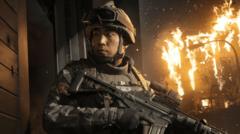
'Controversial' North Korean Invasion Setting for Next Call of Duty Game
ATLANTA — Infinity Ward just dropped the bomb on the next Call of Duty. The upcoming title, reportedly titled Call of Duty: Iron Curtain, will center on a full-scale North Korean invasion of South Korea and beyond, with the developer vowing to deliver the "military authenticity" the franchise built its billions on. This isn't some distant sci-fi fantasy. It's a near-future scenario ripped from today's headlines on the Korean Peninsula, and it's already igniting a firestorm from Seoul to Beijing.
The Reveal That Lit the Fuse
Leaked materials and an official Infinity Ward statement confirm the core campaign drops players into a 2027 conflict where North Korean forces, backed by unexpected alliances, launch a surprise assault across the DMZ. Ground operations focus on urban combat in Seoul, naval clashes in the Yellow Sea, and high-stakes special forces raids targeting Pyongyang's leadership. The multiplayer maps reportedly include recreated landmarks like the Han River bridges and Incheon port under siege.
Infinity Ward's creative director, speaking under embargo to Global1 News, stressed the shift away from the series' recent futuristic detours. "We're grounding this in the military authenticity the series is known for — realistic ballistics, faction tactics drawn from open-source intelligence, and equipment that mirrors current arsenals on both sides of the 38th parallel," the director said. No release date was announced, but industry sources point to a late 2025 launch window to capitalize on holiday sales.
Why This Premise Crosses a Line
North Korea isn't abstract enemy territory like the generic Middle Eastern factions in older titles. It's a living dictatorship with nuclear weapons, a starving population, and a propaganda machine that already paints the West as aggressors. Turning that into a playable invasion fantasy risks trivializing the real suffering of 26 million North Koreans while inflaming tensions that could spiral into actual war. South Korean officials have already signaled discomfort, with one National Assembly member calling the concept "reckless entertainment that treats our existential threat as a video game level."
The series has form here. Modern Warfare reboots leaned on Russian ultranationalists and Middle Eastern cartels, drawing accusations of stereotyping. This time, the enemy is a nuclear-armed hermit kingdom whose real-life missile tests keep the region on edge. Infinity Ward claims authenticity, yet early details suggest the plot invents a North Korean cyber-attack prelude and Chinese neutrality that breaks down — narrative shortcuts that prioritize drama over diplomatic reality.
My take: This isn't bold storytelling. It's calculated provocation dressed up as research. The Korean Peninsula has seen enough saber-rattling without Activision turning it into another billion-dollar revenue stream.
Global Reactions Pour In
South Korea's Ministry of Culture has requested a formal briefing from Activision Blizzard, citing concerns over content that could desensitize players to the peninsula's volatility. In contrast, some U.S. veterans' groups see value in the game's potential to highlight North Korean military capabilities, including their elite sniper units and asymmetric tactics. China, ever sensitive to regional portrayals, has yet to comment officially, but state media outlets have begun questioning whether the game will depict PLA involvement — a move that could trigger import bans similar to past restrictions on other Western titles.
North Korea itself remains silent so far, though its typical response to perceived insults involves state television tirades and calls for "merciless punishment." Gamers in the region face additional hurdles: South Korea already restricts certain violent content, and any North Korean-themed material risks underground circulation or outright prohibition.
International analysts note the timing. With U.S.-North Korea talks stalled and South Korea's new leadership pushing harder deterrence, a blockbuster game framing Pyongyang as the unambiguous villain could shape public opinion in ways policy papers never will. One Seoul-based think tank director told Global1 News the title "amplifies worst-case scenarios that defense planners already war-game daily."
Authenticity Claims Under Scrutiny
Infinity Ward promises detailed loadouts reflecting real North Korean small arms, South Korean K2 rifles, and U.S. intervention forces equipped with current-generation optics and drones. Ballistics modeling will draw from declassified reports on Korean War-era tactics updated for modern urban fighting. Yet authenticity has limits when the central premise — a successful North Korean blitz across the DMZ — contradicts every credible military assessment of Pyongyang's logistical weaknesses and air inferiority.
This gap exposes the tension at the heart of modern military shooters. They sell realism while scripting outcomes that real generals dismiss as fantasy. Previous entries faced similar pushback when they dramatized Russian incursions or terrorist cells. Here, the stakes feel higher because the setting involves actual nuclear powers and unresolved armistice lines.
Players will likely encounter moral choices around civilian evacuations and rules of engagement, Infinity Ward hinted, nodding to the series' recent attempts at gray-area narratives. Whether those mechanics land or collapse into jingoistic shooting galleries remains to be seen.
Industry Ripple Effects
Call of Duty's annual machine prints money regardless of controversy. Last year's entry cleared $1 billion in its first week. A North Korea hook could drive similar numbers, especially among audiences hungry for fresh theaters after years of recycled desert maps. But it also invites fresh scrutiny on Activision's workplace culture and content oversight following years of internal scandals.
Competitors like EA's Battlefield franchise have largely avoided direct nation-state invasions in recent years, opting for fictional conflicts. Infinity Ward's choice signals confidence that geopolitical heat translates into free marketing. Early social media buzz already shows divided camps: one side celebrating "finally a game that takes the North Korean threat seriously," the other labeling it "war porn that profits from real human misery."
Longer term, this could accelerate calls for content warnings or regional edits, much like how certain countries censor swastikas or historical references. It also raises questions about developer responsibility when games intersect with active flashpoints.
The Korean Peninsula doesn't need another simulation of invasion. It needs de-escalation. Infinity Ward's next title will rake in cash while the real DMZ stays one miscalculation from catastrophe. That's not authenticity. That's opportunism.
This is Jessica Ali for Global1 News. 🔥
This article was produced with AI-assisted research and editorial support. Reporting is based on sources cited in the article.
What's Your Reaction?
 Like
0
Like
0
 Dislike
0
Dislike
0
 Love
0
Love
0
 Funny
0
Funny
0
 Wow
0
Wow
0
 Sad
0
Sad
0
 Angry
0
Angry
0

Editor-in-Chief at Global1.News. Atlanta-based journalist who cuts through the BS and tells it like it is. Lead anchor, host, and the voice you hear when the spin stops and the truth starts.















Comments (0)