
Sarmat ICBM Delays Exposed by Leaked Russian Documents
Moscow, Russia — Leaked internal documents expose deep production failures and a catastrophic 2025 test crash that contradict Kremlin claims of Sarmat ICBM combat readiness by late 2026. Despite official boasts, supply chain breakdowns and propulsion flaws at Krasmash threaten the entire program. The gap between propaganda and reality now raises urgent questions about Russia's nuclear modernization and strategic credibility.
Moscow, Russia — Leaked internal documents expose deep production failures and a catastrophic 2025 test crash that contradict Kremlin claims of Sarmat ICBM combat readiness by late 2026. Despite official boasts, supply chain breakdowns and propulsion flaws at Krasmash threaten the entire program. The gap between propaganda and reality now raises urgent questions about Russia's nuclear modernization and strategic credibility.
Catastrophic November 2025 Test Failure at Plesetsk Cosmodrome
According to The Moscow Times, which reviewed leaked documents, a Sarmat test launch from Plesetsk Cosmodrome on November 28, 2025, ended in failure, with satellite imagery analyzed by arms researchers later revealing a large crater at the launch site. RUSI analysts assessed the incident as stemming from a propulsion system malfunction during the initial boost phase. The Defense Ministry has not released an official account of the event, and subsequent test schedules outlined in the leaked documents show further postponements. International observers noted the absence of any follow-up launches in the months after the incident, underscoring how the setback has forced a reevaluation of the entire flight-test sequence.
Production Bottlenecks at Krasmash and Makeyev Design Bureau
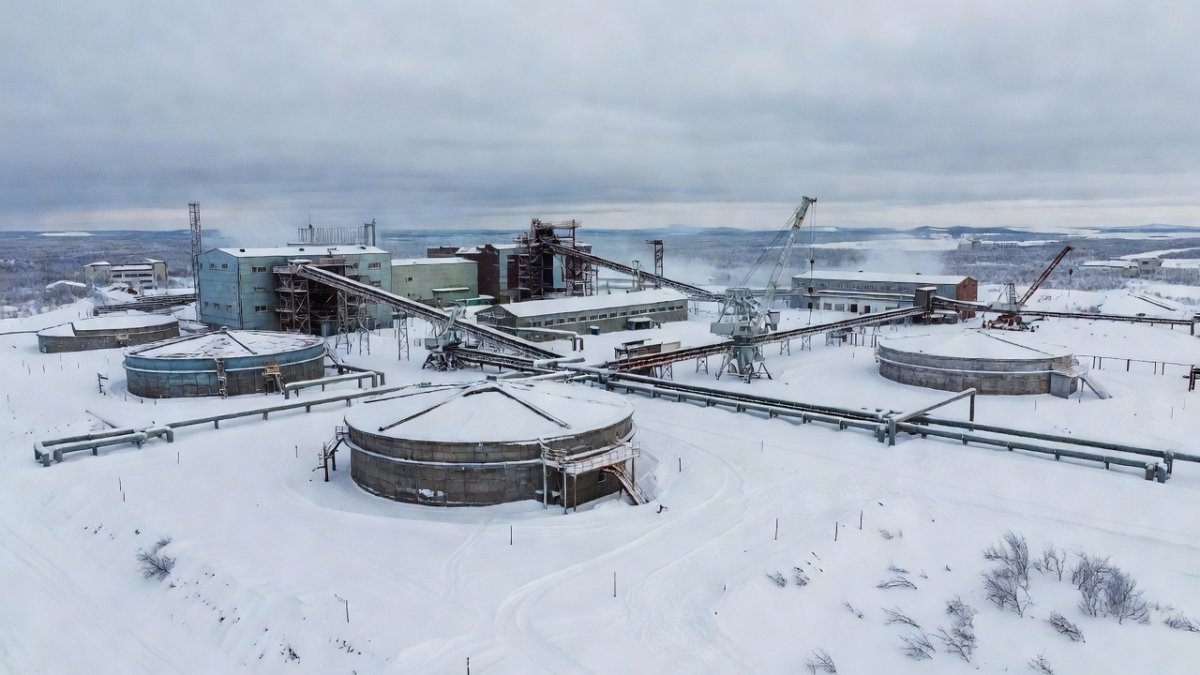
Manufacturing of the Sarmat has been concentrated at the Krasmash facility in Krasnoyarsk, with design oversight provided by the Makeyev Design Bureau. The leaked documents cite shortages of specialized components and difficulties in retaining skilled personnel as primary constraints on output. Western sanctions have restricted access to certain precision materials, forcing reliance on domestic substitutes that have not yet met performance standards. Defense Ministry statements emphasize ongoing modernization efforts at the plant, yet the internal records project that current production rates fall short of the numbers needed to field even a single regiment by the announced deadline. These constraints have reduced projected serial production to fewer than five units per year, far below the 20 needed for full regiment deployment by 2027.
The Krasnoyarsk Machine-Building Plant has long served as the primary production hub for Russia's heavy ICBMs, yet internal documents reveal persistent bottlenecks that have crippled Sarmat output. Skilled labor shortages have intensified since 2022, with an estimated 15,000 defense engineers and technicians emigrating amid mobilization and economic pressures, leaving the facility short of specialists capable of handling the missile's complex liquid-fuel propulsion systems. European sanctions on precision machine tools from Germany and Switzerland have severed access to critical CNC equipment, forcing Krasmash to rely on outdated Soviet-era lathes that fail to meet the tolerances required for the RS-28's reentry vehicle integration. Rostec announced factory upgrades in 2023, including new assembly lines and testing bays valued at over 40 billion rubles, but leaked records indicate these projects remain incomplete due to supply chain gaps and corruption scandals at subcontractor firms.
NEW START Suspension Creates Verification Gap for Observers
Russia's decision to suspend participation in the New START treaty in February 2023 eliminated on-site inspections and data exchanges that previously allowed U.S. and NATO monitors to track missile inventories and test activities. Without these mechanisms, assessments of Sarmat progress now depend on satellite imagery and occasional official statements from the Foreign Ministry. U.S. Strategic Command officials have noted that the resulting opacity complicates efforts to evaluate the actual status of Russia's strategic forces. The leaked documents underscore how this lack of external scrutiny has allowed internal delays to remain hidden from public view, creating a widening information gap that affects allied planning.
Putin's Personal Promotion of the Sarmat Program
President Putin has repeatedly described the Sarmat, known to NATO as SS-X-30 Satan II, as an unstoppable system capable of evading any missile defense. These statements, delivered in public addresses and defense forums, have framed the missile as a cornerstone of Russia's nuclear deterrent. The leaked documents, however, reveal that technical milestones cited in those speeches have slipped by multiple quarters. Kremlin sources continue to echo the president's narrative of technological superiority, while Makeyev Design Bureau reports indicate that key performance parameters remain unproven after the Plesetsk failure. President Vladimir Putin first unveiled the Sarmat in his March 1, 2018, Address to the Federal Assembly, showcasing an animated video of the missile evading U.S. missile defenses and striking targets in the United States. He framed the weapon explicitly as retaliation for Washington's withdrawal from the INF Treaty, emphasizing its 18,000-kilometer range and ability to carry multiple independently targetable warheads as a direct counter to American strategic superiority.
Public messaging has consistently portrayed the missile as a symbol of Russian technological resurgence, with Putin personally overseeing test announcements and linking delays to external sabotage rather than internal failures. In reality, the contrast with leaked Defense Ministry documents exposes how these claims serve propaganda needs, masking production shortfalls that threaten the 2026 combat duty timeline. Analysts from the Carnegie Endowment note that such rhetoric sustains elite cohesion and public morale but risks eroding credibility when test failures become public knowledge through satellite imagery and independent reporting.
NATO and Strategic Implications of Russia's Deterrence Challenges
Analysts at RUSI and the Fondation pour la Recherche Stratégique have examined how repeated Sarmat setbacks affect Russia's overall nuclear posture. The missile's advertised capacity to carry more than ten MIRV warheads over an 18,000-kilometer range was intended to strengthen second-strike capabilities. NATO officials have stated that delays in fielding the system do not alter alliance planning but do highlight vulnerabilities in Russia's modernization schedule. U.S. Strategic Command assessments suggest that existing silo-based systems continue to form the backbone of Russian strategic forces in the interim. NATO Secretary General Jens Stoltenberg has repeatedly cited Sarmat delays as evidence of Russia's eroding nuclear modernization capacity, warning in 2025 briefings that repeated test failures undermine Moscow's ability to maintain parity with alliance forces.
These delays complicate New START replacement talks, as Russian negotiators leverage unproven systems like Sarmat to demand concessions on U.S. missile defenses, stalling progress toward any post-2026 arms control framework. Broader Russian nuclear programs face similar hurdles, including delays in Borei-class submarine construction due to turbine shortages and Avangard hypersonic glide vehicle integration issues stemming from the same sanctions regime. Zircon sea-launched hypersonics have also seen postponed deployments, with only limited operational capability achieved by late 2025. Experts at the International Institute for Strategic Studies argue that these cascading problems weaken Russia's negotiating position, potentially accelerating NATO's conventional superiority in Europe while exposing vulnerabilities in the Kremlin's nuclear triad that could influence future escalation dynamics.
Impact on Russia's Broader Nuclear Modernization Timeline
The Sarmat delays documented in the internal records point to wider strains on Russia's nuclear replacement programs. The Defense Ministry had planned to phase out older ICBMs in favor of newer designs, yet production shortfalls at Krasmash threaten to extend the service life of legacy systems. Leaked timelines show that even optimistic projections now place initial operational capability well into 2027 or later. Foreign Ministry statements maintain that strategic parity with other nuclear powers remains intact, while independent reviews by 19FortyFive and Technology Org note that sustained testing failures could force adjustments to force structure goals.
Outlook for Future Testing and Deployment Decisions
Defense Ministry planning documents referenced in the leaks outline a revised test sequence beginning later this year, though no firm dates are confirmed. Makeyev Design Bureau engineers have recommended additional ground tests before any further flight attempts. International observers, including those previously involved in New START verification, continue to monitor Plesetsk and Krasnoyarsk via commercial satellite providers. The gap between official timelines and documented progress suggests that any announcement of combat duty will require substantial new evidence of resolved technical issues, leaving the program's future dependent on verifiable progress rather than repeated assertions of readiness.
By Irina Volkov, Staff WriterThis article was produced with AI-assisted research and editorial support. Reporting is based on sources cited in the article.
What's Your Reaction?
 Like
0
Like
0
 Dislike
0
Dislike
0
 Love
0
Love
0
 Funny
0
Funny
0
 Wow
0
Wow
0
 Sad
0
Sad
0
 Angry
0
Angry
0

Russia/Eastern Europe Correspondent at Global1.News. Covering Russian politics, energy, security, and the shifting dynamics of the post-Soviet space. Provides clear-eyed analysis on one of the world's most opaque regions.














Comments (0)