
China Uses Custard Apple Imports as Leverage Against Taiwan
China's Custard Apple Imports from Taiwan Spark Fears of Economic Coercion The Recent Approval and Immediate Concerns In June 2026, reports emerged that Chinese authorities had approved imports of atemoya, commonly known as custard apples, from a limited number of Taiwanese farms. Taiwan's agriculture ministry responded with explicit caution, interpreting the move as a potentia
The Recent Approval and Immediate Concerns
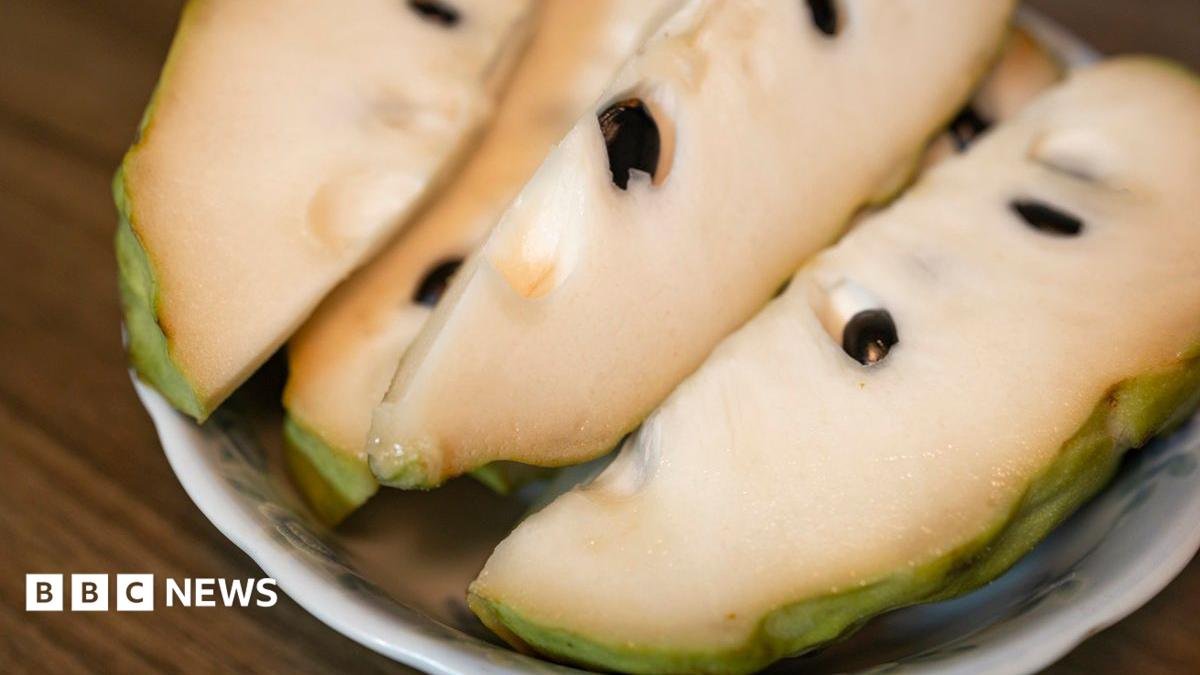
In June 2026, reports emerged that Chinese authorities had approved imports of atemoya, commonly known as custard apples, from a limited number of Taiwanese farms. Taiwan's agriculture ministry responded with explicit caution, interpreting the move as a potential instrument of leverage rather than a straightforward commercial opening. Officials noted that the selective nature of the approval, confined to specific producers, mirrored patterns observed in earlier trade decisions affecting other Taiwanese agricultural goods.
Historical Patterns of Agricultural Trade Measures
Between 2021 and 2023, China implemented import restrictions on several Taiwanese products, including pineapples, sugar-apples, and wax apples. These actions were framed by Beijing as responses to phytosanitary issues, yet Taiwanese authorities documented the timing as coinciding with periods of heightened political friction across the strait. The sequence established a precedent in which agricultural approvals and prohibitions functioned as adjustable tools within broader economic statecraft. The current custard apple decision extends this established approach, allowing Beijing to modulate market access without requiring new legislative frameworks.
Cross-Strait Economic Integration as Political Instrument
Beijing's management of agricultural trade reflects a consistent preference for maintaining selective economic interdependence while preserving the capacity for rapid adjustment. By granting limited entry to Taiwanese atemoya, Chinese regulators create an opening that can be expanded or curtailed according to political conditions. This tactic aligns with the Dual Circulation strategy, which emphasizes domestic market resilience alongside calibrated external linkages. For Taiwan, such measures underscore the vulnerability of sectors that remain oriented toward the mainland market despite repeated diversification initiatives.
Post-2024 Election Dynamics and Ongoing Tensions
Following the 2024 presidential election, cross-strait relations have continued along a trajectory of managed friction. The incoming administration maintained its emphasis on strengthening ties with democratic partners while resisting unification overtures. In this environment, agricultural trade decisions serve as low-cost signals of Beijing's willingness to reward or penalize specific constituencies within Taiwan. Farmers in regions that have historically supported closer economic engagement with the mainland now face renewed uncertainty, illustrating how trade approvals can influence domestic political calculations without direct military or diplomatic confrontation.
Taiwan's Market Diversification and Regional Reorientation
Taiwan has pursued export diversification toward Southeast Asia and Japan since the early 2020s, seeking to reduce reliance on any single market. Japanese importers have absorbed increased volumes of certain fruits, while ASEAN countries have expanded phytosanitary protocols to accommodate Taiwanese produce. Nevertheless, the scale of the Chinese market continues to exert gravitational pull. The selective custard apple approval tests whether Taiwanese producers will prioritize short-term revenue gains over longer-term risk mitigation, potentially slowing the pace of reorientation toward alternative destinations.
The Atemoya as Marker of Agricultural Identity
Beyond commercial considerations, the atemoya has acquired symbolic weight within Taiwan's agricultural narrative. Grown in specific highland regions, the fruit represents local adaptation and quality differentiation that Taiwanese authorities promote in international branding efforts. Any perception that Beijing can selectively validate or withhold recognition of this product reinforces anxieties about external influence over Taiwan's economic self-definition. Agricultural identity thus becomes intertwined with questions of political autonomy, amplifying the resonance of trade decisions far beyond immediate revenue figures.
Strategic Calculus and Second-Order Effects
From Beijing's perspective, agricultural leverage offers asymmetric advantages: it targets politically salient rural constituencies while remaining deniable as routine regulatory action. For Taipei, the challenge lies in balancing farmer interests against the need to demonstrate resilience against coercion. Regional actors, including ASEAN states and Japan, observe these dynamics as indicators of how economic tools may be deployed in future disputes. The custard apple case, though modest in volume, contributes to a cumulative record that shapes expectations about the boundaries of acceptable economic statecraft in the Taiwan Strait.
By Prof. Marcus Chen, Staff WriterThis article was produced with AI-assisted research and editorial support. Reporting is based on sources cited in the article.
What's Your Reaction?
 Like
0
Like
0
 Dislike
0
Dislike
0
 Love
0
Love
0
 Funny
0
Funny
0
 Wow
0
Wow
0
 Sad
0
Sad
0
 Angry
0
Angry
0

World Politics Analyst at Global1.News. Based in Beijing, covering US-China relations, global trade, and geopolitical strategy. Brings deep analytical perspective to the power dynamics shaping international affairs.















Comments (0)