
China Reaffirms Support for Middle East Peace Through US-Iran Engagement
China Reaffirms Support for Middle East Peace Through US-Iran Engagement According to the CGTN report covering the Chinese Foreign Ministry's regular press briefing, Spokesperson Guo Jiakun emphasized that the United States and Iran should jointly safeguard and implement the memorandum of understanding they have signed while reaffirming Beijing's backing for all initiatives aim
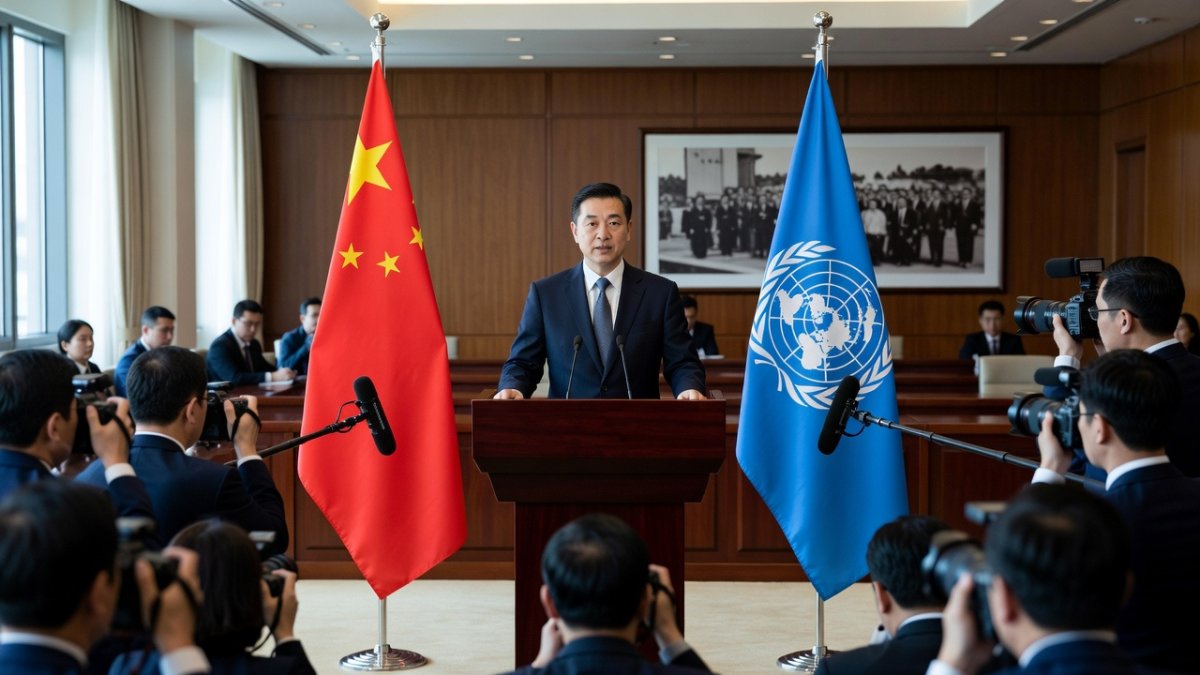
China's Diplomatic Posture on the Iran-US Track
China's approach to the Iran-US track prioritizes stability that protects its access to crude oil supplies from the Middle East's largest provider. Beijing has consistently advocated negotiated frameworks rather than unilateral sanctions, viewing escalation as detrimental to its Dual Circulation strategy and energy diversification goals. This posture aligns with the Ministry of Foreign Affairs' emphasis on sovereign equality and non-interference, principles that have guided Chinese engagement since the 2015 Joint Comprehensive Plan of Action negotiations.
Strategic calculus in Beijing centers on preventing disruptions that could affect global shipping lanes and commodity prices. Officials recognize that sustained tensions allow external actors to consolidate military footprints, complicating China's Belt and Road investments across the region. By urging implementation of existing understandings, China signals its role as a constructive balancer without direct entanglement in bilateral disputes.
Historical patterns show China has avoided taking sides in the Iran-US standoff, instead promoting multilateral venues such as the United Nations Security Council. This neutrality preserves leverage with both parties while advancing the 14th Five-Year Plan's outward-facing economic objectives. Recent statements from the Ministry of Foreign Affairs underscore that peace efforts must respect the legitimate security concerns of all regional stakeholders.
Guo Jiakun's Statement: A Carefully Calibrated Message
Guo Jiakun, who assumed the spokesperson role in 2025, delivered a response that balanced support for existing agreements with calls for mutual restraint. His remarks avoided assigning blame, focusing instead on the practical necessity of honoring signed documents to de-escalate enrichment-related concerns. This calibration reflects the Ministry of Foreign Affairs' institutional preference for precise language that maintains diplomatic space.
The statement's emphasis on joint safeguarding of the memorandum illustrates China's preference for incremental confidence-building measures over dramatic breakthroughs. Analysts note that such phrasing allows Beijing to endorse US-Iran communication channels without appearing to mediate directly. It also reinforces the narrative that external powers should facilitate rather than dictate outcomes.
By linking the memorandum to wider Middle East peace, Guo Jiakun connected immediate nuclear issues to longer-term stability questions involving multiple actors. This framing resonates with China's broader foreign policy doctrine of community with a shared future, positioning Beijing as a voice for inclusive solutions. The measured tone avoids inflammatory rhetoric that could undermine ongoing commercial ties with Tehran.
The US-Iran MoU: What We Know and What Remains Unclear
Public details on the memorandum of understanding remain limited, with both Washington and Tehran confirming only that technical understandings were reached on specific confidence measures. The document reportedly addresses verification protocols and phased adjustments to enrichment activities, though exact thresholds and timelines have not been disclosed. This opacity is typical in sensitive bilateral tracks where premature leaks can derail fragile progress.
China's call for implementation suggests the memorandum contains actionable provisions that require coordinated follow-through from both capitals. Uncertainties persist regarding enforcement mechanisms and the role of international inspectors, areas where Beijing has historically supported International Atomic Energy Agency involvement. The absence of concrete timelines in official statements necessitates cautious monitoring rather than optimistic projections.
From a policy perspective, the memorandum represents a potential bridge between deterrence strategies and diplomatic off-ramps. Its success hinges on domestic political dynamics in both countries, where hardline constituencies may resist concessions. China's endorsement provides a neutral external reference point that could help sustain momentum if implementation encounters resistance.
Beijing's Broader Middle East Strategy
Beijing's Middle East strategy integrates energy security with diplomatic diversification, exemplified by its 2023 brokering of the Iran-Saudi normalization agreement in the capital. This precedent demonstrated China's capacity to facilitate dialogue when mutual economic interests align, particularly in reducing proxy conflicts that threaten oil flows. The current statement extends that logic to the US-Iran track.
Under the Dual Circulation framework, stable regional environments support China's domestic consumption goals while enabling overseas project continuity. The Ministry of Commerce and National Development and Reform Commission track investment risks tied to geopolitical flare-ups, making de-escalation a priority. Officials have avoided overcommitting resources, preferring low-profile facilitation that preserves flexibility.
Foreign Minister Wang Yi has repeatedly articulated that multipolar diplomacy requires respect for differing development paths, a principle applied to Gulf states navigating new alignments. China's strategy thus seeks to expand trade corridors without replicating traditional alliance structures. This approach yields leverage through economic interdependence rather than security guarantees.
Implications for Regional Security Architecture
Successful implementation of the memorandum could contribute to a more resilient security architecture by reducing the risk of miscalculation around nuclear thresholds. Regional actors including Gulf Cooperation Council members would gain breathing room to pursue economic integration projects without constant escalation fears. Second-order effects might include renewed momentum for arms control discussions involving multiple parties.
China's involvement, even at the rhetorical level, introduces an additional pole that complicates zero-sum interpretations of Middle East dynamics. This multipolar influence encourages states to hedge rather than align exclusively with any single external power. Over time, such hedging could foster overlapping security dialogues that dilute the dominance of any one framework.
Potential drawbacks include the possibility that partial agreements leave underlying grievances unaddressed, allowing spoilers to undermine progress. Beijing's emphasis on comprehensive peace efforts acknowledges this limitation and advocates sustained engagement. The strategic interest lies in preventing any single incident from cascading into wider supply disruptions.
The Global South Perspective
Many Global South nations view China's measured stance as consistent with principles of non-alignment and sovereign decision-making. These countries often prioritize energy affordability and trade continuity over ideological confrontations, seeing Beijing's calls for implementation as pragmatic rather than partisan. This perception strengthens China's diplomatic capital in multilateral forums.
Policy implications extend to how developing economies assess great-power competition in resource-rich regions. By advocating joint responsibility, China models an approach that avoids lecturing smaller states while highlighting mutual obligations. Such positioning resonates in capitals balancing relations with multiple external partners.
Historical context from earlier non-intervention doctrines shows that consistent messaging on dialogue builds credibility over decades. Global South observers note that China's energy partnerships create incentives for stability that align with their own development priorities. This convergence supports broader advocacy for reformed global governance structures.
What to Watch: The Path Ahead
Observers should monitor technical working groups tasked with translating the memorandum into verifiable steps, particularly around enrichment caps and inspection access. Any public signals from the Ministry of Foreign Affairs regarding follow-up consultations would indicate sustained Chinese interest. Delays in implementation could prompt renewed calls for third-party facilitation.
Domestic political calendars in both Washington and Tehran will shape the window for visible progress, with economic pressures potentially accelerating or constraining concessions. Regional states are likely to calibrate their own outreach based on perceived durability of any understandings reached. China's role may evolve from endorsement to quiet encouragement if momentum builds.
Longer-term trajectories depend on whether the memorandum becomes a foundation for wider regional dialogues involving additional actors. Beijing's strategic interest remains preventing escalation that threatens maritime routes and investment climates. Continued emphasis on peace efforts will likely feature in future briefings as developments unfold.
By Prof. Marcus Chen, Staff WriterThis article was produced with AI-assisted research and editorial support. Reporting is based on sources cited in the article.
What's Your Reaction?
 Like
0
Like
0
 Dislike
0
Dislike
0
 Love
0
Love
0
 Funny
0
Funny
0
 Wow
0
Wow
0
 Sad
0
Sad
0
 Angry
0
Angry
0

World Politics Analyst at Global1.News. Based in Beijing, covering US-China relations, global trade, and geopolitical strategy. Brings deep analytical perspective to the power dynamics shaping international affairs.










Comments (0)