
China's Arrest of Myanmar Scholar Min Zin Signals Heightened Scrutiny of Foreign Researchers
China's Arrest of Myanmar Scholar Min Zin Signals Heightened Scrutiny of Foreign Researchers The Circumstances of the Detention China's foreign ministry has confirmed the arrest of U Min Zin, a US-based scholar, on charges of spying and endangering national security. The detention occurred in early June in the southwestern city of Kunming, which lies near the Myanmar border. Ac
The Circumstances of the Detention
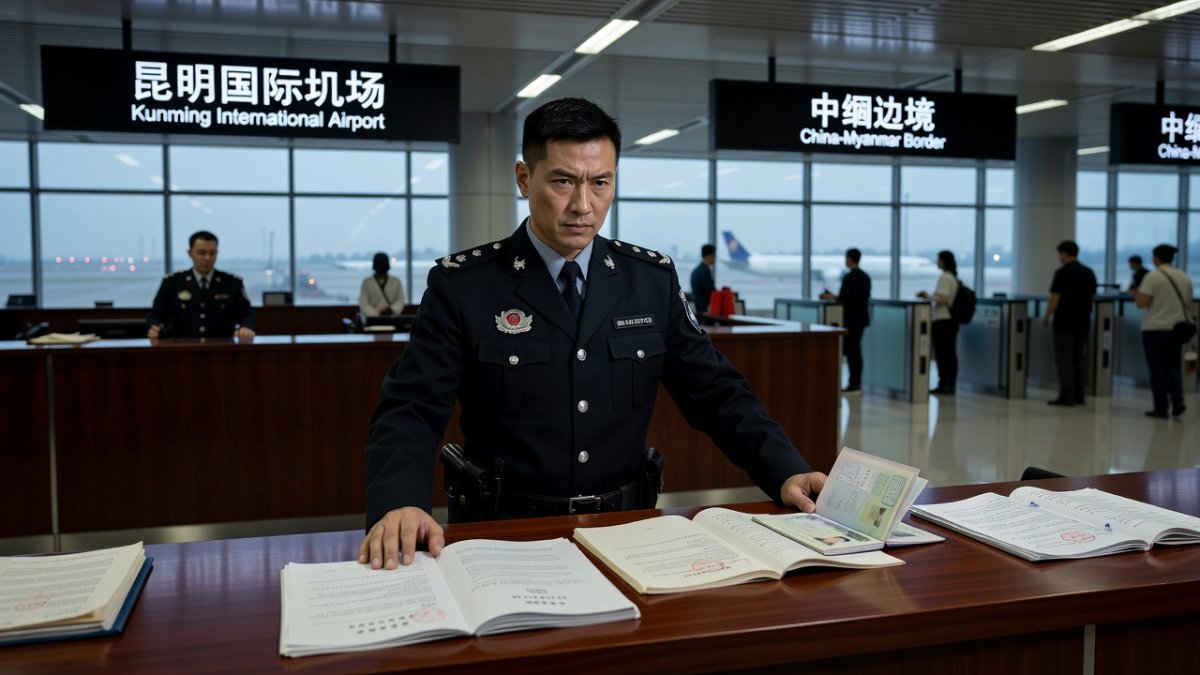
China's foreign ministry has confirmed the arrest of U Min Zin, a US-based scholar, on charges of spying and endangering national security. The detention occurred in early June in the southwestern city of Kunming, which lies near the Myanmar border. According to reports, Min Zin was taken into custody at the airport on 3 June while attending a meeting. He had been scheduled to speak at a conference in Kathmandu later that month. Details beyond the ministry's statement remain limited, consistent with the infrequent nature of such actions against US citizens on national security grounds.
Family members have expressed concern and are in contact with the US consulate in Guangzhou. The case has drawn attention because it involves a researcher whose work centers on regional dynamics rather than direct technological or military matters. Chinese authorities have framed the matter strictly in terms of protecting sovereignty and security interests, without elaborating on specific evidence at this stage.
Background of the Scholar and His Institutional Role
Min Zin serves as executive director of the Myanmar Institute for Strategic and Policy Studies, a Thailand-based think tank that examines China's involvement in Myanmar, including economic projects, political relations, and regional influence. He previously participated in Myanmar's 1988 pro-democracy movement as a student activist, later seeking refuge in Thailand before pursuing studies in the United States. He returned to Myanmar in 2010 and currently divides his time between Thailand, the US, and Myanmar while enrolled as a PhD student at the University of California, Berkeley.
His research portfolio focuses on how Chinese initiatives intersect with Myanmar's internal developments. This line of inquiry aligns with longstanding Chinese priorities in maintaining stable border relations and advancing connectivity projects under broader frameworks such as the Belt and Road Initiative. The arrest therefore touches directly on sensitivities surrounding external analysis of these ties.
Diplomatic Context Following the Trump-Xi Meeting
The detention unfolded weeks after US President Donald Trump's visit to Beijing, during which he received an elaborate reception from Chinese President Xi Jinping. That engagement had been presented as an effort to stabilize channels amid ongoing trade and technology frictions. Against this backdrop, the arrest introduces an additional point of friction into the bilateral relationship, even as both sides continue to manage competing interests in the Indo-Pacific.
Beijing's decision to proceed with the case at this moment reflects a calculated emphasis on internal security considerations over immediate diplomatic optics. Chinese policy continues to prioritize the safeguarding of information flows and influence operations near its southwestern periphery, particularly where Myanmar is concerned. The timing suggests that core security objectives retain precedence even during periods of high-level US engagement.
Myanmar's Strategic Importance and the Upcoming Presidential Visit
China maintains close ties with Myanmar's military government, which assumed power following the 2021 coup. These links encompass energy pipelines, infrastructure financing, and diplomatic support within regional forums. Myanmar's President Min Aung Hlaing is scheduled to visit Beijing the week after the arrest became public, underscoring the priority Beijing places on sustaining this partnership.
Min Zin's institutional focus on documenting Chinese activities in Myanmar places his work at the intersection of these interests. From Beijing's perspective, external scrutiny of its Myanmar engagement can complicate efforts to project influence without external commentary. The arrest may therefore serve as a signal that research touching on these relationships will face stricter boundaries, regardless of the researcher's nationality or academic affiliation.
Implications for Academic Mobility and Information Control
The case illustrates China's evolving approach to foreign researchers whose inquiries intersect with sensitive border regions or partner governments. While outright arrests of US citizens on espionage charges remain uncommon, the precedent contributes to a chilling effect on fieldwork and data collection near China's frontiers. Universities and think tanks may need to reassess risk protocols for scholars working on Myanmar or similar neighboring states.
For the United States, the episode adds another layer to existing concerns over reciprocity in academic and journalistic access. American institutions have already faced restrictions on certain forms of China-related research; this development extends similar pressures outward. The result could be reduced granular understanding of Chinese activities in Southeast Asia at a time when policy communities on both sides seek clearer assessments of regional trends.
Regional Stability and Second-Order Effects
Beyond bilateral ties, the arrest carries implications for ASEAN states and the wider Global South. Myanmar remains a critical node in China's southwestern economic corridors. Heightened enforcement against analysts studying these corridors may limit independent verification of project outcomes, affecting how neighboring countries evaluate similar Chinese proposals. This dynamic could reinforce perceptions that Beijing prefers managed narratives around its regional engagements.
At the same time, the episode highlights the leverage China derives from its position as Myanmar's primary external partner. The junta's reliance on Beijing for diplomatic cover and investment gives Chinese authorities additional tools to shape information environments. For Washington and its partners, the challenge lies in sustaining credible research capacity on these issues without exposing scholars to elevated personal risk. Over time, such cases may accelerate the fragmentation of knowledge production into more insulated national or institutional silos.
By Prof. Marcus Chen, Staff WriterThis article was produced with AI-assisted research and editorial support. Reporting is based on sources cited in the article.
What's Your Reaction?
 Like
0
Like
0
 Dislike
0
Dislike
0
 Love
0
Love
0
 Funny
0
Funny
0
 Wow
0
Wow
0
 Sad
0
Sad
0
 Angry
0
Angry
0
World Politics Analyst at Global1.News. Based in Beijing, covering US-China relations, global trade, and geopolitical strategy. Brings deep analytical perspective to the power dynamics shaping international affairs.














Comments (0)