
Vietnam Chases Semiconductor Dreams — Can Hanoi Compete in the Global Chip Race?
Vietnam has positioned itself as one of Southeast Asia's most determined newcomers in the global semiconductor industry. In September 2024, the Vietnamese government issued Decision No. 1018/QD-TTg, outlining a comprehensive national semiconductor strategy extending to 2050. This document reflects Hanoi's recognition that semiconductors represent not merely an economic sector but a cornerstone of technological sovereignty and geopolitical resilience. The strategy's central slogan, "C = SET +1,"...
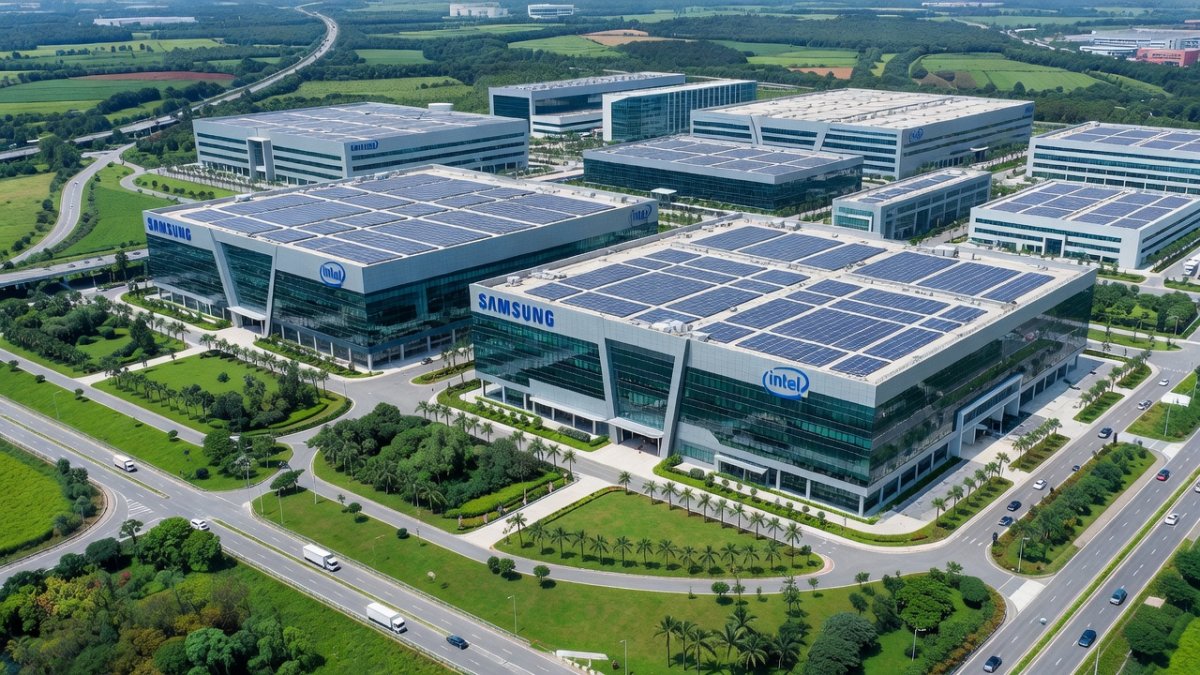
Vietnam has positioned itself as one of Southeast Asia's most determined newcomers in the global semiconductor industry. In September 2024, the Vietnamese government issued Decision No. 1018/QD-TTg, outlining a comprehensive national semiconductor strategy extending to 2050. This document reflects Hanoi's recognition that semiconductors represent not merely an economic sector but a cornerstone of technological sovereignty and geopolitical resilience. The strategy's central slogan, "C = SET +1," encapsulates its logic: building a competitive chip industry (C) through specialization (S), electronics (E), and talent (T), with the crucial "+1" denoting Vietnam's ambition to serve as an alternative supply node to China amid intensifying U.S.-China technological competition.
The plan's scale is striking. Hanoi aims to train 50,000 semiconductor engineers by 2030, elevate science and technology spending to 3-4 percent of the state budget, and launch a $100 million venture capital fund modeled on Israel's successful Yozma program. These measures seek to address Vietnam's historical underinvestment in research and development, which stood at only 0.7 percent of the state budget in the mid-2010s compared to China's roughly 2 percent during the same period. By anchoring its approach in mature-node technologies rather than cutting-edge processes, Vietnam is pursuing a pragmatic path that leverages its existing manufacturing strengths while avoiding direct confrontation with established leaders such as Intel, Nvidia, and global foundry giants.
The Korea-Vietnam semiconductor connection adds critical depth to this ambition. South Korean firms have long viewed Vietnam as a strategic manufacturing outpost, and the interplay between Hanoi's Decision No. 1018/QD-TTg and Seoul's industrial priorities is reshaping regional supply chain dynamics. Samsung and SK Hynix, two pillars of the global memory market, have invested billions in Vietnamese facilities, creating a de facto extension of the Korean semiconductor ecosystem. This relationship not only accelerates Vietnam's industrial maturation but also allows Korean conglomerates to diversify away from over-reliance on domestic production and exposure to Northeast Asian geopolitical risks. As Vietnam climbs the value chain under its national strategy, the bilateral partnership could evolve from simple assembly and test operations into deeper collaboration on mature-node innovation, advanced packaging, and specialized chip applications for automotive and industrial sectors.
Vietnam's Strategic Framework and Roadmap
Vietnam's semiconductor ambitions must be understood against a backdrop of chronic underfunding in science and technology. For decades, the country prioritized low-cost manufacturing and assembly within global value chains rather than upstream innovation. Decision No. 1018/QD-TTg marks a deliberate break from this pattern, signaling a long-term commitment to climb the value chain through structured investment in human capital, infrastructure, and policy incentives.
The strategy's phased implementation underscores this gradualism. Between 2024 and 2030, Hanoi targets the establishment of 100 chip design companies, one semiconductor fabrication plant (fab), and ten outsourced semiconductor assembly and test (OSAT) facilities. By 2050, these figures are projected to grow to 300 design firms, three fabs, and twenty OSAT plants. The focus on mature chips at the 32-nanometer node and above is particularly significant. Rather than competing with Taiwan's TSMC in advanced 5nm or 3nm processes, Vietnam intends to specialize in chips for automotive, industrial, and telecommunications applications — segments where demand is exploding due to electric vehicles, 5G infrastructure, and smart manufacturing.
From a Korea-Vietnam perspective, this mature-node emphasis aligns neatly with Samsung's global strategy. Samsung Electronics has increasingly allocated mature-node capacity to its Vietnamese operations, using these facilities to produce components that feed into its worldwide supply chain. SK Hynix, while more focused on leading-edge memory in Korea, benefits indirectly as Vietnamese OSAT capacity helps stabilize packaging and testing for its memory products. The K-Semiconductor Belt initiative — Seoul's flagship program to create an integrated domestic ecosystem spanning memory, foundry, and materials — gains resilience through this offshore diversification. Vietnam essentially becomes a complementary node in the K-Semiconductor Belt, reducing Seoul's vulnerability to supply disruptions while giving Hanoi access to Korean engineering know-how, equipment standards, and quality control methodologies.
Regional supply chain dynamics are further strengthened by the involvement of Intel and Nvidia. Intel's longstanding $4 billion assembly and test facility in Ho Chi Minh City serves as an anchor for Vietnam's OSAT ambitions, while Nvidia's growing ecosystem — including partnerships with local firms for AI hardware — creates demand for the type of mature-node chips Vietnam aims to produce. FPT and Viettel are positioned to act as bridges in this ecosystem, with FPT leveraging its software expertise to move into chip design and Viettel applying military-grade R&D to secure communications chips. These domestic champions, supported by Korean and American investment, could accelerate the formation of a robust Southeast Asian semiconductor cluster that links the K-Semiconductor Belt with emerging Vietnamese capabilities.
Domestic Champions and Foreign Investment
Several Vietnamese entities are already active in the semiconductor space. FPT Semiconductor, a subsidiary of the country's leading technology conglomerate FPT, has emerged as a notable domestic champion. FPT's recent announcement of a $200 million investment in an artificial intelligence factory powered by Nvidia H100 GPUs illustrates the growing convergence between semiconductor capabilities and AI ambitions. Viettel, the military-owned telecommunications giant, is also investing in chip-related research and development, with a focus on secure, domestically controlled components that align with national security priorities embedded in Decision No. 1018/QD-TTg.
Foreign investors remain central to Vietnam's trajectory. Intel operates a major $4 billion assembly and test facility in Ho Chi Minh City that has become one of the company's most important packaging and testing hubs globally. Samsung and LG have established extensive operations across the country, with Samsung's facilities in Bac Ninh and Thai Nguyen provinces forming the backbone of Vietnam's electronics export economy. Japanese firms including Panasonic and Toshiba maintain significant manufacturing footprints, contributing to a multilayered supply chain that blends Northeast Asian precision with Vietnamese scale.
The Korean dimension deserves particular attention in this context. Samsung's Vietnamese operations employ tens of thousands of workers and have transformed provinces north of Hanoi into specialized electronics manufacturing zones. These sites handle not only final assembly but also increasingly sophisticated back-end processes that support Samsung's memory and logic chip portfolio. SK Hynix, though less visibly present in Vietnam than Samsung, maintains strategic supplier relationships and has explored packaging partnerships that could expand under the K-Semiconductor Belt framework. This Korean engagement provides Vietnam with technology transfer opportunities that few other Southeast Asian nations can match, while allowing Korean firms to hedge against potential disruptions in their primary production bases in South Korea and China.
Supply chain dynamics reveal an emerging division of labor. Korea retains leadership in advanced materials, photoresists, and high-end fabrication, while Vietnam absorbs mature-node production, OSAT expansion, and growing design capacity. Intel's presence adds validation and training infrastructure, and Nvidia's AI ecosystem drives demand for specialized chips that Vietnamese firms can target without challenging front-end leaders. The result is a complementary rather than competitive relationship that strengthens overall regional resilience against U.S.-China tensions.
The Korean Dimension — Samsung, SK Hynix, and Regional Supply Chains
The Korean context offers crucial insights for understanding Vietnam's potential. Samsung Electronics and SK Hynix rank among the world's largest semiconductor manufacturers, with particular strengths in memory chips that power everything from smartphones to data centers. Samsung's extensive facilities in Bac Ninh and Thai Nguyen provinces have become integral components of Vietnam's electronics manufacturing ecosystem, employing tens of thousands of workers and generating substantial export revenue. These operations exemplify how Vietnam functions as a key extension of South Korea's semiconductor supply chain, particularly for assembly, testing, and packaging activities that complement the K-Semiconductor Belt's domestic focus.
South Korea's K-Semiconductor Belt initiative, launched to strengthen domestic production and reduce vulnerabilities in critical materials and equipment, provides an instructive parallel. Vietnam's strategy under Decision No. 1018/QD-TTg can be viewed as complementary rather than duplicative. By developing mature-node production and OSAT capacity, Vietnam helps diversify South Korean firms' regional footprint and mitigates risks from over-concentration in Northeast Asia. This is especially relevant as geopolitical tensions and natural disaster risks — such as earthquakes in Taiwan or potential conflicts on the Korean peninsula — underscore the need for geographic redundancy.
Furthermore, the Korea-Vietnam link facilitates talent circulation and ecosystem learning. Korean engineers frequently rotate through Vietnamese facilities, transferring best practices in yield management and quality assurance. Vietnamese engineers, in turn, gain exposure to global standards that prepare them for higher-value design and R&D roles. As FPT and Viettel deepen their semiconductor activities, partnerships with Samsung and SK Hynix could evolve toward joint development of automotive-grade chips or industrial sensors — areas where mature-node expertise meets growing Southeast Asian demand. Intel and Nvidia further enrich this dynamic by providing reference designs and AI accelerators that Vietnamese firms can adapt using locally developed IP.
Regional supply chain dynamics are thus being redrawn. Instead of a linear flow from Northeast Asia to low-cost assembly in Southeast Asia, a more networked model is emerging. The K-Semiconductor Belt supplies advanced components and equipment, Vietnamese OSAT facilities handle back-end processing, and Intel's Vietnamese operations serve as a quality bridge to global markets. This configuration enhances resilience, reduces single-point vulnerabilities, and positions both countries to capture greater value from the semiconductor boom driven by AI, electrification, and digital transformation.
Geopolitical Ambitions and Challenges
The "+1" component of Vietnam's slogan reveals the strategy's geopolitical underpinnings. Vietnam's positioning as a "China +1" destination for supply chain diversification has already attracted substantial investment from Samsung, Intel, and other multinationals. However, overt positioning against China could invite economic retaliation, particularly given the deep trade ties between Hanoi and Beijing. Vietnam's traditional balancing diplomacy will face new tests as it seeks to attract sensitive technologies while maintaining stable relations with its northern neighbor.
Korean firms face similar balancing acts. Samsung and SK Hynix must navigate U.S. export controls on advanced equipment while preserving Chinese market access. Their Vietnamese operations offer a pragmatic middle path — producing mature-node chips that fall outside the strictest controls while supporting global customers. Decision No. 1018/QD-TTg explicitly recognizes this reality by focusing on applications that serve automotive, industrial, and telecom sectors rather than cutting-edge consumer or military AI chips.
Prospects for Regional Leadership
Vietnam's semiconductor strategy, if successfully executed, could reshape Southeast Asia's technological landscape. The emphasis on talent development, ecosystem building, and geopolitical positioning reflects a sophisticated understanding of contemporary semiconductor geopolitics. As Vietnam progresses from assembly toward design and limited fabrication, its relationship with Korean industry may evolve from vertical integration to more collaborative innovation partnerships. Such evolution would benefit both countries by enhancing supply chain resilience and creating new avenues for joint R&D.
While Hanoi's ambitions should not be overstated — Vietnam is unlikely to challenge TSMC or Samsung in leading-edge semiconductors anytime soon — the country's systematic approach under Decision No. 1018/QD-TTg suggests it may become an increasingly important player in mature-node production, advanced packaging, and specialized applications. The involvement of FPT, Viettel, Intel, and Nvidia, combined with deepened ties to the K-Semiconductor Belt, provides a foundation for sustainable growth. The coming decade will test whether Vietnam can translate strategic vision into tangible industrial capability, but the Korea-Vietnam semiconductor axis already stands as one of the most promising vectors for regional technological advancement.
By Prof. David Park, Staff WriterThis article was produced with AI-assisted research and editorial support. Reporting is based on sources cited in the article.
What's Your Reaction?
 Like
0
Like
0
 Dislike
0
Dislike
0
 Love
0
Love
0
 Funny
0
Funny
0
 Wow
0
Wow
0
 Sad
0
Sad
0
 Angry
0
Angry
0

East Asia/Technology Correspondent at Global1.News. Seoul-based voice covering Korean politics, technology, business, and culture. Analyzes how technology and geopolitics intersect across East Asia.















Comments (0)