
Dangote Refinery Ends Naira Petrol Pricing at $0.779/litre
The End of Naira Pricing at Dangote Refinery In a development that marks a significant shift in Nigeria's energy landscape, Dangote Petroleum Refinery has officially ended naira-denominated pricing for Premium Motor Spirit, commonly known as petrol. The refinery, Africa's largest with a capacity of 650,000 barrels per day, will now sell ex-depot at a fixed rate of $0.779 per litre.
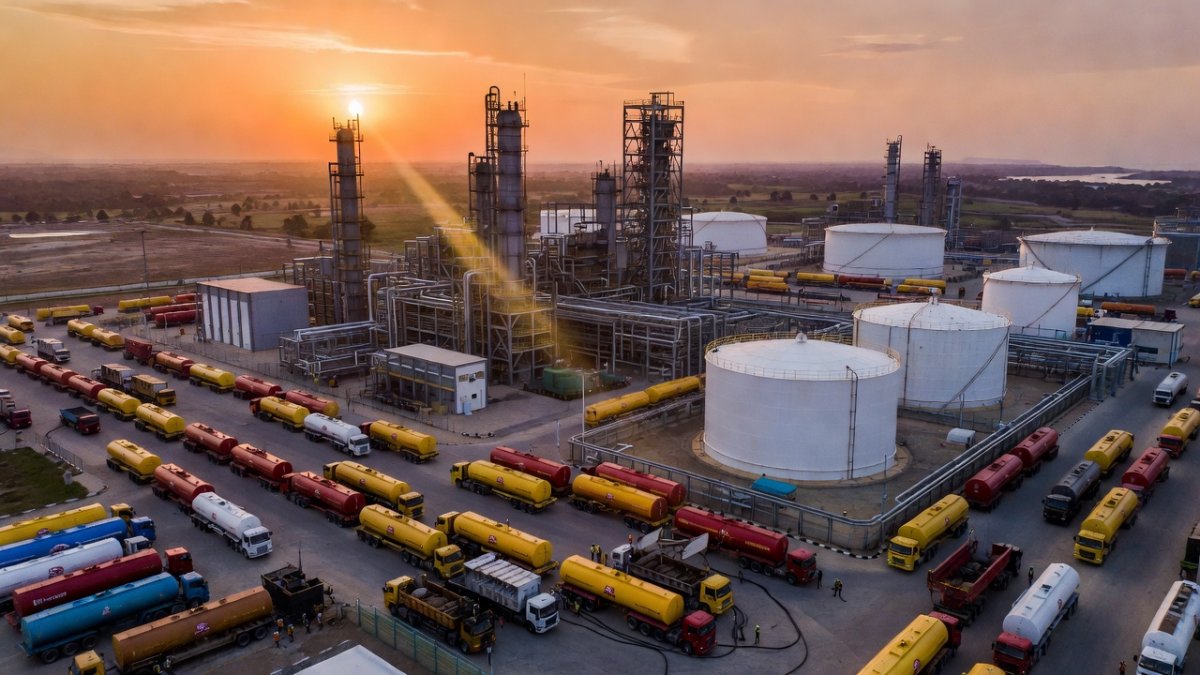
The End of Naira Pricing at Dangote Refinery
In a development that marks a significant shift in Nigeria's energy landscape, Dangote Petroleum Refinery has officially ended naira-denominated pricing for Premium Motor Spirit, commonly known as petrol. The refinery, Africa's largest with a capacity of 650,000 barrels per day, will now sell ex-depot at a fixed rate of $0.779 per litre. This decision, announced on July 3, 2026, effectively ends the brief era of the naira-for-crude policy introduced by the Federal Government on October 1, 2024.
The move comes barely 24 hours after the refinery reduced its ex-depot price by N50 to N1,075 per litre on July 2, marking the fourth price cut in one month. Industry watchers say the transition to dollar pricing reflects the reality of global crude procurement. Dangote Refinery CEO David Bird had earlier stated that the facility purchases Nigerian crude at international benchmark prices, meaning its operations remain tied to dollar-denominated international markets despite operating on Nigerian soil in Lekki, Lagos.
This policy reversal arrives at a time when Nigerians are still grappling with the full effects of petrol subsidy removal in 2023. For many households in Abuja, Lagos, Kano and Port Harcourt, fuel remains the single largest monthly expense after food. The announcement has therefore triggered cautious optimism among some analysts and palpable anxiety among transporters and small business owners who fear that currency volatility could soon translate into higher pump prices.
Dollar Benchmark and the Exchange Rate Factor
At the official exchange rate of N1,380.50 to the dollar published by the Central Bank of Nigeria, the new ex-depot price of $0.779 per litre translates to approximately N1,075.61. However, the price will now fluctuate daily with movements in the foreign exchange market. This introduces a new layer of uncertainty for depot owners, marketers and ultimately consumers.
Dangote has also fixed diesel at $1.087 per litre and Jet A1 at $0.942 per litre. Liquefied Petroleum Gas transactions, however, will continue under the existing naira arrangement for now. The partial nature of this dollarisation suggests the refinery is taking a measured approach while still responding to the harsh economics of importing crude in dollars and the need to maintain operational viability.
CBN Governor Olayemi Cardoso has maintained a tight monetary policy stance in recent months, keeping the Monetary Policy Rate at 27.5 percent in a bid to anchor inflation. Yet the naira continues to face pressure. With Nigeria's inflation rate remaining elevated above 22 percent, fuel prices continue to be a major driver of headline inflation. The decision to price petrol in dollars could therefore complicate the Central Bank's efforts to achieve single-digit inflation in the medium term.
Economists at the Lagos Business School note that this development effectively formalises what many had suspected since the naira-for-crude policy began: that without full deregulation and a truly market-driven exchange rate, local refining alone cannot shield Nigerians from global energy price shocks and currency volatility.
Retail Pump Prices Hold Steady Despite Depot Increments
Despite the shift at the refinery level, retail pump prices at major stations operated by the Nigerian National Petroleum Company Limited, NIGC, AA Rano, MRS and others have remained unchanged for now. In Abuja and its environs, petrol still sells between N1,155 and N1,205 per litre depending on the outlet. This temporary stability offers some relief to motorists in the Federal Capital Territory, but industry sources warn it may not last.
Depot owners have already begun adjusting their prices upward. Ranoil, African Terminal, Pinnacle Energy, Sahara Energy and Integrated Oil have raised ex-depot prices by between N30 and N90 per litre in the last 48 hours. These increments are expected to gradually filter down to independent marketers who source products from these depots.
In Lagos, where most of the country's fuel distribution infrastructure is concentrated, truck owners at Apapa and Oando depots report that loading costs have already increased. "We are watching the situation carefully," said one major transporter who declined to be named. "If the dollar continues to climb against the naira, the current retail prices will become unsustainable within two weeks."
The Nigerian Midstream and Downstream Petroleum Regulatory Authority has not yet issued a formal statement on the development, but insiders say regulators are monitoring the situation closely to prevent opportunistic price gouging by marketers.
Middle East Tensions and the Surge in Global Crude Prices
The timing of Dangote's decision coincides with escalating geopolitical tensions in the Middle East. Global crude oil prices have surged past $92 per barrel following four days of intensified airstrikes involving Iran, the United States and Israel. The Strait of Hormuz, through which nearly 20 percent of global seaborne oil passes, has become a flashpoint once again.
Iran has imposed fresh restrictions on both crude and refined petroleum exports, tightening supply at a time when OPEC+ production cuts are already supporting prices. Brent crude rose as high as $92.80 on July 3, the highest level since April 2025. For a country like Nigeria that still imports a significant portion of its refined products despite having four state-owned refineries that remain largely moribund, these developments carry serious implications.
Energy analysts in Abuja point out that even with Dangote Refinery operating at close to 80 percent capacity, Nigeria's overall fuel supply chain remains vulnerable to international developments. The refinery's ability to meet domestic demand has eased import dependence, but its pricing model is now fully exposed to both crude price volatility and naira depreciation.
This situation mirrors challenges faced by other African oil producers. From Angola to Ghana and even Ivory Coast, refining capacity expansions are being tested by the same global headwinds. The Dangote experience is therefore being watched across the continent as a bellwether for African energy independence ambitions.
IPMAN and Industry Reactions to the Dollar Transition
The Independent Petroleum Marketers Association of Nigeria has called on the Federal Government to intervene urgently to avert a spiral of price hikes. IPMAN President Abubakar Maigandi, speaking from the association's headquarters in Abuja, described the development as "a direct consequence of policy inconsistency" and urged authorities to provide strategic buffers for marketers.
"We supported the naira-for-crude initiative because it promised to stabilise the market," Maigandi said. "Now that we are returning to dollar pricing, the government must ensure that the exchange rate used for petroleum products does not become another avenue for speculation."
Other stakeholders have expressed mixed reactions. While some economists praise the move as an honest reflection of market realities, consumer groups in Kano and Onitsha worry about the ripple effects on transportation costs, food prices and overall cost of living. The Nigeria Labour Congress has also signaled its readiness to engage the government on the matter should pump prices rise significantly.
Minister of Finance and Coordinating Minister of the Economy Wale Edun is expected to chair an emergency meeting with energy sector leaders before the end of this week. Sources close to the presidency say the government remains committed to a fully deregulated downstream sector but will explore options to cushion the impact on the most vulnerable citizens.
Broader Implications for Nigeria and West African Energy Markets
Beyond Nigeria's borders, the development has implications for the wider West African energy market. Landlocked countries such as Niger, Chad, Burkina Faso and Mali rely heavily on fuel imports from Nigeria. Any sustained increase in Nigerian petrol prices will likely trigger similar adjustments in Niamey, N'Djamena and Ouagadougou, where transport unions are already stretched thin.
The Economic Community of West African States has in recent years pushed for greater energy integration. The Dangote Refinery was expected to play a central role in this vision by supplying refined products across the region in naira or through barter arrangements. The return to dollar pricing may slow down these integration efforts, at least in the short term.
From an economic diversification standpoint, the development underscores the limitations of relying on a single mega-refinery to solve structural challenges. While the Dangote project represents a remarkable engineering and financial achievement, its pricing decisions reveal how deeply Nigeria remains integrated into volatile global commodity markets.
Regional competitors are taking note. Ghana's plans to expand the Tema refinery and Ivory Coast's ambitions in Abidjan are now being reviewed through the lens of the Nigerian experience. The lesson appears to be that local refining capacity must be accompanied by sound macroeconomic management and strategic foreign exchange buffers if it is to deliver affordable fuel to citizens.
What This Means for the Future of Fuel Pricing in Nigeria
As Nigeria enters this new phase of fuel pricing, several questions remain unanswered. Will the government allow full pass-through of dollar prices to consumers? Can the Central Bank successfully defend the naira sufficiently to prevent wild swings at the pump? And perhaps most importantly, can Nigerian consumers, already burdened by high inflation, absorb yet another energy price shock?
Longer term, the solution lies in increasing domestic crude production, improving refinery efficiency, and building strategic petroleum reserves that can be deployed during periods of global volatility. The current administration has made commitments in all these areas, but implementation has been uneven.
For ordinary Nigerians, particularly commercial drivers in Lagos traffic, market women in Kano, and civil servants in Abuja, the immediate concern is whether the price of petrol will cross the N1,300 per litre threshold before the end of this quarter. Many families have already adjusted their budgets. Others are simply waiting to see how events unfold.
What is clear is that the era of expecting cheap fuel in an oil-producing nation with a volatile currency is gradually coming to an end. The Dangote Refinery's decision to price in dollars is not merely a commercial choice. It is a reflection of deeper structural realities that Nigeria, like many other African economies, must confront with honesty and creativity.
The coming weeks will test the resilience of both the market and the people. How the Federal Government, the Central Bank, and industry operators navigate this transition will shape not just fuel prices, but the broader trajectory of Nigeria's economic recovery and its leadership role in African energy matters.
By Sarah Okafor, Staff Writer
This article was produced with AI-assisted research and editorial support. Reporting is based on sources cited in the article.
What's Your Reaction?
 Like
0
Like
0
 Dislike
0
Dislike
0
 Love
0
Love
0
 Funny
0
Funny
0
 Wow
0
Wow
0
 Sad
0
Sad
0
 Angry
0
Angry
0

Africa Correspondent at Global1.News. Based in Lagos, covering politics, business, technology, and culture across the continent. Focused on telling African stories beyond the headlines — the innovation, entrepreneurs, and communities shaping the region's future.















Comments (0)