
Carney to attend G7 summit in France as Iran peace deal is 'topic number 1'
Prime Minister Mark Carney arrived in Evian-les-Bains, France, on Monday for the annual G7 summit, one day after U.S. President Donald Trump announced that an agreement had been reached to end the conflict in Iran. The timing places Canada at the centre of discussions on regional stability, global energy routes and the next steps in nuclear diplomacy. Carney, speaking on the ta
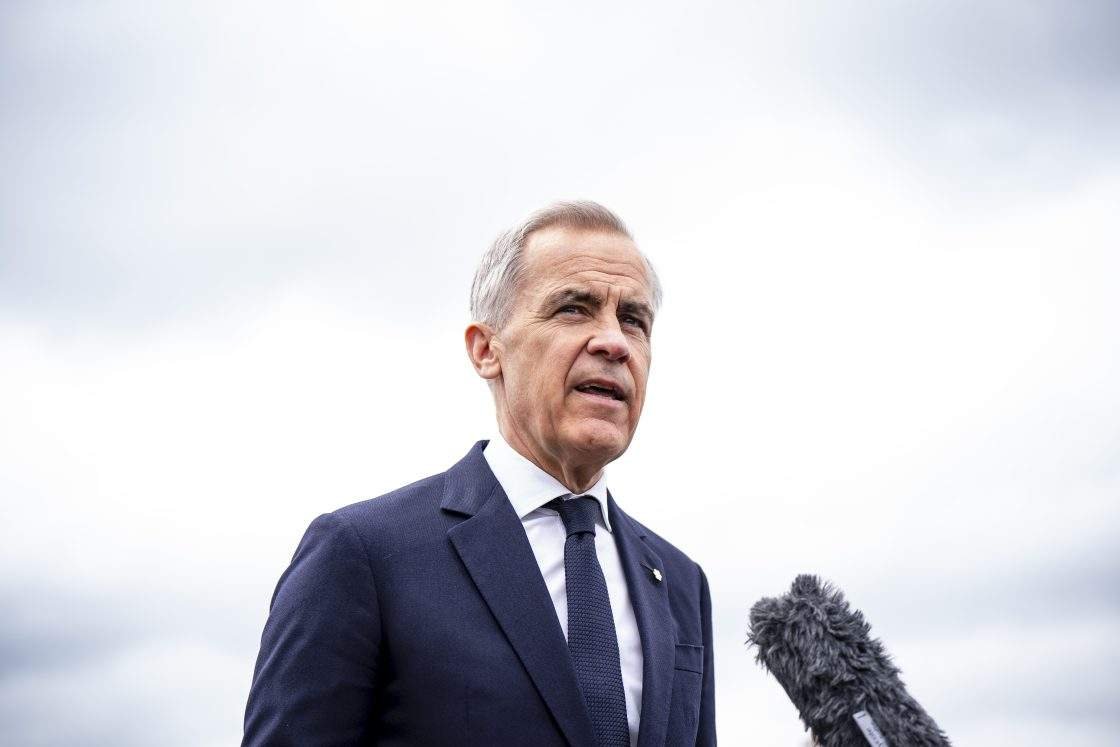
Prime Minister Mark Carney arrived in Evian-les-Bains, France, on Monday for the annual G7 summit, one day after U.S. President Donald Trump announced that an agreement had been reached to end the conflict in Iran. The timing places Canada at the centre of discussions on regional stability, global energy routes and the next steps in nuclear diplomacy.
Carney, speaking on the tarmac before departure, said the summit offers Canada and its partners a chance to reinforce the progress announced by the United States. The leaders of Canada, France, Germany, Italy and the United Kingdom issued a joint statement welcoming the development and stressing the need for rapid implementation.
The Announcement and Immediate Canadian Reaction
Trump stated on Sunday that he had authorised an end to the U.S. blockade in the Strait of Hormuz, though he later clarified that the waterway would not reopen until Friday, when the agreement is formally signed. Carney responded by underscoring Canada’s long-standing position that any durable ceasefire must guarantee safe transit through the strait and address Iran’s nuclear programme.
In a statement posted on social media, the prime minister urged all parties to maintain good-faith dialogue and avoid escalation while negotiations continue. Ottawa has consistently called for verifiable limits on Iran’s nuclear activities and has supported the role of the International Atomic Energy Agency in monitoring compliance.
Joint G7 Statement and Shared Priorities
The five-nation statement released Monday described the announcement as a moment of opportunity to restore regional stability and stabilise the global economy. It called the urgent reopening of the Strait of Hormuz essential and committed the countries to a strictly defensive and independent mission focused on reassuring commercial shipping and conducting mine-clearance operations.
The leaders also reaffirmed that Iran must never acquire a nuclear weapon. They expressed readiness to work with the United States, Iran and the IAEA toward that goal, while signalling willingness to lift relevant sanctions in response to clear, verifiable steps by Tehran on its nuclear programme. Support for Lebanon’s sovereignty and a robust ceasefire was likewise included.
Canada’s Role in Multilateral Diplomacy
Canada’s participation in the G7 reflects its traditional emphasis on collective approaches to international security and economic stability. With the summit taking place under the French presidency of Emmanuel Macron, discussions are expected to avoid a single overarching communique in favour of targeted statements on specific issues.
Carney is scheduled to meet European Council President Antonio Costa and European Commission President Ursula von der Leyen on Monday. A working dinner on geopolitical and economic questions will follow. Ukrainian President Volodymyr Zelenskyy is also attending, ensuring that the war in Ukraine remains on the agenda alongside developments in Iran.
Economic Stakes for Canadian Households and Industry
The Strait of Hormuz carries a significant share of global oil trade. Any prolonged closure raises the risk of higher energy prices that flow through to Canadian consumers via transportation and heating costs. Canadian energy producers, particularly in Alberta and Newfoundland and Labrador, watch such developments closely because price volatility affects investment decisions and government revenues.
Finance officials in Ottawa have noted that even temporary disruptions can influence Bank of Canada interest-rate deliberations. A stable reopening of the strait would therefore ease one source of upward pressure on inflation, supporting households already managing elevated living costs.
Artificial Intelligence and the Emerging World Order
Alongside security questions, Carney has indicated that standards, regulations and responsibility for artificial intelligence will feature in the discussions. France has placed economic imbalances at the centre of the summit theme, and AI governance intersects with both trade and labour-market concerns in Canada.
The prime minister has argued that no single country or institution can provide all the answers in a rapidly shifting world order. He has suggested that Canada must identify its own priorities and pursue them through flexible partnerships, a view that aligns with Ottawa’s approach to both AI safety and child-protection standards online.
Trade Discussions on the Sidelines
While it remains unclear whether Carney will hold a bilateral meeting with Trump during the summit, Canada-U.S. Trade Minister Dominic LeBlanc is set to meet United States Trade Representative Jamieson Greer. The encounter offers an opportunity to address ongoing bilateral trade irritants even as attention focuses on the Iran agreement.
Other invited leaders from Brazil, India, Kenya and South Korea will join the core G7 members, broadening the range of perspectives on global economic governance and supply-chain resilience.
Tags: G7 summit, Mark Carney, Iran nuclear deal, Strait of Hormuz, Canada foreign policy, international relations
By Alex Thompson, Staff Writer
This article was produced with AI-assisted research and editorial support. Reporting is based on sources cited in the article.
What's Your Reaction?
 Like
0
Like
0
 Dislike
0
Dislike
0
 Love
0
Love
0
 Funny
0
Funny
0
 Wow
0
Wow
0
 Sad
0
Sad
0
 Angry
0
Angry
0
Canada Correspondent at Global1.News. Based in Toronto, covering Canadian politics, energy, trade, and US-Canada relations. Provides the Canadian perspective on North American and global affairs.









Comments (0)