
Canada Unveils Plan for Up to 10 New Nuclear Reactors by 2040
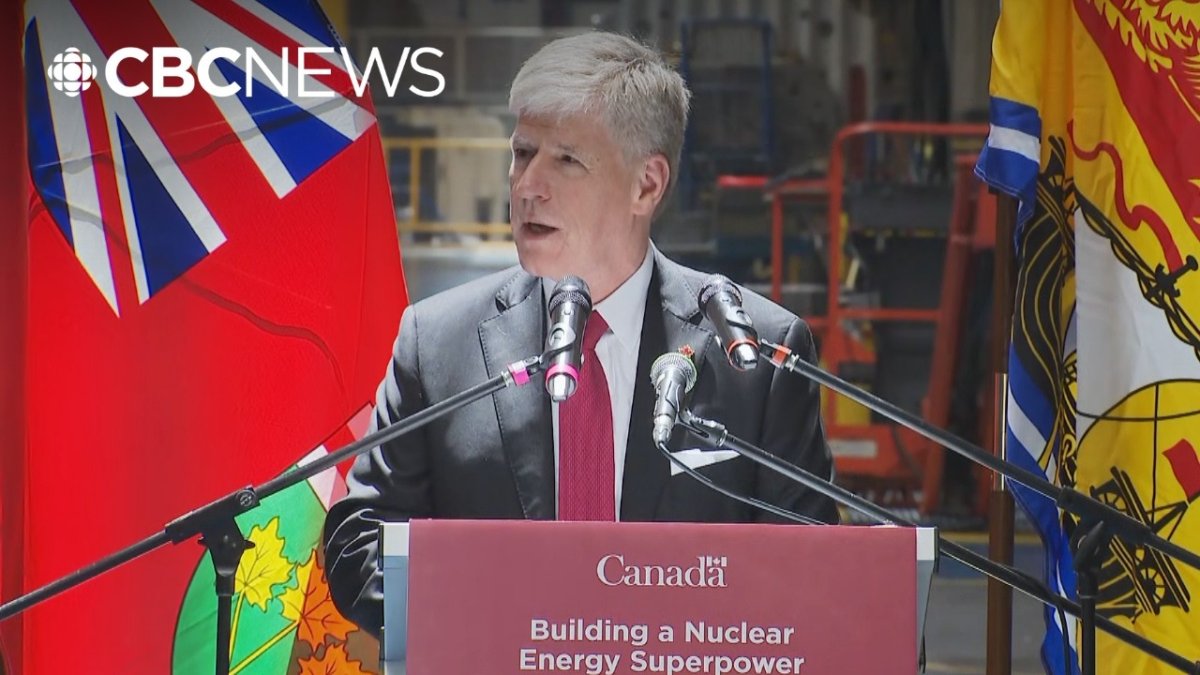
The CBC News YouTube video released this week captures Energy Minister Tim Hodgson standing in Newmarket, Ontario, on Monday, June 22, 2026, as he unveiled Canada's new national nuclear strategy and described it as the start of a civilian nuclear renaissance. Natural Resources Canada officials followed the announcement with a technical briefing that laid out specific constructi
The CBC News YouTube video released this week captures Energy Minister Tim Hodgson standing in Newmarket, Ontario, on Monday, June 22, 2026, as he unveiled Canada's new national nuclear strategy and described it as the start of a civilian nuclear renaissance. Natural Resources Canada officials followed the announcement with a technical briefing that laid out specific construction targets and funding mechanisms. The strategy directly addresses the federal goal of doubling Canada's electricity grid capacity by 2050 while reducing reliance on natural gas peaker plants. Canadian readers in provinces facing rising electricity demand will see immediate relevance in the plan's emphasis on reliable baseload power from nuclear sources.
The Strategy unveiled
Energy Minister Tim Hodgson announced the national nuclear strategy on Monday in Newmarket, Ontario, framing it as essential for meeting Canada's electricity needs without expanding fossil fuel infrastructure. The plan emerged after Natural Resources Canada officials completed months of internal analysis that identified nuclear power as the only scalable option for baseload generation. Hodgson stated explicitly that no credible plan exists to double the national grid by 2050 without nuclear energy. This announcement matters for Canadian households because it ties directly to long-term electricity affordability and industrial competitiveness in manufacturing sectors across Ontario and beyond.
The strategy prioritises both large-scale reactors and smaller designs to serve different regions of the country. Officials confirmed that the Canadian Infrastructure Bank and the Canada Growth Fund will provide the primary financing channels for the more than $100 billion total investment. Provincial governments received advance notice of the targets, though implementation details remain subject to further negotiations. For readers in remote northern communities, the inclusion of microreactor deployment represents a concrete shift from diesel dependence toward cleaner, locally generated power.
Tim Hodgson emphasised that the strategy builds on existing Canadian expertise rather than importing foreign reactor designs as the default option. The announcement occurred against the backdrop of global interest in nuclear expansion, yet the minister focused on domestic job creation and supply chain development. Natural Resources Canada technical staff provided data showing that nuclear currently supplies about 15 percent of Canada's electricity from four operating plants. This measured approach reassures Canadian taxpayers that public funds will support proven technology already operating within national borders.
Timelines and targets
The strategy sets a target of up to 10 new large-scale nuclear reactors operating by 2040, with two reactors required to be under construction by 2035. At least one of those reactors must be located outside Ontario to ensure geographic distribution of new capacity. Five additional reactors are listed as planned or under development by the same 2040 deadline. These concrete milestones give Canadian energy planners specific dates against which to measure progress on grid expansion.
A Canadian-made microreactor must reach final design approval by 2035 and begin deployment to a remote community by the late 2030s. The Darlington small modular reactor project in Ontario remains on track as the first SMR in the G7, with an output of up to 300 megawatts. Saskatchewan has separately committed to exploring its own SMR deployment by the mid-2030s under the terms of the Ottawa-Alberta energy collaboration agreement. Meeting these staggered timelines will require coordinated federal-provincial permitting processes that have historically delayed major infrastructure projects.
Cost estimates prepared by Natural Resources Canada place the total investment above $100 billion, with the Canadian Infrastructure Bank and Canada Growth Fund designated as lead financiers. The timeline also requires at least four new international CANDU export markets secured by 2040. These targets reflect the government's assessment that nuclear must scale rapidly to support industrial electrification across Canadian manufacturing and resource sectors.
Where Canada stands on nuclear today
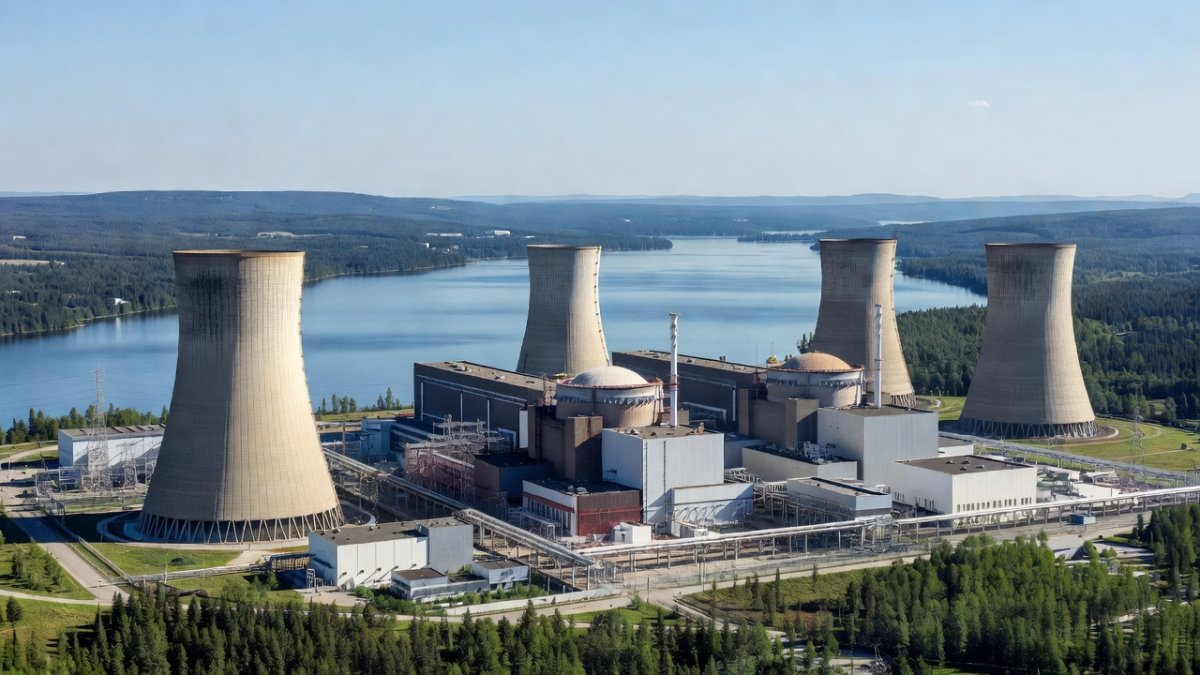
Canada currently operates four nuclear plants that together generate approximately 15 percent of national electricity: three in Ontario at Bruce, Darlington and Pickering, plus the Point Lepreau facility in New Brunswick. These plants have provided reliable baseload power for decades and form the foundation for the new expansion strategy. The Darlington SMR project continues construction as the first grid-scale small modular reactor in the G7, demonstrating Canada's existing technical capability. Canadian readers benefit from this established infrastructure because it already supports thousands of skilled positions in the nuclear supply chain.
Provincial utilities in Ontario and New Brunswick have maintained strong operational records at existing stations, with refurbishment projects at Bruce and Darlington extending plant life and preserving jobs. The strategy explicitly builds on this operational experience rather than starting from a blank slate. Natural Resources Canada data shows that nuclear output has remained stable while other generation sources have fluctuated with weather and fuel prices. This stability matters for Canadian industries that require uninterrupted power to maintain production schedules and export competitiveness.
The four existing plants employ highly trained Canadian workers whose expertise will transfer directly to new construction projects. Point Lepreau in New Brunswick has operated continuously since its return to service, providing a model for how newer reactors could integrate into smaller provincial grids. The strategy document notes that these facilities already contribute to Canada's low-carbon electricity profile without requiring additional natural gas backup during peak demand periods.
Provincial collaboration and grid needs
The federal goal of doubling Canada's electricity grid capacity by 2050 requires new nuclear capacity outside traditional Ontario centres. The strategy mandates at least one reactor under construction outside Ontario by 2035, with Saskatchewan positioned to advance its own SMR plans through the Ottawa-Alberta energy deal. This interprovincial collaboration addresses regional disparities in generation capacity that have left some provinces more dependent on natural gas. Canadian electricity consumers in western provinces stand to gain from reduced price volatility once nuclear baseload is added.
Hodgson stated that nuclear provides the only reliable baseload option capable of supporting industrial electrification without increasing greenhouse gas emissions from gas-fired peaker plants. Provincial governments have begun preliminary discussions on siting and regulatory approvals, though final decisions remain months away. The Canada Growth Fund financing mechanism is designed to reduce risk for private partners participating in these multi-province projects. This coordinated approach matters because fragmented provincial planning has previously slowed major energy infrastructure across Canada.
Grid planners at provincial utilities have modelled scenarios showing that renewables alone cannot meet the 2050 capacity target without substantial nuclear additions. The strategy therefore positions nuclear as a complement to existing hydro and wind resources rather than a replacement. Remote communities currently reliant on diesel generators will see the first microreactor deployments by the late 2030s, directly lowering both emissions and fuel transportation costs. These deployments represent a practical test of smaller reactor technology before wider rollout.
CANDU reactor exports
The strategy sets a target of at least four new international CANDU export markets by 2040 while engaging between six and ten new nuclear entrant countries over the next 15 years. Thirty CANDU reactors currently operate in South Korea, China, India, Argentina, Pakistan and Romania, with two additional units already planned abroad. These existing export relationships provide a proven track record that Canadian negotiators can leverage in new markets. Canadian manufacturers stand to benefit from the supply chain orders that typically accompany CANDU sales.
Natural Resources Canada officials noted that CANDU technology competes directly with other reactor designs in emerging nuclear nations seeking reliable, long-life fuel cycles. The export target aligns with the domestic construction schedule, allowing Canadian firms to maintain skilled workforces between major home projects. Trade promotion efforts will focus on countries that have already expressed interest in Canadian nuclear cooperation agreements. Success in these markets would generate foreign revenue that offsets part of the domestic $100 billion investment.
Existing CANDU operators in Asia and South America continue to provide operational data that improves Canadian designs and training programs. The strategy document highlights that these international relationships also support non-proliferation objectives through Canadian safeguards expertise. For Canadian readers concerned about global emissions, each new CANDU export displaces coal-fired generation in the purchasing country while sustaining high-value employment at home.
Political reactions and ethics
Conservative Leader Pierre Poilievre responded from Vancouver that an announcement alone will not build reactors and that promises are being reported as results. His statement underscores the opposition's view that previous Liberal nuclear commitments have not translated into completed projects on schedule. Poilievre's remarks highlight the political risk that the strategy could face if construction timelines slip beyond the 2035 and 2040 milestones. Canadian voters will judge the plan by whether shovels enter the ground on the first new reactors within the stated deadlines.
Prime Minister Mark Carney did not receive a briefing on the strategy because of an ethics screen related to his former Brookfield holdings, which are now in a blind trust. Brookfield maintains an ownership stake in a competing reactor model, creating the potential conflict that triggered the screen. Natural Resources Canada officials conducted the technical briefing without the Prime Minister's direct involvement to maintain compliance. This procedural step demonstrates how ethics rules shape the flow of information even on major national infrastructure announcements.
The ethics screen has not altered the content of the strategy itself, which was developed by departmental staff using established policy processes. Opposition critics have questioned whether the screen limits the Prime Minister's ability to champion the file publicly. For Canadian taxpayers, the situation illustrates the practical application of conflict-of-interest guidelines to high-stakes energy decisions involving billions in public funds.
Economic and employment impact
The strategy projects that nuclear expansion will double the current 90,000 nuclear-related jobs over the coming decades through direct construction, supply chain and operations roles. These positions span engineering, skilled trades and regulatory oversight, many of which are already concentrated in Ontario but will expand to other provinces. The Canadian Infrastructure Bank financing structure is intended to attract additional private capital that multiplies the employment effect. Canadian workers in the nuclear sector gain long-term career visibility from the multi-decade construction pipeline.
More than $100 billion in investment will flow through domestic contractors for reactor components, civil works and specialised equipment. The Canada Growth Fund component reduces financing costs for projects that might otherwise face private-sector risk premiums. Provincial economies in New Brunswick and Saskatchewan stand to capture portions of this spending once reactors outside Ontario reach the construction phase. This geographic spread addresses long-standing concerns that federal energy investments disproportionately benefit central Canada.
Industrial electrification enabled by new nuclear capacity supports manufacturing and resource processing sectors that employ hundreds of thousands of Canadians. Reduced reliance on natural gas peaker plants also limits exposure to international fuel price swings that have affected electricity rates in recent years. The export component of the strategy adds another layer of economic activity through technology sales and ongoing service contracts with foreign operators.
What happens next
Natural Resources Canada will now begin formal consultations with provincial governments on reactor siting and regulatory timelines for the first two units required by 2035. The Canadian Infrastructure Bank has initiated project evaluation processes to identify financing structures that meet both the cost target and the geographic distribution requirement. Technical work on the Canadian-made microreactor design will accelerate to meet the 2035 finalisation deadline. These immediate next steps determine whether the 2040 targets remain achievable.
Parliamentary committees are expected to hold hearings on the strategy within the coming months, giving opposition members an opportunity to examine cost assumptions and risk allocation. Provincial utilities will update their integrated resource plans to incorporate the new federal targets. International trade negotiations for additional CANDU markets will proceed in parallel with domestic construction planning. Canadian readers can track progress through regular Natural Resources Canada updates on milestone achievement.
The strategy document itself will serve as the baseline against which future governments measure delivery. Any delays in permitting or financing will directly affect the 2035 construction start requirement. Successful execution would position Canada as a leader in both domestic grid decarbonisation and nuclear technology exports. The coming year will reveal whether the announced renaissance translates into concrete project approvals.
By Alex Thompson, Staff WriterThis article was produced with AI-assisted research and editorial support. Reporting is based on sources cited in the article.
What's Your Reaction?
 Like
0
Like
0
 Dislike
0
Dislike
0
 Love
0
Love
0
 Funny
0
Funny
0
 Wow
0
Wow
0
 Sad
0
Sad
0
 Angry
0
Angry
0

Canada Correspondent at Global1.News. Based in Toronto, covering Canadian politics, energy, trade, and US-Canada relations. Provides the Canadian perspective on North American and global affairs.















Comments (0)