
Brazil Amazon Drought: Historic Record Lows Leave 600,000 Stranded as 2026 Super El Niño Threatens
Keywords: Amazon drought, Brazil 2026 El Niño, climate change Amazon, Manaus river levels, Amazon basin crisis, ribeirinhos impact, botos deaths, IBAMA enforcement, WWA attribution, NOAA El Niño forecast, Latin America drought, deforestation rainfall, hydroelectric plants Brazil, Amazonas emergency, Global1.News The riverside communities of Amazonas state are facing unimaginabl
Brazil Amazon Drought Intensifies as 2026 Super El Niño Threatens Catastrophic Repeat
Manaus, Amazonas – Brazil, June 2026 — In the bustling capital of Manaus, home to two million residents, the mighty Amazon River has dropped to levels unseen since 1902, stranding hundreds of thousands of ribeirinhos and Indigenous families who depend on the waterway as their sole lifeline. With 60 cities in Amazonas state under emergency declarations tracked by the Amazonas Civil Defense agency, the crisis has already closed or rendered inaccessible more than 1,700 schools and 760 medical clinics, while 200 Amazon river dolphins perished in overheated Lake Tefé. As NOAA confirmed El Niño conditions on June 11, 2026, experts warn this developing Super El Niño could eclipse the 2015 drought that triggered a 36 percent surge in wildfires, placing 30 million people across the Amazon basin nations of Brazil, Peru, Colombia, Venezuela, Ecuador, and Bolivia at even greater risk.
The Human Toll in the Heart of the Amazon
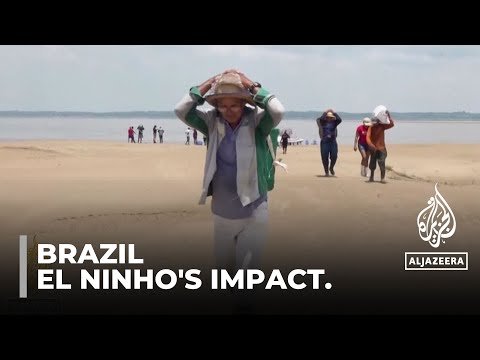
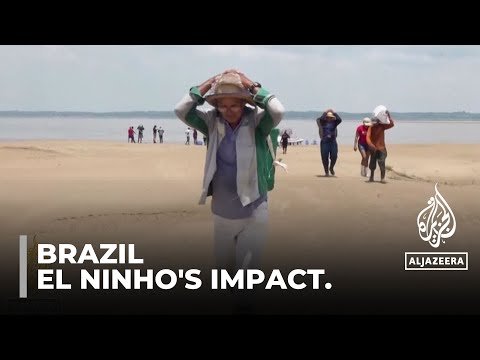
The scale of suffering in Amazonas state is staggering, with more than 600,000 people—equivalent to 150,000 families—directly affected by the historic drought, according to figures compiled by the Amazonas Civil Defense agency. These communities, primarily ribeirinhos living along riverbanks and Indigenous groups whose territories span vast stretches of rainforest, have seen their daily existence upended as rivers that serve as the only roads in the Amazon become impassable. In Manaus alone, the capital with a population of two million, residents watch helplessly as the Rio Negro reaches an all-time low, cutting off supplies and isolating entire villages. The crisis extends beyond Brazil’s borders, with the Paraguay River also hitting record lows that impact neighboring Paraguay and Argentina, highlighting how this single drought event reverberates across Latin America. Families once reliant on fishing and small-scale agriculture now face acute food insecurity, while the lack of navigable waterways prevents timely delivery of medicine and fuel. IBAMA, Brazil’s environmental enforcement agency, has struggled to reach remote areas due to the same low water levels hampering enforcement operations. The human angle is heartbreaking: children miss months of schooling, elders cannot access clinics, and entire communities feel abandoned by the outside world. This is not merely an environmental story but a profound social emergency affecting the most vulnerable populations in the region, where poverty rates already exceed national averages and adaptive capacity remains limited.
Rivers at Historic Lows: A Basin in Distress
Nowhere is the drought’s severity more evident than in the unprecedented drops recorded across multiple Amazonian rivers. The Amazon River near Manaus has reached its lowest level in 121 years, since records began in 1902, while the Rio Negro has plunged to an all-time low at the same monitoring station. In Tabatinga, the Solimoes River sits 4.25 meters below its long-term average, and in Tefé the same river is 2.92 meters below normal. Further south, the Madeira River at Porto Velho has dwindled to just 48 centimeters in depth compared with an average of 3.32 meters, rendering large cargo vessels useless. These measurements, collected by Brazilian hydrological services, paint a picture of systemic hydrological collapse. The Paraguay River’s simultaneous record low extends the crisis into the southern cone, affecting navigation and agriculture in Paraguay and Argentina. With 30 million people living across the entire Amazon basin spanning six countries, the interconnected river system means that disruptions in one nation quickly cascade to others. Deforestation has compounded the problem by disrupting the Amazon’s ability to produce its own rainfall, creating a feedback loop that intensifies dry conditions. Latin American governments are now confronting the reality that these record lows are no longer anomalies but the new baseline under accelerating climate change.
Disrupted Lives: Schools, Clinics, and Energy Security
The closure or inaccessibility of more than 1,700 schools and 760 medical clinics has severed essential services for tens of thousands of children and patients across Amazonas state. Because rivers function as the primary transportation arteries, low water levels have isolated communities that lack any road connections, turning routine medical evacuations into impossible logistical challenges. Brazil’s hydroelectric plants, which supply the majority of the nation’s electricity, are operating at reduced capacity due to diminished river flows, raising the specter of blackouts that could further strain already fragile health systems. IBAMA agents report difficulty patrolling vast territories, allowing illegal activities to proliferate while enforcement resources are stretched thin. The Amazonas Civil Defense agency continues to track the 600,000 affected residents, coordinating limited relief that often arrives by air or small boats navigating treacherous shallows. For ribeirinhos families, the absence of river transport means lost income and heightened food prices. Indigenous territories face similar isolation, threatening cultural practices tied to seasonal river cycles. Across Latin America, similar infrastructure vulnerabilities are emerging as neighboring countries experience parallel river declines, underscoring the need for regional cooperation on energy and emergency response planning.
Ecological Catastrophe: Dolphins and Extreme Heat
The ecological toll has been devastating, with more than 200 Amazon river dolphins, known locally as botos, dying in Lake Tefé alone after water temperatures soared to 38°C (100°F). This extreme heating, far above historical norms, created lethal conditions for aquatic life already stressed by low oxygen levels. The same phenomenon threatens fish stocks that sustain both human communities and larger predators throughout the basin. The Paraguay River’s record low further signals that the crisis is not confined to northern tributaries but affects the entire South American hydrological network. Scientists note that such temperature spikes are consistent with climate change projections for the region, where reduced rainfall and higher evaporation rates concentrate heat in shrinking water bodies. The loss of 200 botos represents not only a biodiversity tragedy but also a cultural blow, as these animals hold significance in local folklore and serve as indicators of ecosystem health. With 30 million people depending on the basin’s resources, the ripple effects on fisheries and tourism could last years. IBAMA has mobilized emergency response teams, yet the scale of mortality suggests deeper systemic damage that enforcement alone cannot reverse.
Climate Change as the Primary Driver
According to the World Weather Attribution analysis published in January 2024, climate change—not El Niño—was the main driver behind this drought, making such events 30 times more likely than in the pre-industrial era. The study examined rainfall deficits across the Amazon basin and concluded that human-induced warming dramatically increased the probability and intensity of the observed conditions. While El Niño can exacerbate dryness in the northern Amazon, the foundational shift is attributable to rising global temperatures that alter atmospheric circulation patterns. This finding carries profound implications for the 30 million residents of Brazil, Peru, Colombia, Venezuela, Ecuador, and Bolivia who inhabit the basin. Deforestation, which disrupts the Amazon’s self-generated rainfall cycle, acts as an additional stressor that WWA researchers identified as amplifying the climate signal. Latin American nations now face the urgent task of integrating these attribution results into national adaptation plans. IBAMA’s enforcement efforts against illegal logging have gained renewed importance as preserving forest cover becomes a direct climate mitigation strategy. The data leave little doubt that without rapid emissions reductions, future droughts will grow even more severe regardless of natural variability.
The 2026 El Niño: A Super Threat on the Horizon
NOAA’s confirmation of El Niño conditions on June 11, 2026, has triggered alarm across the scientific community, with models indicating the phenomenon will strengthen through the Northern Hemisphere winter of 2026-27. Historical precedent shows that El Niño enhances drought across the northern Amazon, and experts fear the current event could surpass the 2015 episode, during which wildfires increased by 36 percent. Brazil already witnessed fire surges of 980 percent during previous drought periods, a statistic that foreshadows potential catastrophe if the 2026 El Niño intensifies. The combination of background climate change—already making droughts 30 times more likely—and this developing Super El Niño creates a dangerous multiplier effect. APIAM, the Amazon research consortium, warns that river levels could drop even further, compounding the existing crisis that has already killed 200 botos and closed hundreds of schools and clinics. Regional governments must prepare for heightened wildfire risk, energy shortfalls, and humanitarian needs affecting millions. Coordinated action through IBAMA and civil defense agencies will be essential to mitigate what could become the most severe Amazon drought on record.
The Bottom Line — What Comes Next
The convergence of record river lows, mass wildlife mortality, and infrastructure collapse demands immediate regional solidarity and long-term structural change. With NOAA projecting a strengthening 2026 El Niño and WWA confirming climate change as the dominant driver, Latin American policymakers must accelerate both adaptation investments and emissions reductions. Protecting remaining forest cover through strengthened IBAMA enforcement offers one of the few levers available to restore rainfall patterns. International support for Amazon basin countries is critical, as the 30 million residents cannot shoulder this burden alone. Early warning systems, expanded aerial relief capacity, and diversified energy sources beyond vulnerable hydroelectric plants are urgent priorities. The 600,000 people already affected in Amazonas serve as a stark reminder that climate impacts are no longer future threats but present realities. Without decisive action, the 2026 Super El Niño could push the Amazon past irreversible tipping points, with consequences felt far beyond Latin America’s borders. The time for incremental responses has passed; bold, coordinated leadership is now essential to safeguard the world’s largest rainforest and the communities that call it home.
By Elena Vasquez, Staff Writer
This article was produced with AI-assisted research and editorial support. Reporting is based on sources cited in the article.
What's Your Reaction?
 Like
0
Like
0
 Dislike
0
Dislike
0
 Love
0
Love
0
 Funny
0
Funny
0
 Wow
0
Wow
0
 Sad
0
Sad
0
 Angry
0
Angry
0

Latin America Correspondent at Global1.News. Based in Mexico City, covering politics, economics, energy, and culture across the region. Brings an on-the-ground perspective to stories spanning from the Rio Grande to Patagonia.













Comments (0)