
Bolivia Declares State of Emergency as 50-Day Blockade Crisis Paralyzes Economy
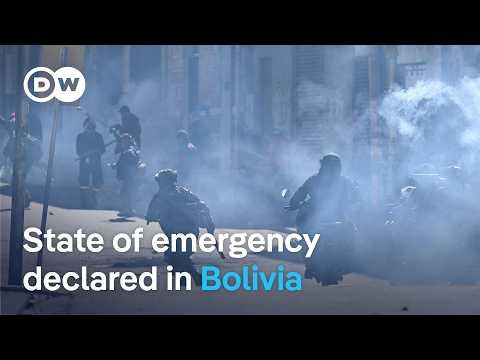
In a recent DW News report, Bolivia's president Rodrigo Paz declared a state of emergency on Saturday, June 20, 2026, after 50 days of anti-government protests and road blockades brought the economy to a halt. The measure gives Paz broader constitutional tools to restore order, including the option of deploying the armed forces to clear barricades that have severed supply lines
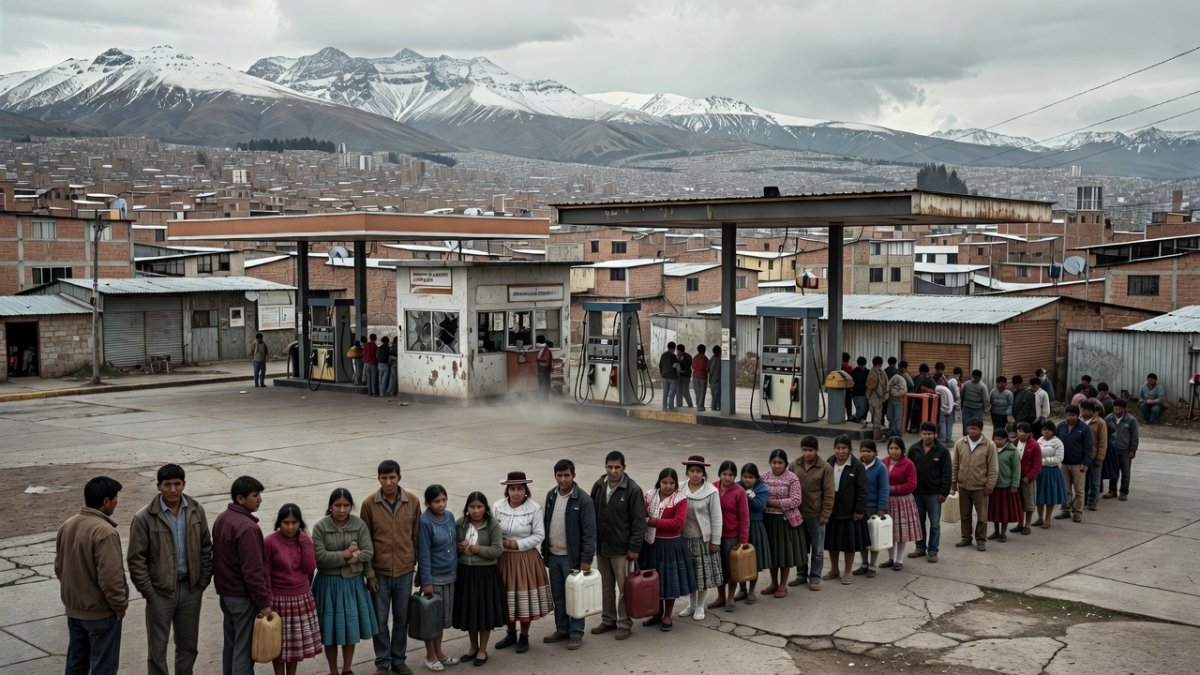
In a recent DW News report, Bolivia's president Rodrigo Paz declared a state of emergency on Saturday, June 20, 2026, after 50 days of anti-government protests and road blockades brought the economy to a halt. The measure gives Paz broader constitutional tools to restore order, including the option of deploying the armed forces to clear barricades that have severed supply lines across the country. For Mexican readers, the images from La Paz — long lines at empty gas stations, idled trucks, and families unable to access food and medicine — carry an uncomfortable familiarity with Mexico's own history of fuel subsidy protests.
Bolivia's State of Emergency Exposes Deep Divisions as Paz Government Confronts Nationwide Blockades
La Paz, Bolivia — June 21, 2026
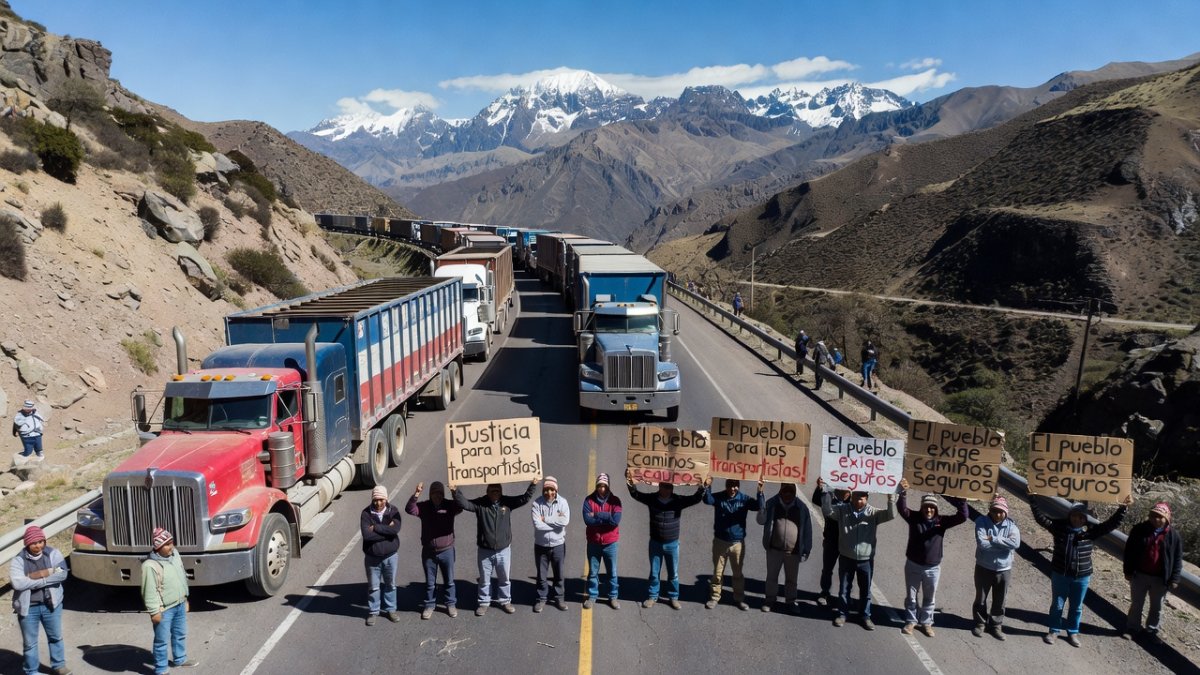
Bolivia's Emergency Declaration Draws Global Attention
The DW News report captured scenes of empty shelves in La Paz markets and families waiting hours outside closed pharmacies on June 20, 2026. President Rodrigo Paz invoked the state of emergency to authorize military intervention on remaining roadblocks after talks with unions stalled. This decision directly affects supply routes linking the capital to the departments of Cochabamba and Santa Cruz, where agricultural goods normally flow daily to urban centers.
Mexican viewers recognize these pressures because similar shortages occurred during the 2017 gasolinazo when Pemex price adjustments triggered blockades on federal highways in states such as Puebla and Guerrero. The Bolivian measure now places the armed forces under constitutional authority to reopen the highways that connect Huanuni mining districts to processing plants in Oruro.
How the Crisis Began — Fuel Subsidy Removal
Protests erupted in early May 2026 immediately after President Rodrigo Paz eliminated the two-decade-old fuel subsidies that had kept gasoline prices below regional averages since the era of Evo Morales. The Christian Democratic Party candidate had campaigned on fiscal responsibility after taking office in October 2025 with 54.5 percent of the vote. Within days, pump prices rose sharply, prompting the Bolivian Workers' Confederation to call for nationwide mobilizations.
Miners from the Huanuni cooperative, teachers affiliated with the urban education unions, and cocaleros from the Yungas region joined transport workers in setting up barricades on the main La Paz-Oruro highway. These actions severed fuel deliveries to El Alto and Cochabamba, where residents reported gas stations running dry by May 15, 2026. The policy shift ended subsidies that had shielded low-income households for twenty years under the Movement for Socialism administrations.
Human Impact on Bolivian Families and Communities
In El Alto, market vendors who normally purchase produce from Santa Cruz wholesalers found their stalls empty by the third week of May 2026. Mothers reported traveling on foot to distant clinics because medicine shipments could not pass the blockades near the Desaguadero border crossing with Peru. At least ten people have died and hundreds have been arrested since the protests began, according to official tallies released on June 18, 2026.
These hardships mirror the experiences of Mexican families during the 2017 fuel protests when communities in the state of Mexico organized soup kitchens after Pemex deliveries stopped. Bolivian households now face parallel choices between buying scarce cooking gas or paying rising bus fares to reach workplaces in the administrative center of La Paz.
The COB Union's Role and the Friday Agreement
The Bolivian Workers' Confederation led negotiations that produced a signed accord on Friday, June 19, 2026, inside the government palace in La Paz. President Paz described the document as "a ray of hope for all Bolivians" after the COB agreed to lift several blockades in exchange for targeted price relief measures. Union leaders from the mining and transport sectors attended the ceremony alongside representatives from the Huanuni cooperative.
Despite the agreement, roadblocks persisted in rural areas near the Cochabamba-Santa Cruz corridor, prompting the emergency declaration the following day. The COB maintains that its members will monitor compliance with the new fuel pricing formulas while continuing to represent teachers and cocaleros who still demand broader subsidy restoration.
Political Context — Paz's Rise and MAS Decline
Rodrigo Paz assumed the presidency in October 2025 after defeating the Movement for Socialism candidate, ending eighteen years of uninterrupted MAS governance that began under Evo Morales in 2006 and continued under Luis Arce. The Christian Democratic Party platform emphasized market reforms and closer ties with international financial institutions. Former president Evo Morales has remained in exile, issuing statements from Argentina that criticize the subsidy cuts while avoiding direct calls for renewed mobilization.
The shift in power altered the balance inside the Plurinational Legislative Assembly, where MAS legislators now form the opposition. Paz's administration has cited depleted natural gas fields in Tarija as justification for ending subsidies that the previous government could no longer sustain. This political transition directly influences how security forces respond to the current blockades.
Comparison to Mexico's Own Fuel Protest History
Mexico experienced comparable unrest in January 2017 when the Enrique Peña Nieto administration raised gasoline prices under the Pemex liberalization program. Demonstrations spread from the Valle de Mexico to highways in Michoacan and Oaxaca, resulting in dozens of arrests and temporary closures of the Mexico City-Puebla corridor. Mexican labor federations such as the CTM played roles similar to those now held by the COB in Bolivia.
Both episodes reveal how sudden energy price adjustments strain communities that depend on affordable transport for agricultural and informal commerce. Mexican analysts note that the 2017 protests accelerated public support for later energy sovereignty policies under Andres Manuel Lopez Obrador, a dynamic that Bolivian opposition figures now reference when discussing potential political realignments.
International Reaction and US Backing
The Trump administration issued a statement on June 20, 2026, expressing support for President Paz's efforts to restore order and reopen commercial routes. U.S. officials described Paz as a pro-business leader whose reforms align with regional investment goals. This backing contrasts with the more cautious stance taken by the Organization of American States, which called for dialogue without endorsing military deployment.
Regional bodies including the Andean Community have offered mediation, while Brazil and Argentina monitor the impact on cross-border trade through the Puerto Suarez corridor. Mexican diplomats at the United Nations have followed the situation closely because of shared concerns over energy policy stability across Latin America.
Economic Dimensions — Bolivia's Resource Curse
Bolivia's economy expanded rapidly during the 2000s and early 2010s on the strength of high natural gas prices exported through pipelines to Brazil and Argentina. Depletion of major fields in the Chaco region reduced export revenues, forcing the Paz government to confront fiscal deficits that subsidies had previously masked. The central bank in La Paz reported declining foreign reserves by early 2026.
These structural pressures affect everyday workers in the informal markets of Santa Cruz and the mining centers of Potosi. Families who once benefited from stable fuel costs now allocate larger portions of household income to transportation, reducing spending on education and health services provided through the public system.
What Comes Next — Will the Emergency Hold?
The state of emergency authorizes the armed forces to clear remaining barricades on the principal highways linking La Paz with the eastern lowlands. Military units began operations on Sunday, June 21, 2026, near the town of Caracollo, where transport workers had maintained positions since mid-May. Government spokespeople stated that the measure will remain in place until supply chains normalize.
Opposition legislators in the Plurinational Legislative Assembly have announced plans to challenge the decree's scope, while the COB leadership has scheduled further meetings with Paz advisers. The coming weeks will determine whether the Friday agreement can prevent escalation or whether additional protests will test the limits of the emergency powers.
Implications for Mexico and Latin America
Mexican policymakers examining the Bolivian situation see direct parallels with ongoing debates over Pemex subsidies and electricity tariffs managed by the Comision Federal de Electricidad. Communities in states such as Hidalgo and Veracruz that rely on affordable fuel for agricultural transport face similar vulnerabilities if price supports are reduced without adequate transition programs.
The crisis underscores the need for regional coordination on energy security through institutions such as the Latin American Energy Organization. Mexican civil society groups have already begun sharing organizing strategies with Bolivian counterparts, highlighting how fuel policy decisions reverberate through families and local economies across the hemisphere.
By Rosa Martinez, Staff Writer
This article was produced with AI-assisted research and editorial support. Reporting is based on sources cited in the article.
What's Your Reaction?
 Like
0
Like
0
 Dislike
0
Dislike
0
 Love
0
Love
0
 Funny
0
Funny
0
 Wow
0
Wow
0
 Sad
0
Sad
0
 Angry
0
Angry
0
Latin America/Andes Correspondent at Global1.News. Based in Bogota, covering politics, environment, energy, and social movements across the Andean region. Passionate about environmental journalism and communities protecting their land.












Comments (0)