
Belfast Pogrom: Far-Right Mobs Torch Immigrant Homes, Police Deploy Water Cannons
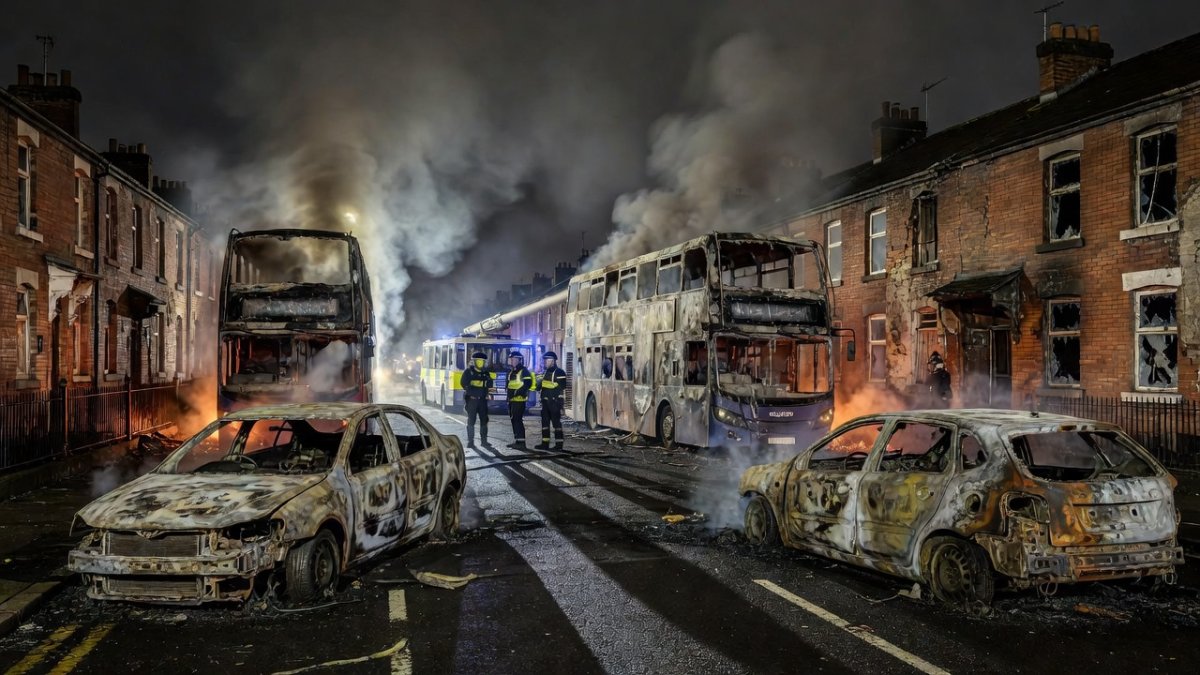
Belfast Ignites: A Pogrom in the Streets Folks, listen close. On the nights of June 10 and 11, 2026, East Belfast turned into a war zone where far-right mobs hunted immigrant families like prey. Cars exploded into fireballs. Buses were reduced to charred skeletons. Sudanese, Syrian, and Eastern European households were dragged from their homes and forced to run for their lives.
Belfast Ignites: A Pogrom in the Streets
Folks, listen close. On the nights of June 10 and 11, 2026, East Belfast turned into a war zone where far-right mobs hunted immigrant families like prey. Cars exploded into fireballs. Buses were reduced to charred skeletons. Sudanese, Syrian, and Eastern European households were dragged from their homes and forced to run for their lives. This wasn’t random unrest. This was a coordinated pogrom, plain and simple. Water cannons roared back into service for the first time in years while families huddled in community centers, clutching what little they could carry. The world watched in real time as The New York Times splashed it across the front page and CBS News went live from the barricades. I’m telling you straight: this is what happens when encrypted apps, viral lies, and political opportunists light the match. The damage won’t be undone with press releases. It’s going to take years to rebuild any shred of trust.
The Spark That Lit the Fuse
Everything started with a knife attack on June 9 in North Belfast. A Sudanese refugee, already under stress from the asylum system, stabbed two locals during a street confrontation. The details were grim, but the facts got twisted within hours. CBS News reported that Tommy Robinson, real name Stephen Yaxley-Lennon, immediately circulated edited video clips across Telegram and X, claiming the attacker was part of a larger “invasion.” Robinson’s posts racked up millions of views by midnight, urging followers to “defend our streets.” The original police statement made clear the incident was isolated, yet Robinson’s network framed it as proof that all refugees were a threat. By morning of June 10, far-right accounts were posting maps of immigrant addresses in East Belfast. That single attack became the pretext. The refugee in question was later charged, but the damage from the misinformation was already done. Robinson didn’t just share the story—he weaponized it.
East Belfast Under Siege
By dusk on June 10 the mobs arrived in East Belfast. AP photographer Peter Morrison captured the chaos from the front lines: masked men smashing car windows, pouring petrol, then stepping back to film the flames. Buses on the Newtownards Road were torched where they stood, passengers scrambling out the emergency exits. Immigrant families—many of them long-term residents with jobs and kids in local schools—were pulled from houses while neighbors either filmed or looked away. Morrison’s photos showed women carrying infants down alleyways while flames lit the sky behind them. One family told Reuters they had five minutes to grab passports before their front door was kicked in. The violence wasn’t spread evenly; it targeted specific streets where asylum housing was concentrated. By 2 a.m. the first water cannons appeared, but the damage was already widespread. Peter Morrison later told colleagues he’d never seen anything like it in Northern Ireland—not even during the worst of the Troubles.
Water Cannons Return to the Streets
Northern Ireland police hadn’t deployed water cannon since 2013. On June 10 they brought them out again, blasting high-pressure jets at crowds trying to reach more immigrant homes. The vehicles rumbled through narrow streets, officers in full riot gear behind the shields. Footage from Al Jazeera showed the cannons knocking people off their feet while fires still burned in the background. Police said the decision came after multiple officers were injured by bricks and petrol bombs. Locals described the sound as a freight train bearing down on them. The deployment marked a serious escalation in policing tactics and drew immediate criticism from human rights groups who argued the cannons were being used against residents in their own neighborhoods. Yet without them, officers admitted later, the mobs would have reached several more streets that night. The machines bought time, nothing more.
The Second Night of Fire
June 11 brought no calm. Mobs regrouped, larger this time, and hit different pockets of East Belfast. More vehicles burned. Families who had stayed in their homes the first night now fled to community centers that had opened as emergency shelters. BBC reporters on the ground described scenes of children sleeping on gym mats while parents stared at phones waiting for news of missing relatives. One center took in over 200 people by midnight. Police formed cordons but the crowds simply moved to side streets. Fires were set in bins and abandoned cars to create distractions. By morning the tally included at least 18 vehicles destroyed and more than 40 families displaced. The community centers became the only safe ground left for many. Aid workers handed out blankets and charged phones while outside the sirens kept wailing.
Why the Word “Pogrom” Fits
Call it what it was. Britannica and Wikipedia both define a pogrom as a violent riot aimed at an ethnic or religious minority, often with the intent to drive them out. That’s exactly what unfolded in East Belfast. The New York Times, Al Jazeera, and The Guardian all used the term in their coverage because the pattern matched: targeted attacks on specific minority communities, coordinated through social media, and aimed at expulsion rather than random crime. This wasn’t protest against policy. This was collective punishment of families based on where they came from. The word carries weight because it describes organized communal violence, not mere hooliganism. When reporters saw families forced from their homes at night while their belongings burned, the historical label became unavoidable. Other terms felt too soft for what actually happened.
Global Outrage and Official Condemnation
The UK government and Northern Ireland officials issued swift condemnations. Prime Minister’s office called the violence “utterly unacceptable” and promised extra resources for policing. World media descended fast. The New York Times ran front-page photos the next morning. CBS News broadcast live from the water cannon lines. Reuters and AP pushed images and video to outlets across Europe, Asia, and the Americas. Al Jazeera’s headline on June 11 read: “Police in Belfast use water cannon as anti-immigrant unrest continues.” The Guardian documented the bin fires and street battles from the first night onward. International governments expressed concern about rising far-right activity in the UK. The coverage made clear this was no local flare-up—it was a warning sign watched from capitals around the world.
The Deeper Rot Behind the Flames
Far-right networks in the UK have been growing for years, fueled by encrypted apps that let organizers coordinate without easy detection. Tommy Robinson’s role was central: he didn’t need to be physically present to direct the energy. His video shares turned a single stabbing into a call to arms. Immigration politics provided the tinder—years of heated debate over asylum numbers, housing shortages, and integration failures. The Belfast attacks showed how quickly online agitation can become street-level violence when local grievances are exploited. Police later confirmed they were monitoring several Telegram channels that had posted addresses and times. This wasn’t spontaneous anger. It was planned. The same pattern has appeared in other UK cities, but Belfast’s history of sectarian division made the explosion especially dangerous.
Families Shattered, Trust in Ruins
Dozens of families remain displaced weeks later. Some are staying with distant relatives; others are in temporary housing provided by local councils. Trust between communities has cratered. Neighbors who once said hello now cross the street. Local aid groups—churches, refugee charities, and volunteer networks—are working overtime to deliver food, legal help, and trauma support. One organization reported running out of basic supplies within 48 hours. The psychological damage is harder to measure. Children who witnessed the fires are having nightmares. Parents are afraid to send kids to school. Rebuilding that sense of safety will take far longer than putting out the last flames.
What You Can Do Right Now
Folks, this isn’t the time for passive scrolling. Contact your representatives and demand they fund protection for at-risk communities and crack down on organized incitement on encrypted platforms. Support Belfast aid groups directly—organizations like the Northern Ireland Refugee Centre and local church relief funds are still accepting donations for housing, food, and counseling. Share only verified reporting from AP, Reuters, The New York Times, and the BBC instead of unconfirmed clips. If you’re in the UK, volunteer with groups doing integration work. Silence helps the next mob form. Action starves it. The families in those community centers are counting on people who refuse to look away.
By Jessica Ali, Staff Writer
This article was produced with AI-assisted research and editorial support. Reporting is based on sources cited in the article.
What's Your Reaction?
 Like
0
Like
0
 Dislike
0
Dislike
0
 Love
0
Love
0
 Funny
0
Funny
0
 Wow
0
Wow
0
 Sad
0
Sad
0
 Angry
0
Angry
0

Editor-in-Chief at Global1.News. Atlanta-based journalist who cuts through the BS and tells it like it is. Lead anchor, host, and the voice you hear when the spin stops and the truth starts.










Comments (0)