
One Dead as Century-Old Shophouse Collapses Near Wat Traimit in Bangkok
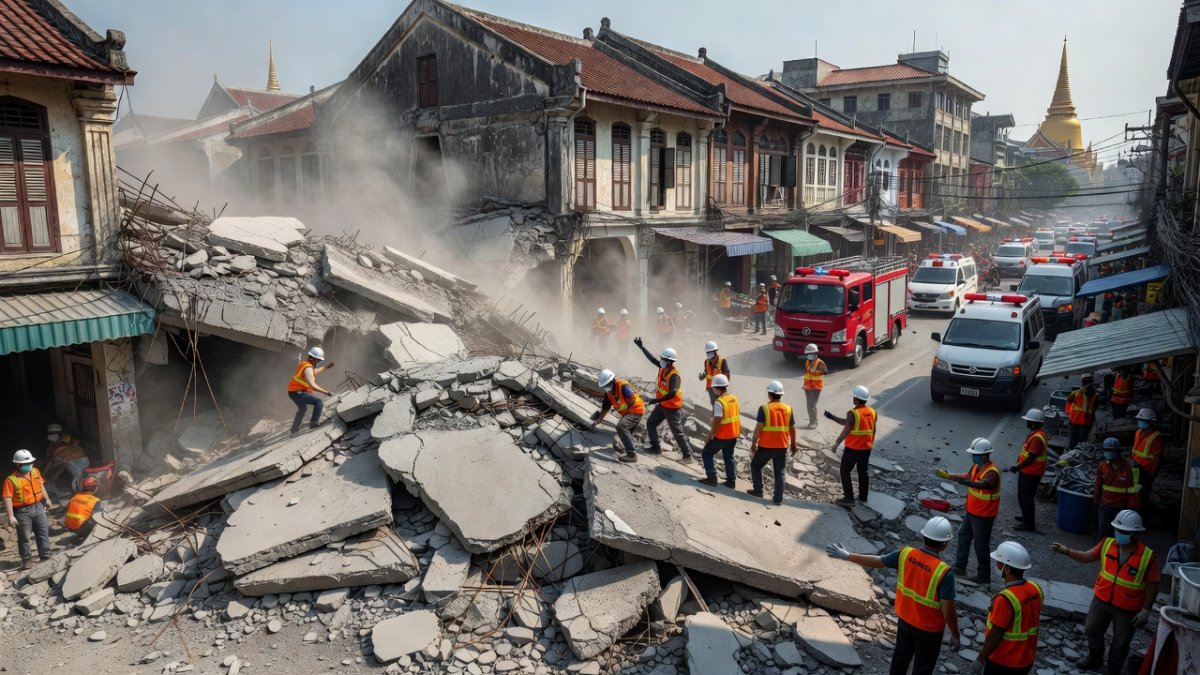
The Sudden Collapse on Rama IV Road On 20 June, a concrete slab from the second floor of an ageing shophouse along Rama IV Road in Bangkok's Samphanthawong district gave way at approximately 16:43, striking a passer-by and causing one confirmed fatality. Rescue workers from the Suan Mali Fire and Rescue Station arrived promptly, retrieved the victim's body from the debris, and
The Sudden Collapse on Rama IV Road
On 20 June, a concrete slab from the second floor of an ageing shophouse along Rama IV Road in Bangkok's Samphanthawong district gave way at approximately 16:43, striking a passer-by and causing one confirmed fatality. Rescue workers from the Suan Mali Fire and Rescue Station arrived promptly, retrieved the victim's body from the debris, and verified the death at the scene. CCTV footage captured the sudden failure, with clouds of white dust and rubble scattering across the street. Authorities from the Samphanthawong district office immediately cordoned off the site to prevent further incidents.
The structure, described by local officials as part of an old shophouse complex estimated at nearly 100 years old, had shown prior signs of wear, including intermittent falling fragments of brick and plaster noted by nearby shop owners. Police coordinated with the Metropolitan Electricity Authority to inspect adjacent poles and wiring for any secondary risks. No additional individuals were reported trapped inside the building following a thorough check by emergency teams.
This event unfolded in a densely populated commercial corridor where daily foot traffic includes residents and visitors heading toward nearby landmarks. The rapid response by Suan Mali Fire and Rescue Station personnel ensured the area was secured within minutes, limiting further exposure to hazards from the remaining structure.
Wat Traimit Wittayaram Worawihan and Its Neighbourhood
The collapse occurred in close proximity to Wat Traimit Wittayaram Worawihan, the temple renowned for housing the Golden Buddha statue that draws Thai devotees and international pilgrims throughout the year. Samphanthawong district forms part of Bangkok's historic Chinatown, where Buddhist temples stand alongside shophouses that have supported generations of Thai-Chinese families engaged in trade. The presence of Wat Traimit provides a spiritual anchor for the community, with morning alms rounds and evening chanting routines continuing even as safety inspections proceeded on Rama IV Road.
Local residents in Samphanthawong maintain strong ties to both commerce and temple life, often visiting Wat Traimit for merit-making ceremonies on Buddhist holy days. The ageing shophouse that failed had housed businesses serving this mixed community, including vendors of paper offerings commonly used in Thai-Chinese ancestral rites. Such locations reflect the layered history of Bangkok's urban core, where structures from the early twentieth century still line major thoroughfares like Rama IV Road.
Thai authorities have long recognised the cultural value of these districts, balancing preservation of heritage buildings with modern safety requirements. The incident near Wat Traimit highlights how everyday movement around sacred sites intersects with the physical condition of surrounding properties in central Bangkok.
Immediate Emergency Response and Safety Actions
Following the 20 June collapse, traffic police established barriers along sections of Rama IV Road to redirect vehicles and reduce congestion caused by the ongoing structural assessment. Officials confirmed that electricity supply checks were completed in coordination with the relevant authority to rule out any connection to nearby poles. The sealed perimeter allowed inspectors to evaluate the stability of the remaining building without public interference.
Rescue teams from Suan Mali Fire and Rescue Station maintained presence at the site through the initial hours, ensuring no further debris posed risks to passers-by. Witnesses reported that the loud crash initially resembled a falling electricity pole, a common sound in older urban zones, before the plume of dust became visible. These details guided the methodical approach taken by emergency personnel on the day of the incident.
Investigations into the precise cause of the structural failure remain active, with authorities collecting evidence from the debris field that also damaged at least three vehicles parked nearby. The absence of trapped individuals inside the shophouse allowed resources to focus entirely on perimeter security and traffic management along Rama IV Road.
Businesses Operating in the Historic Shophouse
The nearly 100-year-old shophouse complex on Rama IV Road accommodated several longstanding enterprises typical of Samphanthawong commerce, such as shops selling paper offerings for Buddhist and ancestral ceremonies, stores dealing in electrical goods, tea shops serving local customers, and a travel agency assisting regional travellers. These businesses form part of the daily economic fabric that supports Thai families and Southeast Asian visitors moving through Bangkok's Chinatown area.
Shop owners in the vicinity had observed small fragments of brick and plaster detaching from the structure over preceding months, yet the scale of the 20 June slab failure exceeded prior expectations. The presence of these varied trades illustrates how multi-generational buildings in central Bangkok continue to host essential services even as their physical condition requires attention from city planners.
Community members in Samphanthawong often rely on such mixed-use properties for both livelihood and convenience, with tea shops providing gathering points near Wat Traimit Wittayaram Worawihan. The incident temporarily disrupted these routines, prompting reflections on how heritage structures can be maintained while serving contemporary needs in Thai urban life.
Witness Perspectives from the Samphanthawong Community
One shop owner operating near the site described hearing a sudden loud noise followed by widespread dust, initially mistaking the event for a routine infrastructure issue before recognising the extent of the collapse. This account aligns with CCTV records from 16:43 on 20 June, which documented the concrete slab detaching and falling onto the street below. Such observations from long-term residents underscore the gradual wear that older buildings in Bangkok's historic districts can exhibit.
Additional witnesses noted that falling debris had appeared intermittently from the shophouse in the weeks prior, a detail shared with authorities during initial interviews. These perspectives from Samphanthawong locals contribute to the ongoing investigation by highlighting patterns that may inform future inspections of similar structures along Rama IV Road and surrounding areas.
The community's response remained measured, with residents cooperating fully as police and rescue teams secured the location. This cooperation reflects the strong neighbourhood bonds characteristic of Thai urban villages, where daily interactions around temples like Wat Traimit foster mutual awareness of local conditions.
Traffic Disruptions and Area Management
Traffic police promptly blocked portions of Rama IV Road after the collapse to manage vehicle flow and protect the inspection zone. Motorists were advised to seek alternative routes, reducing pressure on the affected stretch near Samphanthawong. These measures continued while structural engineers assessed the remaining portions of the nearly 100-year-old building.
The presence of damaged vehicles, at least three according to on-site reports, added to the complexity of clearing the roadway. Coordination between traffic units and the Suan Mali Fire and Rescue Station ensured that emergency access remained available throughout the response period on 20 June and subsequent days.
For residents and businesses in the area, the temporary road restrictions highlighted the interconnected nature of transportation and safety in central Bangkok. Rama IV Road serves as a vital artery linking commercial zones with cultural sites such as Wat Traimit Wittayaram Worawihan, making swift yet careful management essential for the surrounding Thai and Southeast Asian communities.
Implications for Urban Heritage in Thailand
The 20 June incident at the ageing shophouse complex raises considerations for how Bangkok maintains its historic building stock while protecting public safety. Structures of similar age in Samphanthawong and other districts often house the small enterprises that sustain local economies and cultural practices tied to nearby temples. Ongoing investigations will examine factors contributing to the concrete slab failure, providing data that could guide inspections elsewhere in the capital.
Thai authorities have previously addressed comparable challenges in older urban zones, recognising that buildings constructed nearly a century ago require systematic evaluation. The response involving the Metropolitan Electricity Authority and district officials demonstrates the coordinated approach used to mitigate risks around sites like Wat Traimit Wittayaram Worawihan.
For readers across Thailand and Southeast Asia, this event illustrates the balance between preserving architectural heritage and ensuring modern standards in rapidly developing cities. Communities in Samphanthawong continue their daily activities around the temple and markets, underscoring resilience while authorities work to determine next steps for the affected property on Rama IV Road.
Looking Ahead for Samphanthawong Residents
As investigations proceed, local shop owners and residents in the Samphanthawong area maintain their routines with awareness of the sealed section along Rama IV Road. The businesses within the complex, including those offering paper offerings and tea, represent enduring elements of Bangkok's commercial landscape that support both Thai families and visitors from neighbouring countries.
Authorities have stated that structural assessments will continue until full stability is confirmed, allowing for informed decisions on the remaining building. This measured process aligns with Thai cultural values of careful consideration and community welfare, particularly in districts centred around significant temples such as Wat Traimit Wittayaram Worawihan.
The events of 20 June serve as a reminder of the importance of vigilance regarding older infrastructure in central Bangkok. Residents express quiet determination to support one another as normal activities resume around the inspected site, reflecting the gentle strength found in Thai neighbourhood life.
By Ann Srisawat, Staff WriterThis article was produced with AI-assisted research and editorial support. Reporting is based on sources cited in the article.
What's Your Reaction?
 Like
0
Like
0
 Dislike
0
Dislike
0
 Love
0
Love
0
 Funny
0
Funny
0
 Wow
0
Wow
0
 Sad
0
Sad
0
 Angry
0
Angry
0

Southeast Asia Correspondent at Global1.News. Based in Bangkok, covering Thai and Southeast Asian politics, economy, technology, and culture. Deep regional perspective on one of the world's most dynamic regions.













Comments (0)