
Bafana World Cup 2026: Mexico 2-0, Red Cards, Broos Backed
**Keywords:** Bafana Bafana, World Cup 2026, Hugo Broos, Mexico vs South Africa, MacBeth Sibaya, Estadio Azteca, Ronwen Williams, South African football, PSL, Themba Zwane, Sphephelo Sithole, Julián Quiñones, Raúl Jiménez The Azteca Roared and Bafana Felt Every Decibel The Estadio Azteca pulsed with 87,000 Mexican voices on June 11, 2026, as Bafana Bafana stepped onto the pitch
The Azteca Roared and Bafana Felt Every Decibel
The Estadio Azteca pulsed with 87,000 Mexican voices on June 11, 2026, as Bafana Bafana stepped onto the pitch for their fourth-ever World Cup appearance. From the first whistle the home side pressed high and the South African backline, set in a 3-4-3, absorbed wave after wave. Julián Quiñones found the net in the ninth minute and the mountain grew steeper with every passing second.
Ronwen Williams, wearing the captain’s armband, organised his defenders relentlessly yet the early goal shifted the entire rhythm of the match. Mbekezeli Mbokazi stood out as the brightest light in green and gold, winning headers and reading passes that others missed. Still, one early concession turned the night into a test of survival rather than a platform for attacking football.
South African supporters watching back home felt the familiar mix of pride and pain. The team had travelled with genuine belief after years of rebuilding under Hugo Broos, but the sheer volume inside the Azteca made every clearance feel heavier. The 2-0 scoreline at full time told only part of the story; the manner of the defeat left scars that will linger until the next fixture.
Broos’ Six-Defender Setup Draws Heavy Fire
Hugo Broos chose a cautious 3-4-3 that many labelled overly defensive before kick-off. Critics counted six or seven players whose natural instincts leaned toward protection rather than progression, and the plan unravelled once Mexico took the lead. Fans on social media quickly labelled the Belgian coach a coward, questioning why a side ranked outside the global elite would park so many bodies behind the ball against a CONCACAF powerhouse.
The starting eleven featured Mbekezeli Mbokazi, Ime Okon and Nkosinathi Sibisi across the back, with Khuliso Mudau and Aubrey Modiba providing width from wing-back positions. Jayden Adams and Teboho Mokoena sat in front of them while Oswin Appollis, Lyle Foster and Relebohile Mofokeng carried the attacking threat. The structure aimed for balance, yet Mexico’s movement exposed gaps between the lines after the opening goal.
Broos defended the approach by pointing to the need for a solid platform in the tournament’s first game. Pundits countered that the same caution prevented Bafana from ever threatening Guillermo Ochoa’s goal. The debate now centres on whether the same blueprint can be adjusted for the remaining group matches or whether a bolder selection is required in Atlanta.
Red Cards and a Furious Broos Confront Sampaio
Referee Wilton Sampaio of Brazil issued three red cards in total, two of them to South African players. Sphephelo Sithole and Themba Zwane both received their marching orders, leaving Bafana with nine men for the closing stages. The dismissals followed a series of heated challenges that the Brazilian official judged worthy of straight reds.
Broos was visibly furious at full time, arguing that the decisions lacked consistency and robbed his team of any chance to fight back after Raúl Jiménez made it 2-0 in the 67th minute. The coach’s post-match comments focused on the referee rather than his own players’ discipline, a stance that has split opinion among supporters who want accountability on both sides of the white line.
The numerical disadvantage turned an already difficult evening into a damage-limitation exercise. Mbokazi continued to battle but the extra space afforded to Mexico’s attackers proved decisive. South African football now waits to see whether FIFA will review the incidents or whether the red cards stand as the final word on a chaotic night.
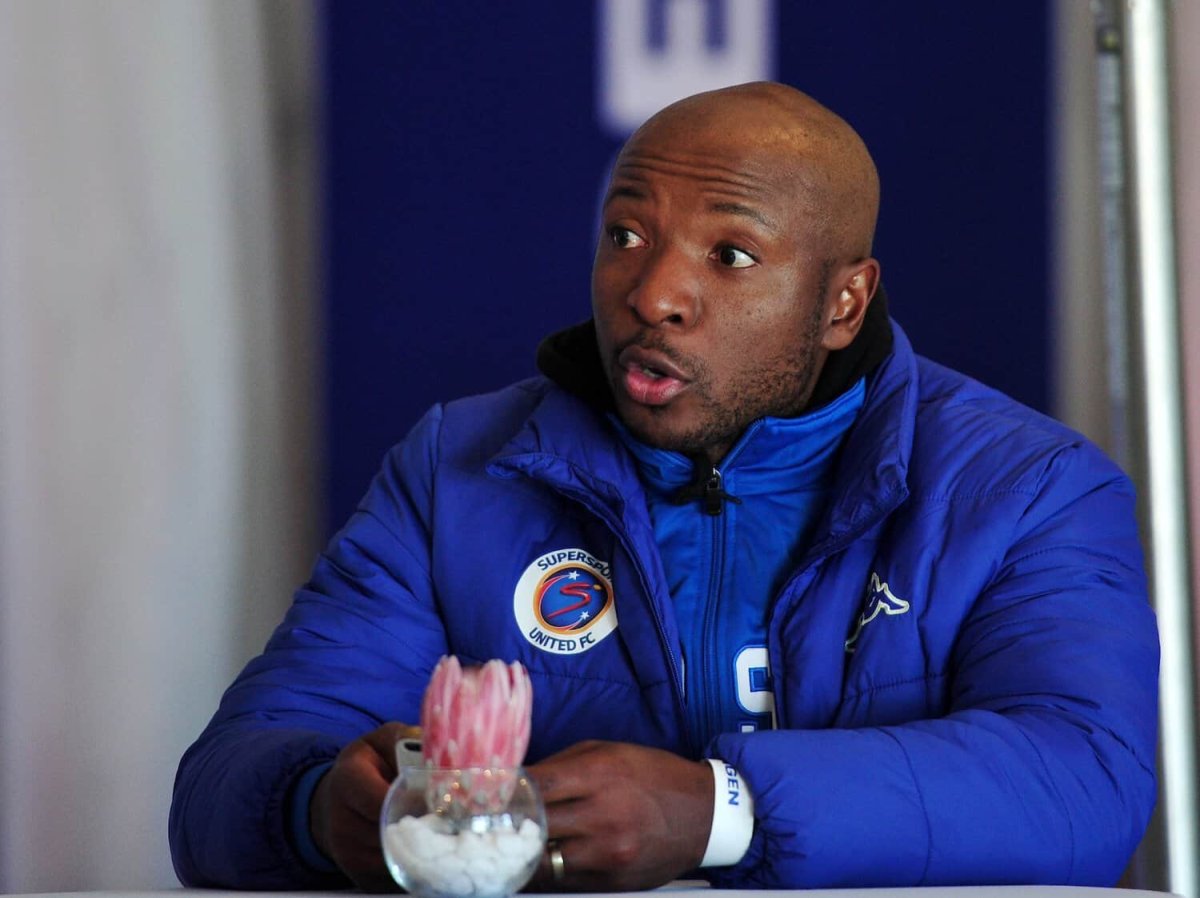
MacBeth Sibaya Steps Forward to Back His Former Coach
Former Bafana midfielder MacBeth Sibaya, who earned 62 caps across the 2002 and 2010 World Cups, offered immediate public support for Broos. Speaking after the match, Sibaya insisted the starting line-up carried the necessary balance for a first-game scenario against a formidable Mexico side. He reminded critics that realism must guide selections when the opposition possesses superior depth and home support.
Sibaya stressed that South African players often carry a cautious mindset shaped by years of limited international exposure. He argued that expecting free-flowing football from the outset ignored the psychological weight of the occasion. His words carried extra weight because of his own experience inside the same pressure cooker two decades earlier.
The 2002 and 2010 veteran also looked ahead, stating that the squad remains capable of bouncing back. He singled out the upcoming fixtures against Czechia and South Korea as winnable if concentration levels rise. Sibaya’s intervention has calmed some of the immediate noise, yet the broader conversation about tactical identity continues.
Four World Cups and the Weight of 2010 Expectations
Bafana Bafana’s 2026 campaign marks only their fourth appearance at the global showpiece, following appearances in 1998, 2002 and the 2010 tournament hosted on home soil. The 2010 edition remains the emotional benchmark; the nation still recalls the opening-night victory over Uruguay and the electric atmosphere inside Soccer City. This generation carries the same hunger to leave a lasting mark rather than simply participate.
Since Broos took charge in 2021 the emphasis has rested on rebuilding structures, integrating PSL talent and navigating transformation targets. The current squad reflects that long-term work, with players such as Ronwen Williams and Teboho Mokoena emerging as leaders. Yet the gap between domestic success and international results remains painfully visible on nights like this one.
Grassroots development and academy pathways have improved, yet the step up against technically superior sides still exposes areas that require further investment. The 2-0 defeat at the Azteca serves as another data point in that ongoing journey rather than a final verdict on the project.
Warm-Up Results Offered Mixed Signals Before the Opener
Bafana arrived in North America after a mixed series of friendlies that included draws against Panama, Nicaragua and Jamaica alongside defeats to Cameroon and Panama. The results suggested defensive organisation had improved while attacking fluency remained inconsistent. Broos used those matches to test combinations that ultimately shaped the Mexico starting eleven.
Some supporters viewed the warm-up record as a warning sign, while others pointed to the value of minutes played together under tournament conditions. The loss to Cameroon in particular highlighted the physical demands that awaited the team once the real competition began. Those lessons were meant to prepare the squad for the intensity of the Azteca, yet the early goal still caught the defence off guard.
The preparation period also allowed younger players such as Relebohile Mofokeng and Oswin Appollis to gain valuable experience. Their performances in the build-up created optimism that has now been tempered by the opening result. The focus shifts immediately to how those same players respond in the next fixture.
Czechia Awaits and the Must-Win Reality Bites
Bafana’s next assignment comes on Thursday, June 18, 2026, against Czechia in Atlanta. The fixture carries must-win status if the team hopes to keep qualification hopes alive in Group A alongside South Korea. Sibaya himself noted that both remaining opponents are disciplined and awkward, yet he believes the current group possesses the quality to secure positive results.
Tactical adjustments will dominate the conversation in the coming days. Broos must decide whether to retain the same defensive core or introduce more attacking personnel once the red-card suspensions are confirmed. The Atlanta venue offers a different atmosphere, one that may allow South African supporters in the United States to create a more vocal backing.
The margin for error has narrowed dramatically. A second defeat would end the campaign before it truly begins, while a victory would restore belief and shift attention toward the final group game. The players understand the stakes; the nation waits to see whether the response matches the scale of the challenge.
Tags: Bafana Bafana, World Cup 2026, Hugo Broos, Mexico, MacBeth Sibaya, Estadio Azteca, South African football, PSL
By Dante Williams, Staff Writer
This article was produced with AI-assisted research and editorial support. Reporting is based on sources cited in the article.
What's Your Reaction?
 Like
0
Like
0
 Dislike
0
Dislike
0
 Love
0
Love
0
 Funny
0
Funny
0
 Wow
0
Wow
0
 Sad
0
Sad
0
 Angry
0
Angry
0

Breaking News and Investigations Correspondent at Global1.News. Based in London, covering global breaking news, security, and investigative stories. Known for digging deeper and connecting the dots across continents.









Comments (0)