
AMCA Fifth-Gen Fighter: India's Management Challenge
The Advanced Medium Combat Aircraft programme represents India's most ambitious attempt to indigenously design and produce a fifth-generation stealth fighter. While the technical specifications are now largely frozen after a decade of development work, the real bottleneck facing the programme lies in creating accountable institutions, a capable private-sector manufacturing base
The Advanced Medium Combat Aircraft programme represents India's most ambitious attempt to indigenously design and produce a fifth-generation stealth fighter. While the technical specifications are now largely frozen after a decade of development work, the real bottleneck facing the programme lies in creating accountable institutions, a capable private-sector manufacturing base and a unified command structure capable of delivering the aircraft on schedule.
AMCA Programme: Technology Ready, Management Framework Still Evolving
New Delhi – June 5, 2026 — The Cabinet Committee on Security approved ₹15,803 crore for prototype development in March 2024, setting a first-flight target of late 2028 and serial production by 2035. Five flying prototypes are planned under the current sanction, with the first three dedicated to developmental flight trials and the remaining two reserved for weapon integration testing. Rollout intervals of eight to nine months between airframes have been stipulated by programme planners at the Aeronautical Development Agency.
Technical Specifications and Design Maturity
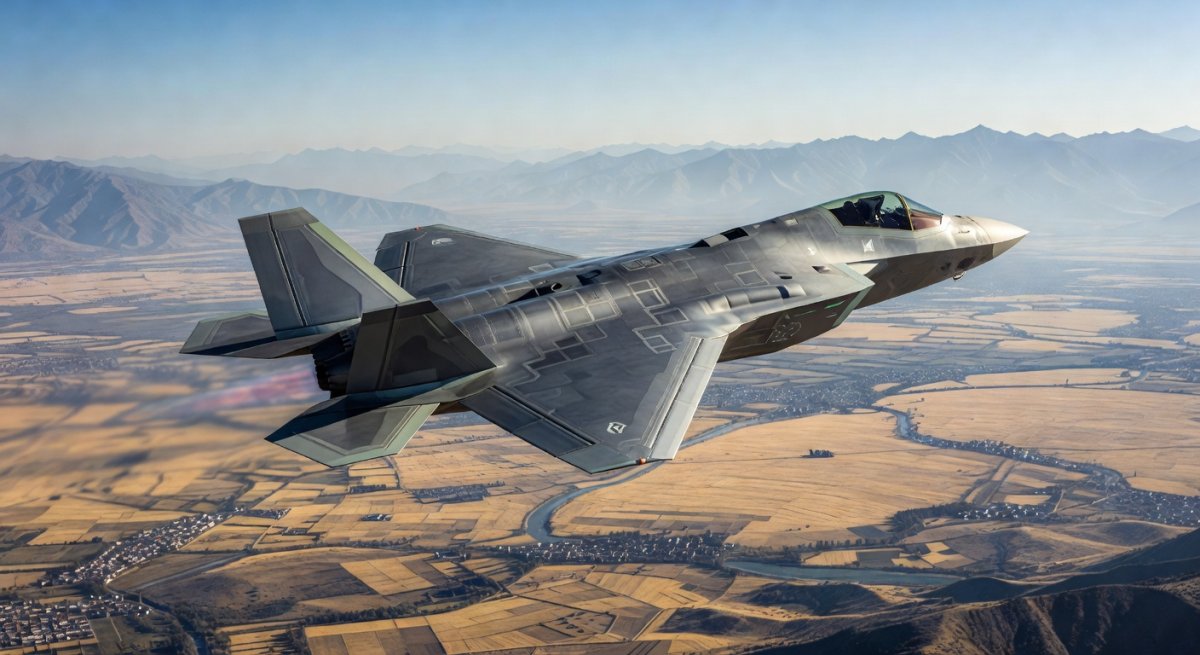
The AMCA is configured as a single-seat, twin-engine, all-weather multirole stealth aircraft optimised for low radar cross-section and supercruise capability. Design work concluded in 2023 after nine distinct configurations — designated 3B-01 through 3B-09 — were evaluated by ADA in collaboration with the Indian Air Force between November 2013 and December 2014. Configuration 3B-09 was selected following extensive low-speed and high-speed wind-tunnel testing at the Calspan Wind Tunnel facility in the United States, along with radar cross-section testing of scale models.
A full-scale engineering model manufactured by VEM Technologies, a private-sector aerospace firm based in Hyderabad, was publicly displayed for the first time at Aero India 2025 — marking the first time a private Indian company has been entrusted with building a full-scale representation of a fifth-generation airframe. The aircraft will eventually replace the Sukhoi Su-30MKI as the Indian Air Force's primary air superiority fighter and includes a naval variant, designated NAMCA or AMCA-N, currently under study for the Indian Navy's future Indigenous Aircraft Carrier (IAC-2). Internal weapons bays, advanced sensor fusion and low-observable shaping form the core of its fifth-generation combat architecture.
Funding Trajectory and Programme Timeline
Initial feasibility studies for the AMCA received ₹4,000 crore in funding following the project definition phase that concluded by February 2014. An additional ₹447 crore was sanctioned for the Detailed Design Phase in 2018. India's withdrawal from the Indo-Russian Fifth Generation Fighter Aircraft (FGFA) project that same year elevated the AMCA to the Indian Air Force's first preference for its future fighter fleet, creating an urgency that the earlier joint-development approach had not demanded.
The 2024 CCS sanction of ₹15,803 crore — approximately US$1.6 billion at current exchange rates — provides the budgetary envelope for five flying prototypes and associated ground-test articles. The first prototype is expected to roll out within three years of the CCS approval, with first flight anticipated in late 2028. Serial production is targeted for 2035, a timeline that defence analysts describe as aggressive given the complexity of stealth airframe production and systems integration.
Manufacturing Ecosystem and Private-Sector Entry
The Ministry of Defence tender for the AMCA programme explicitly envisages selection of a private-sector industrial partner to establish a fifth-generation aerospace manufacturing ecosystem in India. A Special Purpose Vehicle combining the Aeronautical Development Agency, Hindustan Aeronautics Limited (HAL) and the chosen private entity is currently under formation. This marks a deliberate structural shift from earlier DRDO-led programmes that relied predominantly on public-sector units and suffered from cost overruns and schedule delays.
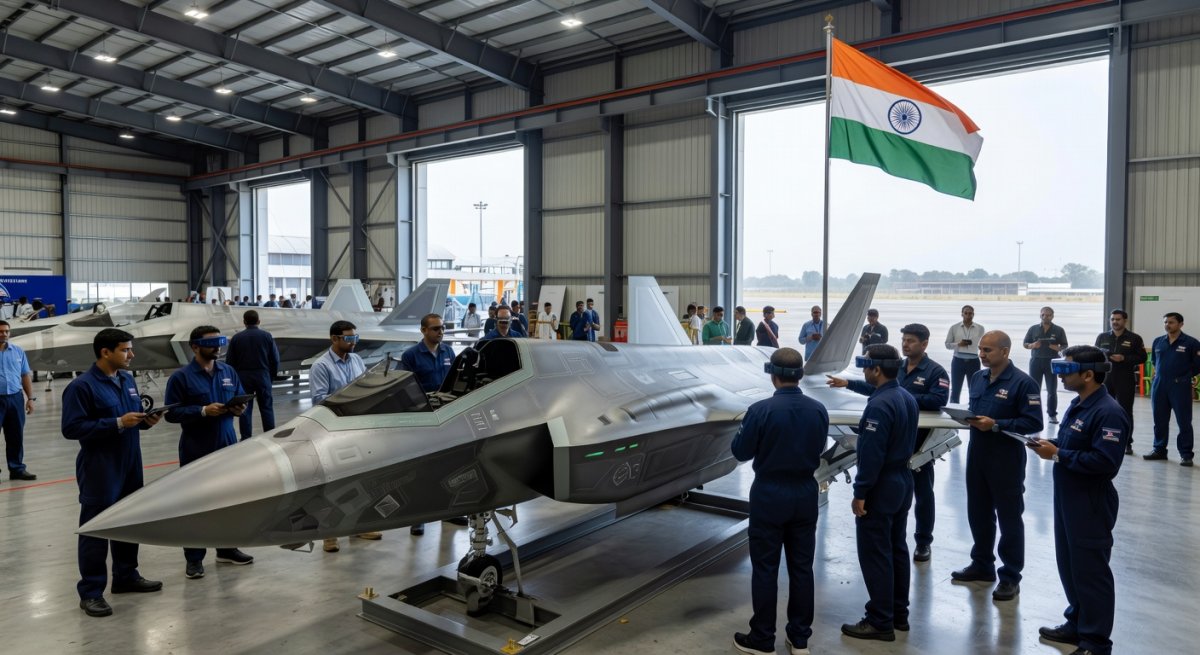
Private-sector involvement is intended to inject modern programme-management practices, supply-chain discipline and quality systems essential for stealth airframe production. The L1 lowest-bidder procurement culture, while appropriate for mature commercial products, carries documented risks when applied to complex developmental programmes where cost predictability and timeline fidelity are paramount. Defence expert Sandeep Unnithan, speaking on the India Today podcast "In Our Defence" on June 5, 2026, noted that the L1 framework — sensible for commodity contracts — becomes "potentially dangerous" when applied to high-stakes strategic programmes like a fifth-generation fighter.
Engine Development on a Parallel Track
The Gas Turbine Research Establishment (GTRE) under DRDO is collaborating with Safran of France on a 110 kN thrust-class engine capable of supercruise — sustained supersonic flight without afterburners. This engine development effort proceeds on a separate track from airframe development, a structural choice that reduces technical risk coupling between the propulsion system and the airframe but introduces a critical coordination requirement. Integration milestones between the GTRE-Safran engine programme and the ADA airframe development schedule will need precise alignment to avoid schedule mismatches as the first prototype approaches rollout.
The parallel engine track mirrors India's broader strategy of diversified defence partnerships, following the 2018 withdrawal from the joint FGFA project with Russia. The Safran collaboration leverages French expertise in military turbofan technology while maintaining Indian design authority through GTRE.
Project Management Architecture: The Missing Piece
The current division of responsibilities across the AMCA programme creates multiple institutional interfaces without a single empowered programme manager. ADA retains design ownership, the Indian Air Force defines operational requirements, private industry handles build and integration, certification agencies manage airworthiness clearances, and the GTRE-Safran engine effort operates under separate governance. The India Today "In Our Defence" episode of June 5, 2026, hosted by Dev Goswami and featuring defence analyst Sandeep Unnithan, highlighted this structural gap, posing the critical question: if one agency owns the design and another owns the requirements, who owns the delay?
Defence analysts have repeatedly cited the ATV/Arihant nuclear-submarine programme as the successful template for complex Indian defence projects. That programme employed a mission-mode organisation with clear authority, ring-fenced funding and direct reporting channels to the highest levels of government — bypassing the layered bureaucracy that typically characterises Indian defence procurement. Replicating that structure for the AMCA would address the institutional fragmentation that has historically delayed indigenous combat-aircraft programmes and contributed to cost escalations.
Strategic Implications for Atmanirbhar Bharat
Successful execution of the AMCA programme would establish India as one of a handful of nations — alongside the United States, China, Russia and a select few European powers — capable of designing, integrating and producing fifth-generation combat aircraft. It would also create a sustainable private-sector aerospace supply chain capable of supporting future unmanned combat aerial vehicles and sixth-generation fighter concepts now in early conceptual stages at ADA.
Taxpayers have already committed more than ₹20,000 crore across the feasibility, detailed design and prototype-development phases. Timely delivery therefore carries both strategic and fiscal accountability. Failure to resolve the management and coordination question risks repeating the cost and schedule overruns seen in earlier indigenous fighter programmes, potentially undermining the credibility of the Make in India initiative in the defence sector. The choice of private partner, the empowerment of the proposed mission directorate and the rigour of the integration plan will determine whether the 2035 production target remains aspirational or becomes achievable.
— By Dr. Raj Patel, Staff Writer
This article was produced with AI-assisted research and editorial support. Reporting is based on sources cited in the article.
What's Your Reaction?
 Like
0
Like
0
 Dislike
0
Dislike
0
 Love
0
Love
0
 Funny
0
Funny
0
 Wow
0
Wow
0
 Sad
0
Sad
0
 Angry
0
Angry
0

India/South Asia Correspondent at Global1.News. Analytical voice with a background in science and health journalism. Based in New Delhi, covering Indian politics, education, healthcare, technology, and policy. Breaks down complex data into clear, actionable reporting.















Comments (0)