
Venezuela's Oil Returns to Global Markets — What It Means for Latin America's Energy Future
Venezuela's Oil Trade with India Signals Shifting Energy Alliances Delcy Rodríguez, Venezuela's acting president, travels to India this week for discussions with Prime Minister Narendra Modi on trade, investment, healthcare, and renewable energy. Yet the core of the relationship remains oil, as India seeks reliable suppliers amid disruptions in the Middle East. Venezuela's crud
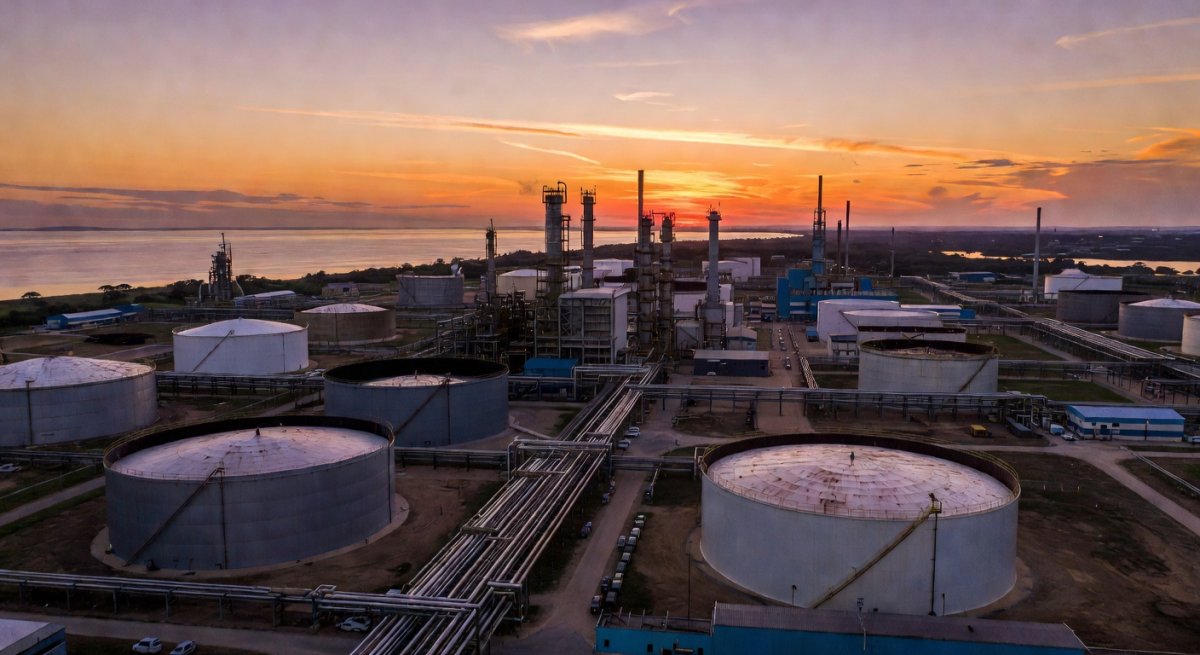
Venezuela's Oil Trade with India Signals Shifting Energy Alliances
Delcy Rodríguez, Venezuela's acting president, travels to India this week for discussions with Prime Minister Narendra Modi on trade, investment, healthcare, and renewable energy. Yet the core of the relationship remains oil, as India seeks reliable suppliers amid disruptions in the Middle East. Venezuela's crude has reentered Indian markets after a pause linked to earlier United States restrictions, with shipments resuming in February under a sanctions-easing framework between Washington and Caracas.
India, the world's third-largest oil importer, now receives roughly 266,000 barrels per day from Venezuela, accounting for about 5.3 percent of its total crude imports according to maritime analytics from Kpler. This volume places Venezuela as India's fifth-largest source, behind only Russia, the UAE, Saudi Arabia, and Brazil. The heavy, sulfur-rich Venezuelan crude suits India's advanced refineries, which convert it efficiently into diesel and jet fuel.
Supply Security Amid Middle East Uncertainty
India depends on imports for about 90 percent of its oil needs, with nearly half of those volumes—around 2.5 to 2.7 million barrels daily—normally transiting the Strait of Hormuz. Recent conflict in the region has effectively closed this chokepoint, elevating Venezuela's role as an alternative. Output from Venezuela has increased by an estimated 400 to 500 thousand barrels per day this year, though it stays well below historical peaks.
Analysts note that Venezuelan supplies help India diversify away from Middle Eastern sources while aligning with Washington's interest in reducing Indian purchases of Russian oil. Before sanctions halted flows in 2019, Venezuela ranked among India's top suppliers, reaching third place by 2012 and holding a top-five position for years afterward.
Regional Energy Dynamics Across Latin America
Venezuela's return as an exporter reshapes energy flows within Latin America. Indian state-owned firms already hold stakes in Venezuelan oil projects and seek expanded opportunities. Bilateral trade, however, remains modest at 679 million dollars in 2024-25, far below the 6.4 billion dollars recorded when Venezuelan shipments reached nearly 16 million tonnes annually by 2019.
Other South American producers, including Brazil, continue to supply India directly. This pattern underscores a broader regional trend where oil revenues support national budgets even as countries navigate global calls for lower emissions. Governments from Caracas to Brasília weigh short-term fiscal needs against long-term environmental commitments.
Oil Revenues Versus Climate Commitments in the Amazon Basin
The tension between petroleum income and climate objectives runs deep across Latin America. In Venezuela, expanded output promises funds for social programs yet risks further strain on ecosystems already pressured by extraction. Similar dynamics appear in neighboring nations where oil projects intersect with sensitive biomes.
Brazil's environmental agencies, including IBAMA and ICMBio under the Ministry of Environment, monitor activities near the Amazon, where fossil fuel development can conflict with protection goals. Local communities in states such as Pará and Amazonas experience direct effects on water quality, biodiversity, and traditional livelihoods when extraction expands. Environmental justice advocates highlight how revenues often bypass those most exposed to pollution and habitat loss.
Brazil's Position in the Broader Energy Transition
Brazil maintains its own oil exports to India while advancing renewable targets and Amazon safeguards. Policymakers in Brasília face parallel pressures: sustaining economic growth through energy exports and meeting international climate pledges. The Venezuelan-Indian arrangement illustrates how global demand can pull regional producers back toward fossil fuels at a moment when transitions to cleaner sources gain momentum.
Indian refineries' ability to process heavy crudes efficiently demonstrates one technical pathway, yet it does not resolve the underlying conflict between continued extraction and forest conservation. Regional organizations and civil society groups increasingly link energy policy to Amazon integrity, arguing that unchecked oil expansion undermines biodiversity and indigenous rights.
Environmental Justice and Future Pathways
Communities across the Amazon basin, from Venezuelan border areas to Brazilian interior municipalities, bear disproportionate burdens from oil operations. Calls for environmental justice emphasize fair distribution of benefits and stronger oversight by agencies tasked with enforcement. Venezuela's growing shipments to India add urgency to these debates, as higher revenues may accelerate project approvals without adequate safeguards.
Latin American nations now confront choices that will shape both energy security and ecological stability. While Venezuelan crude offers India a practical bridge during supply shocks, the arrangement reinforces reliance on hydrocarbons that climate science identifies as drivers of long-term risk. Grounded policy must balance immediate economic needs with protection of the region's vital natural systems.
By Elena Vasquez, Staff WriterThis article was produced with AI-assisted research and editorial support. Reporting is based on sources cited in the article.
What's Your Reaction?
 Like
0
Like
0
 Dislike
0
Dislike
0
 Love
0
Love
0
 Funny
0
Funny
0
 Wow
0
Wow
0
 Sad
0
Sad
0
 Angry
0
Angry
0

Latin America Correspondent at Global1.News. Based in Mexico City, covering politics, economics, energy, and culture across the region. Brings an on-the-ground perspective to stories spanning from the Rio Grande to Patagonia.













Comments (0)