
'A Climate of Fear': Palestine Action Activists Speak Out as Codefendants Await Terror Sentencing
In a recent Middle East Eye report, Palestine Action activists Charlotte Head, Leona Kamio, Samuel Corner and Fatema Rajwani describe the climate of fear surrounding their upcoming sentencing, where they risk being labeled terrorists despite a jury convicting them only on criminal damage charges in May at Woolwich Crown Court. The terrorism connection remained hidden from juror
In a recent Middle East Eye report, Palestine Action activists Charlotte Head, Leona Kamio, Samuel Corner and Fatema Rajwani describe the climate of fear surrounding their upcoming sentencing, where they risk being labeled terrorists despite a jury convicting them only on criminal damage charges in May at Woolwich Crown Court. The terrorism connection remained hidden from jurors during the retrial over a raid on an Elbit Systems facility near Bristol on 6 August 2024. Jordan Devlin and Zoe Rogers were cleared of all charges in the same proceedings. Sentencing is now scheduled for June 12.
'A Climate of Fear': Palestine Action Activists Speak Out as Codefendants Await Terror Sentencing
London, United Kingdom – June 11, 2026 — Palestine Action has conducted multiple operations targeting Elbit facilities across the United Kingdom. The group states its goal is to disrupt supply chains that deliver military equipment to Israeli forces operating in the occupied Palestinian territories. Court records show the August 2024 raid involved damage to property at the Bristol-area site, yet no evidence of violence against individuals was presented to the jury. The four activists faced charges tied directly to actions against an Elbit Systems plant. Jurors heard evidence only about criminal damage and reached guilty verdicts without knowledge of any terrorism label applied by authorities. This separation of information has drawn scrutiny from legal observers who question whether the process allowed for a fair assessment of intent. The Crown Prosecution Service pursued the case under standard criminal statutes while parallel counter-terrorism measures operated in the background.
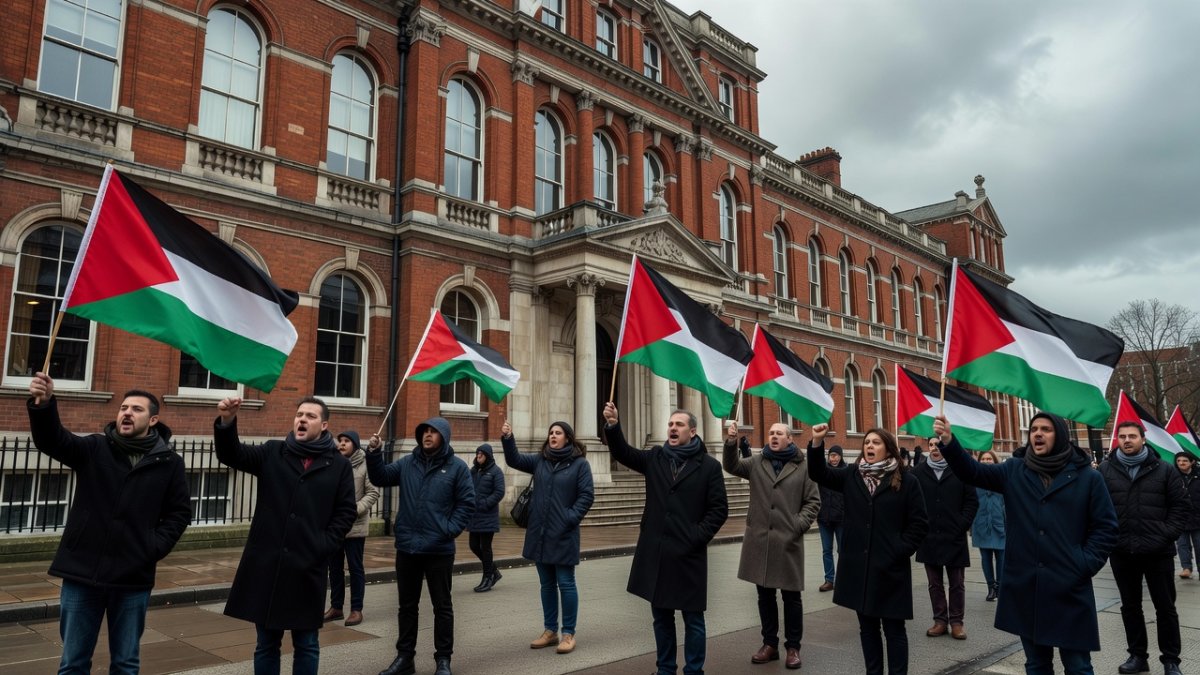
Supporters gathered outside Woolwich Crown Court ahead of the sentencing hearing on June 12, 2026 (Global 1 News)
Individual Stories Behind the Charges
Charlotte Head, Leona Kamio, Samuel Corner and Fatema Rajwani each addressed the personal consequences of the verdict in the Middle East Eye video. They spoke of disrupted lives, employment difficulties, and the psychological weight of facing potential terrorism sentencing. The activists emphasized that their actions stemmed from opposition to arms production rather than any intent to intimidate the public.
Jordan Devlin and Zoe Rogers, cleared by the same jury, avoided conviction entirely. Their acquittals highlight inconsistencies in how similar participation in the raid was judged. Supporters note that all six individuals share the same organizational affiliation yet received divergent outcomes, raising questions about selective prosecution.
Human Rights Implications of Terrorism Labeling
Applying terrorism designations to property damage cases involving political protest carries significant consequences under UK law. Such labels can restrict future travel, employment, and public assembly rights even after sentences are served. Human rights organizations have documented how these measures expand the scope of counter-terrorism powers beyond their original intent against organized violence.
The secrecy surrounding the terrorism element during trial prevented defense teams from addressing it directly before the jury. This approach limits transparency and may discourage others from participating in lawful protest. Legal experts point out that the threshold for terrorism offenses typically requires evidence of intent to influence government policy through serious violence or threats, elements absent from the presented case.
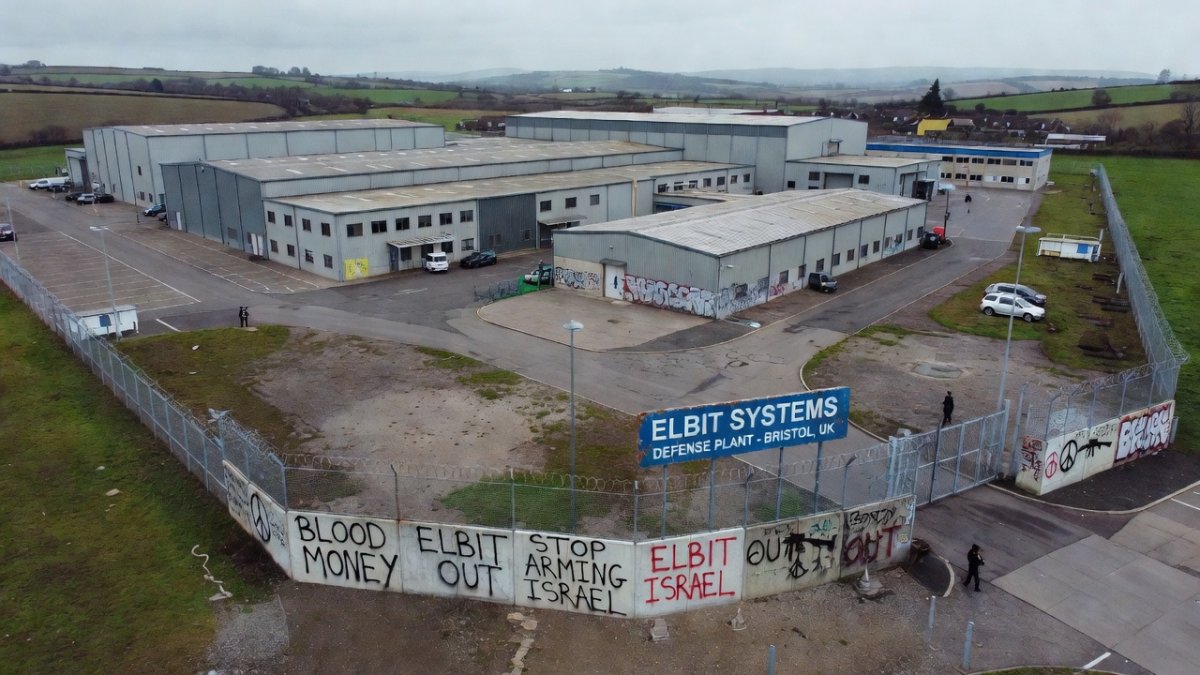
An Elbit Systems facility in the UK, one of several sites targeted by Palestine Action protests over arms supplies to Israel (Global 1 News)
UK Policy Toward Palestine Solidarity Actions
British authorities have increased scrutiny of groups opposing Israeli arms manufacturers in recent years. Elbit Systems maintains several UK sites that produce drones, surveillance equipment, and components used by Israeli forces. Critics argue that hosting these operations contradicts stated UK commitments to international humanitarian law in the occupied territories.
Palestine Action frames its campaigns as non-violent direct action aimed at economic disruption of military supply lines. The organization has targeted multiple Elbit locations since its formation, drawing participants from diverse backgrounds who cite the ongoing situation in Gaza and the West Bank as motivation. Government responses have included arrests, asset seizures, and now terrorism-related proceedings.
Links to Conditions in the Occupied Territories
Equipment manufactured by Elbit has been documented in Israeli military operations across the West Bank and Gaza. Palestinian communities report the effects of drone surveillance and targeted strikes on daily movement, access to resources, and civilian safety. Activists in the UK connect their actions to these realities, arguing that disrupting production constitutes a form of solidarity with affected populations.
The sentencing scheduled for June 12 occurs against a backdrop of sustained conflict that has displaced large numbers of Palestinians and drawn international legal challenges. UK-based protests have grown in response, yet face tighter restrictions when they intersect with defense industry sites. This dynamic illustrates how domestic policy choices intersect with foreign military relationships.
Outlook for Activism and Legal Precedents
The hearing at Woolwich Crown Court will set a practical precedent for how UK courts treat similar protest cases. A terrorism sentence could deter future participation by imposing lifelong restrictions on those convicted. Conversely, a more measured outcome might preserve space for political expression while addressing property damage through ordinary criminal channels.
Palestinian voices in the UK and beyond continue to emphasize the need for accountability regarding arms exports. The activists featured in the Middle East Eye report maintain that their campaign addresses concrete supply chains rather than abstract grievances. The coming decision will influence whether such campaigns remain within the bounds of conventional protest or shift into a securitized category.
By Fatima Al-Rashid, Staff Writer
This article was produced with AI-assisted research and editorial support. Reporting is based on sources cited in the article.
What's Your Reaction?
 Like
0
Like
0
 Dislike
0
Dislike
0
 Love
0
Love
0
 Funny
0
Funny
0
 Wow
0
Wow
0
 Sad
0
Sad
0
 Angry
0
Angry
0

Gulf/MENA Correspondent at Global1.News. Based in Doha, covering Gulf politics, energy markets, diplomacy, and development across the Middle East and North Africa. Tracks the economic transformation of the Gulf states.















Comments (0)