
6 confirmed dead after 6 days of rescue ops in Pampanga building collapse
6 confirmed dead after 6 days of rescue ops in Pampanga building collapse
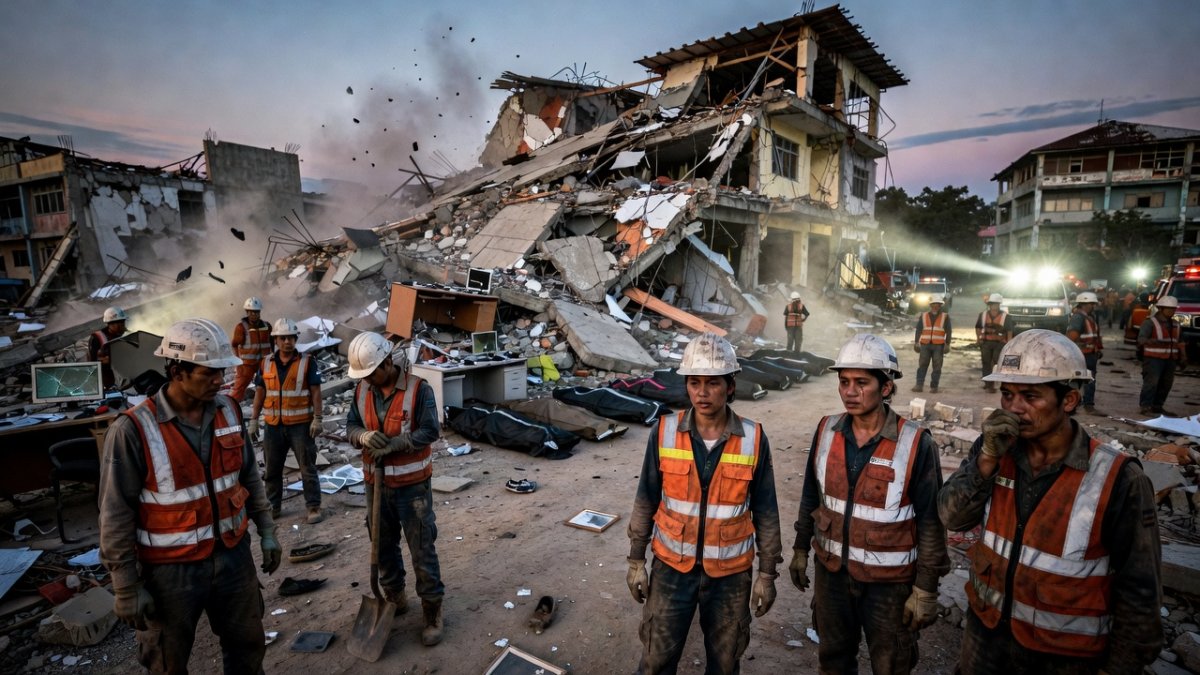
Rescue teams in Angeles City, Pampanga, recovered the bodies of six construction workers on the sixth day of operations at the collapsed four-story building along MacArthur Highway, confirming the deaths amid mounting frustration from grieving families who accuse authorities of delayed and inadequate response. The incident, which occurred on October 12, has left at least three others still unaccounted for as of October 18, with relatives staging daily protests outside the cordoned site demanding faster extraction and accountability for what they describe as systemic negligence in construction oversight.
The Collapse and Initial Response
The structure, a mixed-use building under renovation that housed small commercial spaces on the ground floor and residential units above, gave way without warning at around 3:45 p.m. on October 12. Eyewitnesses reported a loud cracking sound followed by the sudden pancaking of floors, trapping workers who were reinforcing columns without proper shoring. Local police and barangay officials arrived within 20 minutes, but heavy equipment mobilization took over four hours, a delay that families now cite as critical in the loss of lives.
Pampanga Governor Dennis Pineda confirmed the six fatalities during a press briefing on October 18, identifying the deceased as skilled laborers aged 22 to 45 from nearby Tarlac and Bataan provinces. The National Disaster Risk Reduction and Management Council deployed additional urban search and rescue teams from Manila, bringing the total personnel to 180, yet progress remains hampered by unstable debris and limited night operations due to safety protocols.
Families Demand Justice Amid Slow Progress
Relatives of the missing have voiced sharp criticism, with Maricel Santos, wife of 34-year-old victim Roberto Santos, telling reporters, “Six days and still they dig slowly like it is not urgent. My husband was alive when the building fell—we heard his calls on the first night. Now the government hides behind procedures while we bury our dead one by one.” Similar sentiments echoed from other families gathered at the makeshift memorial near the site, where they have held vigils and submitted petitions to the city hall demanding an independent investigation into permit irregularities.
City Engineer Mario Villanueva acknowledged the complaints but defended the methodical approach, stating that rushed extractions risk further collapses that could endanger rescuers. Data from the Department of Public Works and Highways shows Angeles City recorded 14 building-related incidents since 2019, with only two resulting in full accountability prosecutions, highlighting a pattern of weak enforcement that fuels public distrust.
Background on Structural Failures in the Region
Angeles City sits within the Central Luzon fault system, where seismic activity averages moderate tremors annually, yet many older structures lack retrofitting required under the 2015 National Building Code. The collapsed building, constructed in 1998 and renovated without updated engineering stamps, reportedly used substandard rebar according to initial forensic assessments shared by the Pampanga chapter of the Philippine Institute of Civil Engineers.
Engineering expert Dr. Elena Ramos, who reviewed available blueprints, noted that load-bearing walls showed clear signs of corrosion and inadequate foundation depth for the added floor. “This was preventable,” Ramos said. “Contractors often bypass soil testing to cut costs, and local governments approve permits with minimal verification, especially in high-traffic commercial zones like MacArthur Highway.” Such practices contradict democratic principles of public safety, where citizens expect transparent governance rather than profit-driven shortcuts.
Rescue Operations: Challenges and Data
Over the six days, teams have utilized thermal imaging, canine units, and hydraulic jacks to navigate 2,400 cubic meters of rubble. Recovery statistics indicate 11 survivors pulled out in the first 48 hours, while the death toll climbed steadily as access to deeper voids improved. The Department of the Interior and Local Government allocated PHP 4.2 million for the operation, covering overtime and equipment rental, yet families question why foreign-trained rescue specialists from South Korea were not invited earlier despite offers of assistance.
Analysis of similar incidents, such as the 2022 Cebu condominium collapse that killed four, reveals that delays beyond 72 hours reduce survival rates to under 10 percent. Here, the confirmed fatalities all showed signs of crush injuries consistent with prolonged entrapment, underscoring how procedural caution, while necessary, must balance with urgency when lives hang in the balance.
Government Accountability and Policy Implications
Mayor Carmelo Lazatin Jr. has ordered a temporary moratorium on renovation permits in the city pending a full structural audit of 87 aging buildings identified as high-risk. This move responds directly to public pressure but stops short of the independent commission families are demanding to examine corruption in the permitting process. Senate inquiries have been filed by Senator Risa Hontiveros, who cited the tragedy as evidence that building safety remains a justice issue disproportionately affecting working-class laborers.
Broader context from the National Statistics Office indicates construction-related deaths rose 18 percent nationwide between 2020 and 2023, driven by rapid urbanization and lax inspections. For readers in Manila and beyond, this Pampanga case illustrates the urgent need for stronger democratic safeguards—mandatory third-party audits, real-time monitoring apps for projects, and harsher penalties for violators—to prevent future needless losses.
Expert Perspectives and Path Forward
Urban planner Josefa Morales emphasized that Angeles City’s growth as a logistics hub near Clark Freeport has outpaced regulatory capacity. “We need not just rescue funding but preventive investment in training for local engineers and digital permit systems that flag anomalies automatically,” she said. Families have begun organizing a class-action complaint with the Commission on Human Rights, framing the collapse as a violation of the right to life and safe working conditions.
As operations continue into a seventh day, the focus shifts from recovery to reform. The six confirmed deaths serve as a stark reminder that infrastructure failures erode public trust in institutions meant to protect citizens. With three individuals still missing, the coming days will test whether authorities can deliver both closure for families and concrete steps toward accountability.
This is Bella Reyes for Global1 News, reporting from Manila. 🇵🇭
This article was produced with AI-assisted research and editorial support. Reporting is based on sources cited in the article.
What's Your Reaction?
 Like
0
Like
0
 Dislike
0
Dislike
0
 Love
0
Love
0
 Funny
0
Funny
0
 Wow
0
Wow
0
 Sad
0
Sad
0
 Angry
0
Angry
0

Philippines/Southeast Asia Correspondent at Global1.News. Manila-based journalist covering Philippine politics, environment, maritime security, and social issues. Passionate about marine conservation and the communities protecting the Philippines' natural heritage.














Comments (0)