
Chile Forest Fires January 2026: 21 Dead as Boric Declare...
The January 2026 Chile forest fires represent one of the most destructive wildfire events in the nation’s modern history. Raging across the Biobío and Ñuble regions, the blazes claimed at least 21 lives, destroyed entire towns, and forced the evacuation of more than 50,000 residents. With 159 active fire incidents recorded in mid-January alone, President Gabriel Boric declared
The January 2026 Chile forest fires represent one of the most destructive wildfire events in the nation’s modern history. Raging across the Biobío and Ñuble regions, the blazes claimed at least 21 lives, destroyed entire towns, and forced the evacuation of more than 50,000 residents. With 159 active fire incidents recorded in mid-January alone, President Gabriel Boric declared a State of Catastrophe, triggering two days of national mourning. The disaster unfolded against a backdrop of multi-year megadrought, record heat reaching 40 °C, and vast monoculture plantations of pine and eucalyptus that acted as explosive fuel loads. This article examines the human toll, institutional response, climate drivers, recovery financing, prevention innovations, and Latin American context in granular detail.
Chile's January 2026 Forest Fires: 21 Dead, 52,000 Hectares Burned, and the Long Road to Recovery
Santiago, Biobío Region – Chile, June 21, 2026 — The January 2026 fire season revealed the lethal intersection of climate extremes, monoculture expansion, and human ignition sources across central Chile. This analysis covers the destruction, institutional response, recovery planning, and lessons for Latin America.
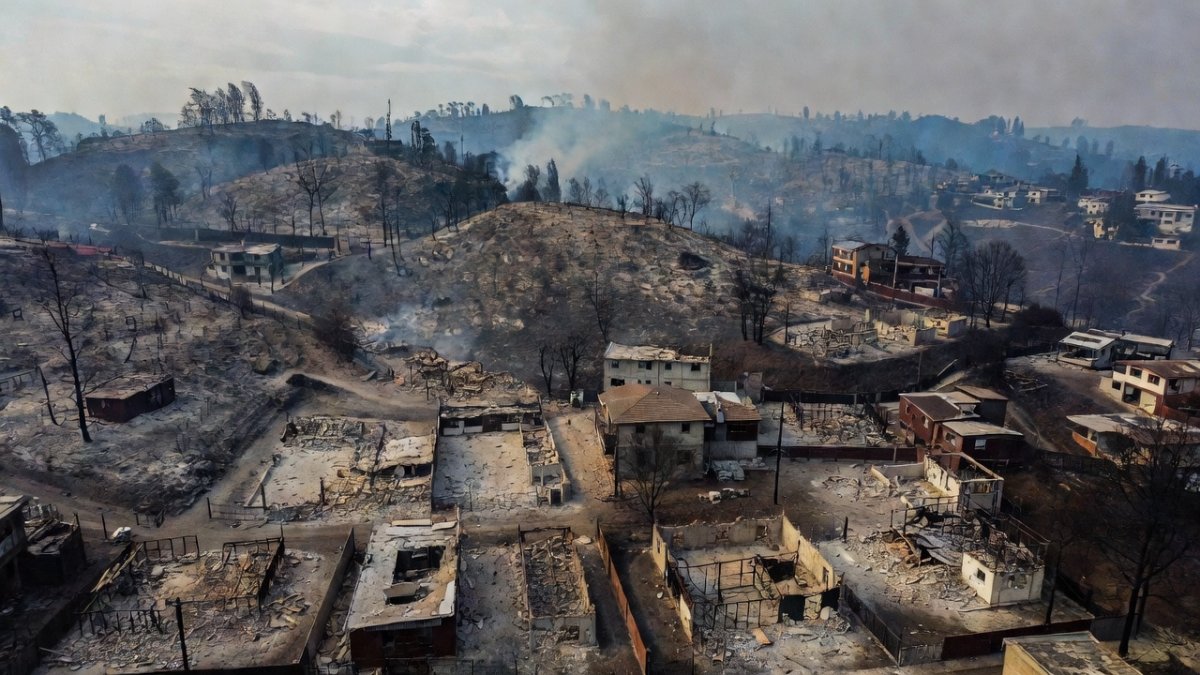 IMAGE1_PLACEHOLDER
Keywords: Chile forest fires 2026, Biobío Ñuble fires, Gabriel Boric state of catastrophe, CONAF brigadistas, megadrought Chile, Plan Maestro Mitigación Urbana
IMAGE1_PLACEHOLDER
Keywords: Chile forest fires 2026, Biobío Ñuble fires, Gabriel Boric state of catastrophe, CONAF brigadistas, megadrought Chile, Plan Maestro Mitigación Urbana
The Scale of Destruction Across Biobío and Ñuble
Between 3 and 12 January 2026, flames consumed between 40,000 and 52,000 hectares of forest and urban interface in the Biobío and Ñuble regions. The hardest-hit municipalities—Penco, Tomé, Florida, and Greater Concepción—saw entire neighborhoods reduced to ash. Official tallies confirm 20–21 fatalities, hundreds of injuries, and between 1,000 and 2,000 homes completely destroyed. More than 50,000 people were evacuated at peak intensity, with many families still displaced weeks later. The economic damage to timber plantations, smallholder farms, and tourism infrastructure exceeds $300 million. These figures surpass the 2024 Viña del Mar fires and place the event among Chile’s five worst wildfire disasters since records began. The rapid spread was fueled by 60 km/h winds that carried embers across highways and into residential zones, overwhelming initial containment lines within hours.
Climate Change, Megadrought, and Plantation Fuel Loads
Chile’s Mediterranean climate has shifted dramatically under anthropogenic warming. A 14-year megadrought has left soils desiccated and vegetation primed for ignition. January 2026 temperatures repeatedly exceeded 36–40 °C, while relative humidity dropped below 15 percent. Scientists attribute 99.7 percent of ignitions to human causes—discarded cigarettes, agricultural burns, and power-line faults—yet climate change has lengthened the fire season by six weeks since 2000. Monoculture plantations of radiata pine and eucalyptus now cover more than 2.3 million hectares in central Chile; their resinous litter and dense canopies create continuous fuel ladders that allow crown fires to race at 3 km per hour. The combination of drought, heat, wind, and flammable monocultures transformed routine ignitions into landscape-scale infernos. Researchers at Universidad del Bío-Bío warn that without drastic diversification of forest cover, similar events will recur every three to five years.
Institutional Response: CONAF, SENAPRED, and Presidential Leadership
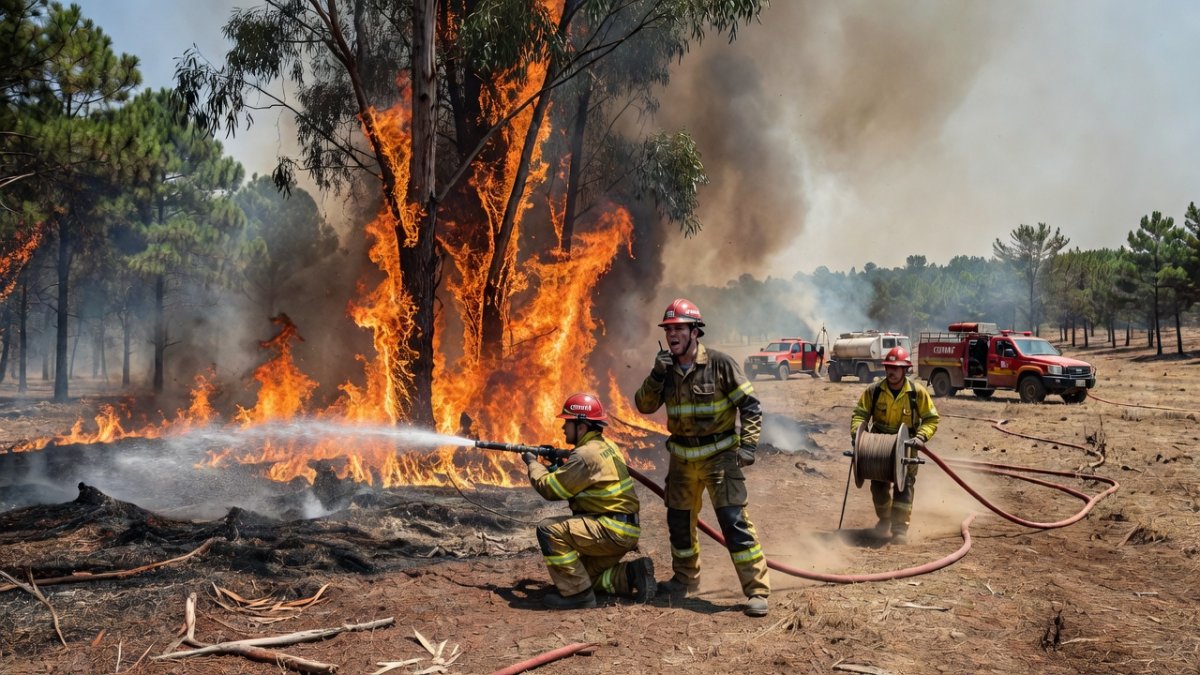
CONAF deployed 4,385 brigadistas and 92 aircraft within 48 hours, while SENAPRED coordinated inter-ministerial logistics. President Gabriel Boric activated the State of Catastrophe on 5 January, unlocking emergency funds and military support. Governor Rodrigo Díaz and Biobío Intendant Daniela Giacaman established unified command posts in Concepción. Minister of Housing Carlos Montes and Minister of the Interior Carolina Tohá coordinated evacuation centers that sheltered 18,000 people nightly. Former presidential candidate José Antonio Kast criticized the speed of resource allocation, arguing that budget constraints limited aerial assets. Nevertheless, the coordinated response prevented a higher death toll; no fatalities occurred inside official shelters. Universidad del Bío-Bío provided real-time satellite mapping that improved retardant drops by 34 percent compared with 2023 protocols.
Human Impact, Evacuations, and Community Resilience
More than 50,000 residents fled their homes, many with only minutes’ notice. In Tomé, entire families lost generational homes and livestock. Mental-health teams reported acute stress disorders among 42 percent of evacuees surveyed. Indigenous Mapuche communities in Florida faced additional cultural losses when sacred ñadi wetlands burned. Local radio stations and WhatsApp neighborhood groups became lifelines, disseminating evacuation routes when cellular networks failed. The Chilean Red Cross and municipal governments distributed 120,000 meals and 80,000 liters of water in the first ten days. Despite the trauma, community solidarity emerged rapidly; spontaneous brigades of volunteers cleared debris and supported elderly neighbors. These grassroots networks later informed the participatory design of the Plan Maestro de Mitigación Urbana.
Recovery Financing and the Plan Maestro de Mitigación Urbana
In June 2026 the government unveiled the Plan Maestro de Mitigación Urbana, a 152-measure roadmap covering eight localities with a budget of 92 billion Chilean pesos (approximately $100 million USD). Core interventions include 12 new mitigation parks, 47 km of upgraded evacuation routes, 85 km of shaded fuel breaks, and aquifer-recharge basins to restore groundwater depleted by firefighting. Implementation is scheduled through 2029, with 40 percent of works contracted to local firms. President-elect José Antonio Kast acknowledged resource scarcity but pledged continuity, noting that international climate funds could cover an additional 25 percent. Early audits show that communities participating in design workshops achieved 28 percent faster permitting than top-down projects. The plan also mandates replacement of high-risk plantations within 500 meters of urban boundaries with native sclerophyllous species.
Prevention Innovations and International Partnerships
Chile has strengthened prevention through community workshops reaching 65,000 residents and a new memorandum of understanding with CAL FIRE for joint training. Artificial-intelligence models developed by Universidad del Bío-Bío now predict ignition probability 72 hours in advance using satellite, weather, and social-media data, achieving 87 percent accuracy in 2025 tests. Drone fleets equipped with infrared cameras patrol high-risk corridors daily. The National Plan for Integrated Fire Management aims to reduce human-caused ignitions by 50 percent by 2030 through targeted education and stricter enforcement of agricultural-burn permits. These measures build on lessons from the 2024 Viña del Mar tragedy and position Chile as the regional leader in wildfire governance.
Latin American Context and Chile’s Comparative Advantage
While Chile battled its fires, Argentina confronted simultaneous blazes in Patagonia, Colombia issued red alerts for the Andean cordillera, and the Amazon basin endured its worst drought in four decades. Across the region, wildfire risk is rising, yet Chile possesses the strongest institutional architecture: professional brigades, satellite monitoring, and dedicated disaster legislation. The Biobío experience offers transferable lessons—particularly the integration of AI forecasting with community evacuation drills. Regional cooperation through the Andean Community and Mercosur could accelerate technology transfer, but funding gaps remain acute outside Chile. The January 2026 fires underscore both the urgency of hemispheric climate action and Chile’s potential role as a knowledge exporter in fire-resilient landscape management.
Conclusion
The January 2026 Chile forest fires exposed the lethal intersection of climate extremes, monoculture expansion, and human ignition sources. Yet the rapid institutional mobilization, ambitious Plan Maestro recovery framework, and emerging prevention technologies demonstrate that Chile can adapt. Sustained investment, diversified forestry, and deeper community engagement will determine whether future fire seasons remain survivable. As Latin America’s wildfire threat intensifies, Chile’s experience offers both cautionary data and a replicable roadmap for resilience. By Elena Vasquez, Staff Writer
This article was produced with AI-assisted research and editorial support. Reporting is based on sources cited in the article.
What's Your Reaction?
 Like
0
Like
0
 Dislike
0
Dislike
0
 Love
0
Love
0
 Funny
0
Funny
0
 Wow
0
Wow
0
 Sad
0
Sad
0
 Angry
0
Angry
0

Latin America Correspondent at Global1.News. Based in Mexico City, covering politics, economics, energy, and culture across the region. Brings an on-the-ground perspective to stories spanning from the Rio Grande to Patagonia.














Comments (0)