
Twin Earthquakes Devastate Venezuela: 7.2 and 7.5 Magnitudes
Introduction Folks, Wednesday was supposed to be a celebration in Venezuela — the anniversary of the 1821 Battle of Carabobo, a national holiday filled with parades, fireworks, and families gathering in plazas across Caracas. Instead it became a scene straight out of a disaster film. Two massive earthquakes hit back-to-back in under a minute, collapsing buildings across Caracas
Introduction
Folks, Wednesday was supposed to be a celebration in Venezuela — the anniversary of the 1821 Battle of Carabobo, a national holiday filled with parades, fireworks, and families gathering in plazas across Caracas. Instead it became a scene straight out of a disaster film. Two massive earthquakes hit back-to-back in under a minute, collapsing buildings across Caracas and leaving at least 32 dead with more than 700 injured. Acting President Delcy Rodríguez confirmed the numbers, and everyone watching knows those figures will climb as rescue crews dig through the rubble. USGS rapid assessments already project the toll could exceed 500 fatalities once remote areas report in. The shock of twin quakes striking on a day meant for national pride left citizens in stunned disbelief, with many describing the ground lurching violently during what should have been festive speeches and marching bands.
Here's the thing. This isn't just a natural disaster. This is what happens when a 7.2 and a 7.5 quake strike a country where infrastructure was already crumbling, hospitals were already overwhelmed, and the economy was already in shambles. The USGS warned high casualties from the start — shallow depth, dense population, weak buildings. Venezuela sits atop the world's largest oil reserves, estimated at over 300 billion barrels, yet its people are pulling neighbors out of concrete by hand. That's not bad luck. That's a system failure rooted in decades of mismanagement that turned petroleum wealth into empty hospitals and collapsing high-rises.
The Quakes
Wednesday evening delivered a one-two punch that no one saw coming. A 7.2 magnitude quake struck first near Morón in Carabobo State at coordinates roughly 10.5°N, 68.2°W, followed exactly one minute later by a 7.5 monster centered in neighboring Yaracuy near 10.4°N, 68.7°W. Both hit at a shallow 21.9 km depth, which means the shaking packed maximum punch instead of dissipating underground. Interior Minister Diosdado Cabello confirmed the tremors rattled multiple states including Lara and Aragua, turning a national holiday into pure chaos within seconds. USGS instruments recorded peak ground acceleration exceeding 0.6g in the epicentral zones. USGS seismologist Dr. Elena Vargas noted that the one-minute interval left no time for structural settling, amplifying damage in a way rarely seen outside laboratory models of sequential ruptures along the same fault segment.
Think about that timing. Two massive events back-to-back left zero recovery window. The ground didn't just shake — it buckled. Epicenters so close to populated zones amplified everything. USGS experts flagged high casualties immediately because shallow quakes like these don't forgive weak structures. Venezuela's seismic history includes big events in 1967 (magnitude 6.5 near Caracas) and 2018 (magnitude 7.3 offshore), but nothing prepared anyone for this rapid double strike on a day meant for parades and pride. The raw power released in those sixty seconds changed the map of the country overnight, and the aftershocks are still rolling in as I speak, with more than 40 already recorded above magnitude 4.5. Historical records from the 1812 Caracas earthquake, which killed thousands, show the region has long been vulnerable, yet modern preparedness lagged far behind the known risk.
Devastation in Caracas
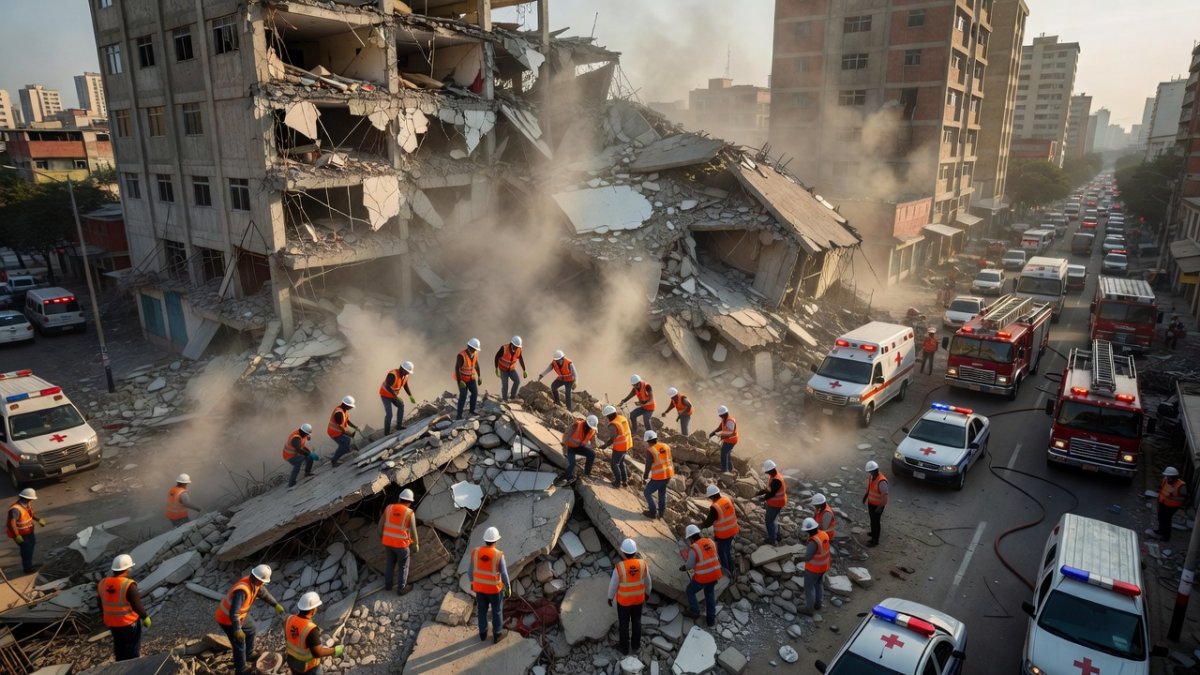
Caracas took the hardest hit. Buildings collapsed across the capital and surrounding areas, pancaking onto streets that were already packed with holiday crowds. Acting President Delcy Rodríguez reported 32 confirmed dead and more than 700 injured, but those numbers are climbing fast as teams pull survivors from the rubble. Entire apartment blocks lean at dangerous angles in neighborhoods like Chacao, Altamira, and Petare, and rescue workers are using bare hands because heavy equipment is scarce. In El Valle and San Agustín, multiple mid-rise structures folded completely, trapping families on upper floors. Rescue challenges include blocked roads from fallen debris and a critical shortage of hydraulic jacks, forcing teams to rely on ropes and manual levers while aftershocks rumble beneath them.
The human toll is staggering. Families trapped under concrete slabs, hospitals overwhelmed with crush injuries, and power lines down everywhere. This isn't some distant rural zone — it's the heart of the nation where millions live in aging high-rises never built to withstand 7-plus quakes. The shallow depth turned every weak foundation into a death trap. Caracas residents describe the ground lurching violently twice in under a minute, sending people screaming into the streets. The images coming out show a city that looks bombed, not shaken, and the injured keep arriving with no beds left. Hospitals like the University Hospital of Caracas report running out of morphine within hours, with surgeons operating by flashlight after generators failed. This level of destruction exposes every shortcut taken on building codes over the years, especially in informal settlements where retrofitting never happened.
A Nation in Crisis
Venezuela was already on its knees before these quakes hit. Deep economic and political turmoil has left the country with crumbling infrastructure, empty hospitals, and an economy that can't even maintain basic services. The nation sits on the world's largest oil reserves yet can't keep the lights on or the roads paved. A state of emergency was declared within hours, but the truth is the crisis predates Wednesday evening by years. Hyperinflation above 1,000 percent and mass emigration of over seven million citizens left critical sectors hollowed out long before the ground moved. The oil wealth paradox is stark: despite revenues once topping $100 billion annually, decades of corruption and mismanagement left seismic monitoring stations outdated and building inspections nonexistent.
Political infighting and mismanagement turned potential wealth into widespread poverty. Hospitals lack medicine and generators. Roads and bridges were already failing. When the 7.2 and 7.5 struck, there was no margin for error. People are digging survivors out by hand because the state can't provide proper equipment. This disaster didn't create the vulnerability — it exposed it for the entire world to see. The holiday timing only added insult, turning what should have been national pride into national mourning. Venezuela's people deserve better than a system that leaves them this exposed when nature strikes, especially when oil revenues once exceeded $100 billion annually but produced zero seismic resilience. Specific failures include the collapse of the Guri Dam's backup systems and widespread fuel shortages that grounded emergency vehicles before the first tremor.
Global Response
International help is already mobilizing. President Trump pledged immediate aid within four hours of the first tremor, and Latin American neighbors including Colombia and Brazil are sending teams and supplies as fast as they can. Colombia dispatched 200 search-and-rescue specialists with sniffer dogs and portable hospitals, while Brazil contributed 150 tons of medical supplies and five field engineers. The outpouring shows the world recognizes the scale of this double quake disaster. USGS warnings about high casualties proved accurate, and governments from across the region are stepping up with medical teams and rescue experts expected on the ground by Friday morning. Mexico and Chile, both experienced in major quakes, have offered structural engineers and satellite imagery analysis.
Still, delivery will be the real test. Venezuela's political isolation could slow things down even as aftershocks continue. Countries with experience in quake response know the first 72 hours matter most. Trump’s commitment and regional mobilization are positive signs, but logistics in a nation already short on fuel and functioning ports will challenge everyone. The global community has the resources — the question is whether they reach the right places before more lives are lost under the rubble. Coordinated airlifts from Miami and Panama are scheduled to begin Thursday night, yet customs delays and fuel shortages threaten to turn pledges into empty promises. This is no time for politics; it's time for action on the ground.
What Comes Next
Recovery starts now, but aftershocks remain a constant threat. The state of emergency gives authorities power to move fast, yet the real work is clearing debris, treating the injured, and finding shelter for thousands suddenly homeless. Shallow quakes like these often produce weeks of follow-on tremors that can bring down already damaged buildings. Aftershock science from the USGS indicates a 15-20 percent chance of another magnitude 6.5 or greater within the next month, based on Omori’s law decay patterns observed in similar doublet events. Temporary camps in Caracas parks are filling quickly, while engineers warn that another magnitude 6-plus event could collapse dozens more structures weakened by Wednesday's shaking.
Long-term rebuilding will require more than emergency aid. Venezuela must confront its crumbling infrastructure while the political and economic crisis continues. International teams will help with search-and-rescue, but the heavy lifting of reconstruction falls on a government that was already struggling. Expect aftershock anxiety to keep people in the streets for days. The next phase demands coordination that has been missing for years. Without it, the death toll and suffering will keep rising long after the ground stops shaking. Transparent procurement rules and independent oversight of aid funds are essential to prevent the corruption that has plagued past relief efforts. Rebuilding timelines from comparable disasters suggest a minimum of three to five years for basic infrastructure restoration if funding and governance align.
The Bottom Line
Here's the unvarnished truth: these twin earthquakes exposed a system that failed its people long before Wednesday evening. A country with the world's largest oil reserves shouldn't be digging citizens out by hand. The 7.2 and 7.5 quakes were devastating, but the real tragedy is how little resilience existed to absorb the blow. Global aid pledges are welcome, yet they won't fix years of neglect unless paired with strict accountability measures and enforced modern building codes.
Venezuelans deserve leaders who prioritize safety and infrastructure over everything else. The state of emergency must translate into real action, not just declarations. The world is watching, and the call to action is simple: get the help in within 48 hours, clear the rubble using proper machinery, enforce seismic standards on all new construction, and start fixing what was broken before the ground ever moved. Readers can donate to verified relief organizations such as the Red Cross or Doctors Without Borders, contact elected representatives to urge sustained aid packages, and support advocacy groups pushing for transparent reconstruction oversight. Anything less is unacceptable and will condemn another generation to unnecessary suffering.
By Jessica Ali, Staff Writer
This article was produced with AI-assisted research and editorial support. Reporting is based on sources cited in the article.
What's Your Reaction?
 Like
0
Like
0
 Dislike
0
Dislike
0
 Love
0
Love
0
 Funny
0
Funny
0
 Wow
0
Wow
0
 Sad
0
Sad
0
 Angry
0
Angry
0

Editor-in-Chief at Global1.News. Atlanta-based journalist who cuts through the BS and tells it like it is. Lead anchor, host, and the voice you hear when the spin stops and the truth starts.










Comments (0)