
Messi Breaks World Cup Scoring Record with 18 Goals in 2026
Lionel Messi has done it again. At 39 years old, playing in his sixth and final World Cup, the Argentine legend has become the all-time leading scorer in FIFA World Cup history with 18 goals — surpassing Miroslav Klose's 16 — and he's not done yet. For South African football fans watching the 2026 World Cup unfold in North America, Messi's brilliance is a reminder of the beauti
Lionel Messi has done it again. At 39 years old, playing in his sixth and final World Cup, the Argentine legend has become the all-time leading scorer in FIFA World Cup history with 18 goals — surpassing Miroslav Klose's 16 — and he's not done yet. For South African football fans watching the 2026 World Cup unfold in North America, Messi's brilliance is a reminder of the beautiful game's power to unite, inspire, and rewrite history.
Messi's Last Dance: Argentina's Icon Shatters World Cup Scoring Record at 2026 World Cup
Arlington, Texas – June 2026 — 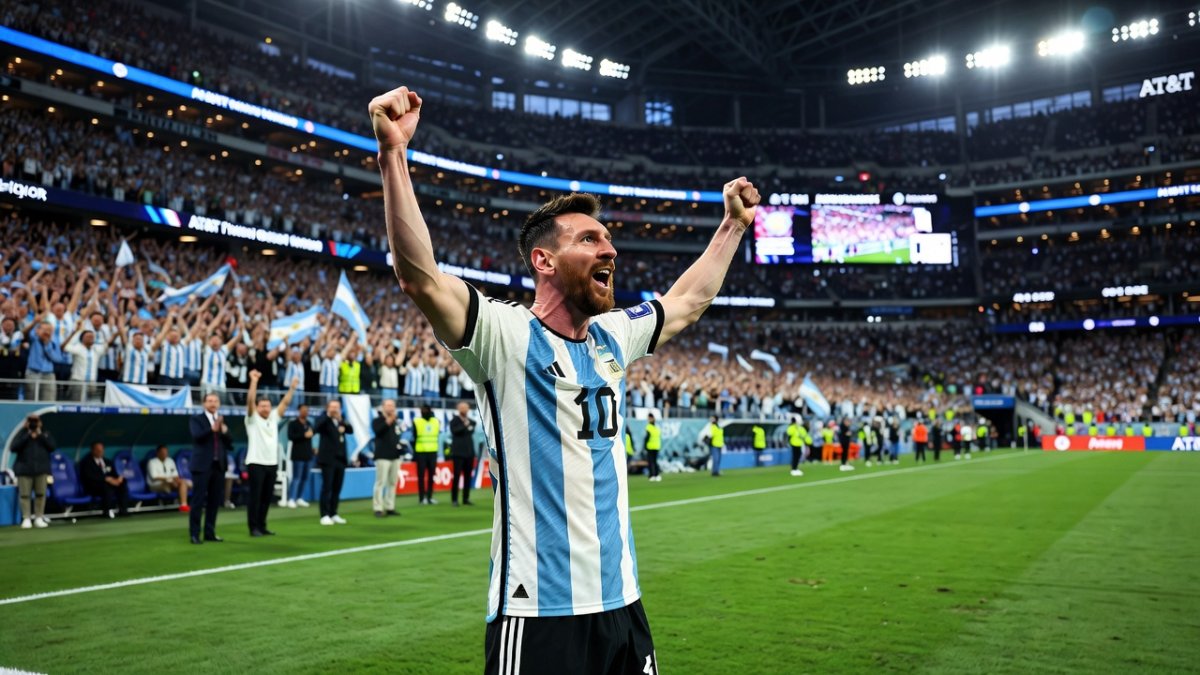
The Moment Messi Rewrote History
On June 22 2026 at AT&T Stadium in Arlington Texas Lionel Messi scored a brace against Austria to give Argentina a 2-0 victory in their second Group J match. The two goals took his career World Cup tally to 18 surpassing Miroslav Klose's previous record of 16. Argentina thereby secured qualification for the Round of 32 with one group match still to play.
Messi had already scored a hat-trick against Algeria in the opening match so these two strikes against Austria meant he had personally scored all five of Argentina's goals at the tournament. The 39-year-old Inter Miami forward broke the overall World Cup scoring record that had belonged to Marta across both men's and women's competitions. South African fans watching the match on television immediately compared the moment to the pride felt when Bafana Bafana beat South Korea 1-0 to reach the same knockout stage.
The AT&T Stadium crowd witnessed history unfold in the second half when Messi converted from the penalty spot and then added a clinical finish from open play. Argentina's reigning champions from the 2022 Qatar tournament now sit atop Group J with maximum points. The result also confirmed that Messi's sixth World Cup campaign would continue into the knockout rounds.
Local analysts in Johannesburg noted that the timing of the record-breaking brace on June 22 came just two days before Messi turned 39 on June 24. The achievement instantly became the talking point in South African sports bars where supporters recalled how several South African players had shared pitches with Messi during European club campaigns.
From a Teenager in 2006 to the GOAT in 2026
Messi's first World Cup goal arrived in 2006 against Serbia when he was still a teenager representing Argentina at the tournament in Germany. That strike began a journey that now spans six World Cups across 2006 2010 2014 2018 2022 and 2026. The progression from promising youngster to all-time leading scorer reflects sustained excellence over two decades.
By the time Argentina lifted the trophy in Qatar in 2022 Messi had already established himself as the focal point of the national team. His return for the 2026 defence at the age of 39 demonstrates remarkable longevity. South African football observers often cite this career arc when discussing the importance of player development pathways from school level upward.
The 18 goals now on Messi's World Cup record include the hat-trick against Algeria and the brace against Austria in Texas. These strikes have come in a tournament where he remains the sole goalscorer for the defending champions. The consistency across six editions of the competition sets a benchmark that few athletes in any sport have matched.
Many South African midfielders who competed in European leagues during Messi's prime years have spoken about the difficulty of containing his movement. Their experiences underline how Messi's evolution from 2006 teenager to 2026 record-breaker has influenced coaching methods back home in the Premier Soccer League.
Argentina's Title Defence — The Reigning Champions Keep Rolling
Argentina entered the 2026 tournament as holders after their 2022 Qatar triumph and have maintained momentum through the opening two matches. The 3-0 win over Algeria followed by the 2-0 victory against Austria leaves them unbeaten and with five goals scored all by Messi. Qualification for the Round of 32 was achieved with a match to spare in Group J.
The tactical discipline shown by the squad under their current coaching staff has allowed Messi to operate in advanced positions where his finishing has proved decisive. Argentina's ability to control games while conceding nothing in the group stage mirrors the approach that delivered the 2022 title. South African coaches studying the matches have highlighted the value of structured build-up play that creates space for star forwards.
With the Round of 32 now secured the focus shifts to maintaining form through the remainder of the group phase. The fact that Messi has shouldered the entire goalscoring burden so far illustrates both his individual quality and the team's reliance on his presence. Bafana Bafana's own qualification via a 1-0 win over South Korea provides a parallel example of how African sides can progress through disciplined defensive displays.
Domestic South African clubs have begun scheduling youth training sessions around Argentina's remaining fixtures to expose young players to the patterns used by the champions. This grassroots interest stems directly from the visible success of Messi's side in defending their crown.
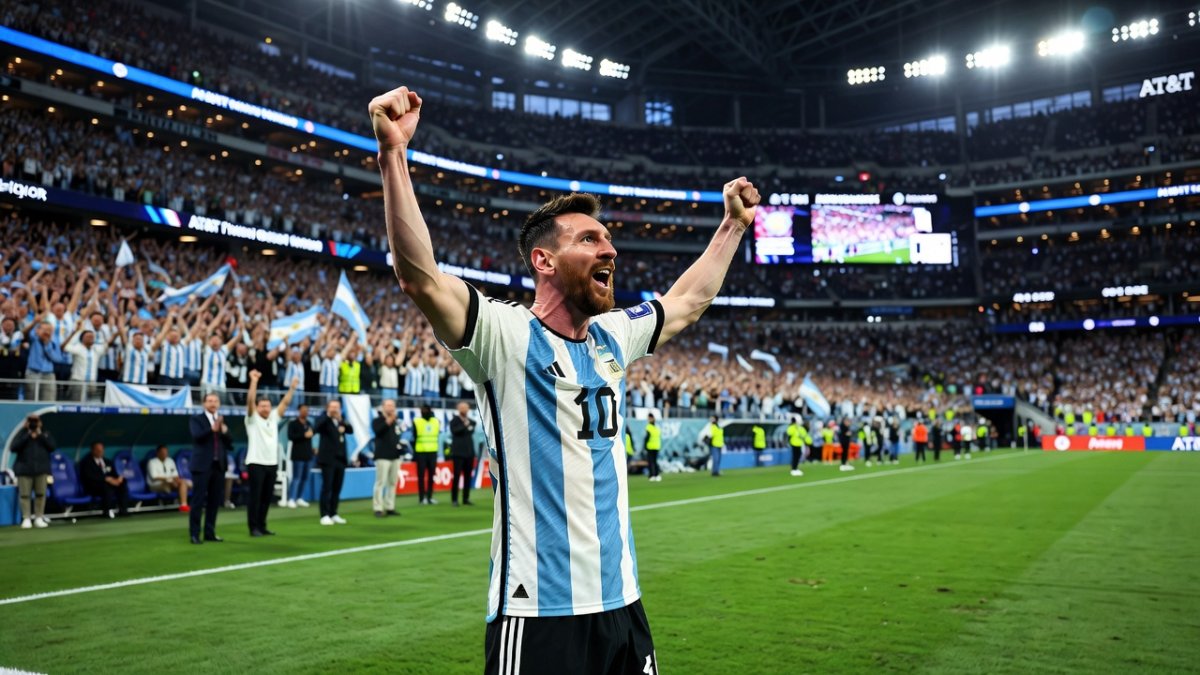
How Messi Compares: The Numbers Behind the Record
Messi's 18 World Cup goals stand one ahead of Miroslav Klose's 16 and also surpass the combined men's and women's record previously held by Marta. These figures come from appearances across six tournaments beginning with his debut goal against Serbia in 2006. The numerical superiority is clear and undisputed in the official FIFA records.
Within the current 2026 campaign Messi has converted a hat-trick against Algeria and a brace against Austria for a total of five goals while his teammates have yet to score. This personal contribution has driven Argentina's perfect start and their qualification for the knockout phase. The efficiency of his finishing underpins the statistical case for his place at the summit of World Cup scoring charts.
Comparisons with previous record holders focus on the span of tournaments rather than single editions. Messi's goals have been spread across 2006 through 2026 whereas Klose's 16 came in four appearances. The longevity factor adds weight to the achievement when measured against historical benchmarks.
South African statisticians tracking the tournament have noted that Messi's 18 goals also exceed the career international tallies of several prominent African strikers. This context helps local fans appreciate the scale of the record while celebrating Bafana Bafana's own progress to the Round of 32.
What Messi's Greatness Means for African and South African Football
South Africa has produced several top footballers who have played alongside or against Messi during their European careers and those experiences continue to shape domestic coaching philosophies. The sight of Messi rewriting World Cup history serves as motivation for young South African talents aiming to reach similar stages. Bafana Bafana's 1-0 victory over South Korea that secured their own Round of 32 place shows the competitive standard now expected on the global stage.
Transformation programmes run by SAFA emphasise exposure to elite match footage and Messi's performances provide clear examples of movement off the ball and finishing under pressure. Grassroots academies across Gauteng and the Western Cape have incorporated clips from the Argentina matches into training modules. The connection between Messi's record and local development pathways remains direct and practical.
National pride in South African sport often finds expression through football and Messi's achievement resonates beyond Argentina. Supporters here recognise the unifying power of individual excellence within a team context especially as Bafana Bafana prepare for their knockout fixture. The shared narrative of African qualification alongside Argentina's success strengthens continental solidarity.
Discussions at SA Sports Ministry level frequently reference the need for sustained investment in youth structures to produce players capable of competing at Messi's level. His 18-goal milestone acts as a measurable target that underscores the importance of long-term planning in South African football governance.
The Final Dance — A Legend's Last World Cup
Messi turned 39 on June 24 2026 just two days after breaking the World Cup scoring record at AT&T Stadium. This sixth and final World Cup appearance follows his earlier participations in 2006 2010 2014 2018 and 2022. The physical demands of the tournament at this stage of his career highlight the exceptional conditioning required to maintain elite performance.
Argentina's reliance on his goals in the opening matches has placed additional spotlight on his role within the squad. With qualification secured the remaining group fixture offers an opportunity to manage minutes ahead of the Round of 32. South African observers have drawn parallels with local veterans who extended their careers through careful load management.
The emotional weight of a potential farewell tournament adds narrative depth to every match Argentina plays. Messi's first goal in 2006 against Serbia now sits at the opposite end of a timeline that includes a 2022 world title and the current 18-goal record. This arc provides a complete picture of sustained excellence across two decades.
Local broadcasters in South Africa have dedicated segments to Messi's journey and its implications for athletes considering longevity in professional sport. The example of competing at the highest level into his late thirties offers lessons for players in the Premier Soccer League and national teams alike.
What to Watch For — Argentina's Path to Glory
Argentina's path from Group J qualification into the Round of 32 and beyond will be defined by their ability to distribute goalscoring responsibility beyond Messi. The five goals he has scored so far have carried the team through the opening phase but knockout football demands collective contributions. The defending champions from Qatar 2022 understand the tactical adjustments required at each stage.
Opponents will study the patterns that produced the hat-trick against Algeria and the brace against Austria at AT&T Stadium. Argentina's coaching staff will likely rotate personnel while preserving the structure that has kept clean sheets in both matches. South African tactical analysts have already begun breaking down these patterns for domestic coaches.
Bafana Bafana's own presence in the Round of 32 creates the possibility of increased African viewership for Argentina's knockout matches. The shared qualification experience links the two nations' campaigns and heightens interest across the continent. Messi's continued involvement guarantees global attention on every fixture.
The historical significance of a successful title defence would place Argentina among the rare sides to win consecutive World Cups. Messi's record of 18 goals already ensures his name will be central to any discussion of the 2026 tournament regardless of the final outcome. South African fans will follow the remaining matches with the same passion they showed during Bafana Bafana's qualification campaign.
By Dante Williams, Staff Writer
This article was produced with AI-assisted research and editorial support. Reporting is based on sources cited in the article.
What's Your Reaction?
 Like
0
Like
0
 Dislike
0
Dislike
0
 Love
0
Love
0
 Funny
0
Funny
0
 Wow
0
Wow
0
 Sad
0
Sad
0
 Angry
0
Angry
0

Breaking News and Investigations Correspondent at Global1.News. Based in London, covering global breaking news, security, and investigative stories. Known for digging deeper and connecting the dots across continents.










Comments (0)