
Venezuela Twin Earthquakes: 1,700 Dead as Toll Climbs
Folks, the ground didn't just shake last Wednesday. It cracked open Venezuela's already fragile reality, and the aftershocks are still exposing just how little those in charge seem prepared to do about it. According to Al Jazeera, the death toll has now surpassed 1,700, with the twin earthquakes striking in quick succession along the coastal town of La Guaira. A 12-storey apart
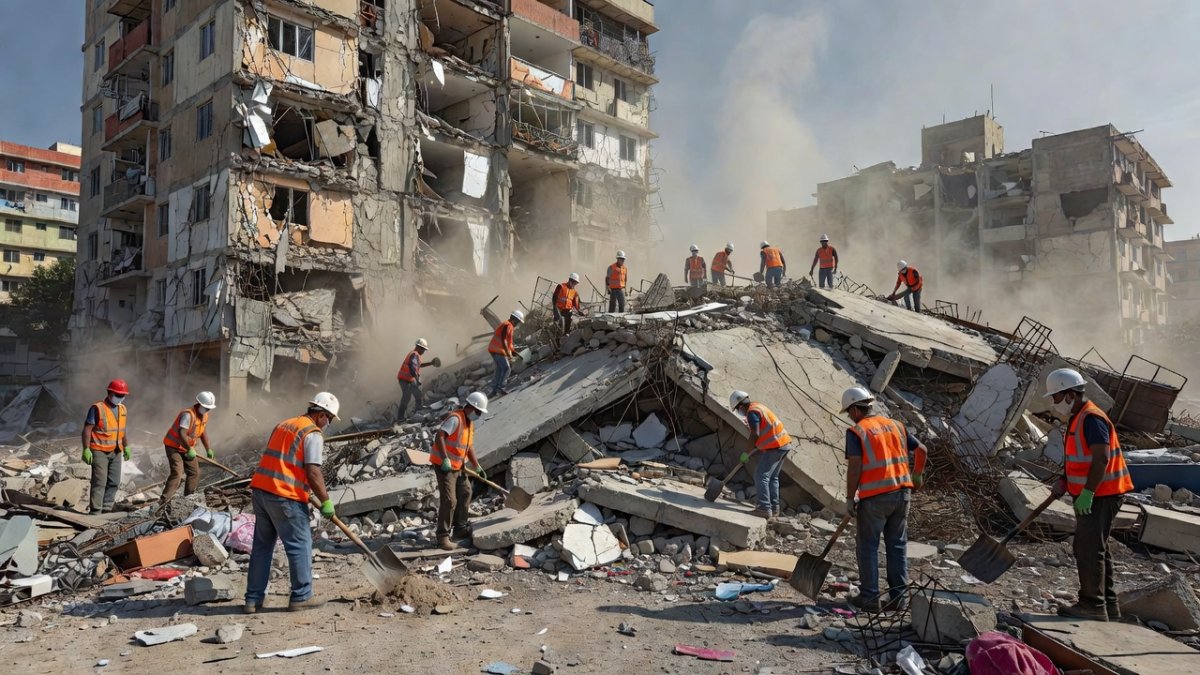
Folks, the ground didn't just shake last Wednesday. It cracked open Venezuela's already fragile reality, and the aftershocks are still exposing just how little those in charge seem prepared to do about it. According to Al Jazeera, the death toll has now surpassed 1,700, with the twin earthquakes striking in quick succession along the coastal town of La Guaira. A 12-storey apartment building pancaked straight down. Tens of thousands are still missing. And the survivors — the ones clawing through rubble with crowbars and bare hands — are running out of time.
Interim President Delcy Rodríguez has called this "the most brutal natural catastrophe" in Venezuela's history. She is not wrong about the scale. But as BBC correspondent Orla Guerin reports from the scene, the anger on the ground is directed squarely at the government's response — or lack of it. This is not a weather event you can blame on nature. This is a test of leadership, and so far the results are not looking good.
Let me be clear about what we're looking at here. La Guaira is a densely populated coastal state just north of Caracas — the same region devastated by the 1999 Vargas mudslides that killed an estimated 30,000 people. The twin quakes hit the same vulnerable geography: hillsides crowded with informal housing, aging infrastructure, and a population that has already survived years of hyperinflation, migration, and political chaos. Add a major earthquake to that mix, and you get the catastrophe unfolding right now. The BBC has at least three correspondents on the ground. NPR is running continuous coverage. This is not a minor event being inflated — this is the biggest natural disaster to hit Venezuela in a generation, and it is happening to a country that was already on its knees.
The Twin Quakes That Didn't Stop
The first earthquake hit La Guaira in the early hours last Wednesday. Minutes later, a second, stronger tremor finished the job. Buildings that had stood for decades collapsed in seconds. The 12-storey residential block on the main coastal road became a mass grave before anyone could react. Rescue crews — backed by dogs, drones, and sensitive sound detection equipment — have been working around the clock. But as the BBC reports, "In areas devastated by the twin earthquakes, people are using crowbars, pickaxes and their bare hands to try to reach survivors." The official machinery moves slowly. The desperate move faster.
Aftershocks continue to rattle the region, forcing constant pauses in rescue operations. Every tremor sends residents screaming back into the streets. The timeline is brutal: one quake, then another, then a death toll that keeps climbing. Al Jazeera confirmed Wednesday evening that confirmed fatalities had surpassed 1,700, with numbers still expected to rise as rescue teams reach deeper into the debris.
The Human Toll: A Stadium Full of Survivors and One Miracle Baby
The baseball stadium in La Guaira has become a makeshift shelter for hundreds of displaced families. Survivors sleep on donated blankets, share bottles of water, and wait for word on loved ones still trapped. The BBC's video report from the stadium shows families depending entirely on donated food and clothing — hopeful the authorities will find them temporary accommodation while the country rebuilds. But hope only stretches so far when the aftershocks keep coming and the missing count keeps climbing.
One resident told the BBC that she had been living on a stadium bench for five days with her two young children. Her husband is still under the rubble of the 12-storey building. She does not know if he is alive. Nobody can tell her. That is the reality right now in La Guaira — thousands of families suspended between grief and uncertainty, waiting for news that may never come while rescue crews work in shifts around pancaked concrete.
But amid the devastation, one story broke through. "The miracle rescue of 18-day-old baby Juan David is a symbol of hope in Venezuela after the devastating earthquakes," the BBC reported. The newborn was pulled alive from the rubble alongside his mother, who later told reporters that the baby's cries kept her fighting for air in the narrow pocket that saved them. Eighteen days old and already a survivor. "He helped me survive," his mother told the BBC in an interview that has been shared across Venezuela. For every miracle, though, there are silent tragedies. Parents continue digging through pancaked concrete for children whose names they still whisper. Tens of thousands remain unaccounted for — not recovered, not confirmed dead, just gone.
Government Response Under Fire
Interim President Delcy Rodríguez declared a national emergency within hours of the quakes, but on the ground in La Guaira, that declaration has not translated into visible action. The BBC reports directly: "People in areas devastated by twin earthquakes say they need more support from the government." Not more statements. More support. Heavy equipment arrived late. Rescue teams remain stretched thin. Tents and medical supplies are being distributed, but survivors say the pace is far too slow for the scale of the destruction.
The anger is not abstract. BBC journalist Orla Guerin filed a video report titled "Anger directed at Venezuela's official response to earthquake recovery," capturing residents expressing fury over the state's efforts — or lack thereof — to locate survivors and help victims. When the cameras catch people screaming at officials in the streets, you know the frustration has boiled over.
Political Test: Can This Government Deliver?
NPR put it bluntly: "Venezuela's deadly quakes put its US-backed government to the test." And this is not just any test. The 1999 Vargas disaster — mudslides that killed an estimated 30,000 people — became the defining moment for Hugo Chávez early in his presidency. He used the crisis to consolidate power, deploying the military and nationalizing the response, emerging as a strongman who could act while the old guard dithered. Now history is repeating, but with a very different set of circumstances.
NPR reports that "La Guaira state bore the brunt of the earthquake damage, bringing memories of a 1999 disaster that became President Hugo Chávez's first major test. Now, it's the acting leader's challenge." The difference is that Rodríguez does not have Chávez's political capital or military muscle. The economy is in ruins after years of sanctions and mismanagement. The state's capacity to respond to a crisis of this magnitude has been hollowed out by a decade of brain drain and budget cuts. International aid is complicated by the fact that different countries recognize different Venezuelan governments. And every delayed rescue — every piece of equipment that arrives a day late — becomes a political weapon for her opponents.
The question is not whether the government is trying. The question is whether trying is enough when the ground is still shaking and the missing count keeps rising. If Rodríguez pulls this off — if she can coordinate a response that saves lives and rebuilds trust — she will have proven something important. If she fails, this disaster will define her administration the way Vargas defined Chávez, but without the same ending.
The Road Ahead: Aftershocks, Recovery, and Accountability
Recovery will take months, if not years. The aftershocks have not stopped, and each new tremor risks collapsing what little remains standing. International aid is arriving in pieces — hampered by logistics, sanctions complexity, and the sheer scale of the destruction. Rescue teams will keep using dogs, drones, and sound detectors until the last possible survivor is found, but the window is closing fast. The BBC reports that rescue operations continue with "teams armed with a range of techniques" digging through rubble, but the brutal reality is that survival after five days in these conditions is measured in hours, not days.
The longer-term question is whether this disaster forces genuine change in Venezuela's disaster preparedness and response infrastructure — or whether it becomes another tragedy filed away and forgotten once the cameras leave. As the BBC's Orla Guerin continues reporting from the scene, the world has a choice: pay attention now, or wait for the next catastrophe to ask why nothing changed. Rebuilding La Guaira will require international coordination, political will, and resources that Venezuela does not have on its own. The 1999 Vargas recovery took years and billions of dollars. This time, the country has even less to work with.
What You Can Do Right Now
Folks, this story is not going away just because the news cycle moves on. Demand that US support for Venezuela includes immediate, transparent disaster aid. Donate to verified humanitarian organizations already operating in La Guaira — not bureaucratic pipelines that take months to deliver. Share the BBC and NPR reporting so the pressure never fades. Share the story of baby Juan David and the thousands still missing. The people of La Guaira do not need our sympathy. They need heavy equipment, medical teams, and a government that matches its words with action. They needed it last Wednesday. They still need it today.
By Jessica Ali, Global 1 News
This article was produced with AI-assisted research and editorial support. Reporting is based on sources cited in the article.
What's Your Reaction?
 Like
0
Like
0
 Dislike
0
Dislike
0
 Love
0
Love
0
 Funny
0
Funny
0
 Wow
0
Wow
0
 Sad
0
Sad
0
 Angry
0
Angry
0

Editor-in-Chief at Global1.News. Atlanta-based journalist who cuts through the BS and tells it like it is. Lead anchor, host, and the voice you hear when the spin stops and the truth starts.











Comments (0)