
Venezuela Earthquake Rescue: 3-Year-Old Boy Saved After 6 Days Under Rubble
Twin Quakes Devastate Venezuela's Northern Coastline The DW News YouTube short shows dramatic footage of the June 30 rescue of three-year-old Klieber Morán from collapsed concrete in La Guaira state, six days after the disaster struck. Twin earthquakes hit on June 24, 2026, with a magnitude 7.2 foreshock followed 39 seconds later by the magnitude 7.5 mainshock. The epicenters w
Twin Quakes Devastate Venezuela's Northern Coastline
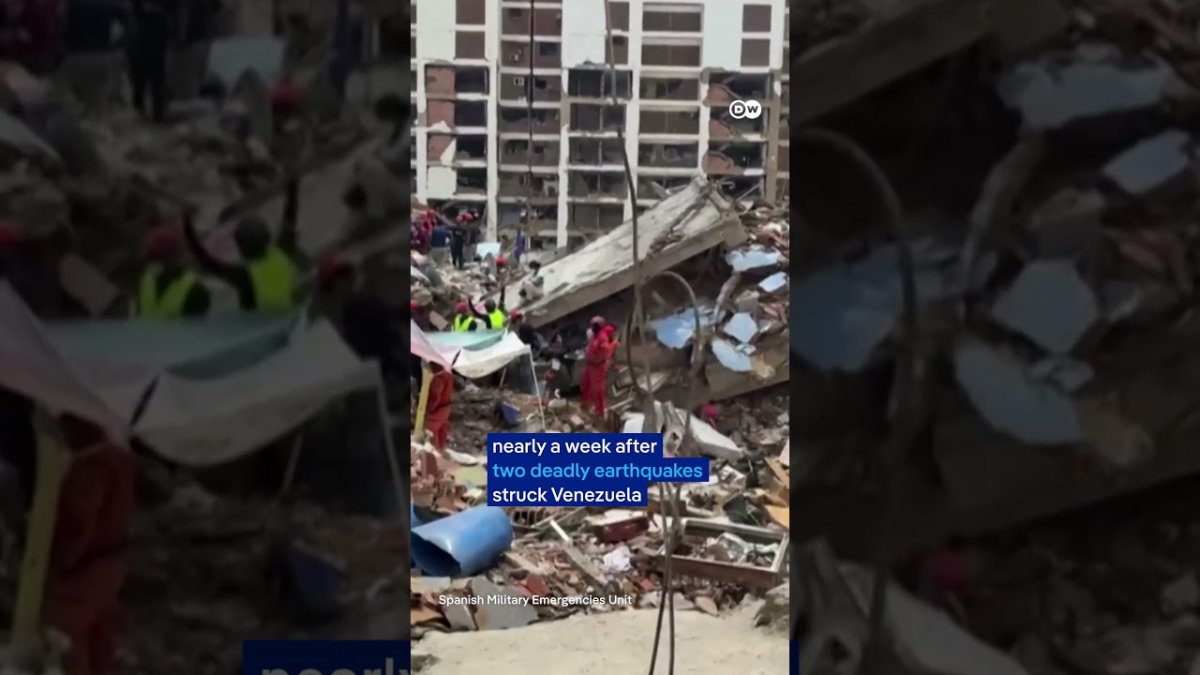
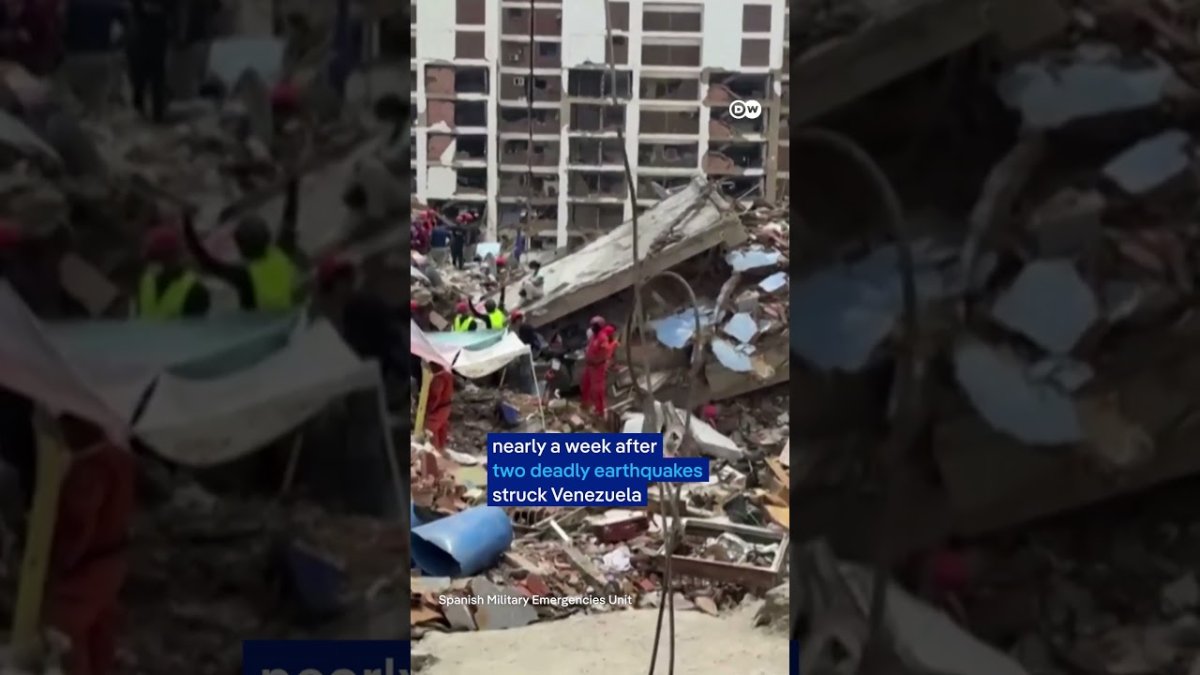
The DW News YouTube short shows dramatic footage of the June 30 rescue of three-year-old Klieber Morán from collapsed concrete in La Guaira state, six days after the disaster struck. Twin earthquakes hit on June 24, 2026, with a magnitude 7.2 foreshock followed 39 seconds later by the magnitude 7.5 mainshock. The epicenters were located in Veroes municipality, Yaracuy state, roughly 100 miles west of Caracas. These events rank as the strongest earthquakes in Venezuela in over a century and caused hundreds of buildings to collapse along the northern coastline.
Affected regions include Yaracuy state, La Guaira state, Caracas, Falcón state, Carabobo state, and Aragua state. More than 1,900 people have been confirmed dead and over 3,000 injured according to official tallies. Americares reports that 50,000 people remain missing across the impacted zones. The scale of destruction has left tens of thousands without power or clean water in port cities like La Guaira.
Klieber Morán: A Miracle Rescue Amid the Rubble
Interim President Delcy Rodríguez announced the rescue of three-year-old Klieber Morán on June 30 in La Guaira state. A Jordanian rescue team pulled the boy from under collapsed concrete where he had survived without food or water for six full days. Medical personnel transported him to a nearby hospital where his condition was reported as stable. The video footage captures the moment responders carefully extracted the child from the debris field.
This rescue stands out amid ongoing operations complicated by continuing aftershocks. Rescue teams have worked around the clock since the June 24 events to reach survivors in heavily damaged coastal areas. Klieber Morán's survival highlights the critical window for locating individuals trapped in reinforced concrete structures common in the region. Families across La Guaira state have gathered at temporary shelters hoping for similar outcomes.
Mexico Sends Topos and SEDENA in Solidarity
Mexico deployed members of the Topos de México volunteer rescue team along with SEDENA personnel as part of the international effort. Topos de México earned international recognition after the 1985 Mexico City earthquake that measured magnitude 8.0 and killed over 5,000 people. The group later responded to the 2017 Puebla earthquake of magnitude 7.1 that claimed 370 lives. Their current deployment to Venezuela follows established protocols under SEDENA's Plan DN-III-E for disaster response.
Over 2,000 rescue workers from 27 countries have arrived in Venezuela, including teams from Jordan, Colombia, Brazil, Chile, Spain, the United States, Turkey, Russia, and France. Mexico's contribution includes specialized equipment and medical support coordinated through the SRE. These efforts connect directly to Mexico's own history of seismic events and the need for rapid cross-border assistance. SEDENA units have focused on search operations in Yaracuy and La Guaira states where structural collapses remain extensive.
The Human Toll on Families and Communities
More than 1,900 confirmed deaths and 3,000 injuries have left families in colonias across Yaracuy and La Guaira states searching for missing relatives. Americares estimates place the number of missing at 50,000, many of them children and elderly residents in coastal communities. The destruction of health facilities has strained local resources, forcing survivors to travel long distances for care. Rural communities and indigenous groups in the affected states face particular challenges accessing aid distribution points.
Small business owners in port areas like La Guaira have lost livelihoods as buildings housing markets and warehouses collapsed. Teachers and students report that schools remain closed indefinitely, disrupting education for thousands of children. Healthcare workers from IMSS-style systems in Mexico have drawn parallels to the strain seen after domestic quakes. The economic impact on these northern states is expected to affect migrant workers and farmers who rely on regional trade routes.
International Aid and Political Tensions
Critics have accused the interim government under Delcy Rodríguez of a slow and politically motivated response to the disaster. Allegations of aid distribution favoring certain areas have surfaced amid ongoing tensions between the government and opposition groups. International aid coordination continues through Palacio Nacional with contributions from the UN and IFRC. The Red Cross activated emergency protocols and deployed pre-positioned supplies of food, water, and medicine.
The United States sent humanitarian aid and additional rescue personnel alongside multiple Latin American nations. Mexico's Topos de México and SEDENA teams operate within this broader framework while maintaining focus on technical search operations. Political frictions have complicated the delivery of supplies to the hardest-hit colonias in Falcón and Carabobo states. Observers note that transparent coordination remains essential for reaching the 50,000 people still reported missing.
Aftershocks and the Long Road to Recovery
Continuing aftershocks have hindered rescue operations in the days since June 24. Tens of thousands of residents lack access to electricity and clean water across the northern coastline. Destroyed health facilities in Yaracuy and La Guaira states have forced medical teams to set up temporary clinics. Long-term recovery efforts are projected to take years given the extent of infrastructure damage in port cities.
Economic disruption in La Guaira has affected trade and tourism sectors that support local families. CFE-style utility repairs face delays due to repeated seismic activity. CONEVAL-equivalent assessments in Venezuela highlight rising poverty levels in the impacted regions. International teams including Mexico's personnel continue to support both immediate rescue and early recovery planning.
Shared Earthquake Memory Connects Mexico and Venezuela
Mexican families understand the trauma of sudden seismic events through the 1985 Mexico City earthquake and the 2017 Puebla disaster. Topos de México's deployments to Haiti in 2010, Nepal in 2015, and Turkey in 2023 demonstrate the organization's ongoing commitment to international solidarity. SEDENA's Plan DN-III-E protocols have guided Mexico's response to Venezuela in the same way they have supported domestic operations. These shared experiences create direct connections between communities in Mexico City, Monterrey, and Guadalajara and those suffering in Caracas and La Guaira.
Teachers and healthcare workers in both countries recognize the long-term effects on children like Klieber Morán who survive such ordeals. The presence of Mexican rescue teams reinforces cultural and historical ties between the two nations. Rural communities in Oaxaca and Mérida have sent messages of support to affected Venezuelan pueblos. This solidarity extends beyond immediate aid to include knowledge sharing on building resilience in earthquake-prone areas.
What to Watch For
Rescue operations will continue in the coming days as aftershocks persist across Yaracuy and La Guaira states. Additional international teams may arrive as the UN and IFRC expand coordination efforts. Mexico's Topos de México and SEDENA personnel are expected to remain on site to assist with structural assessments. Families of the 50,000 missing persons await further updates from interim President Delcy Rodríguez.
Recovery planning will focus on restoring power and water services while addressing allegations of uneven aid distribution. Economic support for small business owners and farmers in the northern states will become a priority in the weeks ahead. Observers will monitor how political tensions influence the pace of reconstruction in Caracas and surrounding regions. Mexican journalists and aid organizations will continue reporting on the shared lessons from this disaster.
By Rosa Martinez, Staff WriterThis article was produced with AI-assisted research and editorial support. Reporting is based on sources cited in the article.
What's Your Reaction?
 Like
0
Like
0
 Dislike
0
Dislike
0
 Love
0
Love
0
 Funny
0
Funny
0
 Wow
0
Wow
0
 Sad
0
Sad
0
 Angry
0
Angry
0
Latin America/Andes Correspondent at Global1.News. Based in Bogota, covering politics, environment, energy, and social movements across the Andean region. Passionate about environmental journalism and communities protecting their land.









Comments (0)