
Judge Blocks Trump USPS Ballot Order Nationwide
In a decisive blow to the Trump administration's efforts to reshape mail voting ahead of the 2026 midterms, U.S. District Judge Emmet Sullivan issued a nationwide injunction on July 1, 2026, halting implementation of the president's March executive order on USPS mail ballot delivery. The ruling prevents the U.S. Postal Service from conditioning mail-in ballot services on states
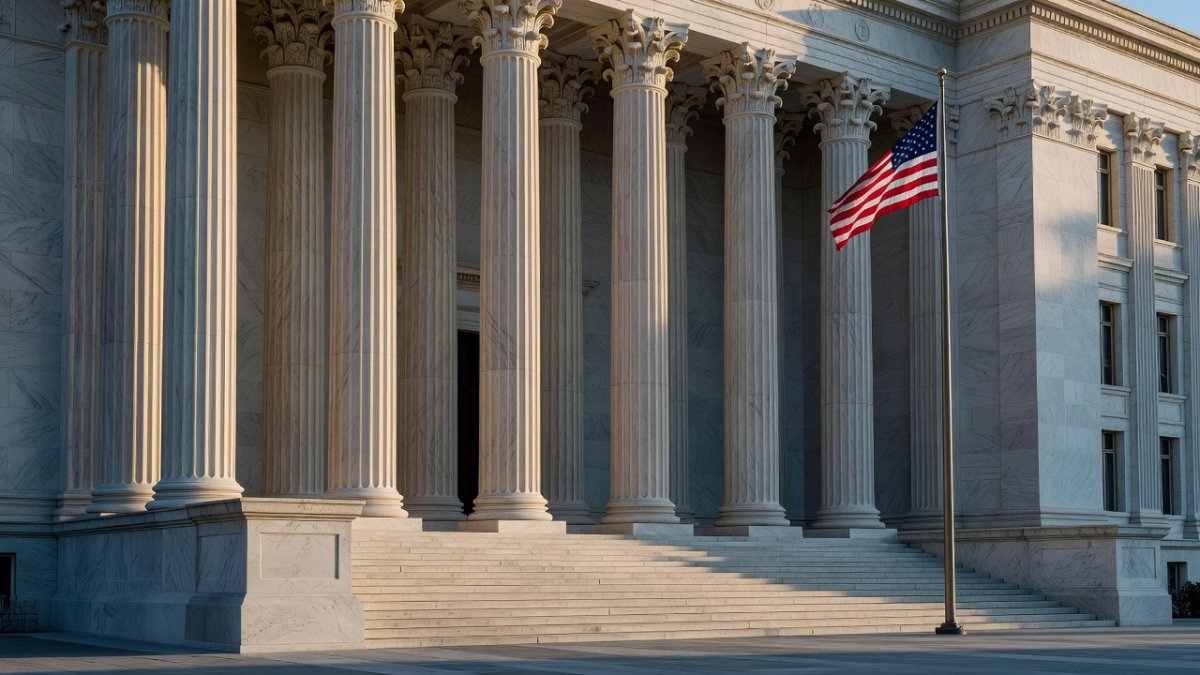
In a decisive blow to the Trump administration's efforts to reshape mail voting ahead of the 2026 midterms, U.S. District Judge Emmet Sullivan issued a nationwide injunction on July 1, 2026, halting implementation of the president's March executive order on USPS mail ballot delivery. The ruling prevents the U.S. Postal Service from conditioning mail-in ballot services on states sharing comprehensive voter lists, a requirement critics have called an unconstitutional overreach.
Sullivan's order extends a June 25 partial block issued by a Boston federal judge that had already protected 23 states and the District of Columbia. By going nationwide, the DC District Court decision ensures uniform protection for voters in every state, preserving access to mail ballots at a time when control of Congress hangs in the balance.
Civil rights organizations immediately hailed the ruling as a vital safeguard. "This decision protects the fundamental right to vote without partisan interference," said a spokesperson for the NAACP. The League of Women Voters echoed the sentiment, calling Sullivan's injunction "a clear victory for democracy."
The Nationwide Block: Sullivan Drops the Hammer
Judge Emmet Sullivan's 42-page opinion meticulously dismantled the administration's legal arguments, finding that the executive order directly violated the terms of a 2021 settlement agreement stemming from a 2020 lawsuit brought by civil rights groups. That earlier case had challenged USPS operational changes that slowed mail delivery in the run-up to the 2020 election. Sullivan ruled that the March 2026 order amounted to an improper attempt to leverage USPS services for political ends, exceeding executive authority under the Postal Reorganization Act.
The court emphasized that the order's requirement for states to transmit detailed voter rolls--including names, addresses, and voting history--lacked any statutory basis and risked exposing sensitive personal data. Sullivan noted that the administration had failed to demonstrate how such data sharing would improve election integrity, instead viewing it as a thinly veiled mechanism to pressure Democratic-led states. "The executive order cannot stand as a lawful exercise of presidential power," Sullivan wrote, citing precedents limiting executive interference in independent agencies like the USPS.
Legal analysts pointed to Sullivan's history of scrutinizing executive actions, including during the first Trump term. The nationwide scope was justified, the judge explained, because piecemeal injunctions would create a chaotic patchwork of mail delivery rules just months before the midterms. Data from the Election Assistance Commission shows that more than 43 million mail ballots were cast in 2024; any disruption in 2026 could disenfranchise millions. Additional analysis from the Brennan Center indicates that mail voting turnout surged 18 percent among voters aged 65 and older in 2024, underscoring the order's potential to suppress senior participation.
Fiery in tone, Sullivan's ruling warned that allowing the order to proceed would "invite future administrations to weaponize federal services against political opponents." The decision drew immediate praise from voting rights advocates who had long warned of renewed suppression tactics targeting mail voting. Experts at the MIT Election Lab added that the ruling reinforces the principle that election administration must remain insulated from short-term political pressures.
What Trump's Executive Order Actually Said
President Trump signed the executive order in March 2026, directing the USPS to withhold mail ballot delivery services from any state that refused to provide full voter registration lists within 60 days. The order framed the requirement as essential for "verifying eligibility" and preventing fraud, though no widespread evidence of mail ballot fraud has been documented in recent cycles according to studies by the Brennan Center and MIT Election Lab. In fact, the Heritage Foundation's own database recorded fewer than 1,500 proven cases of mail-in fraud nationwide since 2016.
Under the order, states would have to transmit electronic files containing every registered voter's name, current address, date of birth, and partisan affiliation where available. Non-compliant states faced complete suspension of USPS handling of outbound and return mail ballots, effectively forcing voters to use in-person or commercial carriers. Administration officials claimed the policy would save taxpayer money and deter non-citizen voting, yet internal USPS estimates projected only marginal cost savings while risking widespread delays. A Government Accountability Office report released in May 2026 projected that compliance costs for states could exceed $240 million.
Critics quickly labeled the measure an attempt to punish states that expanded mail voting during the pandemic. "This is not about security--it's about control," said a Guardian source familiar with the drafting process. The order bypassed Congress entirely, relying on the president's authority over executive agencies despite the USPS's status as an independent establishment. Congressional Democrats introduced the Mail Voting Integrity Act in April to codify protections, though the bill stalled in committee.
Implementation guidance circulated to postal managers in April 2026 outlined strict compliance audits, with regional postmasters instructed to flag ballots from non-cooperating states. The policy would have taken effect on August 1, 2026, leaving little time for states to adjust before early voting began in September. Internal memos obtained by ProPublica revealed that regional directors were told to prepare "contingency staffing plans" for a potential 40 percent drop in mail volume from affected states.
This Isn't the First Time: A Timeline of Legal Challenges
The July 1 ruling builds directly on a 2020 lawsuit filed by the NAACP, League of Women Voters, and allied groups challenging Trump-era USPS operational changes that removed hundreds of mail-sorting machines and reduced overtime. Those changes, critics argued, deliberately slowed mail delivery ahead of the 2020 election. The case resulted in a 2021 settlement requiring the Postal Service to restore capacity and consult stakeholders before future alterations affecting election mail.
On June 25, 2026, a Boston federal judge issued a preliminary injunction covering 23 states plus DC, finding that the March executive order breached the 2021 settlement. That ruling cited internal USPS emails showing the administration had pressured postal leadership to enforce the voter-list condition without adequate legal review. One email from a senior postal official warned that "political directives risk violating our statutory independence."
Sullivan's nationwide extension on July 1 consolidated the legal front, preventing the administration from simply shifting enforcement to unaffected states. Court records reveal that the original 2020 litigation produced over 12,000 pages of discovery, including testimony from former Postmaster General Louis DeJoy acknowledging political pressure during the pandemic period. DeJoy's deposition transcripts showed repeated White House calls seeking faster delivery for certain Republican-led states.
Legal scholars note that the 2021 settlement's anti-retaliation clause proved decisive. Sullivan quoted directly from the agreement: "The Postal Service shall not condition election mail services on any state's compliance with unrelated federal demands." The administration's attempt to do exactly that triggered the nationwide block. Constitutional law professor Pamela Karlan of Stanford described the clause as "a critical guardrail against executive overreach."
What This Means for the 2026 Midterms
With control of both chambers of Congress at stake, the ruling preserves mail voting access in key battleground states including Pennsylvania, Michigan, and Arizona. Election officials in those states had warned that compliance with the executive order would require costly new data-sharing systems and could expose voters to privacy risks under varying state laws. Pennsylvania's chief election officer estimated implementation would cost $47 million and delay ballot processing by up to nine days.
Turnout models from the Center for Election Innovation & Research project that mail ballots will again comprise 30-35 percent of total votes in 2026. Any forced shift to in-person voting would disproportionately affect older voters, rural residents, and communities of color--groups that leaned heavily Democratic in recent cycles. A Tufts University study found that mail voting increased participation by 11 percent among Black voters in 2024.
State election directors expressed relief. "We can now focus on secure, accessible elections rather than fighting federal overreach," said one official quoted in USA Today. The decision also removes a potential flashpoint that could have triggered lawsuits in every non-compliant state, freeing judicial resources for other pre-election disputes. The National Association of Secretaries of State issued a statement welcoming the clarity.
Politically, the ruling hands Democrats a messaging victory on voting rights while forcing Republicans to defend an unpopular policy. Polling from early June showed 62 percent of voters opposed conditioning mail services on data sharing, according to a New York Times/Siena survey. Among independents, opposition reached 71 percent.
The Administration's Next Move
The Department of Justice is expected to file an emergency appeal with the D.C. Circuit within days. Administration lawyers will likely argue that the president retains broad authority over executive agencies and that the 2021 settlement cannot bind future policy choices on election integrity. Solicitor General Elizabeth Prelogar is expected to lead the briefing.
Should the D.C. Circuit uphold Sullivan's injunction, the administration may seek Supreme Court review before the August 1 implementation deadline. Conservative justices have previously shown skepticism toward nationwide injunctions, though the settlement-violation finding may prove difficult to overturn. Legal observers note that Chief Justice Roberts has historically favored narrow remedies in election cases.
Inside the White House, aides are reportedly exploring legislative workarounds or new executive actions targeting only federal employees' ballots. None of these alternatives would restore the original order's broad reach before the midterms. Sources close to the president indicate that a fallback plan involving state-level legislation is also under consideration.
The Bottom Line
Judge Sullivan's nationwide block is more than a legal technicality--it is a firewall against the cynical manipulation of the mail system for partisan gain. Voters deserve elections decided by ballots, not bureaucratic ultimatums. The ruling also highlights the enduring importance of independent judicial oversight in protecting core democratic functions from short-term political maneuvering.
The 2026 midterms will now proceed without this manufactured crisis. Americans must remain vigilant: contact state election offices today to confirm your registration status, request mail ballots at the earliest opportunity, volunteer as a poll watcher, and hold elected leaders accountable through sustained civic engagement. Share this article with friends and family to spread awareness. Democracy is not self-executing; it requires active defense from every citizen.
By Jessica Ali, Global 1 NewsThis article was produced with AI-assisted research and editorial support. Reporting is based on sources cited in the article.
What's Your Reaction?
 Like
0
Like
0
 Dislike
0
Dislike
0
 Love
0
Love
0
 Funny
0
Funny
0
 Wow
0
Wow
0
 Sad
0
Sad
0
 Angry
0
Angry
0

Editor-in-Chief at Global1.News. Atlanta-based journalist who cuts through the BS and tells it like it is. Lead anchor, host, and the voice you hear when the spin stops and the truth starts.













Comments (0)