
Venezuela's Twin Earthquakes Trigger a Public Health Emergency
The twin earthquakes that struck Venezuela on June 24, 2026, have unleashed not only physical destruction but a rapidly escalating public health emergency layered atop a health system already crippled by years of shortages and political neglect. With 2,295 confirmed dead, more than 11,000 injured, and 12,800+ damnificados directly affected, the disaster has displaced millions i
The twin earthquakes that struck Venezuela on June 24, 2026, have unleashed not only physical destruction but a rapidly escalating public health emergency layered atop a health system already crippled by years of shortages and political neglect. With 2,295 confirmed dead, more than 11,000 injured, and 12,800+ damnificados directly affected, the disaster has displaced millions into overcrowded shelters lacking clean water and sanitation. Nearly 59,000 buildings stand damaged or destroyed according to NASA satellite imagery, while 38+ hospitals face critical structural harm. The health fallout now threatens to claim far more lives than the initial tremors as waterborne illnesses, dengue, malaria, measles, and yellow fever spread through rubble-strewn communities in La Guaira and Caracas. This crisis intersects daily life for roughly 8 million people who felt strong to violent shaking, exposing how pre-existing governance failures amplify natural disasters across Latin America's fragile ecosystems and urban poor.
Headline: Venezuela's Twin Earthquakes Trigger a Public Health Emergency
Caracas, Venezuela – July 2, 2026 — On June 24, 2026, twin magnitude 7.2 and 7.5 earthquakes struck 39 seconds apart off Venezuela's northern coast west of Caracas, epicenter near the capital, sending violent shocks through coastal states and triggering an immediate health catastrophe in a nation whose hospitals already operated with chronic medicine shortages and unreliable power. The official toll stands at 2,295 dead, 11,000+ injured, and 12,800+ damnificados, with NASA imagery confirming nearly 59,000 buildings damaged or destroyed. Over 680 aftershocks rocked the region in the first week alone, hundreds more continuing, while 38+ hospitals sustained damage. PAHO/WHO launched a US$24 million emergency appeal on July 1 to deliver lifesaving care, disease surveillance, and essential medicines as the UN warns more than 5 million people face imminent disease outbreaks. International teams from India, the United States, Cuba, and MSF now race to contain the secondary health disaster unfolding amid Venezuela's strained political and ecological landscape.
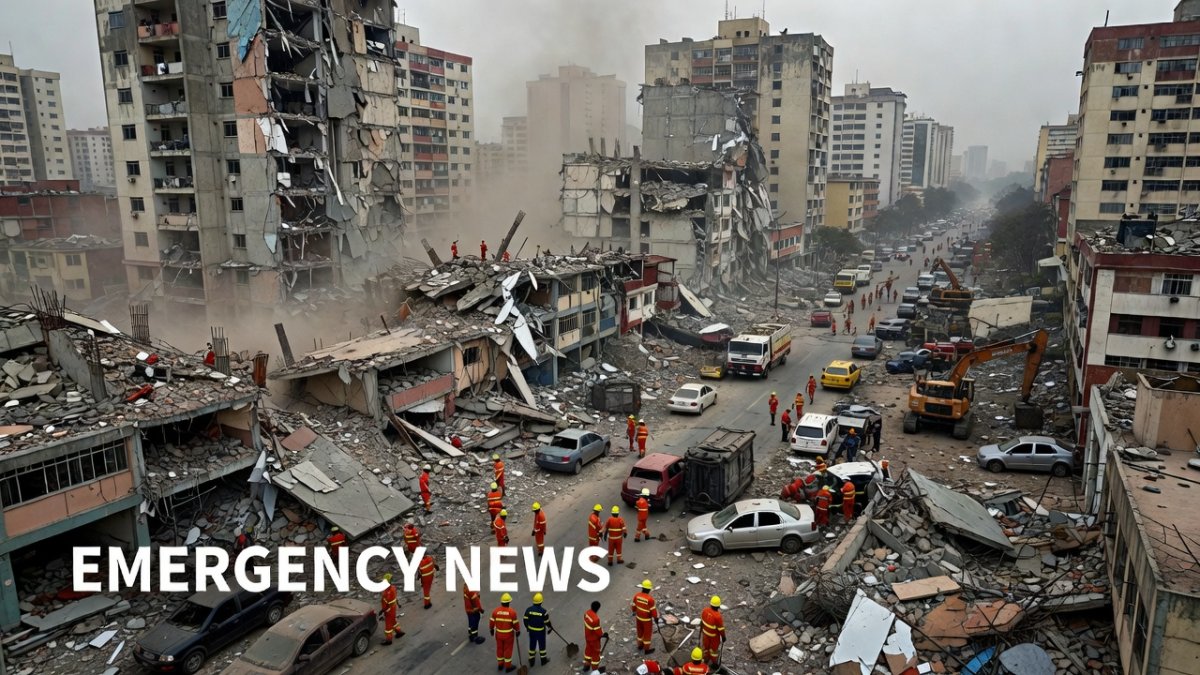
The Tremors That Shook a Nation
The June 24, 2026, doublet earthquake sequence began at 11:42 a.m. local time when a magnitude 7.2 event struck 39 seconds before a magnitude 7.5 shock off Venezuela's northern coast west of Caracas. The epicenter lay close enough to the capital that roughly 8 million residents experienced strong to violent intensities, collapsing homes, schools, and clinics across La Guaira and Miranda states. Official figures record 2,295 dead, 11,000+ injured, and 12,800+ damnificados, while NASA satellite imagery documents nearly 59,000 buildings damaged or destroyed. More than 680 aftershocks hit in the first week, with hundreds continuing daily and further destabilizing already fractured infrastructure. Venezuela's Civil Protection agency, chronically under-equipped and lacking heavy machinery or updated contingency plans, struggled to reach isolated coastal communities where daily life revolves around fishing and informal markets now buried under rubble. The coastal ecosystem, already stressed by oil pollution and deforestation, now faces additional contamination from collapsed sanitation systems, directly threatening the health of families who rely on local water sources for cooking and bathing.
Health System on the Brink
Venezuela's health system entered the disaster already fractured by years of economic sanctions, political polarization under the Maduro administration, and mass emigration of medical personnel. Chronic shortages of medicines, equipment, and reliable electricity left hospitals operating at minimal capacity long before June 24. The earthquakes damaged 38+ facilities, some critically, eliminating trauma and intensive-care capacity precisely when demand surged. PAHO/WHO responded on July 1 with a US$24 million emergency appeal focused on lifesaving care, disease surveillance, and essential medicines. The UN simultaneously warned that more than 5 million people could face imminent disease outbreaks. Daily life for Caracas residents now involves hours-long waits outside damaged clinics for basic pain relief or wound care, while rural families in La Guaira navigate destroyed roads to reach any remaining services. Political tensions have slowed coordinated national response, leaving local ecosystems and communities to absorb the brunt of both seismic damage and governance shortfalls that predate the quakes.
Disease Outbreak Threats in the Rubble
Overcrowded shelters housing thousands of damnificados lack adequate clean water and sanitation, creating perfect conditions for waterborne illnesses to spread rapidly through La Guaira and Caracas neighborhoods. Dengue and malaria risks have risen sharply as standing water pools in collapsed buildings and disrupted drainage systems along the northern coast, where ecosystems already harbor mosquito vectors. Low vaccination rates leave populations vulnerable to measles and yellow fever outbreaks, with the UN projecting more than 5 million people could be affected without swift intervention. PAHO/WHO's July 1 appeal of US$24 million targets surveillance and medicines precisely for these threats. Families displaced into golf-course relief centers and makeshift camps share contaminated water sources, while Venezuela's Civil Protection lacks the resources to enforce hygiene protocols. The health crisis now directly shapes daily routines, forcing parents to weigh infection risks against the need to scavenge for food amid 680+ aftershocks that continue to rattle nerves and structures alike.
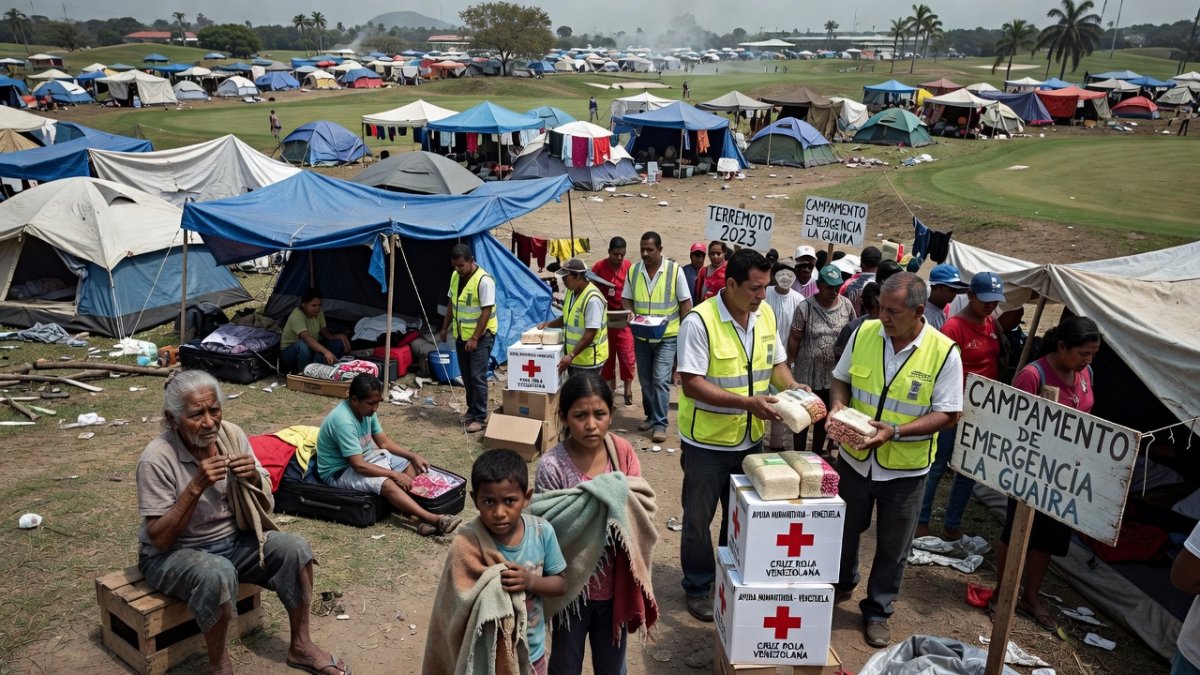
MSF's Lifeline in La Guaira's "War Zone"
Médecins Sans Frontières deployed emergency trauma kits to eight hospitals in La Guaira and Caracas within days of the June 24 quakes, ultimately treating nearly 4,000 patients. On July 2, MSF opened a mobile clinic in an isolated area of La Guaira state, describing the scene as resembling a "war zone" with collapsed infrastructure and overwhelmed local responders. The José María Vargas Hospital in La Guaira received initial MSF kits sufficient for roughly 200 patients, enabling basic surgical and wound-care services despite ongoing aftershocks. Staff navigate damaged roads and power outages to reach communities where daily life has halted, with families sleeping in open air near destroyed homes. MSF's rapid presence highlights how international medical NGOs fill gaps left by Venezuela's pre-strained health system and under-equipped Civil Protection agency. Their work directly mitigates the immediate trauma burden while disease surveillance teams monitor rising waterborne and vector-borne threats in the rubble-strewn coastal zone.
Operation Amistad: India's Field Hospital in Caracas
India launched "Operation Amistad" on June 26, dispatching a 41-member army medical contingent and 60 Para Field Hospital that became fully operational at La Rinconada Racetrack in Caracas by June 29. The unit provides free 24/7 care using BHISHM Cube mobile hospital technology, supported by 35-66 tonnes of aid flown more than 14,000 km. This field hospital now serves thousands of injured and displaced residents who previously had no access to functioning medical facilities after 38+ hospitals sustained damage. Indian personnel coordinate with local health workers amid continuing aftershocks, offering surgical, obstetric, and infectious-disease services in a city where daily commutes and market activities have been replaced by shelter life. The operation demonstrates South-South solidarity reaching Latin America's most vulnerable populations, complementing PAHO/WHO's US$24 million appeal and helping contain the disease risks threatening more than 5 million people across the affected region.
International Response and the Road Ahead
The United States deployed its Disaster Assistance Response Team (DART) alongside urban search-and-rescue units, military logistics support, and $150 million in assistance. Cuba sent doctors among the earliest international responders, reinforcing overwhelmed facilities in Caracas and La Guaira. A local golf course was converted into a major relief center housing displaced families, though conditions remain precarious with limited sanitation. NASA data showing nearly 59,000 damaged buildings and 680+ aftershocks underscore the prolonged recovery ahead. Venezuela's Civil Protection, lacking heavy machinery and contingency planning, relies heavily on these external teams to clear rubble and restore basic services. The health crisis now dominates daily life for millions, as political divisions and ecosystem damage from the quakes compound challenges in delivering clean water and vaccines. Long-term reconstruction will require sustained international engagement to rebuild both infrastructure and public-health capacity across the northern coast.
The Bottom Line — What Comes Next
Venezuela's recovery from the June 24, 2026, earthquakes will stretch years, with the health crisis representing the next major wave of suffering. Damaged hospitals, low vaccination coverage, and overcrowded shelters create conditions for sustained outbreaks of dengue, malaria, measles, and waterborne diseases unless PAHO/WHO's US$24 million appeal and ongoing MSF and Indian support expand rapidly. International solidarity must prioritize disease surveillance and medicine supply chains while addressing the political and infrastructural weaknesses that left 38+ hospitals vulnerable. For coastal communities whose ecosystems and livelihoods have been upended, the path forward demands coordinated investment in resilient health systems and disaster preparedness. Without immediate action, the human cost will far exceed the initial 2,295 deaths as aftershocks and disease continue to reshape daily existence across the region.
By Elena Vasquez, Staff Writer
This article was produced with AI-assisted research and editorial support. Reporting is based on sources cited in the article.
What's Your Reaction?
 Like
0
Like
0
 Dislike
0
Dislike
0
 Love
0
Love
0
 Funny
0
Funny
0
 Wow
0
Wow
0
 Sad
0
Sad
0
 Angry
0
Angry
0

Latin America Correspondent at Global1.News. Based in Mexico City, covering politics, economics, energy, and culture across the region. Brings an on-the-ground perspective to stories spanning from the Rio Grande to Patagonia.













Comments (0)