
USMCA Renewal Declined — Annual Reviews Ahead for Mexico
The Announcement from Washington U.S. Trade Representative Jamieson Greer issued a statement on Wednesday following a virtual meeting with Mexican Economy Minister Marcelo Ebrard and Canadian Trade Minister Dominic LeBlanc. The announcement addressed the required joint review of the United States-Mexico-Canada Agreement on July 1, 2026. Greer explained that the USMCA Free Trade
The Announcement from Washington
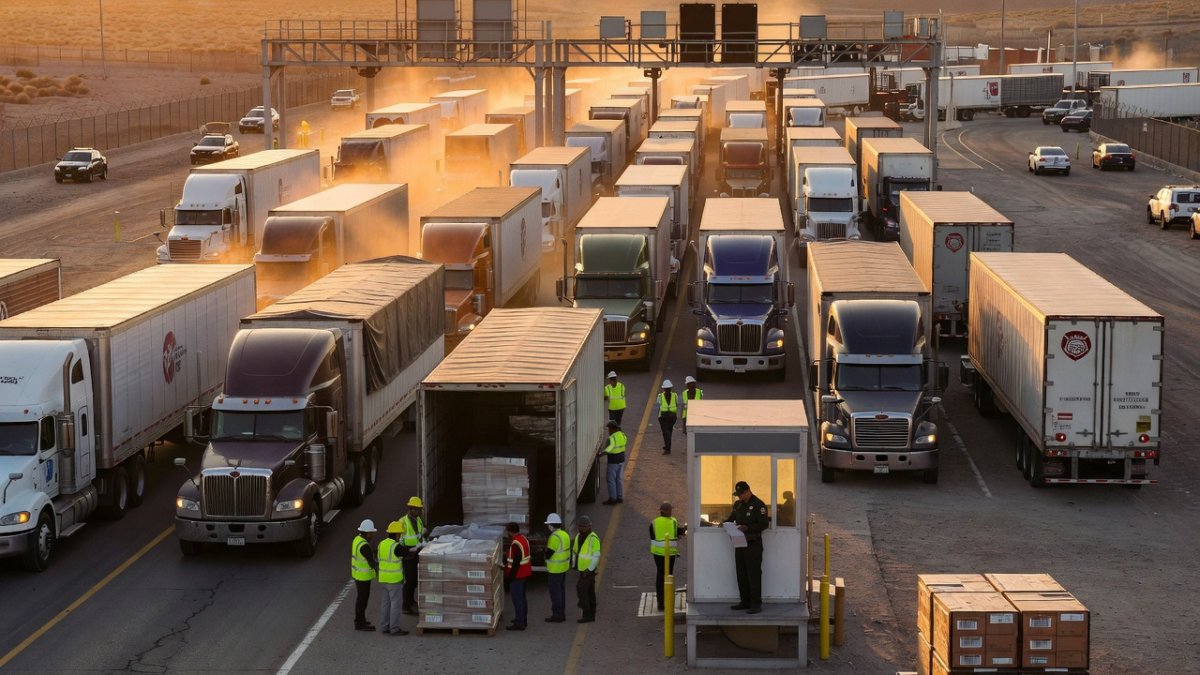
U.S. Trade Representative Jamieson Greer issued a statement on Wednesday following a virtual meeting with Mexican Economy Minister Marcelo Ebrard and Canadian Trade Minister Dominic LeBlanc. The announcement addressed the required joint review of the United States-Mexico-Canada Agreement on July 1, 2026. Greer explained that the USMCA Free Trade Commission, composed of government representatives of each Party, must conduct this review according to the pact's terms. Mexican communities from the border colonias to the central highlands listened closely as the details emerged from Washington.
Greer's statement opened by noting the USMCA requires the joint review on July 1, 2026. In accordance with the Agreement, the United States, Mexico, and Canada met virtually today to discuss the operation of the USMCA. The United States did not agree to renew the USMCA in its current form. As a result, the USMCA is not renewed, Greer stated plainly during the session that connected officials across North America.
The U.S. trade representative added that the United States will continue to engage with Mexico and Canada to address the Agreement's shortcomings and our trade deficits with these countries. However, the Agreement remains in force pending resolution of these issues or until the Agreement's termination. This measured approach left room for ongoing dialogue while signaling a clear path forward for the coming years.
Greer further noted that the United States will meet with Mexico the week of July 20 for a third round of bilateral negotiations related to the USMCA joint review. Families in Mexican ejidos and urban neighborhoods watched for signs of stability in cross-border commerce. The virtual format of the initial meeting underscored the modern tools used to manage these longstanding economic ties.
What This Means for Mexican Trade Relations
Mexican Economy Minister Marcelo Ebrard responded in a video message on Wednesday, emphasizing key procedural safeguards within the USMCA. He noted that if a country wants to withdraw from the USMCA, it has to give six months' notice to its trade partners. Ebrard stressed that no country has expressed its intent to withdraw from the pact, which superseded NAFTA exactly six years ago on July 1, 2020. That has not occurred, nor do we think it will occur based on the information we have up until now, he said, offering reassurance to Mexican exporters and workers alike.
Ebrard conveyed that Greer told him and LeBlanc on Wednesday that the United States is not in the position to be able to renew the USMCA for an additional 16 years. Therefore, we're going to take the annual review track, said the economy minister from the Secretaría de Economía. He added that Mexico, the U.S. and Canada could at some stage agree to renew the USMCA for 16 more years, keeping long-term possibilities open for communities that rely on steady trade flows.
In the short term, Ebrard said that the USMCA will continue working as it has been, asserting that there won't be any immediate modification to the pact. He noted that most of the trade between Mexico and the United States occurs in accordance with the USMCA, which will remain in force, as I already said. This continuity matters deeply for families in border regions who depend on daily commerce.
Ebrard highlighted Mexico's aim during annual reviews to reduce the number of unresolved issues between the parties year by year. In summary, the agreement continues, it's scheduled to continue until 2036. The current agreement won't change in these days or in the coming months, he concluded, providing a sense of measured calm from Palacio Nacional.
The Shift to Annual Reviews
In early June, both Mexico and Canada notified their North American trade partners that they wished to extend the USMCA for an additional 16 years to 2042. This request reflected a shared desire for extended stability among the three nations. Around a week later, Trump said he wasn't seeking to renew the pact, which he described at the time as sort of a good deal, but which he once called the best agreement we've ever made. The contrast in comments set the stage for the current annual review process.
As a result of the United States' decision to not renew the USMCA in its current form, Mexico, the U.S. and Canada will have to conduct annual reviews of the pact before it expires in 2036. At some point in the future, the three countries could reach an agreement to extend a modified USMCA for an additional 16 years. This structure introduces regular checkpoints that Mexican officials at the Secretaría de Economía will navigate carefully.
CNBC wrote in an article on Wednesday that yearly reviews could result in the renegotiation of major parts of the treaty. Ebrard responded by focusing on practical steps to address concerns incrementally each year. Mexican small business owners in regional markets expressed hope that these reviews would strengthen rather than disrupt established supply chains.
The shift maintains the core framework while allowing adjustments over time. Communities across Mexico view the annual process as an opportunity to voice local priorities during each cycle. Officials continue to stress that the pact's overall operation stays consistent in the near term.
Trade Deficits and the Trump Administration's Priorities
Trump has long railed against the United States' trade deficits with Mexico and Canada, the two largest trade partners of the U.S. In addition to reducing those deficits, the U.S. president wants to protect U.S. industry, and to that end, has imposed tariffs on Mexican and Canadian vehicles, steel and aluminum. These measures directly influence production decisions in Mexican factories and farms.
Trump and Mexican President Claudia Sheinbaum agreed last year to work to reduce Mexico's trade surplus with the U.S., which in 2025 was $197 billion. This figure underscores the scale of bilateral commerce that supports jobs on both sides of the border. Mexican agricultural exporters and manufacturers monitor these discussions closely for any shifts in tariff policies.
Rules of origin requirements remain a central focus in ongoing talks, as they determine how much North American content qualifies goods for preferential treatment. The Trump administration has prioritized these provisions alongside deficit reduction goals. Workers in maquiladora facilities along the northern border feel the effects of such priorities in their daily production targets.
Sheinbaum's administration continues coordination through established channels to manage these economic dynamics. The $197 billion surplus from 2025 serves as a reference point for future negotiations. Mexican communities recognize that balanced trade supports both national growth and household livelihoods.
Impact on Mexican Communities and Key Industries
Maquiladora workers in border cities stand to experience steady employment conditions as the USMCA remains in force without immediate changes. These facilities produce goods for export under the agreement's framework, supporting families in colonias near Tijuana, Ciudad Juárez, and other hubs. Annual reviews may introduce gradual adjustments that affect shift schedules and supplier contracts over time.
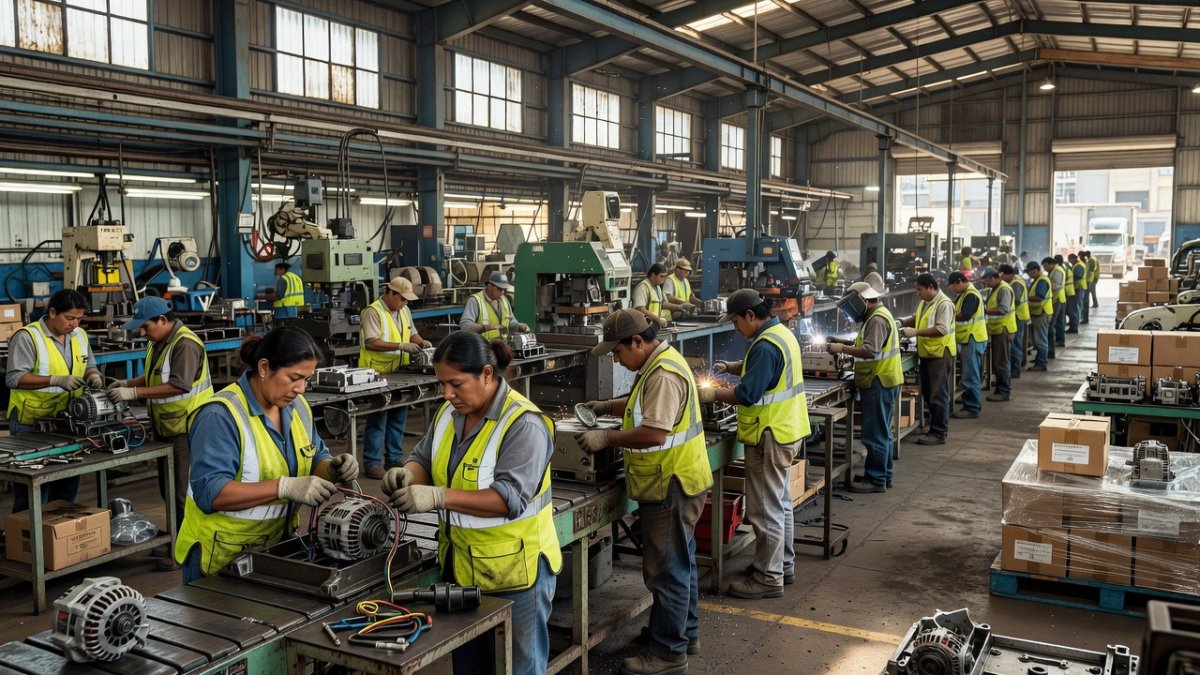
The automotive industry in Puebla and Aguascalientes relies heavily on integrated North American supply chains governed by the pact. Plants there assemble vehicles and components that move across borders daily. Workers and their communities watch the July 20 talks for signals on rules of origin that could influence future investments.
Agricultural exporters shipping avocados, agave, berries, tomatoes, and beer benefit from the continued operation of the USMCA. These products reach U.S. markets under terms established by the agreement, sustaining rural economies and ejido-based producers. Small business owners who package and transport these goods also depend on predictable trade rules.
Migrant workers who travel between agricultural regions and processing centers contribute essential labor to industries covered by the pact. Their remittances support households across Mexico while the agreement stays active. Community leaders emphasize the human element behind each trade statistic.
Overall, the absence of sudden modifications allows these sectors to plan with greater certainty in the coming months. Families in affected areas maintain routines tied to cross-border commerce. The annual review mechanism offers a structured way to address emerging concerns without disrupting established patterns.
The July 20 Bilateral Talks and Canada's Position
The week of July 20 brings a third round of bilateral negotiations in Mexico City focused on strengthening North American rules of origin for autos and other industrial goods, and economic security to keep other countries from benefiting from USMCA access. These discussions build on prior meetings and involve representatives from the Secretaría de Economía. Mexican officials prepare detailed positions to safeguard key industries during the sessions.
A senior U.S. official said that talks in Mexico City would center on these specific areas to address shared priorities. The agenda reflects ongoing efforts to refine the agreement's provisions while it remains in force. Participants from both nations approach the meetings with an eye toward practical outcomes for workers and businesses.
In a statement, LeBlanc said that he reaffirmed Canada's unwavering support for the CUSMA and its renewal during his meeting with Ebrard and Greer. The USMCA is known as CUSMA in Canada and T-MEC in Mexico. This position aligns with Mexico's emphasis on continuity and measured progress through annual reviews.
The Mexico City talks provide a dedicated forum for advancing bilateral elements ahead of broader trilateral considerations. Canadian and Mexican perspectives converge on maintaining the pact's core benefits. Observers in Mexican communities note the importance of these negotiations for long-term economic security.
What to Watch For
Future annual reviews will offer regular opportunities to resolve outstanding matters between the parties. Mexican officials aim to reduce unresolved issues progressively each year while the agreement continues until 2036. This process could lead to targeted updates that reflect evolving economic conditions across North America.
Possible outcomes include incremental changes to rules of origin or other provisions during scheduled checkpoints. At some point, the three countries could agree to extend a modified USMCA for an additional 16 years. Communities across Mexico will follow these developments through updates from the Presidencia and Secretaría de Economía.
The framework keeps the USMCA operational without immediate modifications, allowing industries and workers to maintain current practices. Yearly assessments provide structured avenues for dialogue on trade deficits and related priorities. Mexican families connected to export sectors remain attentive to announcements that could shape their livelihoods.
Observers anticipate that the July 20 bilateral session will set the tone for subsequent reviews. Continued engagement among the partners supports the agreement's role in regional commerce. The path ahead emphasizes stability alongside opportunities for refinement through established mechanisms.
Tags: USMCA, T-MEC, Marcelo Ebrard, Jamieson Greer, Claudia Sheinbaum, trade deficit, annual reviews, 2036, rules of origin, maquiladora, automotive, agricultural exports, Mexico City talks
By Rosa Martinez, Staff Writer
This article was produced with AI-assisted research and editorial support. Reporting is based on sources cited in the article.
What's Your Reaction?
 Like
0
Like
0
 Dislike
0
Dislike
0
 Love
0
Love
0
 Funny
0
Funny
0
 Wow
0
Wow
0
 Sad
0
Sad
0
 Angry
0
Angry
0

Latin America/Andes Correspondent at Global1.News. Based in Bogota, covering politics, environment, energy, and social movements across the Andean region. Passionate about environmental journalism and communities protecting their land.














Comments (0)