
Bafana Bafana Heartbreak: 1-0 Loss to Canada at World Cup
**Keywords:** Bafana Bafana, South Africa World Cup, Canada vs South Africa, Hugo Broos, Ronwen Williams, 2026 World Cup, Eustáquio goal, SoFi Stadium, Round of 32, Bafana defense, Mbekezeli Mbokazi, Teboho Mokoena The Heartbreak The final whistle at SoFi Stadium on Sunday June 28 2026 brought an ocean of tears and stunned silence from South African supporters who had dared to
The Heartbreak
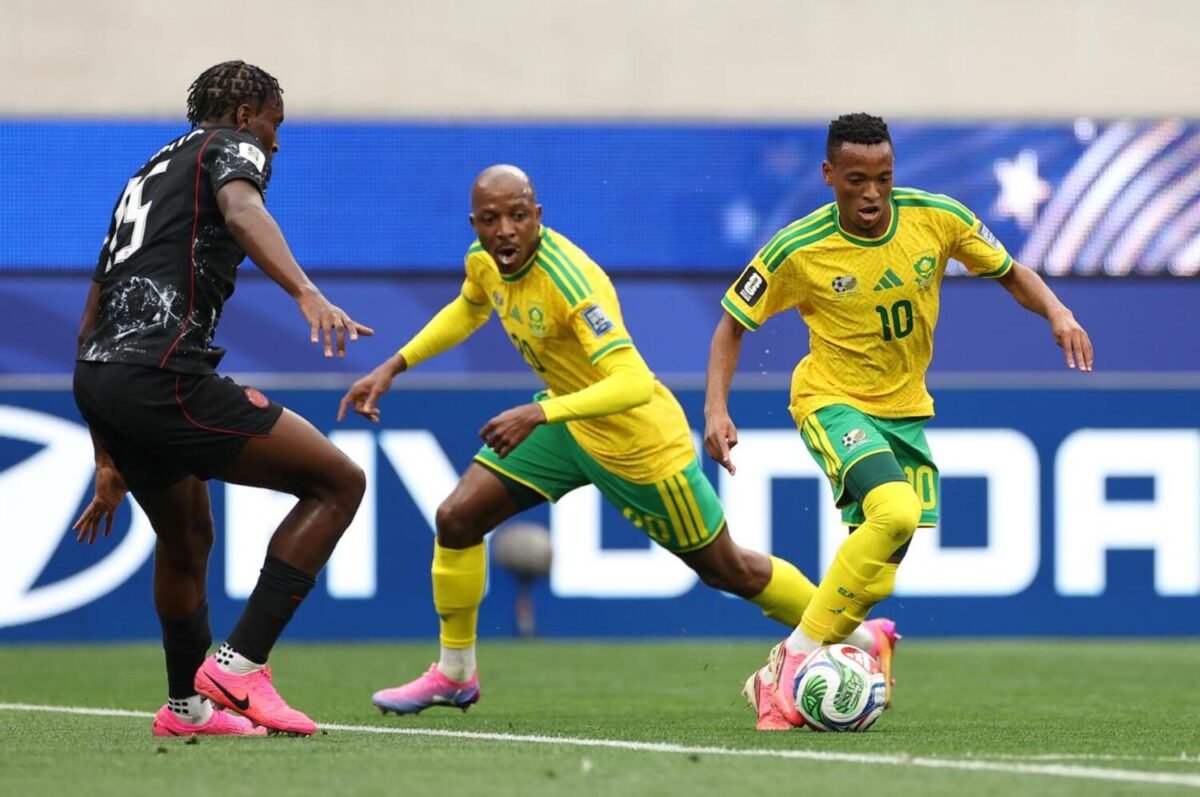
The final whistle at SoFi Stadium on Sunday June 28 2026 brought an ocean of tears and stunned silence from South African supporters who had dared to dream. Bafana Bafana had reached the World Cup knockout stage for the first time in their history only to fall 1-0 to Canada courtesy of Stephen Eustáquio’s 90+2’ volley. The late dagger turned a tense, hard-fought Round of 32 clash into national heartbreak, yet the pride in reaching this stage remained undiminished.
Players collapsed on the pitch while Canadian celebrations erupted around them. Ronwen Williams, who had produced several world-class saves, stared blankly at the sky. The 0-0 scoreline that had held for 92 minutes evaporated in a single moment of quality from the hosts’ midfield. For a nation that had waited decades for this opportunity, the defeat tasted especially bitter because the performance had been so valiant.
Supporters who filled sections of the Los Angeles venue with vuvuzelas and flags knew this was no ordinary exit. Bafana had shown tactical discipline and defensive steel against a talented Canadian side featuring Alphonso Davies. The pain was real, but so was the sense that a new chapter had begun for South African football.
Even in defeat the players left the field with heads held high, acknowledging the travelling fans who had witnessed history. The 1-0 scoreline will forever be remembered as the moment the dream ended, yet it also marked the highest point Bafana Bafana had ever reached on the global stage.
Match Breakdown
From the opening whistle the contest was a cagey, high-stakes affair at SoFi Stadium. Bafana Bafana lined up with Ronwen Williams in goal behind Khuliso Mudau, Ime Okon, Mbekezeli Mbokazi and Aubrey Modiba. Teboho Mokoena anchored midfield alongside Oswin Appollis and Relebohile Mofokeng, with Thalente Mbatha and the attacking threat of the forward line looking to exploit transitions. Canada, coached by Jesse Marsch, relied on the creativity of Eustáquio and the pace of Alphonso Davies and Jonathan David.
Early chances were scarce. Mokoena unleashed a powerful long-range effort in the 25th minute that forced Maxime Crepeau into a fingertip save. Canada responded with probing crosses but found the Bafana backline compact. Okon recorded the most touches in the first half, constantly breaking up play and distributing calmly under pressure. The half ended goalless after Modiba’s dramatic goal-line clearance in the 44th minute and Williams’s scramble save a minute later.
The second half saw Hugo Broos introduce Thalente Mbatha for Mofokeng at the interval. Williams produced another standout moment in the 65th minute, denying Tani Oluwaseyi one-on-one. Mbokazi then cleared off the line seconds later. Mbatha fired over from distance in the 70th minute while Promise David dragged a chance just wide in the 76th. Appollis tested Crepeau in the 84th minute, but the decisive blow arrived in stoppage time when Eustáquio volleyed home the only goal of the game.
Canada became the first host nation to play a World Cup match outside their own country, adding extra historical weight to the fixture. Bafana’s organisation frustrated the more fancied opponents for long periods, yet the single moment of quality proved decisive in the Round of 32 encounter.
Defensive Warrior
Ronwen Williams stood tallest among Bafana’s heroes, producing a masterclass between the posts that almost delivered a famous clean sheet. His 65th-minute one-on-one save against Oluwaseyi epitomised the bravery and reflexes that defined his tournament. Time and again the goalkeeper rushed off his line to smother danger and organised the back four with vocal authority.
Mbekezeli Mbokazi and Ime Okon formed an impressive central partnership. Okon’s composure on the ball and ability to read danger allowed Bafana to maintain shape even when Canada pressed high. Mbokazi’s 65th-minute goal-line clearance mirrored Modiba’s first-half heroics and highlighted the collective defensive resolve. Mudau and Modiba provided width and recovery speed on the flanks, limiting the influence of Davies after his introduction from the bench.
The entire unit restricted Canada to few clear opportunities until the final seconds. Williams’s distribution also helped launch quick counters, while the centre-backs won the majority of aerial duels. Their performance proved that South African defending had reached a new level of maturity on football’s biggest stage.
Even after Eustáquio’s late strike, the defenders left the pitch knowing they had given everything. Their resilience turned a potential rout into a narrow defeat and earned admiration from neutrals worldwide. The defensive display will serve as a benchmark for future Bafana teams aiming to compete at the highest level.
Broos's Decisions
Hugo Broos’s tactical choices reflected both experience and pragmatism. Restoring Teboho Mokoena after suspension added steel and long-range threat in midfield. The decision to start Relebohile Mofokeng offered youthful dynamism before the half-time switch to Thalente Mbatha injected fresh energy and a different attacking profile in the second period.
Broos maintained a compact 4-2-3-1 shape that frustrated Canada’s attempts to play through the lines. The emphasis on defensive organisation and quick transitions maximised the squad’s strengths while minimising exposure to Davies and David. Substitutions were timed to disrupt Canada’s rhythm and protect tiring legs in the Los Angeles heat.
Critics may question whether a more attacking approach could have yielded a goal, yet the coach’s priority was clearly to reach extra time or penalties. The structure allowed Bafana to compete for 92 minutes against a technically superior opponent. Broos’s calm touchline presence transmitted belief to players who had never before experienced knockout football at a World Cup.
Ultimately the late concession overshadowed the positive aspects of his game plan. Still, the Belgian coach’s blueprint delivered South Africa’s best-ever World Cup finish and laid foundations for continued progress in future cycles.
History Made
Reaching the Round of 32 itself constituted a landmark achievement for Bafana Bafana. Never before had South Africa advanced beyond the group stage at a World Cup, making this 2026 campaign historic regardless of the final result. The players etched their names into national folklore simply by boarding the plane to Los Angeles for the knockout fixture.
Canada’s status as the first host nation to contest a World Cup match on foreign soil added further context. The clash at SoFi Stadium therefore carried dual historical significance. Bafana’s disciplined display ensured the game remained in the balance until the final moments, proving they belonged on this stage.
Young talents such as Mofokeng, Appollis and Mbatha gained invaluable experience that will shape the next decade of South African football. Veterans like Williams and Mokoena demonstrated leadership under the brightest lights. The 1-0 scoreline cannot erase the fact that a new generation now believes qualification and progression are achievable goals.
Media coverage across the continent celebrated the milestone. Flags waved proudly in Johannesburg, Cape Town and Durban as fans recognised that the team had exceeded expectations and set a new standard for future squads to follow.
Future
Although the 1-0 defeat ended the immediate dream, the long-term outlook for Bafana Bafana appears brighter than at any point in recent memory. The experience of competing in the knockout phase will accelerate development and raise expectations within the South African Football Association. Hugo Broos is expected to remain in charge to build on this foundation.
Key performers such as Ronwen Williams, Mbekezeli Mbokazi and Teboho Mokoena will serve as mentors for emerging talents. The defensive organisation displayed against Canada can become a template for future qualifiers. Investment in youth structures and domestic leagues will be crucial to sustaining momentum.
Qualification for the 2030 World Cup now carries heightened importance. Fans will demand continued progress rather than a return to earlier disappointments. The pain of Eustáquio’s 90+2’ goal will fuel motivation in training sessions and future matches.
South African football has tasted the knockout stage and will not settle for less. With the right support and continued tactical evolution, Bafana Bafana can transform this heartbreaking exit into the springboard for even greater achievements on the global stage.
Tags: Bafana Bafana, South Africa World Cup, Hugo Broos, Ronwen Williams, 2026 World Cup, Canada vs South Africa, Eustáquio, SoFi Stadium, Round of 32, Bafana defense
By Dante Williams, Staff Writer
This article was produced with AI-assisted research and editorial support. Reporting is based on sources cited in the article.
What's Your Reaction?
 Like
0
Like
0
 Dislike
0
Dislike
0
 Love
0
Love
0
 Funny
0
Funny
0
 Wow
0
Wow
0
 Sad
0
Sad
0
 Angry
0
Angry
0

Breaking News and Investigations Correspondent at Global1.News. Based in London, covering global breaking news, security, and investigative stories. Known for digging deeper and connecting the dots across continents.











Comments (0)