
US-Iran memorandum under strain amid south Lebanon attacks
US-Iran memorandum under strain amid south Lebanon attacks In the CGTN video titled "US-Iran memorandum under strain amid south Lebanon attacks," the discussion centers on how the recently concluded Islamabad Memorandum faces immediate tests from ongoing Israeli operations in southern Lebanon, underscoring the fragile balance between the United States and Iran after the 2026 co
The Islamabad Memorandum provisions and strategic context
The Islamabad Memorandum emerged from the aftermath of the 2026 Iran war as a 14-point memorandum of understanding designed to halt active hostilities across multiple fronts. Announced on June 14 and formally signed on June 19 in Islamabad, Pakistan, the agreement carries the signatures of President Donald Trump and Iranian President Masoud Pezeshkian. Its central clause mandates the immediate and permanent termination of military operations on all fronts, including Lebanon. In exchange, the United States committed to lifting the naval blockade and waiving sanctions on Iranian oil exports, while Iran pledged to reopen the Strait of Hormuz to commercial traffic. These reciprocal steps reflect a calculated effort to restore a measure of stability after months of disruption that had reshaped energy flows and supply chains. The 2026 war itself had exposed vulnerabilities in regional deterrence, prompting both Washington and Tehran to seek an off-ramp that preserved core interests without requiring full capitulation. Historical parallels with earlier ceasefires show that such memoranda often hinge on enforcement mechanisms that remain underdeveloped at the signing stage. For China, the memorandum aligns with long-standing advocacy for negotiated settlements that prevent escalation into broader conflicts capable of drawing in multiple powers. The document's emphasis on phased implementation rather than instantaneous compliance indicates awareness that verification will require sustained diplomatic engagement.

Strait of Hormuz remains central to the Islamabad Memorandum negotiations. (Global 1 News)
How Israeli strikes in south Lebanon are testing the framework
Israeli air strikes on southern Lebanon have placed direct pressure on the Islamabad Memorandum's ceasefire provisions. Reports indicate continued operations despite the agreement's explicit call for termination of military activities in the area. Iran has documented 84 claimed violations within the first two days, citing civilian casualties in Doueir and Kfar Roumman as evidence of non-compliance. These incidents illustrate the difficulty of extending a bilateral US-Iran understanding to a third party whose security priorities diverge sharply. The strikes test the memorandum's assumption that mutual US-Iran restraint would automatically translate into de-escalation across linked theaters. Without explicit enforcement language covering Israeli actions, the framework risks incremental erosion as each side interprets violations differently. From a strategic standpoint, Israel's calculus appears driven by concerns over Hezbollah infrastructure that predate the 2026 war, creating a gap between the memorandum's text and operational realities on the ground. The cancellation of planned US-Iran talks in Switzerland further signals that early implementation disputes are already complicating follow-up diplomacy. Such developments highlight how localized military activity can undermine broader stabilization efforts when signatories lack unified leverage over all relevant actors.
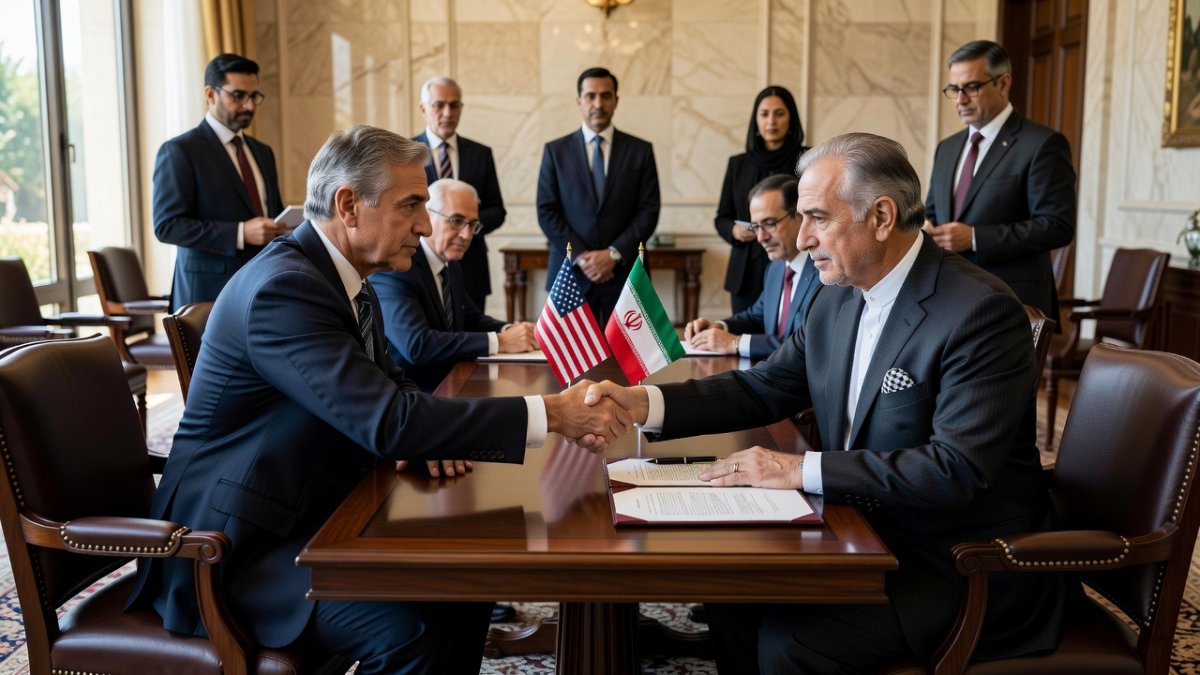
The Islamabad Memorandum was signed in Pakistan on June 19, 2026. (Global 1 News)
China's diplomatic position and strategic interests
China's Ministry of Foreign Affairs has consistently called for restraint and a diplomatic resolution to the tensions surrounding the Islamabad Memorandum. This stance reflects Beijing's broader doctrine of prioritizing stability to safeguard economic corridors and energy supplies. Chinese policymakers view the memorandum as a potential template for managed competition between major powers, provided it prevents the Strait of Hormuz from reverting to a contested chokepoint. The 2026 war had already demonstrated how regional conflict can interrupt Belt and Road Initiative projects that rely on secure maritime routes through the Persian Gulf and Indian Ocean. By advocating dialogue, China positions itself as a constructive actor capable of engaging both Washington and Tehran without direct military entanglement. This approach also serves domestic political objectives by maintaining focus on the 14th Five-Year Plan's growth targets rather than diverting resources to crisis response. Second-order effects for ASEAN and the Global South include reduced volatility in commodity prices that could otherwise strain developing economies. China's leverage stems from its role as a major purchaser of Iranian energy and a key investor in regional infrastructure, giving it quiet influence over compliance incentives. The MFA's measured language avoids assigning blame while underscoring the need for all parties to honor commitments, thereby preserving diplomatic space for future mediation.
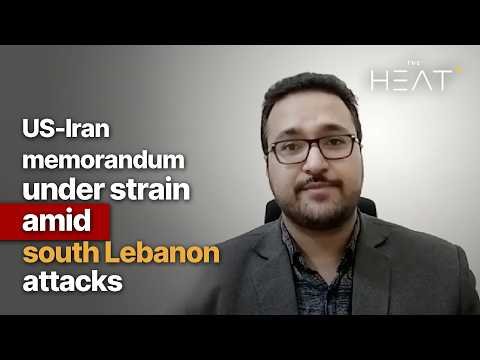
Israeli strikes in southern Lebanon continue despite the US-Iran ceasefire framework. (CGTN)
Energy security and Strait of Hormuz implications for global markets
The reopening of the Strait of Hormuz under the Islamabad Memorandum directly addresses one of the most acute disruptions of the 2026 Iran war. During the conflict, the blockade had constricted roughly one-fifth of global oil trade, driving price spikes that affected importers across Europe, Asia, and the Global South. The US commitment to waive Iranian oil sanctions complements Iran's pledge to restore passage, creating a dual-track mechanism intended to stabilize supply. Yet the persistence of Lebanese front violations introduces uncertainty about whether these energy provisions can hold. Markets remain sensitive to any signal that Hormuz access might again be contested, as even temporary closures carry outsized effects on futures pricing and inventory strategies. For China, which imports significant volumes through the strait, the memorandum's energy clauses align with efforts to secure predictable flows under the Dual Circulation strategy. European and ASEAN economies similarly benefit from reduced risk premiums, though they continue to diversify suppliers as a hedge. The absence of robust verification protocols for Hormuz traffic leaves room for miscalculation if incidents at sea are attributed to state actors. Overall, the memorandum's energy dimension illustrates how ceasefires in one domain can produce immediate macroeconomic consequences far beyond the original belligerents.
Impact on Belt and Road and China's energy diversification
China's Belt and Road Initiative projects in the Middle East and Central Asia depend on uninterrupted energy transit through the Strait of Hormuz. The 2026 war's blockade exposed single-point vulnerabilities that the Islamabad Memorandum seeks to mitigate by restoring Iranian export capacity and maritime access. Successful implementation would support China's ongoing diversification away from any single supplier or route, complementing investments in pipelines through Myanmar and Russia. Iranian oil returning to global markets under waived sanctions could also ease pressure on domestic refining margins inside China. However, continued instability in southern Lebanon risks indirect spillover if it prompts renewed naval posturing near Hormuz. Beijing's strategic interest therefore lies in reinforcing the memorandum's durability through quiet diplomacy rather than public confrontation. Historical experience with earlier sanctions relief episodes shows that energy trade rebounds gradually, requiring parallel progress on financial channels. For the Global South, stable Hormuz traffic supports affordable energy imports essential to industrialization plans. China's position as both a major investor and consumer gives it a stake in ensuring the memorandum evolves from paper commitments into operational reality.
Regional calculus: US constraints, Iran domestic pressure, Israeli priorities
Each signatory and relevant actor operates under distinct constraints that shape adherence to the Islamabad Memorandum. The United States faces domestic political limits on sustained engagement in multiple theaters simultaneously, particularly when Israeli security actions diverge from the agreement's text. Iran encounters internal pressures to demonstrate that the lifting of sanctions delivers tangible economic relief without further territorial concessions. Israel's priorities remain focused on degrading perceived threats from non-state actors in Lebanon, creating friction with the memorandum's Lebanon-specific clause. These differing incentives explain why early violations have already surfaced and why follow-up talks in Switzerland were postponed. From China's perspective, such asymmetries underscore the value of multilateral frameworks that distribute responsibility rather than relying on bilateral understandings alone. The Global South watches closely, as prolonged uncertainty could affect investment flows and migration patterns tied to regional instability. Second-order effects include potential realignments within OPEC+ dynamics once Iranian volumes re-enter the market. The memorandum's survival therefore depends on whether parties can reconcile their core security requirements with the text's prohibition on renewed operations.
What comes next — scenarios for the MOU's survival or collapse
Future trajectories for the Islamabad Memorandum range from incremental consolidation to outright erosion depending on enforcement and external shocks. One pathway involves phased verification mechanisms that gradually extend the ceasefire to Lebanon through third-party monitoring, preserving the energy and sanctions provisions. An alternative scenario sees continued Israeli operations prompting Iranian responses that test the Hormuz reopening, leading to renewed naval tensions. China's MFA emphasis on restraint suggests Beijing will favor diplomatic channels to encourage compliance, potentially offering economic incentives tied to Belt and Road cooperation. For ASEAN economies, stable implementation would support trade predictability, while collapse could revive price volatility. The United States and Iran retain leverage through their ability to reimpose or withhold the agreed concessions, yet both face audience costs if the memorandum unravels quickly. Historical patterns from prior Middle East agreements indicate that durability improves when economic benefits materialize early for all sides. Observers will therefore monitor oil export volumes and Lebanese front activity as leading indicators. The coming months will clarify whether the June 19 framework can accommodate the competing priorities of its signatories and affected neighbors. By Prof. Marcus Chen, Staff Writer
This article was produced with AI-assisted research and editorial support. Reporting is based on sources cited in the article.
What's Your Reaction?
 Like
0
Like
0
 Dislike
0
Dislike
0
 Love
0
Love
0
 Funny
0
Funny
0
 Wow
0
Wow
0
 Sad
0
Sad
0
 Angry
0
Angry
0

World Politics Analyst at Global1.News. Based in Beijing, covering US-China relations, global trade, and geopolitical strategy. Brings deep analytical perspective to the power dynamics shaping international affairs.










Comments (0)