
Trump's $2.45B Big Bend Wall Alarms Mexican Border Towns
**Keywords:** Big Bend border wall, Presidio levee, DHS Noem waiver, Fisher Sand and Gravel, Sheinbaum Trump relations, Boquillas crossing, Center for Biological Diversity lawsuit, Rio Grande flood control, Barnard Construction, Texas Civil Rights Project The Surprise Announcement Residents of the Presidio Valley learned of the project through a March 5, 2026 Department of Home
The Surprise Announcement
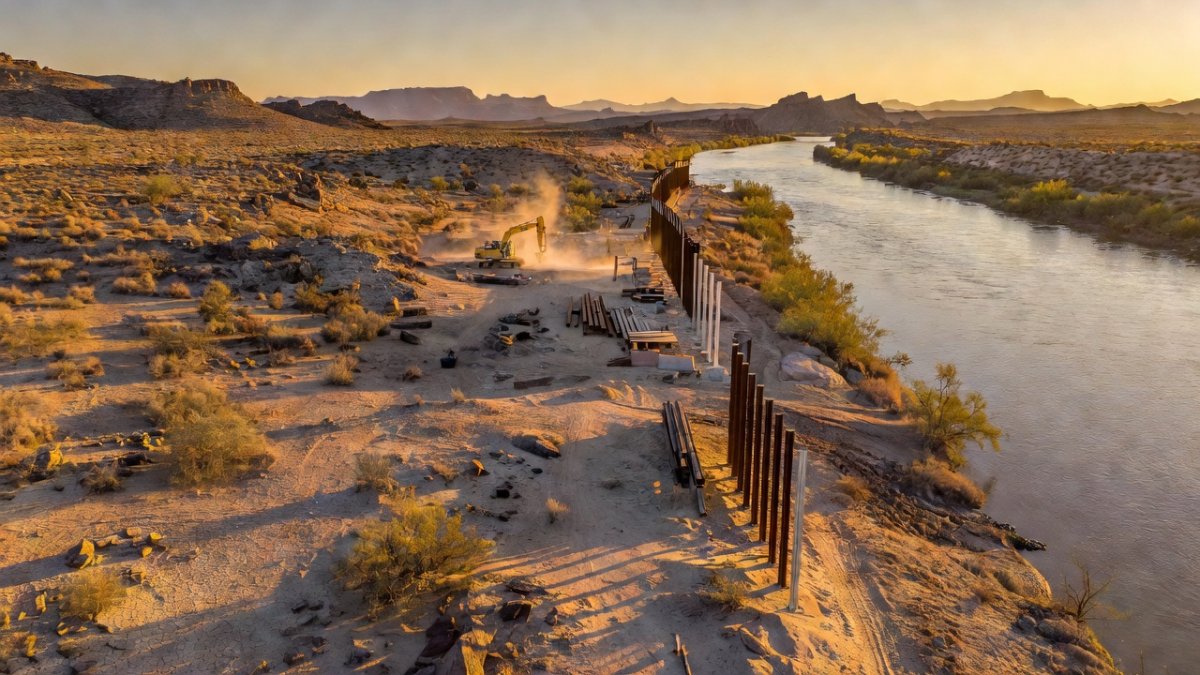
Residents of the Presidio Valley learned of the project through a March 5, 2026 Department of Homeland Security release rather than local briefings. The announcement, signed by then-Secretary Kristi Noem, outlined a $2.45 billion barrier stretching across remote West Texas desert. Community leaders immediately questioned the lack of advance notice to the roughly 4,000 people living in El Presidio.
On March 17 the Presidio Municipal Development District sent formal letters to federal agencies demanding details on levee placement, construction timelines, and effects on the Rio Grande floodplain. District officials noted that no environmental or engineering documents had been shared with the city or neighboring Mexican communities in Ojinaga. The letters cited the need for answers before any ground disturbance began.
Local river guides and landowners organized a March 21 rally in Presidio to discuss the sudden plans. Participants expressed frustration that information arrived via national news rather than direct outreach from DHS or the U.S. Army Corps of Engineers. The absence of public meetings left families uncertain about property access and future flood protection.
A $2.45 Billion Barrier
The project calls for 30-foot steel bollards equipped with fiber optic cables and surveillance cameras along 70 to 80 miles from Ruidosa to Colorado Canyon. Twelve-foot maintenance roads and 24-foot patrol roads would run parallel to the barrier. DHS awarded $960.4 million to Barnard Construction Co. for work in the Presidio corridor and $1.2 billion to Fisher Sand and Gravel for the longer Ruidosa segment.
Fisher Sand and Gravel has a documented history of environmental violations in prior federal projects. The company’s selection drew immediate scrutiny from environmental groups familiar with its record. The 15-mile Presidio Valley Flood Control System levee would run parallel to the Rio Grande, replacing infrastructure damaged in earlier floods.
February 2026 waivers issued by Noem suspended 28 environmental and historic preservation laws across 175 miles. These waivers cleared the path for rapid construction but removed requirements for public review of impacts on wildlife corridors and cultural sites. The scale of the contracts and the speed of the waivers have raised questions about oversight in such a sensitive binational region.
Legal Challenge and Waived Protections
The Center for Biological Diversity and Friends of Ruidosa Church filed suit in El Paso federal court against DHS, arguing the waivers violate statutory protections for endangered species and historic resources. The Texas Civil Rights Project separately filed complaints alleging improper withholding of public records related to the project timeline and land acquisition plans.
A June 17 lawsuit reported by the Texas Tribune challenges the scope of the February waivers. Plaintiffs contend that bypassing 28 separate laws without adequate justification sets a precedent that undermines long-standing environmental safeguards in the borderlands. Court filings reference the unique ecology of Big Bend National Park and the adjacent Mexican protected areas.
Attorneys for the groups note that the natural mountain ranges, canyons, and desert already limit cross-border movement in the region. They argue the massive infrastructure investment lacks justification when existing terrain provides significant barriers. Hearings are expected to examine whether DHS followed required procedures before issuing the broad waivers.
Flood Risk and the Presidio Levee
The 2008 floods destroyed hundreds of homes in Presidio and caused $14 million in documented damages. Federal disaster recovery funds rebuilt basic infrastructure, yet current replacement value of at-risk property now exceeds $100 million. Residents fear the new levee design could alter historic flood patterns without sufficient modeling shared with the community.
The Presidio-Ojinaga International Rail Crossing remains one of only eight legal international rail crossings on the entire U.S.-Mexico border. Any change to the levee alignment could affect rail operations and cross-border commerce that supports local economies on both sides. Community members have requested hydraulic studies showing how the 15-mile levee would interact with the existing rail bridge.
Without transparent engineering data, families worry that construction could increase rather than reduce flood risk during monsoon seasons. The Presidio Municipal Development District continues to press federal agencies for detailed answers on levee height, maintenance responsibilities, and emergency access routes.
Impact on Border Communities
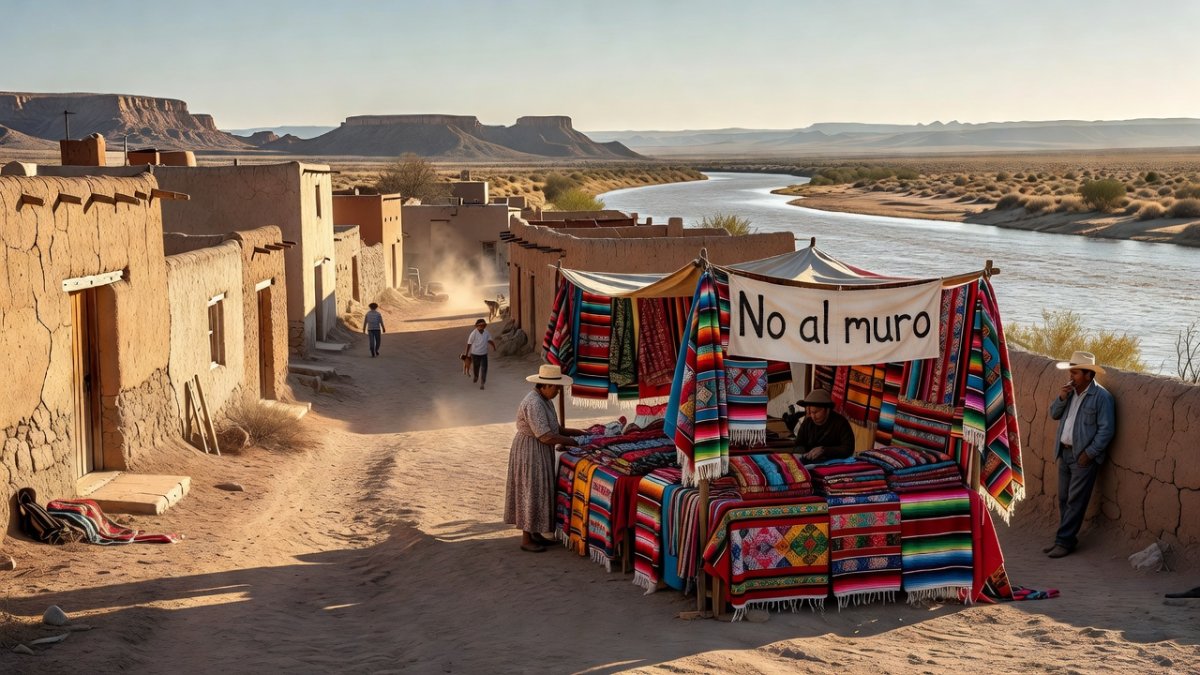
At the single legal pedestrian crossing in Boquillas, Mexican women embroider items bearing the phrase “No al muro.” The crossing serves as a vital link for families divided by the river and for tourism that sustains small businesses in both countries. Construction traffic and new barriers could further isolate this remote port of entry.
Presidio’s binational economy depends on daily movement of goods and people. The rail crossing and limited vehicle bridge support agriculture, trade, and family visits. Landowners on the U.S. side have voiced concerns about restricted access to riverfront property once patrol roads and bollards are installed.
Mexican families in Ojinaga and surrounding colonias watch the developments closely. Many maintain cross-border ties through work, school, and healthcare. The sudden announcement has prompted informal discussions in plazas and tianguis about potential disruptions to these longstanding connections.
Sheinbaum Administration's Position
The Secretaría de Relaciones Exteriores has monitored the DHS announcements through standard diplomatic channels. While no formal protest has been issued, the scale of waived protections and the location near the Rio Grande raise questions about coordination with Mexican environmental authorities. The Sheinbaum administration, building on the AMLO legacy of assertive sovereignty, is expected to seek detailed briefings on any transboundary effects.
Relations between the Sheinbaum government and the Trump White House already face scrutiny over migration enforcement and trade issues. A major infrastructure project in Big Bend adds another layer of complexity, particularly given the involvement of contractors with prior environmental complaints. SRE officials have emphasized the importance of preserving the Presidio-Ojinaga rail link and protecting shared water resources.
Morena-aligned legislators in the Congreso de la Unión have called for updates from the SRE on how the project aligns with existing bilateral agreements. The absence of early consultation with Mexican communities across the river has been noted in diplomatic correspondence as a point of concern for future cross-border cooperation.
What to Watch For
Legal proceedings in El Paso will determine whether the Center for Biological Diversity and Texas Civil Rights Project complaints advance to full hearings. Key dates include responses to the June 17 filing and any motions regarding public records access. Observers will track whether additional landowners join the litigation.
Community organizing continues in Presidio with weekly meetings at the Municipal Development District. Residents are collecting signatures for petitions requesting full environmental reviews despite the waivers. Mexican civic groups in Ojinaga have expressed interest in parallel information sessions.
Construction timelines remain unclear. DHS has not released a detailed schedule for the Barnard or Fisher contracts, leaving local businesses uncertain about workforce influx or supply chain needs. Continued monitoring by the SRE and potential statements from Palacio Nacional will shape the diplomatic tone between the two governments in coming months.
Tags: border wall, Big Bend, Presidio, Sheinbaum, DHS, Rio Grande
By Rosa Martinez, Staff Writer
This article was produced with AI-assisted research and editorial support. Reporting is based on sources cited in the article.
What's Your Reaction?
 Like
0
Like
0
 Dislike
0
Dislike
0
 Love
0
Love
0
 Funny
0
Funny
0
 Wow
0
Wow
0
 Sad
0
Sad
0
 Angry
0
Angry
0
Latin America/Andes Correspondent at Global1.News. Based in Bogota, covering politics, environment, energy, and social movements across the Andean region. Passionate about environmental journalism and communities protecting their land.













Comments (0)