
The Yazidi Doctor Healing a Genocide's Survivors: Dr Nagham Nawzat's Fight for Her People
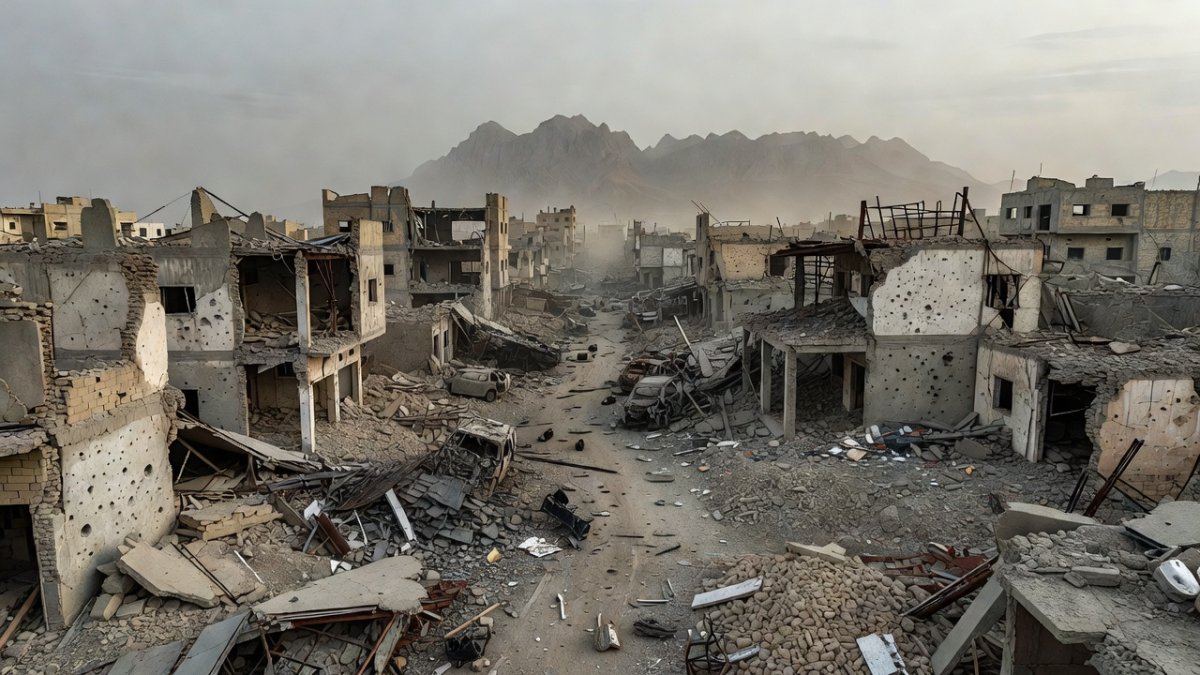
The Sinjar Massacre: August 2014 Shireen was preparing for a high school examination in her family home in Sinjar when Islamic State militants entered on 3 August 2014. At nineteen years old she was seized and taken to Tal Afar, where she was sold into sexual slavery. Three months later she was transferred to Mosul and became the third wife of an Islamic State fighter named Abu
The Sinjar Massacre: August 2014
Shireen was preparing for a high school examination in her family home in Sinjar when Islamic State militants entered on 3 August 2014. At nineteen years old she was seized and taken to Tal Afar, where she was sold into sexual slavery. Three months later she was transferred to Mosul and became the third wife of an Islamic State fighter named Abu Omar. She later recounted that he claimed affection while subjecting her to repeated rape, an experience she described as destroying her life. His other wives beat her during visits.
Shireen’s account reflects the systematic campaign launched by Islamic State against the Yazidi population of Sinjar. Men and elderly women were executed in large numbers. Younger women and girls were captured, trafficked, and subjected to organised sexual violence. The attackers declared the Yazidis devil worshippers and demanded conversion to Islam, rejecting the community’s ancient reverence for Melek Tawwus, the Peacock Angel.
The Yazidi faith, with roots extending more than four thousand years, had already endured repeated historical persecutions. The 2014 assault in Sinjar represented an escalation that the United Nations and other bodies later recognised as genocide. Thousands of families were torn apart in a matter of days, and the survivors who reached safety in Duhok carried both physical injuries and profound psychological wounds.
Central to Yazidi belief is the veneration of Melek Tawwus as a divine emanation rather than a fallen angel, a theological distinction that has repeatedly invited misunderstanding and violence from surrounding communities. Over centuries this small ethnoreligious group faced seventy-two recorded massacres, each time retreating to remote mountain strongholds such as Sinjar for protection. The 2014 attack therefore represented not an isolated event but the latest chapter in a long history of targeted elimination attempts that successive empires and militant movements have justified through accusations of heresy.
Survivors like Shireen carry forward memories that extend beyond personal suffering to encompass the destruction of sacred sites and the erasure of oral traditions passed down through generations. International investigators later documented mass graves containing hundreds of bodies, confirming the deliberate intent to destroy the Yazidi presence in their ancestral homeland. These acts of violence echo earlier campaigns against other minorities across the region, underscoring how religious difference has often served as a pretext for territorial and demographic control.
Dr Nagham Nawzat: A Doctor Among Her People
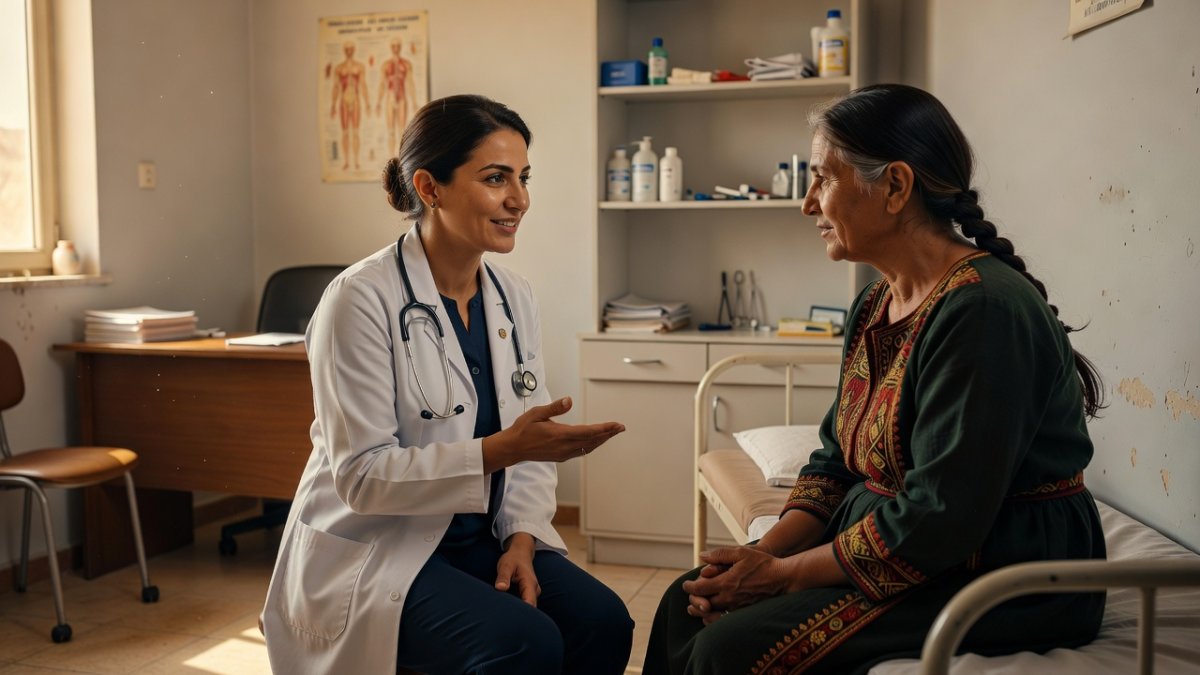
Dr Nagham Nawzat, a Yazidi gynaecologist then aged thirty-seven, began receiving women such as Shireen after their escape or rescue. She established a clinic in Duhok within the Kurdistan Region of Iraq that offers medical treatment, psychological counselling, and forensic documentation. By early 2018 she had treated more than one thousand survivors of Islamic State captivity.
Her approach combines clinical care with an understanding rooted in shared identity. Patients arrive malnourished and traumatised; many are pregnant as a result of rape. Dr Nawzat coordinates rescue operations when possible, records evidence that may support future prosecutions, and oversees rehabilitation programmes supported by international non-governmental organisations and private donations.
The work is physically and emotionally exhausting. Limited funding restricts the scale of services, yet the clinic remains one of the few places where returning Yazidi women can receive care without immediate fear of further rejection. Dr Nawzat has described her continued presence as a moral obligation to her community.
Through careful forensic documentation Dr Nawzat preserves medical evidence including photographs of injuries, detailed patient histories, and laboratory results that could one day contribute to prosecutions under international law. This meticulous record-keeping occurs alongside immediate health interventions, ensuring that clinical priorities never overshadow the long-term pursuit of accountability. Her dual role as healer and documentarian reflects the complex demands placed on medical professionals working in post-genocide settings.
Medical and Psychological Recovery
Survivors frequently present with untreated injuries, nutritional deficiencies, and the physical consequences of prolonged sexual violence. Pregnancies resulting from rape require sensitive medical management and decisions about whether to continue or terminate them under Iraqi law. Psychological support addresses the trauma of repeated rape, forced conversion, and separation from family members still missing.
Rehabilitation extends beyond immediate treatment. Many women need assistance reintegrating into daily routines, resuming education, or securing employment. Dr Nawzat’s programme includes counselling sessions that allow survivors to speak in their own language and within a culturally familiar setting, reducing the isolation that often follows captivity.
Progress remains uneven. Some women regain a measure of stability within months; others require years of support. The absence of specialised long-term mental-health infrastructure in the region means that many continue to rely on the same small network of providers.
Rehabilitation approaches at the clinic incorporate trauma-informed cognitive behavioural techniques adapted to Yazidi cultural frameworks, alongside group therapy sessions that foster peer support among women who share similar experiences. Physical therapy addresses chronic pain from beatings and forced labour, while nutritional programmes restore health compromised by months of deprivation. These integrated methods recognise that recovery cannot be compartmentalised into separate medical and psychological domains.
Long-term follow-up remains essential because many survivors experience delayed onset of severe anxiety, depression, and post-traumatic stress symptoms that surface only after initial safety is established. Partnerships with international organisations have introduced art therapy and vocational training, allowing women to rebuild economic independence while processing their experiences. Such holistic strategies acknowledge the multidimensional harm inflicted during captivity and the equally complex pathways toward restored agency.
Patterns of Minority Persecution Across the Middle East
The Yazidi genocide forms part of a wider regional pattern in which religious and ethnic minorities have repeatedly faced campaigns of expulsion and extermination. From the Assyrian and Chaldean communities targeted during the same Islamic State offensive to the historical massacres of Armenians and Syriac Christians in the early twentieth century, minority groups have often served as convenient scapegoats during periods of political upheaval and territorial contestation.
These episodes share common features including dehumanising rhetoric, systematic sexual violence against women, and the destruction of cultural heritage sites that anchor communal identity. In each case external powers have issued declarations of concern while practical protection for vulnerable populations has remained inconsistent. The Yazidi experience therefore illuminates structural vulnerabilities that extend far beyond a single community or conflict.
Understanding this broader context reveals how cycles of persecution reinforce one another, with each atrocity normalising further violence against groups perceived as outsiders. Palestinian communities, like Yazidis, have also endured repeated displacements justified through narratives of religious or ethnic incompatibility. Recognising these parallels fosters greater solidarity among affected populations and highlights the urgent need for preventive international mechanisms rather than reactive condemnations after mass violence has already occurred.
Scholars of genocide studies note that early warning signs such as hate speech, restrictions on movement, and attacks on religious leaders often precede full-scale campaigns. In the Yazidi case these indicators were present yet insufficiently heeded by regional and international actors. Addressing minority persecution therefore requires sustained attention to these precursors across multiple contexts rather than isolated responses to individual crises.
Stigma and Community Rejection
Upon return, survivors often encounter rejection from their own families and communities. Some Yazidi households view women who were raped as dishonoured, leading to social ostracism or pressure to remain silent about their experiences. Children born of rape present an additional challenge; religious authorities initially resisted accepting these children into the Yazidi community.
This stigma compounds the trauma already endured. Women who escaped after two or more years in captivity may find that relatives fear association with them or worry about the impact on marriage prospects for other family members. The result is a secondary form of displacement within an already displaced population.
Dr Nawzat has worked to counter these attitudes through private counselling with families and discreet advocacy. Change has been gradual, and many survivors still choose to withhold details of their captivity even from close relatives.
Community leaders have since issued statements affirming that survivors remain full members of the Yazidi faith, yet implementation at the family level varies considerably. Educational initiatives within displaced persons camps seek to reframe narratives of victimhood toward recognition of resilience, gradually shifting social attitudes. These efforts demonstrate that cultural change, while slow, can be advanced through persistent internal advocacy supported by medical and humanitarian actors.
International Recognition and the Struggle for Justice
The United Nations, the European Parliament, and the United States Department of State have all recognised the Islamic State campaign against the Yazidis as genocide. In 2016 the United States formally declared that crimes against Yazidis constituted genocide. Approximately three thousand Yazidis remained missing or in captivity as of early 2018, while around one thousand five hundred had been rescued or escaped.
Despite these declarations, the Iraqi legal system lacks specific provisions for genocide or crimes against humanity. Survivors who wish to pursue cases therefore face significant procedural barriers. Evidence collected by clinicians such as Dr Nawzat may prove useful in future proceedings, yet prosecutions inside Iraq have moved slowly.
International attention has brought some additional resources and occasional high-profile advocacy, yet day-to-day justice for individual survivors remains distant. The gap between recognition and enforceable accountability continues to shape the recovery process for thousands of families.
Legal mechanisms available include referral to the International Criminal Court, though Iraq is not a state party, and the possibility of universal jurisdiction prosecutions in European countries where perpetrators have been identified. Hybrid tribunals modelled on earlier examples in Cambodia and Sierra Leone have been proposed as potential vehicles for accountability. Forensic evidence preserved by clinicians provides crucial corroboration for witness testimony, strengthening cases that might otherwise rest solely on survivor accounts vulnerable to challenge.
Advocates continue to press for specialised chambers within Iraqi courts trained in international criminal law standards. Such institutional development would address current gaps while respecting national sovereignty. The slow pace of proceedings underscores the tension between the urgency felt by survivors and the deliberate processes required for credible justice.
Death Threats and Defiance
Dr Nawzat has received death threats linked to her work with survivors. Islamic State sleeper cells and individuals sympathetic to the group have targeted medical personnel and activists who document atrocities. These threats have not deterred her from maintaining the clinic or continuing rescue coordination.
Security measures around the facility remain modest because of resource constraints. Staff and patients alike operate under the knowledge that visibility carries risk. Dr Nawzat has continued her schedule, citing the necessity of providing care that few others are positioned to deliver.
The personal danger she faces mirrors the broader insecurity confronting Yazidi communities across northern Iraq. Medical workers who treat survivors of sexual violence occupy a particularly exposed position in a region where armed groups retain influence.
Despite these risks, Dr Nawzat maintains open channels with international security advisors and local authorities to mitigate threats while preserving accessibility for patients. Her persistence embodies the quiet courage required of human rights defenders operating in fragile post-conflict environments. The international community has occasionally provided protective accompaniment, yet sustained local protection mechanisms remain underdeveloped.
A Community in Exile: The Yazidi Diaspora
The Yazidi population in Iraq, once estimated at approximately five hundred and fifty thousand, has been sharply reduced by death, displacement, and emigration. Around one hundred thousand people have left for Germany and other countries since 2014. Those who remain often live in camps for internally displaced persons, unable to return to Sinjar, which stays largely destroyed and politically contested.
Emigration offers safety but also fragments families and weakens communal structures. Younger Yazidis growing up in Europe face questions of cultural continuity and religious practice far from ancestral villages. Meanwhile, those in Iraqi camps contend with inadequate services and uncertain prospects for return.
Within this dispersed population, survivors and advocates have begun to assume public roles. Nadia Murad, a Yazidi survivor of captivity, received the Nobel Peace Prize in 2018 for her international advocacy. Her visibility stands alongside the quieter, ongoing efforts of thousands of other survivors whose recovery proceeds without public recognition.
Diaspora communities in Germany have established cultural centres and schools that teach the Kurmanji language and Yazidi religious traditions to second-generation children. These initiatives seek to preserve identity while navigating integration into host societies. Remittances from abroad support families remaining in Iraq, yet the emotional cost of separation weighs heavily on both sides of the divide.
Return visits by diaspora members often highlight the contrast between relative security abroad and ongoing hardship in displacement camps. Many express a desire to contribute to reconstruction efforts in Sinjar once political conditions allow. This transnational dimension of recovery illustrates how exile communities can sustain hope and material support even as immediate return remains impossible for most.
Resilience Amid Incomplete Recovery
The work of Dr Nagham Nawzat illustrates both the scale of harm inflicted on the Yazidi community and the determination of survivors to rebuild. Medical care, psychological support, and forensic documentation form part of a larger effort to restore dignity and gather evidence for eventual accountability.
Stigma, legal gaps, and security threats continue to constrain progress. International recognition has not yet translated into comprehensive justice mechanisms inside Iraq, leaving many survivors without clear pathways to redress. At the same time, the emergence of survivor-led advocacy signals a shift from passive victimhood toward active participation in shaping the community’s future.
Dr Nawzat’s clinic operates at the intersection of these realities. Its continued existence depends on limited funding and personal courage, yet it provides a space where women such as Shireen can begin to reconstruct lives interrupted by genocide. The broader Yazidi story remains one of endurance under conditions that test both individual and collective capacity for recovery.
International donors and local authorities must increase sustained investment in long-term mental health infrastructure and legal capacity building if recovery is to move beyond emergency response. The Yazidi experience offers lessons for protecting other minorities facing similar threats, reminding the world that early intervention and consistent accountability mechanisms can prevent repetition of such tragedies. Through continued advocacy and compassionate care, survivors demonstrate that even after genocide, the possibility of renewed life persists.
By Fatima Al-Rashid, Staff WriterThis article was produced with AI-assisted research and editorial support. Reporting is based on sources cited in the article.
What's Your Reaction?
 Like
0
Like
0
 Dislike
0
Dislike
0
 Love
0
Love
0
 Funny
0
Funny
0
 Wow
0
Wow
0
 Sad
0
Sad
0
 Angry
0
Angry
0
Middle East Correspondent at Global1.News. Based in Beirut, covering politics, conflict, energy, and society across the Middle East. Brings context and depth to a region often reduced to headlines.










Comments (0)