
Palestinian Imam Defies Smotrich's Ibrahimi Mosque Takeover in Hebron
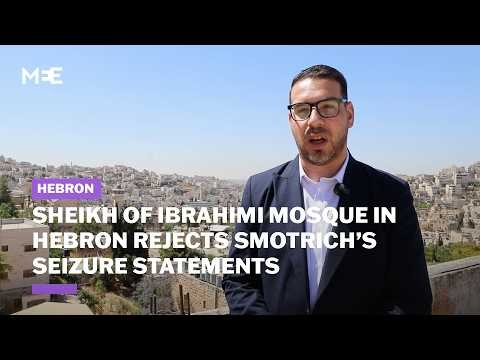
In a recent Middle East Eye report from June 22, 2026, Sheikh Abu Sneineh of the Ibrahimi Mosque in Hebron spoke directly about Israeli Finance Minister Bezalel Smotrich's announcement that a settler-led council would take full administrative control of the site. The interview captured the Sheikh's firm rejection of the plan, which he described as part of an effort to convert o
Sheikh Abu Sneineh's Direct Challenge
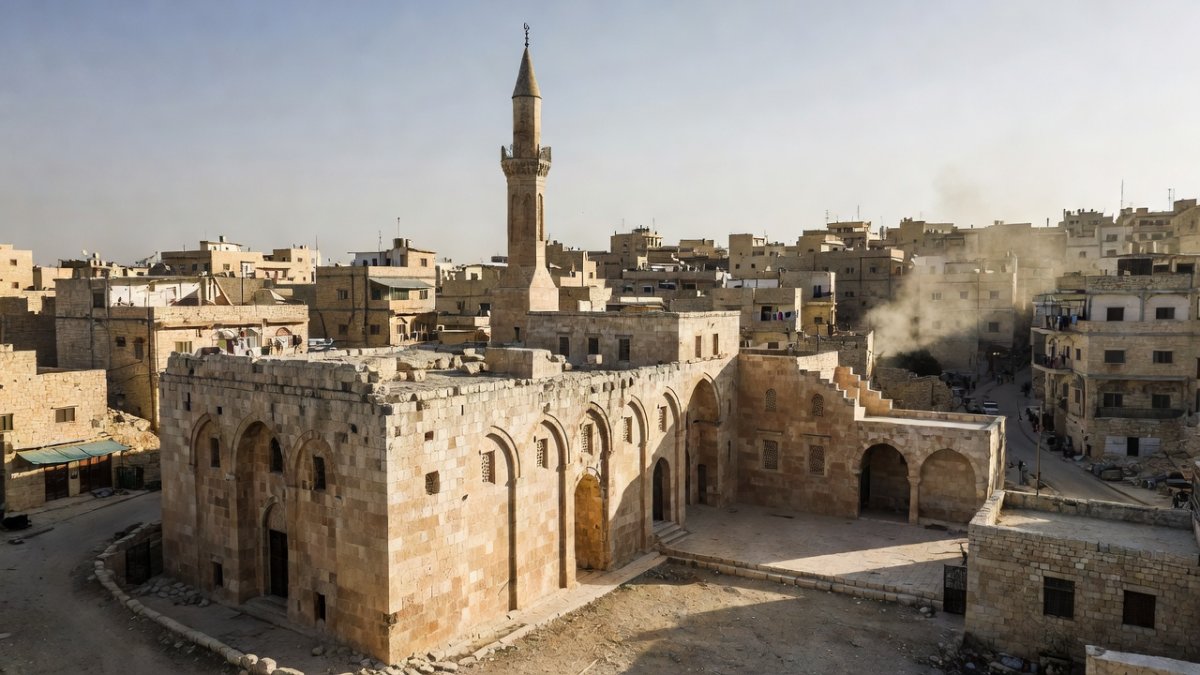
Sheikh Abu Sneineh stated that Israeli authorities are racing against time to alter the character of the Ibrahimi Mosque. He pointed to the presence of Israeli flags already covering parts of the mosque roof and to repeated restrictions that limit Muslim access. These measures, he said, form a pattern aimed at reducing Palestinian presence at the site. The Sheikh emphasized that the mosque remains under Islamic waqf authority and rejected any transfer of control to settler groups.
His comments came after Smotrich's public declaration that the settler-led council would assume oversight. The Sheikh framed the move as an escalation that ignores the mosque's established status as a place of Muslim worship. He called on Palestinians to remain steadfast in their connection to the site despite mounting obstacles.
Smotrich's Cancellation of the Hebron Protocol
Smotrich's announcement includes the cancellation of the Hebron Protocol, a component of the 1997 Oslo Accords signed by then-Prime Minister Benjamin Netanyahu and Yasser Arafat. If carried out, the step would remove planning and construction authority from the Palestinian Hebron Municipality over the Old City. The protocol had previously set out shared arrangements at the Ibrahimi Mosque following the 1994 attack by Baruch Goldstein.
Hebron remains divided into H1, under Palestinian Authority control and covering roughly 80 percent of the city, and H2, under full Israeli military control and containing the Old City along with the Ibrahimi Mosque. The proposed council would operate within this H2 framework, shifting day-to-day decisions away from Palestinian institutions.
Physical Barriers and Access Limits Around the Mosque
More than 120 checkpoints and gates have surrounded the Ibrahimi Mosque area for over 25 years. Approximately 7,000 Palestinians live in the sealed-off zone. These barriers affect movement for residents, worshippers, and merchants who once operated freely in the Old City. Settlers already control half of the mosque building itself, with separate entrances and prayer times enforced by Israeli forces.
Earlier this year, the Israeli army barred the mosque's director from entering the site for 15 days. Such orders add to a record of temporary and extended exclusions that disrupt maintenance and religious leadership. Hebron's mayor, Yousef al-Jabari, condemned the latest administrative proposal as a direct challenge to existing international agreements.
Connections to Pressures at Al-Aqsa Mosque
Sheikh Abu Sneineh linked the situation at the Ibrahimi Mosque to developments at Al-Aqsa Mosque in Jerusalem. He noted similar patterns of administrative pressure and settler incursions at both sites. In his view, the two locations face coordinated efforts to change their status and limit Muslim access under the same broader policy framework.
The Sheikh highlighted that both mosques hold central importance in Islamic tradition and Palestinian collective memory. He argued that allowing changes at one site encourages further steps at the other, creating a wider threat to holy places under occupation.
Absence of Response from Islamic Countries
During the interview, Sheikh Abu Sneineh denounced the lack of concrete action from Islamic countries in response to these developments. He described the silence as leaving Palestinians to face the situation alone. The Sheikh urged greater engagement from regional governments and institutions to uphold the mosque's Islamic character and protect worshippers' rights.
His remarks underscore the isolation felt by local religious leaders when international bodies and neighboring states do not intervene. The International Criminal Court has sought an arrest warrant for Smotrich over alleged war crimes and forced displacement, yet the Sheikh focused on the immediate need for regional solidarity rather than legal processes alone.
Daily Life for Families Near the Mosque
Residents in the H2 area describe how the checkpoints shape every aspect of routine. Families must pass multiple gates to reach schools, clinics, and markets. Shop owners report declining foot traffic as access becomes unpredictable. Children grow up navigating metal barriers and military presence that separate them from extended relatives living only streets away.
These conditions have persisted for decades, yet the proposed settler council introduces new uncertainty about future construction and land use decisions. Palestinian voices in Hebron stress that the mosque serves not only as a place of prayer but as a symbol of continuity amid displacement and restriction. The Sheikh's statements reinforce their determination to maintain that continuity through continued presence and documentation of changes on the ground.
By Fatima Al-Rashid, Staff WriterThis article was produced with AI-assisted research and editorial support. Reporting is based on sources cited in the article.
What's Your Reaction?
 Like
0
Like
0
 Dislike
0
Dislike
0
 Love
0
Love
0
 Funny
0
Funny
0
 Wow
0
Wow
0
 Sad
0
Sad
0
 Angry
0
Angry
0

Gulf/MENA Correspondent at Global1.News. Based in Doha, covering Gulf politics, energy markets, diplomacy, and development across the Middle East and North Africa. Tracks the economic transformation of the Gulf states.











Comments (0)