
Children's Songs Ignite Resistance to Toxic Fumigations in Argentina's Soy Heartland
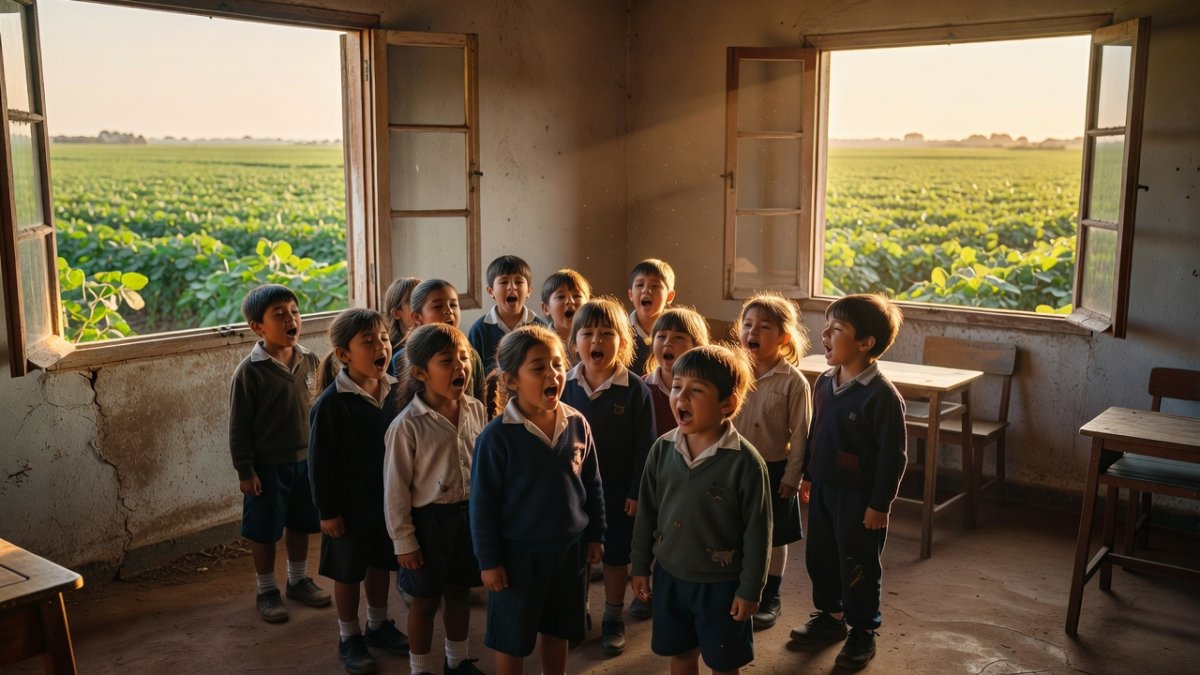
In a sunlit classroom in rural Córdoba, children hum melodies about poisoned soil and dying birds while glyphosate drifts from nearby soy fields just 50 meters away, their small voices rising in defiance against an industry that threatens their very breath. These young singers, guided by music teacher Ramiro Lezcano, transform fear into collective resistance across Argentina’s
In a sunlit classroom in rural Córdoba, children hum melodies about poisoned soil and dying birds while glyphosate drifts from nearby soy fields just 50 meters away, their small voices rising in defiance against an industry that threatens their very breath. These young singers, guided by music teacher Ramiro Lezcano, transform fear into collective resistance across Argentina’s fertile soy belt, where the nation’s economic lifeline collides with catastrophic health costs. The Al Jazeera English Witness documentary captures this urgent struggle, framing children’s health as the frontline casualty of unchecked fumigations.
Children’s Songs Ignite Resistance to Toxic Fumigations in Argentina’s Soy Heartland
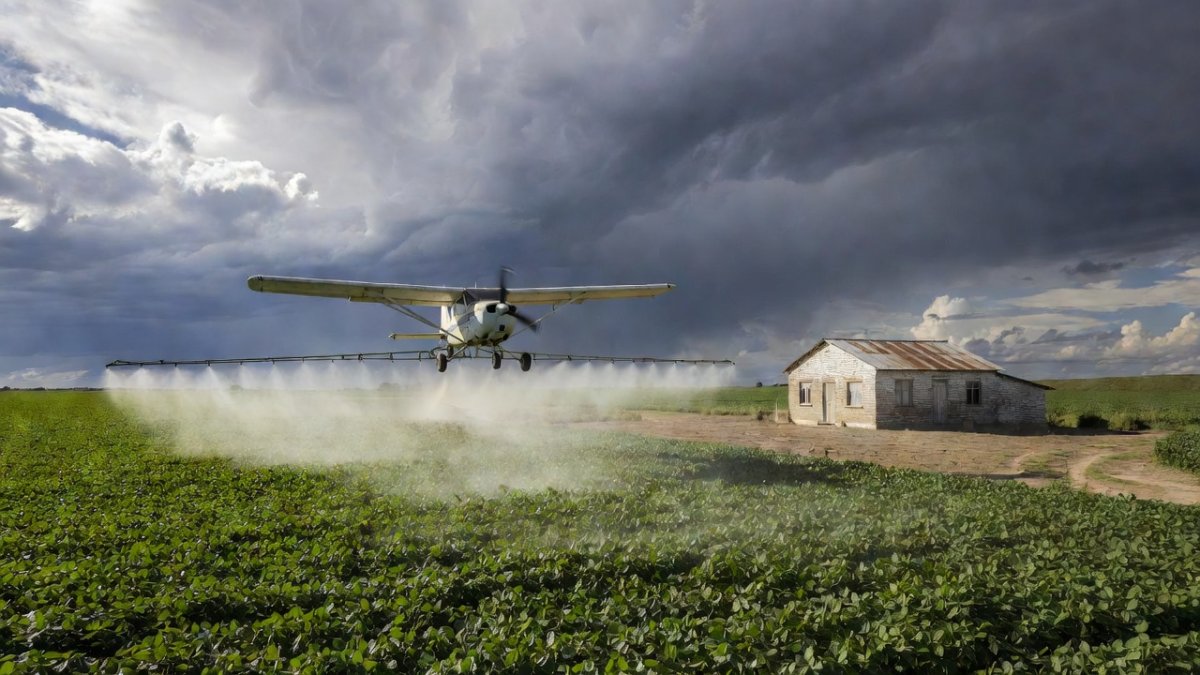
Buenos Aires, Argentina – June 22, 2026 — In the dusty towns of Córdoba and Santa Fe, where endless green soy fields press against school windows, children are composing anthems of survival. Ramiro Lezcano’s students craft lyrics about “mi tierra” under siege, turning music into a weapon against the invisible drift of glyphosate that settles on their desks and skin. The documentary “Una canción para mi tierra,” directed by Mauricio Albornoz Iniesta, has now screened for eight consecutive weeks in Argentine cinemas, bringing national attention to this grassroots uprising. As the camera lingers on young faces singing of contaminated water and lost futures, the film reveals how pesticide exposure has become a daily reality for thousands of rural families whose homes sit within 30 to 100 meters of spraying operations. Lezcano’s method is simple yet revolutionary: he lets the children name the threats—cancer clusters, miscarriages, respiratory crises—and set them to melody, forging a living archive of resistance that echoes from classroom to courtroom.
Music as Resistance in Argentina's Soy Belt
Ramiro Lezcano travels between small schools in Córdoba and Santa Fe, where children as young as eight compose verses describing the acrid smell of fumigations and the silence of vanished insects. Their songs speak directly to “mi tierra,” the land they inherit already marked by chemical trespass. The documentary “Una canción para mi tierra” follows these rehearsals for eight weeks of packed cinema screenings across Argentina, transforming private fear into public testimony. Students describe waking with skin rashes after drift events and watching classmates miss school due to asthma attacks. Lezcano records every lyric, preserving evidence that later reaches judges and journalists. This musical pedagogy turns classrooms into laboratories of collective memory, where data on illness clusters meets the emotional force of melody. Parents report that singing has reduced children’s anxiety while sharpening their demands for buffer zones. Across the soy belt, similar choirs are forming under the Paren de Fumigar network, proving that cultural expression can sustain long-term activism when scientific reports alone fail to move authorities. The children’s voices now travel beyond provincial borders, carried by the documentary into urban theaters and international festivals, reminding viewers that Argentina’s record soy harvests rest upon the smallest shoulders.
The Health Toll: Cancer in the 'Fumigated Towns'
Fundación Salud Socioambiental documented in 2023 that cancer mortality in eight Santa Fe towns repeatedly fumigated—Acebal, Arteaga, Chabás, Luis Palacios, San Genaro, Sastre, Timbúes, and Villa Eloísa—reaches up to 2.7 times the national average. In Ituzaingó Anexo, Córdoba, mothers mapped childhood cancers, birth defects, and miscarriages clustered beside sprayed soy fields, forming the Madres de Ituzaingó after years of official denial. Sofía Gatica lost her newborn daughter to kidney malformations, endured death threats, and received the 2012 Goldman Environmental Prize for her persistence. The International Agency for Research on Cancer classified glyphosate as probably carcinogenic to humans in 2015, yet Argentina maintains no national ban. Biomonitoring studies repeatedly detect glyphosate and its metabolite AMPA in water, soil, and human urine throughout agricultural zones. The network Médicos de Pueblos Fumigados continues logging illness clusters that include respiratory disease, endocrine disruption, and neurological damage. Residents describe entire neighborhoods where “everyone has respiratory and skin diseases,” a phrase repeated in Pergamino testimonies. These data points converge on one conclusion: the soy model’s chemical intensity is producing measurable excess mortality that falls heaviest on children living nearest the fields. Without stronger enforcement of existing buffer ordinances, the health debt will continue compounding across generations.
Two Landmark Court Rulings in a Single Month
In mid-June 2026, two Argentine courts delivered rulings that could reshape national pesticide policy. The Pergamino trial concluded hearings against seven agricultural businessmen and two municipal officials accused of illegal fumigations spanning more than ten years. Residents presented medical records showing cancers, respiratory illness, and skin conditions; abundant scientific evidence was entered before the verdict expected on June 24. If convictions follow, the case will set a precedent for criminal liability in soy-producing provinces. Simultaneously, Sala I of the Cámara Contencioso Administrativo in Chaco found the provincial government and companies Unitec Bio and Marfra responsible for harms affecting two hundred people in a single drift episode. Studies by UBA, CONICET, and INTA detected glyphosate in ninety percent of water samples, rendering supplies unfit for consumption. The court ordered redesign of buffer zones to protect Indigenous Qom communities. Both decisions arrived within weeks, signaling judicial willingness to prioritize health data over agribusiness convenience. Legal observers note that successful enforcement here could compel SENASA to strengthen Resolution 843/25 and encourage other provinces to expand municipal buffer ordinances from five hundred meters to several kilometers. The rulings arrive as children’s songs continue to document the same harms judges are finally acknowledging.
The Economics of Pesticides: Soy, Exports, and Resistance to Change
Argentina produced fifty million metric tons of soy in the 2025/26 season within a record 163 million tons of total grains, making the country the world’s top exporter of soybean meal and oil. The soy complex generates between twenty and twenty-one point four billion dollars annually in exports, reaching thirty billion in strong years and serving as the nation’s primary foreign-currency earner. Glyphosate-tolerant GM soy combined with no-till farming forms the technical backbone of this model. SENASA modernized regulations through Resolution 843/25 yet stopped short of any national glyphosate ban, leaving spray drift as close as thirty to one hundred meters from schools and homes in many districts. Economic dependence creates powerful inertia: provincial governments weigh job losses and export revenue against documented health costs. Grassroots groups counter that buffer zones and alternative practices would not collapse production but would redistribute risk away from children. The tension is stark—while soy sustains macroeconomic stability, the externalized health burden falls on rural communities least able to access specialized medical care. Without policy shifts that internalize these costs, the current export model will continue trading children’s futures for short-term currency inflows.
What This Means for Latin America
Argentina’s legal developments carry immediate implications for neighboring soy producers. Brazil, Paraguay, and Uruguay face parallel conflicts between expanding glyphosate-tolerant soy frontiers and rising reports of cancer clusters near rural schools. Colombia’s aerial glyphosate spraying for coca eradication has already generated comparable health complaints among Indigenous and campesino populations. The Pergamino and Chaco rulings could supply legal templates for plaintiffs across the hemisphere seeking criminal accountability and stricter buffer enforcement. Regional networks such as Paren de Fumigar are already exchanging data and strategies, recognizing that the soy-pesticide model operates as a continental system rather than isolated national problems. Children’s musical resistance in Córdoba may inspire similar cultural organizing in Mato Grosso or the Paraguayan Chaco. As climate pressures intensify demand for Latin American grains, the choice between protecting export volumes and safeguarding child health will define the region’s development path for decades. Argentina’s courts have opened a narrow window; whether other nations step through it will determine if the hemisphere’s children inherit poisoned lands or protected territories.
The Bottom Line — Children's Health vs. Agribusiness
The music continues in Córdoba classrooms even as judges weigh verdicts that will shape enforcement for years. Children’s songs about “mi tierra” have already outlasted multiple agricultural cycles, proving that cultural resistance can sustain pressure when regulatory agencies hesitate. The Pergamino verdict due June 24 and the Chaco buffer redesign represent concrete tests of whether scientific evidence and lived testimony can finally constrain an industry that generates billions yet externalizes disease. Latin America stands at a crossroads: maintain the soy model that delivers export revenue while producing 2.7-times cancer mortality in fumigated towns, or redesign buffer zones, strengthen biomonitoring, and prioritize the right to breathe clean air. The children singing in rural schools have already chosen their side. Their voices, captured by the documentary and amplified through eight weeks of cinema screenings, demand that policymakers match economic ambition with health protection. The coming months will reveal whether Argentina’s courts and governments honor that demand or allow the drift to continue.
By Elena Vasquez, Staff Writer
This article was produced with AI-assisted research and editorial support. Reporting is based on sources cited in the article.
What's Your Reaction?
 Like
0
Like
0
 Dislike
0
Dislike
0
 Love
0
Love
0
 Funny
0
Funny
0
 Wow
0
Wow
0
 Sad
0
Sad
0
 Angry
0
Angry
0

Latin America Correspondent at Global1.News. Based in Mexico City, covering politics, economics, energy, and culture across the region. Brings an on-the-ground perspective to stories spanning from the Rio Grande to Patagonia.










Comments (0)