
The Shadow of Genocide: Yazidi Women and the Legacy of IS Captivity
The Shadow of Genocide: Yazidi Women and the Legacy of IS Captivity In August 2014 Islamic State militants overran the Sinjar region of northern Iraq, targeting the Yazidi community in a campaign the United Nations has described as genocide. Thousands of families were separated, with men and boys often executed and women and girls taken into captivity. Among those seized was ni
The Shadow of Genocide: Yazidi Women and the Legacy of IS Captivity
In August 2014 Islamic State militants overran the Sinjar region of northern Iraq, targeting the Yazidi community in a campaign the United Nations has described as genocide. Thousands of families were separated, with men and boys often executed and women and girls taken into captivity. Among those seized was nineteen-year-old Shireen, who was studying for examinations when militants entered her home. She was sold as a sex slave, first in Tal Afar and later to a fighter named Abu Omar in Mosul. For more than two years she endured forced labour, repeated sexual violence and isolation, forbidden even to step into the garden for fresh air. Two younger Yazidi girls, aged six and ten, were later brought to the same house and subjected to similar abuse.
Shireen's account reflects patterns documented across the Yazidi population. Captives were compelled to convert, told that their reverence for Melek Tawwus amounted to devil worship. Upon release in 2016 during the battle for Mosul, she returned with severe depression and recurring nightmares. Her uncle and several friends had been killed; her father and one sister remain missing. These losses compound the physical and psychological injuries carried by survivors long after physical captivity ends.
Dr Nagham Nawzat's Path to Care
Dr Nagham Nawzat, a Yazidi gynaecologist born in Mosul in 1976, had long focused on women's health before the 2014 attacks. She completed her medical degree in 2002 and specialised in gynaecology, motivated by early concern for gender-based violence. When Islamic State seized territory across northern Iraq, she chose to work at the Duhok Survivors' Centre, the only facility in the country dedicated exclusively to survivors of such violence. Funded by the United Nations Population Fund, the centre provides both medical examinations and sustained psychological support.
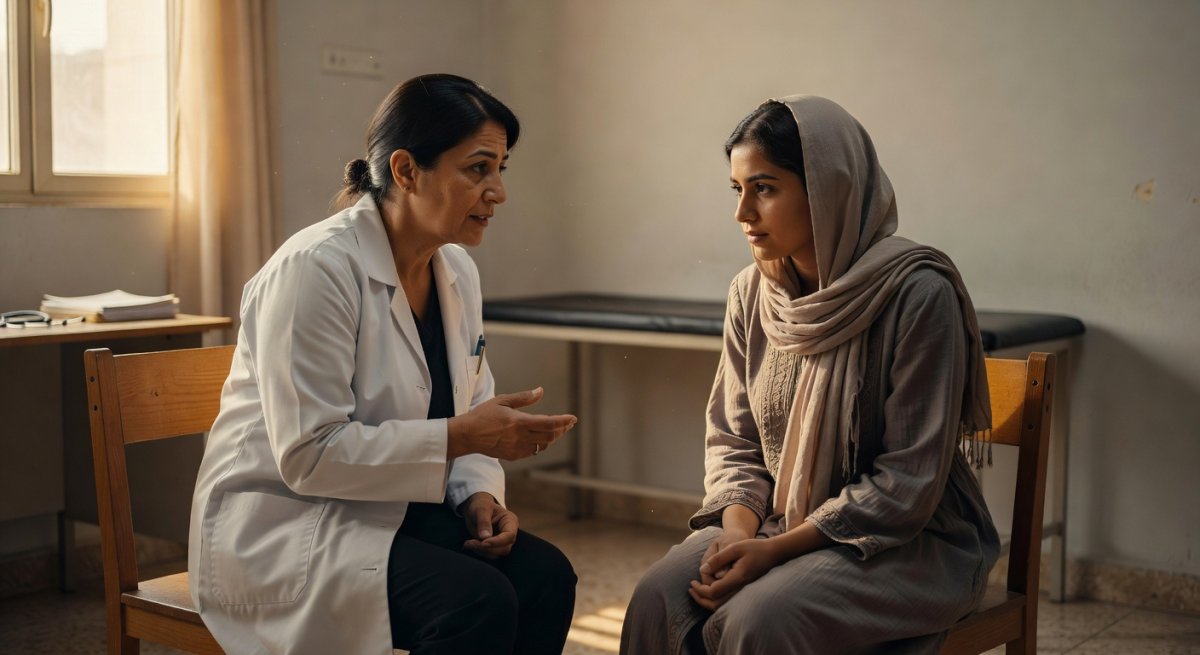
By July 2018 the Kurdistan Regional Government's Kidnapped Affairs department recorded that 2,023 Yazidi women had been liberated. Dr Nawzat has treated an estimated 1,200 of them. Her approach combines immediate physical care with attentive listening. After conducting a full examination she encourages survivors to speak about their experiences, offering reassurance and framing their endurance as strength. Survivors describe her as a steady presence who treats them with the regard of an older sister.
One Survivor's Recovery
After her release Shireen sought care at the centre. The physical check-up was accompanied by extended conversations in which Dr Nawzat affirmed her courage and helped her begin to process the trauma. Shireen has stated that without this support she would not have reached the point of rebuilding her life. At twenty-three she continues to live with the absence of family members and the memories of captivity, yet credits the consistent presence of medical staff for her gradual return to stability.
Many women arrive at the centre carrying similar burdens: the deaths of relatives, uncertainty about missing loved ones, and the social challenges of reintegration. The centre's model recognises that recovery requires addressing both bodily harm and the isolation that follows prolonged captivity. Staff maintain contact over months, adjusting care as survivors confront daily realities in displacement camps or host communities.
International Recognition and Local Realities
In March 2016 Dr Nawzat received the International Women of Courage Award from then-Secretary of State John Kerry. The honour acknowledged her work in delivering psychological support and confronting gender-based violence amid ongoing conflict. Within the Yazidi community her reputation rests on sustained daily engagement rather than public ceremonies. Colleagues at the Kurdistan Regional Government note that her presence at the centre has enabled hundreds of women to access services they might otherwise have avoided due to stigma or fear.
The broader context remains one of displacement and incomplete justice. Many survivors live in camps in the Kurdistan region while awaiting news of relatives or decisions on permanent housing. Economic pressures and limited access to education compound the effects of trauma. The centre's work occurs against this backdrop, providing a measure of continuity when state institutions are still developing specialised services for survivors of sexual violence in conflict.
Continuing Needs and the Human Cost
Figures compiled by the Kurdistan Regional Government indicate that thousands of Yazidis remain missing or unaccounted for. Women released from captivity often require long-term medical monitoring and mental-health support. The Duhok facility continues to receive new patients as additional captives are located and freed. Its staff emphasise that each case involves individual circumstances shaped by age at capture, duration of enslavement and the presence or absence of surviving family networks.
Dr Nawzat's practice illustrates the intersection of clinical medicine and human-rights documentation. By recording the physical and emotional consequences of systematic violence she contributes to the historical record while addressing immediate suffering. Her patients speak of restored dignity and renewed capacity to plan for the future, even as the wider community contends with the scale of loss.
The stories emerging from the centre underscore the necessity of sustained international and local investment in survivor-centred care. Without such services the long-term effects of captivity risk becoming permanent barriers to education, employment and family life. Dr Nawzat's commitment remains focused on the women who arrive each day seeking both treatment and a listener who understands the specific weight of their experiences.
By Fatima Al-Rashid, Staff Writer
This article was produced with AI-assisted research and editorial support. Reporting is based on sources cited in the article.
What's Your Reaction?
 Like
0
Like
0
 Dislike
0
Dislike
0
 Love
0
Love
0
 Funny
0
Funny
0
 Wow
0
Wow
0
 Sad
0
Sad
0
 Angry
0
Angry
0

Middle East Correspondent at Global1.News. Based in Beirut, covering politics, conflict, energy, and society across the Middle East. Brings context and depth to a region often reduced to headlines.









Comments (0)