
Is Syria the Partner Israel Needs to Help Curtail Hezbollah?
In a recent i24NEWS report titled "Is Syria the partner Israel needs to help curtail Hezbollah?" published this week, analysts examined how Syria's new authorities have targeted Hezbollah networks inside their territory since the collapse of the Assad regime. The discussion highlighted concrete Syrian operations against smuggling routes and assassination cells, while noting ong
In a recent i24NEWS report titled "Is Syria the partner Israel needs to help curtail Hezbollah?" published this week, analysts examined how Syria's new authorities have targeted Hezbollah networks inside their territory since the collapse of the Assad regime. The discussion highlighted concrete Syrian operations against smuggling routes and assassination cells, while noting ongoing Israeli strikes in southern Syria and western Daraa on the same day. These developments occur against the backdrop of fourth-round Israel-Lebanon talks that have failed to produce a ceasefire, with Hezbollah rejecting proposals this week amid continued cross-border exchanges.
Is Syria the Partner Israel Needs to Help Curtail Hezbollah?
Jerusalem, Israel — June 4, 2026 — For decades, Syria under the Assad dynasty served as the primary land bridge supplying Hezbollah with Iranian weapons, precision-guided munitions, and operational support. That strategic reality underwent a dramatic reversal after the fall of Bashar al-Assad's regime in late 2025, when the new government under President Ahmad al-Sharaa assumed power in Damascus. Since then, Syrian security forces have carried out an unprecedented campaign against Hezbollah-linked cells, smuggling networks, and assassination plots inside Syrian territory, raising the question of whether post-Assad Syria could become a de facto partner for Israel in curtailing the Iranian-backed terror group.
The Fall of Assad and al-Sharaa's New Direction
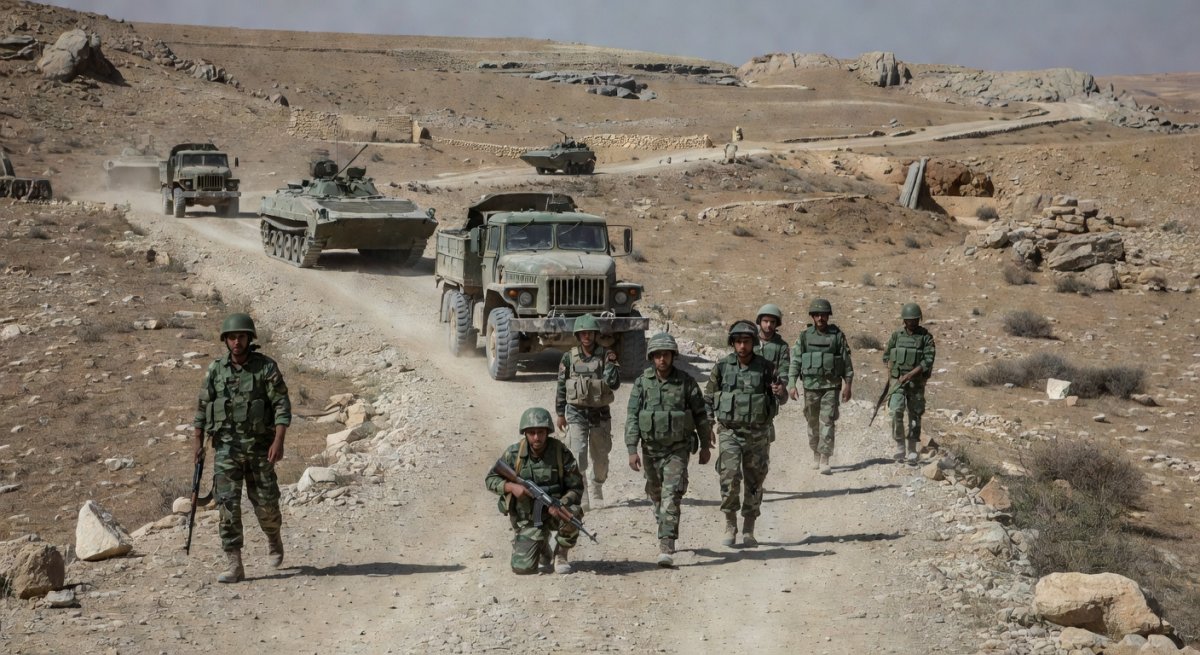
President Ahmad al-Sharaa assumed leadership after the rapid disintegration of Bashar al-Assad's regime, which had relied heavily on Iranian and Hezbollah support throughout Syria's civil war. His administration immediately redirected Syrian military resources away from previous alliances with Iran-backed groups. By early 2026, al-Sharaa had ordered the deployment of several thousand Syrian troops to the Lebanon border, directly disrupting Hezbollah's overland supply lines from Syria into the Bekaa Valley.
The Syrian Foreign Ministry has continued to issue statements condemning Israeli operations in the Golan Heights and southern Syria, yet operational coordination against Hezbollah has proceeded on the ground. This dual-track approach reflects Damascus's priority of reasserting state control over territory once dominated by Iranian militias and the Assad-era patronage networks that enabled Hezbollah's deep entrenchment inside Syria.
Specific Syrian Operations Against Hezbollah Networks
In recent months, Syrian security forces foiled a Hezbollah-linked plot to assassinate a religious figure in Damascus. The cell was dismantled before any attack occurred, according to statements from the Syrian Interior Ministry. Additional raids yielded thousands of explosive detonators and multiple weapon caches intended for transfer into Lebanon. Syrian forces also seized a series of smuggling tunnels along the Syria-Lebanon frontier, facilities that had previously facilitated the movement of precision-guided missile components and drone parts destined for Hezbollah's arsenal.
The Syrian army publicly confirmed the destruction of tunnels near the Qusayr crossing earlier this year. In a separate operation, Syrian authorities discovered and dismantled a Hezbollah-linked cell that was planning attacks against government officials, signaling that the new administration views Hezbollah's autonomous armed presence as a direct challenge to central authority.
Israeli Military Actions and Border Security
The IDF conducted artillery strikes this week targeting areas in southern Syria near the Lebanon border that Israeli intelligence assessed as Hezbollah transit points. Ground forces advanced briefly into western Daraa to destroy infrastructure used for drone launches. These operations followed weeks of similar strikes aimed at preventing the reconstitution of Hezbollah supply corridors that had been disrupted during the broader campaign against the group.
Israeli officials from the Prime Minister's Office have stated that such actions remain necessary even as Syrian forces increase their own pressure on Hezbollah. The Shin Bet and IDF intelligence branches continue to monitor residual Iranian influence inside Syria, particularly around the Damascus International Airport and along the M5 highway corridor, which historically served as a key logistics route for Iranian weapons shipments.
United States Encouragement and Normalization Signals
US officials have held parallel discussions with both Syrian and Israeli counterparts in recent months. Reports indicate that American envoys have expressed encouragement for continued Syrian action against Hezbollah while raising the possibility that normalization between Syria and Israel could occur sooner than any equivalent arrangement with Lebanon. The US State Department has not confirmed a timeline but has linked potential sanctions relief for Syria to verifiable steps against Iranian proxies operating on its territory.
Think tanks including the Foundation for Defense of Democracies, the Stimson Center, and the Washington Institute have published analyses noting an emerging alignment of interests between Damascus and Jerusalem specifically on Hezbollah containment. A recent Stimson Center report described "parallel talks" between Israel and Syria as reshaping Syria-Lebanon relations in ways that could produce a fundamentally different security architecture on Israel's northern border.
Persistent Tensions and Hezbollah's Adaptation
Despite the operational crackdowns, Syria's Foreign Minister reiterated condemnation of Israeli "occupation" of the Golan Heights in a statement issued earlier this week. This rhetoric has not halted operational coordination on the ground but limits the scope for public diplomatic breakthroughs. Hezbollah itself has shifted from operating as a state-within-a-state in Lebanon to functioning primarily as a smuggling network inside Syria, according to assessments from Israeli military intelligence.
Hezbollah has also introduced unjammable drones that defense analysts say pose new challenges for Israeli air defenses. These systems have been tested in limited strikes against Israeli positions in the north, prompting additional IDF deployments along the Lebanon frontier even as fourth-round talks continue under international mediation. The combination of Hezbollah's adaptation and the new Syrian posture creates a complex security calculus for Israeli defense planners.
Analysis and What This Means
For Israeli decision-makers in Jerusalem and Tel Aviv, the central question is whether Syrian actions represent a sustainable strategic shift or a temporary convergence of interests driven by the al-Sharaa government's need to consolidate power. The Mossad and IDF Northern Command have reportedly increased liaison channels with Syrian counterparts through third parties, focusing primarily on preventing Hezbollah rearmament through Syrian territory.
Daily life in northern Israeli communities remains affected by the ongoing threat of drone and rocket attacks, with schools in Kiryat Shmona and other border towns operating under adjusted security protocols. Any deeper partnership with Syria would require Damascus to address Israeli concerns about residual Iranian weapons transfers through its territory. Israeli Foreign Ministry spokespeople have emphasized that concrete results on the ground, rather than diplomatic declarations, will determine whether Syria can serve as a functional partner in curtailing Hezbollah's capabilities. The coming months will be critical in determining whether this alignment of necessity can evolve into a more durable strategic arrangement.
By Hannah Berg, Staff Writer
This article was produced with AI-assisted research and editorial support. Reporting is based on sources cited in the article.
What's Your Reaction?
 Like
0
Like
0
 Dislike
0
Dislike
0
 Love
0
Love
0
 Funny
0
Funny
0
 Wow
0
Wow
0
 Sad
0
Sad
0
 Angry
0
Angry
0
Israel Correspondent at Global1.News. Based in Tel Aviv, covering Israeli politics, security, technology, and society. Provides balanced, deeply-sourced reporting on one of the most closely-watched regions in the world.












Comments (0)