
The Final Act of Colonisation: Inside the US-Israel Plan to Strip Jordan of Al-Aqsa Custodianship
In a recent Middle East Eye opinion video, Ismail Patel, chair of Friends of Al-Aqsa, described the emerging US-Israeli efforts as conquest under the language of coexistence. Middle East Eye exclusively reported on June 4, 2026, that Washington and Tel Aviv are actively working to strip Jordan of its custodianship over Al-Aqsa Mosque. The plan would abolish the Jordanian-backed
In a recent Middle East Eye opinion video, Ismail Patel, chair of Friends of Al-Aqsa, described the emerging US-Israeli efforts as conquest under the language of coexistence. Middle East Eye exclusively reported on June 4, 2026, that Washington and Tel Aviv are actively working to strip Jordan of its custodianship over Al-Aqsa Mosque. The plan would abolish the Jordanian-backed Islamic Waqf and install an Israeli government-created body in its place.
The Final Act of Colonisation: Inside the US-Israel Plan to Strip Jordan of Al-Aqsa Custodianship
Occupied East Jerusalem - June 4, 2026 - The proposal would declare Al-Aqsa a multi-faith centre, allow Israel to appoint imams, control Friday sermons, and repackage the mosque as a tourist attraction. Jordan's Hashemite custodianship, in place since 1924, has been the sole Palestinian institution preserving the site's Islamic character under occupation since 1967. The Trump administration is backing the initiative, while the UK government told Middle East Eye that Jordan's custodianship must be respected.
The Plan Exposed
Middle East Eye reporting reveals that US and Israeli officials have moved beyond discussion into active coordination on replacing Jordanian authority at Al-Aqsa. The scheme targets the Islamic Waqf, the Jordanian-supported body responsible for day-to-day administration of the compound. An Israeli-created entity would assume all management functions, ending nearly a century of Hashemite oversight that began in 1924.
The Trump administration's support gives the plan diplomatic weight inside Washington policy circles. Officials have framed the change as administrative modernisation, yet the details centre on Israeli appointment of religious staff and oversight of sermons. This structure would remove the last formal barrier separating Israeli state power from the third holiest site in Islam.
Al-Aqsa would be redesignated a multi-faith centre open to tourism marketing. Israeli authorities would select imams and shape the content of Friday sermons, shifting control of religious practice directly to the occupying power. The UK government has stated publicly that Jordan's custodianship must be respected, signalling diplomatic friction even as Washington advances the proposal.
Implementation language remains conditional, with documents describing the steps as scheduled for phased rollout if political conditions align. Palestinian observers note that any such transfer would eliminate the only remaining institutional link between the mosque and its historic Islamic administration.
Manufactured Coexistence
Ismail Patel's Middle East Eye video frames the multi-faith designation as conquest wrapped in coexistence rhetoric. The plan markets Al-Aqsa as a shared tourist destination while granting Israel authority to appoint imams and script sermons. Such measures would convert a site of continuous Islamic worship into a state-managed attraction.
Israeli control over religious programming would extend to selecting which scholars address worshippers and determining permissible topics. This replaces the Waqf's established procedures with direct government oversight. Patel argues the language of shared access masks the removal of Palestinian religious autonomy at the compound.
Tourism packaging would prioritise visitor pathways and commercial facilities over prayer space. The shift would accelerate the site's integration into Israeli municipal planning, further detaching it from surrounding Palestinian neighbourhoods in the Old City. Local residents already report restricted access during peak tourist hours under current arrangements.
The proposal's emphasis on coexistence avoids any reference to the 1967 occupation that placed the site under Israeli military rule. By presenting administrative change as neutral reform, the plan obscures the power imbalance that allows one state to rewrite the religious governance of another community's holy place.
Jordan's Custodianship Under Fire
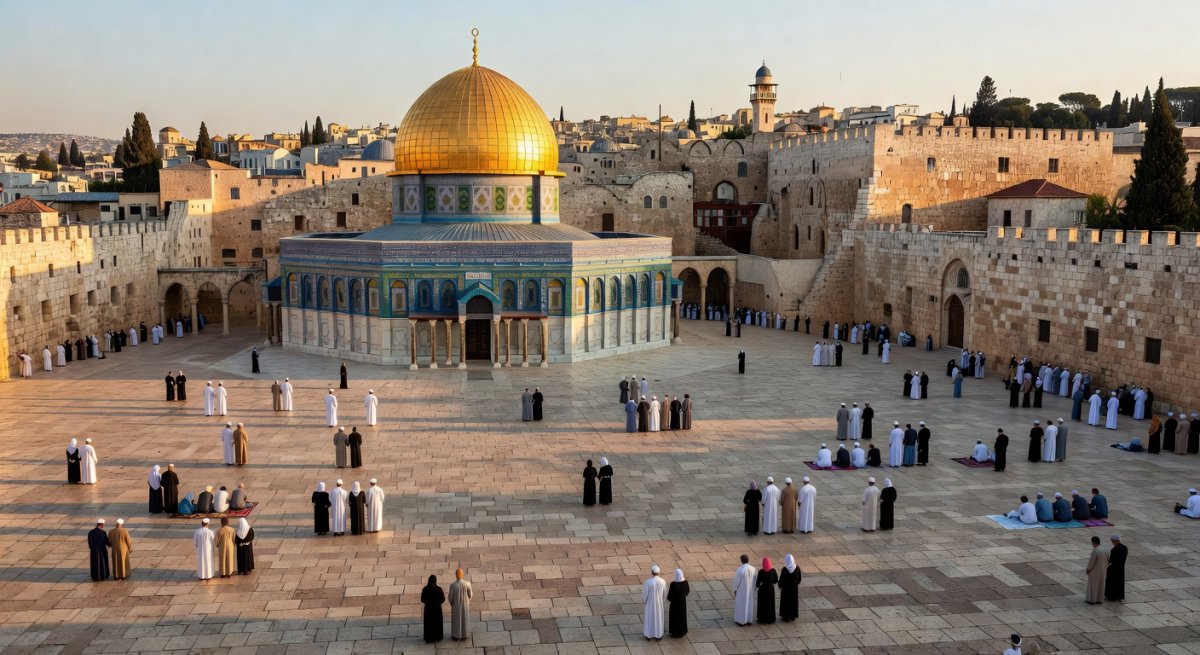
Jordan's Hashemite family has held custodianship of Al-Aqsa since 1924, a role recognised across the Muslim world and maintained through decades of political upheaval. Under Israeli occupation since 1967, the Waqf has remained the only Palestinian institution authorised to maintain the site's Islamic character and physical upkeep. The proposed replacement would sever this direct institutional connection.
The Waqf has managed restoration projects, regulated visitor conduct, and preserved the compound's function as a place of worship rather than a heritage exhibit. Its staff includes Palestinian clerics and administrators who report to Jordanian religious authorities. Removing this structure would place every decision about the mosque under Israeli government review.
Successive Israeli governments have tested the limits of Waqf authority through incremental restrictions. The current plan represents the most direct challenge yet to the 1924 arrangement. Jordanian officials have reiterated that any unilateral change violates long-standing international understandings regarding the site's status.
Palestinians in Jerusalem view the Waqf as the final institutional shield against complete Israeli appropriation of religious life at the compound. Its replacement by an Israeli body would complete a transfer of authority that began with the 1967 occupation but has never been formalised in religious governance.
A Campaign of Attrition
A 2025 Ir Amim report documented an unprecedented rise in Jewish raids on the Al-Aqsa compound, accompanied by new restrictions on Palestinian worshippers. Researcher Aviv Tatarsky stated that under the guise of religious Jewish connection, Israel is steadily taking control of the holy site. More than 600 Palestinians were banned from Al-Aqsa in 2026, while 30 Waqf permits were revoked and six imams were silenced.
The compound was sealed for 40 days during Israel's war on Iran, preventing access for both worship and maintenance. Senior imam Ekrima Sabri described these measures as unprecedented actions designed to impose domination. Eight Arab and Islamic states issued formal condemnations of the prolonged closure.
Israeli authorities have confiscated Palestinian property near Chain Gate street in Jerusalem's Old City, expanding state-controlled zones adjacent to the compound. Israeli flags have been raised inside the Aqsa compound itself, a visible assertion of sovereignty. One Israeli lawmaker publicly called for the mosque's demolition and replacement with a Jewish temple.
These ground-level actions create the practical conditions for the administrative transfer outlined in the US-Israeli plan. Each restriction reduces the Waqf's operational capacity and normalises direct Israeli intervention. Palestinian families in the Old City report daily encounters with new checkpoints and permit requirements that limit their ability to reach the mosque for regular prayers.
Palestinian Voices From the Ground
Ekrima Sabri has spoken of the cumulative effect of bans, permit revocations, and sermon controls on the community that relies on Al-Aqsa for spiritual continuity. Worshippers describe the psychological weight of entering a site under constant surveillance and sudden closures. The 40-day sealing during the war on Iran left many without access to Friday prayers for more than a month.
Aviv Tatarsky's analysis highlights how raids are presented as expressions of Jewish connection while systematically expanding Israeli physical presence. Palestinian residents note that flag-raising ceremonies inside the compound coincide with property confiscations on surrounding streets. These linked developments erode the separation between the mosque and the expanding settlement infrastructure.
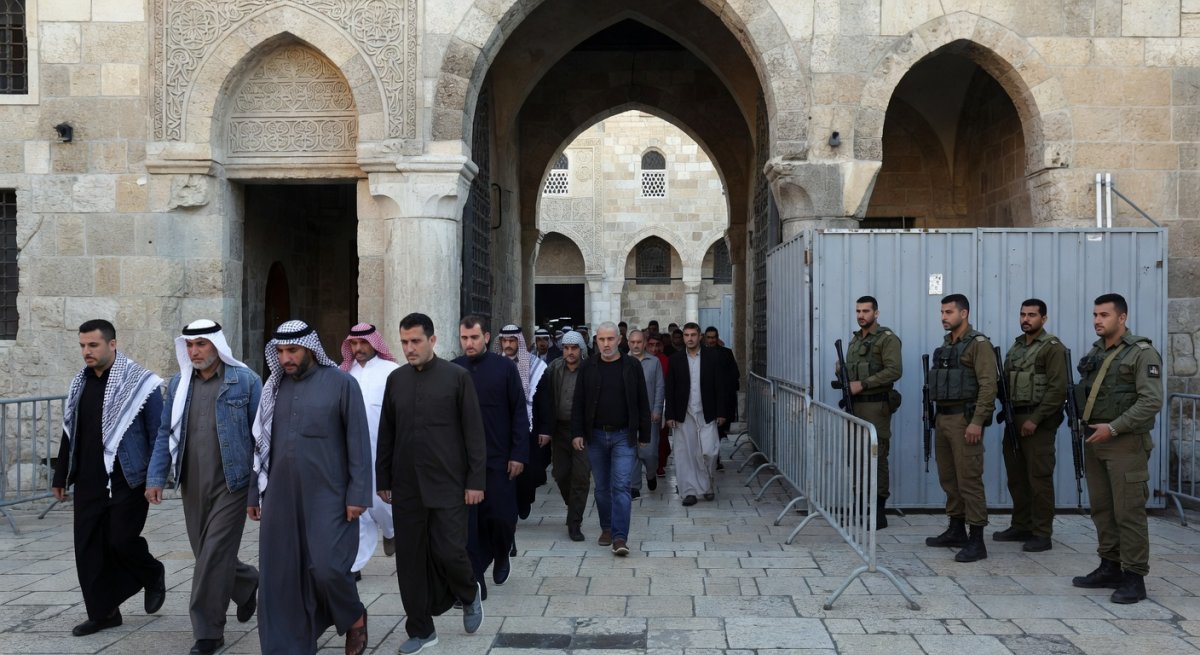
Local families recount how revoked Waqf permits have affected maintenance workers and religious teachers who have served the site for decades. The silencing of six imams has reduced the range of voices available during Friday sermons. Residents in the Old City describe a narrowing of daily life as access routes are monitored and commercial activity near the gates declines.
These accounts illustrate the human dimension behind the administrative proposal. The plan to replace Jordanian custodianship would formalise changes already experienced on the ground through restrictions and personnel changes.
The Regional Picture and What Comes Next
Eight Arab and Islamic states condemned the 40-day closure, signalling broader regional concern over any further erosion of Islamic authority at Al-Aqsa. Jordan's custodianship has served as a stabilising reference point recognised by multiple governments. Its removal would remove a diplomatic buffer that has contained disputes over the site for decades.
The UK statement that Jordan's role must be respected reflects continued international recognition of the 1924 arrangement. Palestinian analysts argue that the Trump administration's backing creates an opening for unilateral Israeli action that previous US positions had restrained. Implementation remains described as conditional, yet ground-level measures continue to advance.
Palestinians in Jerusalem and the West Bank watch the developments as an extension of ongoing displacement and control over religious spaces. The proposed multi-faith designation would recast the compound in ways that prioritise tourism revenue and state oversight over its established role as a centre of Muslim worship. Community leaders emphasise that any change imposed without Palestinian consent repeats patterns of dispossession experienced since 1967.
Future steps will depend on whether diplomatic pushback from Jordan and other states alters the timeline. The Waqf's continued presence, even under pressure, remains the primary mechanism preserving Islamic administration at the site. Palestinian residents continue to organise prayers and maintenance under the existing framework while the larger plan is debated in Washington and Tel Aviv.
 By Fatima Al-Rashid, Staff Writer
This article was produced with AI-assisted research and editorial support. Reporting is based on sources cited in the article.
What's Your Reaction?
 Like
0
Like
0
 Dislike
0
Dislike
0
 Love
0
Love
0
 Funny
0
Funny
0
 Wow
0
Wow
0
 Sad
0
Sad
0
 Angry
0
Angry
0

Gulf/MENA Correspondent at Global1.News. Based in Doha, covering Gulf politics, energy markets, diplomacy, and development across the Middle East and North Africa. Tracks the economic transformation of the Gulf states.













Comments (0)