
Ann Widdecombe murder: Police investigating left-wing motive in killing of Reform UK politician
The Killing of Ann Widdecombe: A Targeted Attack on British Soil The murder of Ann Widdecombe, the former Conservative MP and prominent Reform UK supporter, has sent shockwaves through Westminster and beyond. Police have confirmed the 76-year-old was killed in a targeted attack in Devon last week, an incident that has prompted counter-terrorism investigators to examine whether left-wing extremism played a role. The development comes at a time of heightened political tension...
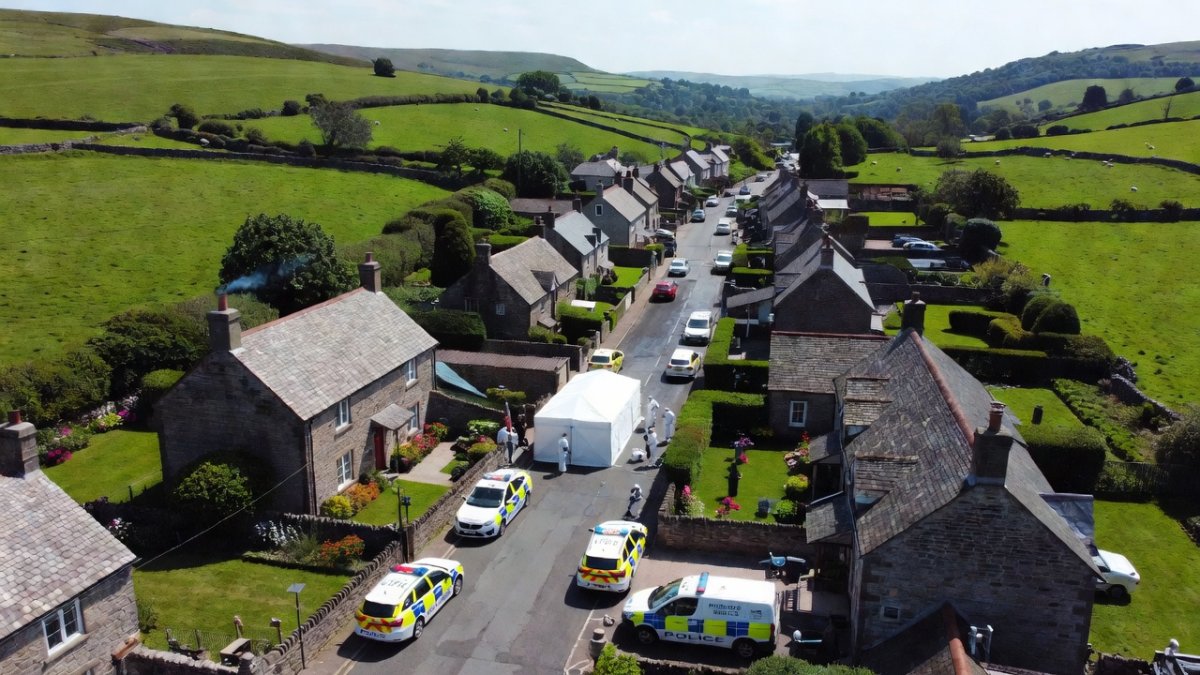
The Killing of Ann Widdecombe: A Targeted Attack on British Soil
The murder of Ann Widdecombe, the former Conservative MP and prominent Reform UK supporter, has sent shockwaves through Westminster and beyond. Police have confirmed the 76-year-old was killed in a targeted attack in Devon last week, an incident that has prompted counter-terrorism investigators to examine whether left-wing extremism played a role. The development comes at a time of heightened political tension in the United Kingdom, with the incoming prime minister, Andy Burnham, warning that the tone of public life has “darkened” markedly since he last served in government nearly a decade ago.
Details remain limited for operational reasons, yet what has emerged paints a picture of a calculated assault on a veteran political figure. Widdecombe, who served as shadow home secretary under William Hague and later became a household name through her appearances on reality television, had thrown her considerable rhetorical weight behind Nigel Farage’s Reform UK in recent months. She had given an interview robustly defending Farage only minutes before the attack, according to sources close to the investigation. Her death has been formally linked by Counter Terrorism Policing (CTP) to a 28-year-old man arrested in Rotherham, South Yorkshire.
Details of the Attack in Devon
The precise circumstances of the killing have not been made public by Devon and Cornwall Police, but senior officers have described it unequivocally as “targeted”. Sources within the force told The Independent that Widdecombe was attacked at a private address in rural Devon where she had been staying. No other individuals were injured, reinforcing the assessment that she was the sole intended victim.
Neighbours in the quiet village spoke of hearing a disturbance shortly after 6pm on Friday. One resident, who asked not to be named, told reporters that a vehicle was seen leaving the scene at speed. Within hours, counter-terrorism officers from the South West region had been drafted in, reflecting the gravity with which the incident was immediately viewed in Whitehall. The speed of the response suggests that intelligence or patterns of behaviour had already placed Widdecombe in a category of elevated risk, although no formal protection had been extended to her by the Metropolitan Police’s parliamentary security team.
Reform UK issued a statement on Saturday describing the killing as “an assault on democracy itself”. Nigel Farage, who had been due to appear alongside Widdecombe at a party event in Taunton the following day, cancelled all engagements and was seen leaving his Kent home accompanied by close protection officers. The party has called for an urgent debate in the House of Commons when it returns from recess.
The Investigation: Left-Wing Motive Under Scrutiny
Laurence Taylor, the head of Counter Terrorism Policing, addressed reporters on Tuesday outside New Scotland Yard. He confirmed that the death was being treated as a “targeted attack” and that officers were examining whether the suspect had been motivated by hostility towards Reform UK figures specifically. Taylor refused to rule out foreign interference, a standard line in terrorism investigations but one that carries particular weight given recent MI5 assessments of state-sponsored activity from Russia and Iran.
The Guardian reported on Wednesday that investigators are actively considering whether left-wing, anarchist and single-issue terrorism — commonly grouped under the acronym LASIT — played a part in the suspect’s alleged motivation. This line of inquiry marks a significant shift. For more than two decades, the dominant focus of counter-terrorism resources has been on Islamist extremism, with far-right terrorism rising sharply in the assessments of MI5 since 2017. Left-wing extremism has traditionally been viewed as lower priority, although the Home Office’s latest annual report on terrorism noted a “persistent low level” of LASIT activity, particularly around animal rights, environmental direct action and anti-fascist networks.
The 28-year-old man arrested in Rotherham on Saturday was initially held on suspicion of murder. He was subsequently re-arrested on suspicion of the commission, preparation or instigation of acts of terrorism under the Terrorism Act 2000. A warrant of further detention has been granted, allowing police to hold him for an additional seven days from the point of his original arrest. Searches have been carried out at two addresses in South Yorkshire and one in the West Midlands. Digital devices and paperwork have been seized for forensic analysis.
Police are also investigating a social media post by an employee of the University of Aberdeen that appeared to celebrate Widdecombe’s death. The post, which has since been deleted, reportedly described the killing as “one less fascist”. Aberdeen University has said it is cooperating fully with the police and has placed the member of staff on administrative leave pending an internal inquiry. The incident has reignited debate about the boundaries of free speech on British campuses, with education secretary Bridget Phillipson expected to make a statement in the Commons next week.
Political Context: Reform UK, Farage and a Polarised Landscape
Ann Widdecombe’s journey from Maastricht rebel to Reform UK stalwart mirrored the convulsions that have reshaped the British right. Having left the Conservative Party in 2019 over its failure to deliver a clean Brexit, she became one of Nigel Farage’s most effective media surrogates. In recent weeks she had been particularly vocal in defending Reform against accusations of racism and extremism, describing the party’s critics in the mainstream media as “the real enemies of democracy”.
Her killing occurs against a backdrop of rising concern about the temperature of political discourse. The 2024 general election, which delivered a Labour majority under Sir Keir Starmer before his unexpected resignation last month, was marked by ugly incidents on the campaign trail. Several Reform candidates reported threats; one Conservative MP required hospital treatment after being assaulted outside a polling station in Sunderland. The incoming prime minister, Andy Burnham, who is expected to be confirmed as Labour leader and therefore prime minister within days, used his first major interview since emerging as the clear frontrunner to call for a “serious review” into the safety of elected representatives.
“Politics has darkened,” Burnham told the BBC on Tuesday. “When I left Westminster in 2017 the threats were real but containable. The abuse, the casual violence in language, the targeting of individuals and their families — it is worse now than at any time in my lifetime.” Burnham’s comments carry particular weight given his own experience as a senior minister during the tumultuous years after the 2016 EU referendum. Whitehall sources say the review he has demanded will be chaired by a senior retired judge and will examine not only physical security but also the role of social media platforms in amplifying threats.
Reform UK itself has been the subject of intense scrutiny since its strong performance in the 2024 election, where it secured five seats and pushed the Conservatives into third place in the popular vote in many parts of England. Security sources have privately expressed concern about the party’s ability to protect its candidates and spokespeople, many of whom lack the institutional support offered by the major parties. The murder of Widdecombe, who was not an MP at the time of her death but remained a highly recognisable face of the party, will intensify those worries.
MP Safety Concerns: Calls for Urgent Review
The killing has revived painful memories of previous attacks on British politicians. The murder of Labour MP Jo Cox in 2016 by a far-right extremist, the stabbing of Conservative MP Sir David Amess in 2021 by an Islamist terrorist, and the attempted murder of Conservative MP Nigel Jones in 2000 all form part of a grim pattern. Each time, promises were made to improve protection for elected representatives. Each time, the political cycle moved on and funding proved tight.
Today, only ministers, certain shadow ministers and MPs judged to be at particular risk receive close protection from the Metropolitan Police. The remainder rely on parliamentary security officers at Westminster and ad hoc risk assessments by their local forces. The House of Commons Speaker, Sir Lindsay Hoyle, has already indicated that he will recall the House early if necessary to debate enhanced measures. One proposal expected to gain traction is the extension of “hostile state actor” style security assessments to domestic extremism threats, allowing police to offer temporary protection to politicians facing credible online incitement.
Counter Terrorism Policing currently assesses the threat from left-wing, anarchist and single-issue terrorism as “low” but “enduring”. MI5’s director general, Ken McCallum, told the Intelligence and Security Committee in closed session last year that the service was monitoring a “loose constellation” of activist networks that sometimes crossed over into criminality. Whether the suspect in the Widdecombe case proves to be a lone actor radicalised online, or part of a wider network, will be critical to future threat assessments.
The Suspect: Background and Legal Position
The 28-year-old man in custody has not been named by police, in line with standard practice before charge. He is understood to have been known to both South Yorkshire Police and counter-terrorism officers prior to his arrest, although not in connection with any active terrorism investigation. Sources suggest he had been involved in environmental protest groups and had posted extensively on social media about “corporate fascism” and the “betrayal of working people by the political class”.
His re-arrest under terrorism legislation gives investigators significantly greater powers, including the ability to examine encrypted devices and to question him without the presence of a solicitor in certain tightly defined circumstances. The seven-day extension granted by a magistrate allows time for forensic analysis of material recovered from the Devon crime scene and from properties in Rotherham and elsewhere.
Legal experts have cautioned that any eventual charge is likely to be murder with a terrorism enhancement, rather than a standalone terrorism offence, unless evidence emerges of wider plotting. The Crown Prosecution Service’s terrorism unit is already involved. If convicted of a terrorism-related murder, the suspect would face a whole-life order — the same sentence handed to the killers of Jo Cox and Sir David Amess.
What Happens Next: Political and Security Ramifications
The coming days will be critical. Counter Terrorism Policing is expected to provide a further update by the end of this week. MI5 is understood to be conducting a parallel review of its own holdings on LASIT activity to establish whether any intelligence “missed connections” exist. The Home Office, under the acting home secretary, has commissioned an urgent assessment of security arrangements for high-profile political figures outside the formal party leaderships.
For Reform UK, the loss of Ann Widdecombe is both a personal tragedy and a strategic blow. She was one of the few senior figures able to reach beyond the party’s core vote. Her funeral, expected to take place in London in the coming fortnight, is likely to be attended by a cross-section of the political establishment — a rare moment of unity at a time of deep division.
Andy Burnham’s call for a wholesale review of MP safety will dominate the political conversation as he prepares to enter Downing Street. The new prime minister has indicated that he wants the review completed within three months and its recommendations implemented before the summer recess. Whether that ambitious timetable can be met will depend on the willingness of the security services, police forces and social media companies to cooperate fully.
Beyond the immediate investigation lies a deeper question about the health of British democracy. The targeting of a 76-year-old woman who had spent decades in public life, albeit often controversially, suggests a breakdown in the norms that once protected even the most divisive figures. As Laurence Taylor said on Tuesday, the investigation is in its early stages. Yet the questions it has already raised — about ideology, about online radicalisation, about the responsibilities of platforms and universities, and about the physical safety of those who choose public service — will resonate long after the suspect is charged.
The coming weeks will test not only the professionalism of Britain’s counter-terrorism machinery but the resilience of its political culture. Ann Widdecombe was fond of quoting Margaret Thatcher’s maxim that “the lady’s not for turning”. In death, she may yet force a turning point in how this country protects those who speak, however provocatively, in the public square.
By Erica Thornton, Staff Writer
This article was produced with AI-assisted research and editorial support. Reporting is based on sources cited in the article.
What's Your Reaction?
 Like
1
Like
1
 Dislike
0
Dislike
0
 Love
0
Love
0
 Funny
0
Funny
0
 Wow
0
Wow
0
 Sad
0
Sad
0
 Angry
0
Angry
0

US Politics and Policy Correspondent at Global1.News. Based in Washington DC, covering American politics, policy, elections, and the courts. Knows how the system works and tells you what it actually means.















Comments (0)