
Bangkok Bar Fire Kills 30, Exposes Dangerous Licensing Loopholes in Thai Law
The tragedy and its immediate aftermath The fire broke out late on Friday at Na Ladprao Brewery in Bangkok's Lat Phrao district, claiming 30 lives among patrons and staff. Rescue teams from the Bangkok Metropolitan Administration arrived within minutes, yet the blaze spread rapidly through the single-story structure near Lat Phrao Road. Local residents from nearby communities described hearing loud music and seeing crowds earlier that evening.
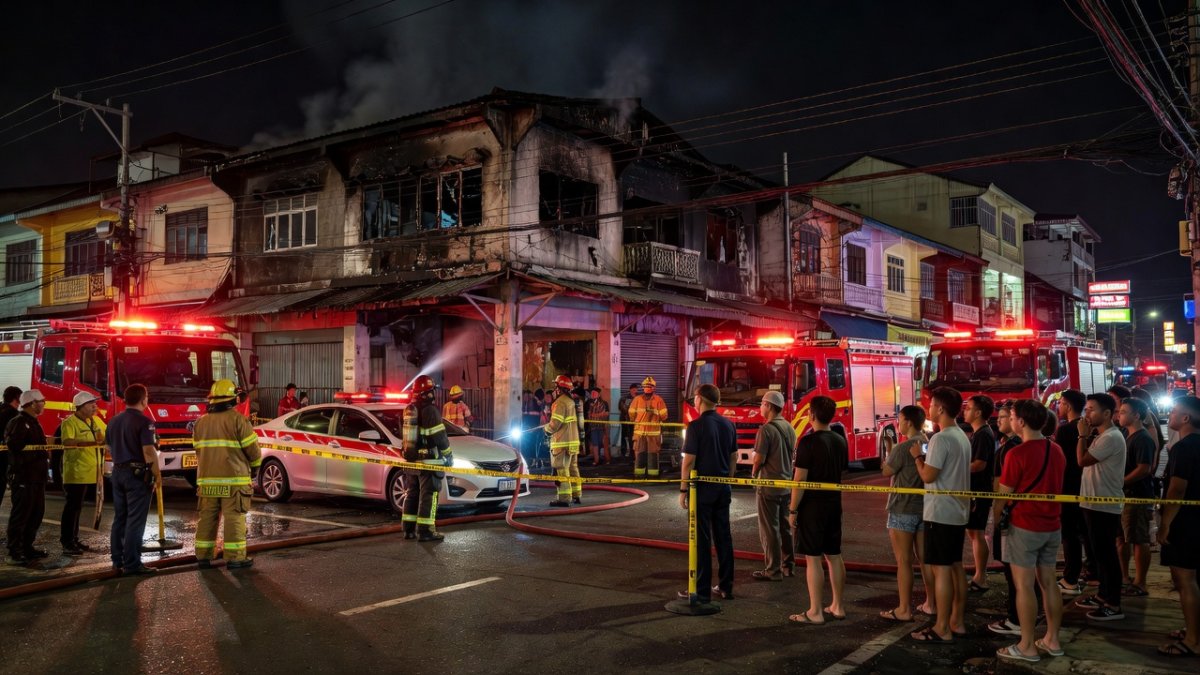
The tragedy and its immediate aftermath
The fire broke out late on Friday at Na Ladprao Brewery in Bangkok's Lat Phrao district, claiming 30 lives among patrons and staff. Rescue teams from the Bangkok Metropolitan Administration arrived within minutes, yet the blaze spread rapidly through the single-story structure near Lat Phrao Road.
Local residents from nearby communities described hearing loud music and seeing crowds earlier that evening. Buddhist monks from Wat Lat Phrao later performed merit-making ceremonies for the victims, reflecting the deep cultural response in the neighborhood.
How restaurant licences became a loophole
The loophole in Thailand's licensing system emerged from overlapping yet fragmented legislation dating back decades. Under the Public Health Act of 1992, local authorities such as the Bangkok Metropolitan Administration (BMA) and municipal offices issue restaurant licences with relatively straightforward requirements focused on food safety and basic hygiene. In contrast, the Entertainment Place Act of 1966 imposes stricter oversight for venues featuring music, dancing or performances, requiring coordinated approvals from district officials, police, city planning departments and fire safety inspectors. Operators routinely exploit this divide by securing a restaurant permit first, then applying separately for alcohol sales and sound permits from different agencies, ensuring no single regulator reviews the full scope of activities.
This fragmented approach allows businesses to operate in residential or mixed-use zones where full entertainment licences would be denied. Historical data from the Department of Local Administration shows that restaurant permits have grown steadily since the 1990s tourism boom, while entertainment venue approvals have remained tightly controlled. The financial incentive is clear: compliance costs for an entertainment licence can exceed 500,000 baht in fees, renovations and inspections, whereas restaurant pathways reduce these expenses by up to 70 percent and permit locations near schools or temples that would otherwise be prohibited. Without a unified database linking permits, authorities remain unaware that a single premises may accumulate multiple approvals that collectively transform it into a high-impact nightlife spot.
Many similar establishments across Bangkok and in Chiang Mai have followed the same pattern, obtaining the simpler restaurant permit while operating as pubs. This approach bypasses the stricter location and zoning rules required under the Entertainment Place Act of 1966. Officials noted that no automatic review occurs when a restaurant adds live music and extended hours, leaving safety standards unchanged despite the shift in use.
The regulatory gap explained
Over time, many establishments evolve far beyond their original licensing intent without triggering reassessment. A venue granted a restaurant licence may later install stages, intensify lighting systems and shift revenue streams so that alcohol sales and ticketed events account for over 60 percent of income. Because permits for alcohol, amplified sound and building use are renewed independently, often annually, the cumulative change in character goes unnoticed. The Public Health Act framework contains no automatic mechanism to reclassify a business once its operational profile changes, leaving inspectors to evaluate only narrow compliance items rather than the venue's overall risk profile.
Closer examination typically occurs only after a complaint or incident, as evidenced by post-2016 reviews following several high-profile incidents in Bangkok. Venues have operated for five to eight years as de facto entertainment spaces while holding valid but mismatched permits. Provincial data from 2022 to 2024 indicates that fewer than 15 percent of restaurant-licensed premises undergo operational audits unless prompted externally. This regulatory blind spot effectively creates a parallel licensing track that bypasses the Entertainment Place Act, allowing operators to avoid the higher safety and zoning standards required for nightlife venues.
Under current rules, a venue can add stages and sound systems without notifying authorities or undergoing new safety evaluations. This loophole affects districts throughout the Isaan region and tourist areas like Phuket, where similar mixed-use businesses operate.
PM's response and political implications
Prime Minister Anutin Charnvirakul rejected calls for his resignation as Interior Minister this week, describing the demands as unprofessional. He pledged to review zoning laws for entertainment venues and ordered the Bangkok governor to intensify inspections nationwide starting Monday.
The Prime Minister stated that the entertainment licence for Na Ladprao Brewery has been permanently revoked, adding that the venue will never reopen as an entertainment business. He also questioned outdated midnight curfews on live music and distance rules from schools and temples that no longer match modern urban life. "I'm a musician myself, and I still don't understand why live music has to stop at midnight," he said, adding that musicians should not be penalised by outdated laws.
What this means for public safety
The double-locked exits at the brewery illustrate a broader profit-first culture that prioritises capacity over egress safety. An emergency exit had been secured with a double lock to prevent customers from leaving without paying, directly contributing to the high death toll. The Prime Minister criticised the practice, saying: "How can anyone accept that explanation?"
Restaurant licences mandate basic fire exits suited to daytime dining crowds, yet these standards prove inadequate when venues host hundreds of late-night patrons amid loud music and alcohol consumption. Evacuation modelling used for food-service permits assumes orderly movement at lower densities; it does not account for impaired mobility, disorientation from strobe lighting or blocked pathways created by temporary stages. As a result, venues may display current individual permits while their physical layout and crowd management plans no longer match actual usage.
This mismatch generates a false sense of security for both regulators and patrons. Young Thais and international tourists, who form the core demographic of these venues, often assume compliance with visible licences equates to comprehensive safety oversight. Regulatory costs avoided by operators are effectively transferred to customers in the form of elevated risk. Ministry of Public Health statistics from 2023 show that entertainment-related injuries in restaurant-licensed premises rose 22 percent year-on-year, underscoring how the absence of holistic review directly endangers public welfare.
Impact on Thailand's tourism and international image
Thailand welcomed more than 40 million international visitors in 2025, with entertainment districts such as Khao San Road, RCA, Thong Lor and Ekkamai serving as major attractions. Any perception that fire safety and licensing standards are inconsistently enforced can influence travel advisories issued by foreign governments and booking behaviour among younger demographics. The Ministry of Tourism and Sports and the Tourism Authority of Thailand have expressed concern that negative coverage of regulatory gaps could erode the country's reputation for reliable nightlife experiences, particularly as regional competitors promote stricter compliance regimes.
Within ASEAN, neighbouring countries are monitoring Thailand's response to determine whether similar loopholes exist in their own systems. Failure to close the gap risks damaging Thailand's soft-power narrative of being a safe, well-managed destination. Tourism receipts exceeded 1.2 trillion baht in 2024, yet sustained growth depends on maintaining confidence that entertainment venues meet modern safety benchmarks. Coordinated reform would not only protect residents but also reinforce Thailand's image as a destination where regulatory integrity matches its cultural appeal.
The road ahead - needed reforms
Reforms under discussion include mandatory licence reassessments whenever a restaurant adds entertainment features, plus unified inspection teams from the Interior Ministry and Public Health Department. These steps would close the current gap and align rules with actual operations.
Community leaders in Lat Phrao have called for greater involvement in zoning decisions, echoing broader calls in Thai society for regulations that respect both economic activity and the safety of residents near temples and schools.
Implementation of these changes in the coming months could set a stronger standard for entertainment venues throughout Thailand and neighboring countries facing similar regulatory challenges.
By Ann Srisawat, Staff WriterThis article was produced with AI-assisted research and editorial support. Reporting is based on sources cited in the article.
What's Your Reaction?
 Like
0
Like
0
 Dislike
0
Dislike
0
 Love
0
Love
0
 Funny
0
Funny
0
 Wow
0
Wow
0
 Sad
0
Sad
0
 Angry
0
Angry
0

Southeast Asia Correspondent at Global1.News. Based in Bangkok, covering Thai and Southeast Asian politics, economy, technology, and culture. Deep regional perspective on one of the world's most dynamic regions.













Comments (0)