
De Beers Pauses Venetia Mine Operations from 2026
De Beers will suspend production at South Africa's Venetia mine for two years, threatening over 1,100 jobs and significant tax revenue while lab-grown diamonds reshape global markets. The move highlights both economic pressures and Africa's ongoing push for greater control over its mineral resources.
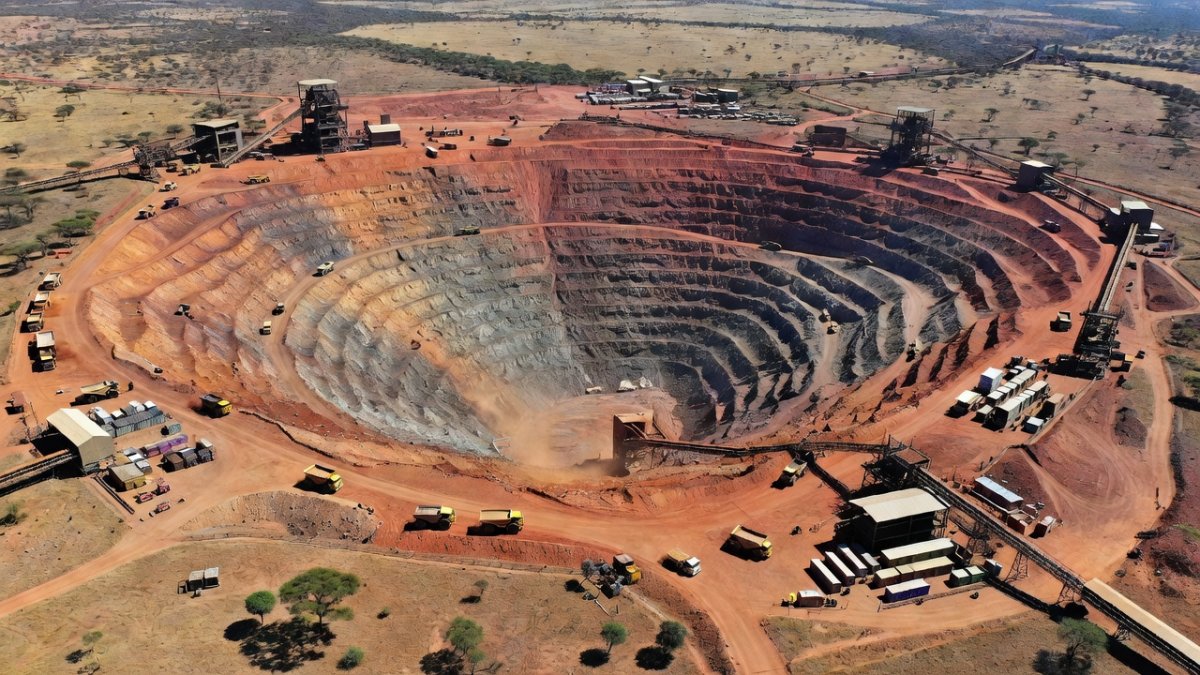
In the sun-baked plains of Limpopo, where red earth meets the promise of buried treasure, the Venetia mine has long stood as both lifeline and legacy for families who trace their roots to the land. De Beers’ decision to pause operations for two years beginning in 2026 arrives like a sudden drought after years of uncertain rains, touching not only the 4,000-plus workers but the wider web of villages, traders, and dreams that depend on those glittering stones. This moment invites South Africans and their continental neighbors to reflect on how mineral wealth can truly serve the people who have always carried its heaviest burdens.
De Beers Halts Venetia Mine as Lab-Grown Diamonds Reshape Global Market
Limpopo, South Africa — Article continues...
The Announcement
De Beers, the world's leading diamond company, confirmed last week that it will halt production at the Venetia mine in Limpopo province for two full years beginning in early 2026. The open-pit operation, South Africa's largest, has supplied more than 40 percent of the country's annual diamond output and directly employs over 4,000 workers. Company executives cited persistently weak prices for natural diamonds as the primary driver, with values having fallen by nearly half since 2022.
Anglo American, which holds majority ownership of De Beers, is simultaneously exploring options to divest from the diamond business entirely in order to concentrate on copper assets. The Venetia suspension follows months of internal reviews and consultations with the National Union of Mineworkers. Government officials in Pretoria have acknowledged the move but stressed ongoing talks to mitigate broader fallout.
Economic Impact on South Africa
The $67 million in taxes and royalties generated by Venetia in 2025 directly supported Limpopo’s education and health budgets, including school feeding schemes that reach over 300,000 learners and mobile clinics serving remote settlements. Losing this revenue for two years will force provincial authorities to delay infrastructure upgrades such as road repairs linking mining towns to markets and the expansion of water projects already strained by climate variability. Broader South African mining trends show declining employment across gold and platinum sectors, with the Minerals Council reporting a net loss of 12,000 formal jobs in 2024 alone, underscoring the urgency for coordinated national responses.
Botswana’s Pula Fund offers a compelling contrast, having accumulated more than $5 billion from diamond revenues to stabilize public spending during price downturns and finance downstream industries like cutting and polishing. South African policymakers are now studying this sovereign wealth model alongside calls from the African National Congress for greater local equity stakes in mining operations. Such comparisons highlight how strategic reinvestment can transform finite resources into enduring community assets rather than repeated cycles of boom and retrenchment.
South Africa's mining sector supports nearly half a million formal jobs and contributes more than 4 percent to national GDP, making any major disruption at Venetia a matter of national concern. In 2025 alone the mine generated approximately $67 million in taxes and royalties that flowed directly into state coffers. These revenues help fund schools, clinics, and infrastructure projects in Limpopo and beyond.
With diamond exports forming a meaningful slice of foreign earnings, the two-year pause could trim overall sector growth projections for 2026 and 2027. Local suppliers of equipment, transport, and catering services that orbit the mine will also feel the contraction. Yet South African policymakers have begun exploring diversification strategies, drawing lessons from Botswana's more resilient diamond partnership model.
The Human Cost to Miners and Families
Limpopo province already contends with an unemployment rate above 32 percent, making the potential loss of income for 4,000 direct employees and thousands more in the supply chain a profound shock to household economies that rely on mine wages averaging R18,000 monthly. When breadwinners stop earning, extended families across Gauteng and Mpumalanga provinces feel the strain through reduced remittances that once covered school fees and funeral costs. The National Union of Mineworkers has entered formal negotiations with Anglo American, demanding severance packages equivalent to two years’ salary plus retraining commitments, while community forums in Musina and Blouberg have begun mapping local coping strategies rooted in cooperative farming and small-scale trading networks.
Women traders near the mine gates describe pooling resources to maintain stokvel savings groups that have historically buffered against layoffs, allowing families to share transport costs and bulk food purchases. These grassroots mechanisms, though resilient, cannot fully replace structured support, prompting unions to advocate for government-backed temporary employment programs modeled on the Expanded Public Works Programme. The human dimension extends beyond numbers to the quiet dignity of workers who have extracted value from the earth for generations and now seek pathways that honor their labor while opening new opportunities.
The National Union of Mineworkers has warned that 1,134 permanent positions at Venetia face immediate risk once production stops. Many of these workers are breadwinners whose wages sustain extended families across multiple provinces. Temporary contractors and service providers could push the total number of affected livelihoods well above 5,000.
Community leaders in the surrounding villages describe a quiet anxiety that has settled over households already stretched by rising living costs. Women who run small trading stalls near the mine gates speak of uncertain school fees and medical expenses ahead. Still, the same communities have shown remarkable solidarity in past downturns, pooling resources and sharing skills to weather storms together.
The Rise of Lab-Grown Diamonds
Lab-grown diamonds reached a global market value of $29.73 billion in 2025, with projections climbing to $108.98 billion by 2035 as younger consumers in Europe and North America prioritize affordability and traceability over traditional scarcity narratives. De Beers’ own Lightbox line, launched to capture this segment, now competes directly with its natural diamond portfolio, illustrating how the company’s dual strategy has accelerated price erosion rather than shielding producers. African governments watch these shifts closely, recognizing that synthetic stones cannot replicate the geological stories embedded in gems from Venetia or Jwaneng.
For producers across the continent, the rise of laboratory alternatives demands a pivot toward premium branding that emphasizes ethical sourcing and community benefit-sharing verified by independent auditors. This transition challenges mining houses to invest in local beneficiation so that more value stays within African borders before stones reach international markets. The data suggests that without such adaptation, natural diamond revenues could contract further, yet the unique heritage carried by these gems offers a foundation for renewed consumer appreciation when paired with transparent storytelling.
Lab-grown diamonds now sell for 78 percent less than comparable one-carat natural stones, reshaping consumer preferences worldwide. The global market for these man-made gems reached $29.73 billion in 2025 and is forecast to climb to $108.98 billion by 2035. Younger buyers increasingly view laboratory diamonds as ethical and affordable alternatives without the environmental footprint of large-scale mining.
De Beers itself launched its own lab-grown line years ago, yet the price collapse has outpaced even optimistic forecasts. Traditional mining houses must now compete on quality storytelling rather than volume alone. African producers are watching closely, recognizing that natural diamonds carry unique geological stories that synthetic stones cannot replicate.
Echoes of Colonial Legacy
De Beers traces its origins to Cecil Rhodes, who founded the company in 1871 on land seized during the colonial scramble for southern Africa's mineral wealth. That history of dispossession still echoes in land rights disputes and benefit-sharing debates today. The Venetia mine itself sits on territory once home to indigenous communities whose descendants now form much of the workforce.
Contemporary African voices increasingly demand that diamond revenues translate into lasting local ownership and skills transfer. While the colonial chapter cannot be rewritten, many see the current transition as an opportunity to renegotiate terms so that future generations inherit stronger institutions rather than repeated cycles of boom and bust.
Pathways to Resilience
Across the continent, countries like Botswana and Namibia have demonstrated how strategic partnerships can cushion mining shocks through sovereign wealth funds and downstream industries. South African stakeholders are studying these examples while pushing for greater beneficiation—cutting and polishing diamonds locally—to capture more value before export. Worker retraining programs focused on renewable energy and agriculture are already being piloted near other idled sites.
Young entrepreneurs in Johannesburg and Cape Town are experimenting with blockchain traceability for natural diamonds, hoping to restore consumer trust and premium pricing. These grassroots innovations reflect the enduring African capacity to adapt and create opportunity even when global giants retreat.
What This Means for Africa's Diamond Future
Botswana and Namibia have shown how sovereign wealth mechanisms and local polishing industries can buffer against market volatility, with Botswana’s Okavango Diamond Company capturing an additional 15 percent of value through in-country cutting. South African stakeholders are advancing similar beneficiation targets, piloting worker retraining in renewable energy installation and agricultural processing near idled sites. Young innovators in Johannesburg meanwhile deploy blockchain platforms to certify natural diamond provenance, restoring trust among buyers wary of both synthetic competition and historical exploitation.
African governments increasingly insist on equity participation and skills transfer clauses in new mining agreements, moving beyond colonial-era extraction models toward partnerships that build lasting institutions. The vision centers on diversified economies where diamond revenues seed manufacturing clusters and youth entrepreneurship, ensuring that when global demand fluctuates, communities retain ownership of their development trajectory. This grounded approach reflects the continent’s enduring capacity to transform challenge into opportunity while honoring the labor and land that have always sustained its people.
By Amara Diop, Staff WriterThis article was produced with AI-assisted research and editorial support. Reporting is based on sources cited in the article.
What's Your Reaction?
 Like
0
Like
0
 Dislike
0
Dislike
0
 Love
0
Love
0
 Funny
0
Funny
0
 Wow
0
Wow
0
 Sad
0
Sad
0
 Angry
0
Angry
0

West Africa/Sahel Correspondent at Global1.News. Dakar-based journalist covering politics, security, climate, and development across Francophone and Anglophone West Africa. Tells the stories of a region undergoing profound transformation.












Comments (0)