
Syria Warns Against Vigilante Justice for Assad-Era Figures
Syria's transitional government is walking a razor-thin line between delivering accountability for crimes committed under the Assad regime and preventing the country from descending into a cycle of revenge killings. The balance between justice and stability in post-conflict Syria carries implications far beyond Damascus — from the Gulf's reconstruction ambitions to Iran's dimin
Syria's transitional government is walking a razor-thin line between delivering accountability for crimes committed under the Assad regime and preventing the country from descending into a cycle of revenge killings. The balance between justice and stability in post-conflict Syria carries implications far beyond Damascus — from the Gulf's reconstruction ambitions to Iran's diminished regional posture and Israel's security calculus on its northern border.
Syria Warns Against Vigilante Justice as Post-Assad Transition Tests Regional Stability
Damascus, Syria – June 16, 2026 —
Post-Assad Syria and Regional Realignment
The overthrow of Bashar al-Assad on December 8, 2024, after 14 years of civil war that claimed half a million lives, has forced Syria into a delicate phase of state reconstruction. New authorities must balance demands for accountability with the risk of renewed instability. Gulf states such as Saudi Arabia and the UAE monitor developments closely, seeking a stable Syria that supports their diversification agendas away from oil dependence. Turkey maintains direct influence over northern security arrangements, while Iran confronts the loss of its key Arab ally. Israel watches southern Syria for any threats to its borders. These overlapping interests make Damascus's handling of former regime figures a matter of regional consequence rather than a purely domestic affair.
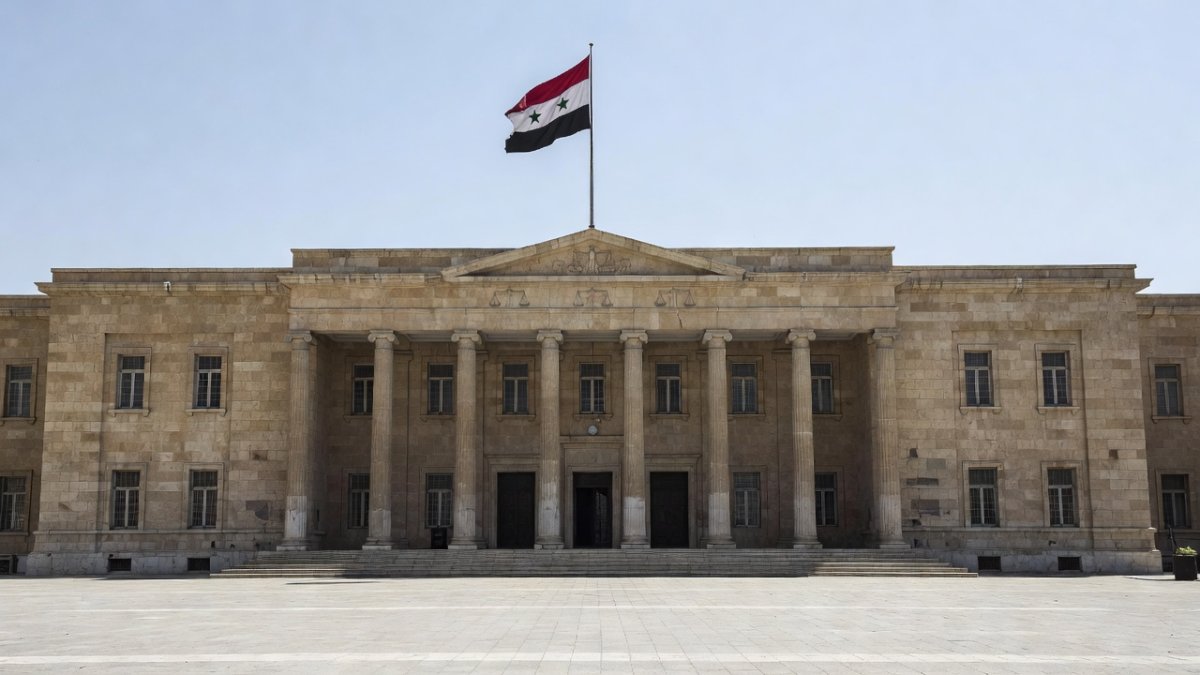
Damascus, Syria — The seat of Syria's transitional government. (Global 1 News)
Interior Ministry Issues Clear Warning
On June 15, 2026, Syrian Interior Ministry spokesperson Noureddine al-Baba explicitly warned against acts of revenge targeting individuals accused of ties to the deposed leader's rule. "Justice is not built on emotion," al-Baba stated, adding that accountability cannot be achieved through "arbitrary punishments or acts of revenge." The statement followed protests calling for swift retribution and several reported incidents of vigilante action. Officials fear that uncontrolled reprisals could fracture the fragile coalition supporting the transitional government and invite external actors to exploit internal divisions.
President al-Sharaa's Consistent Position
President Ahmed al-Sharaa has repeatedly framed the issue in similar terms. He previously cautioned that "it is important not to use transitional justice as a pretext for revenge." This stance reflects a strategic calculation: the new leadership needs to demonstrate credible accountability to satisfy domestic constituencies and international partners while preventing the kind of score-settling that could trigger renewed fighting. The approach also aims to reassure the estimated 800,000-plus former regime and paramilitary personnel whose future integration or exclusion will shape Syria's security landscape for years.
First Public Trials Underway
The first public trial of Assad-era officials opened in Damascus on April 26, 2026, involving former security figures Atef Najib and Amjad Youssef. Syrian authorities have pledged to deliver justice through formal institutions rather than street-level retribution. The proceedings are being watched by regional capitals as a test of whether the transitional government can maintain due process under intense public pressure. Successful management of these cases could strengthen Damascus's hand in negotiations with Gulf donors and Turkish counterparts; failure risks portraying the new order as either too lenient or too chaotic.
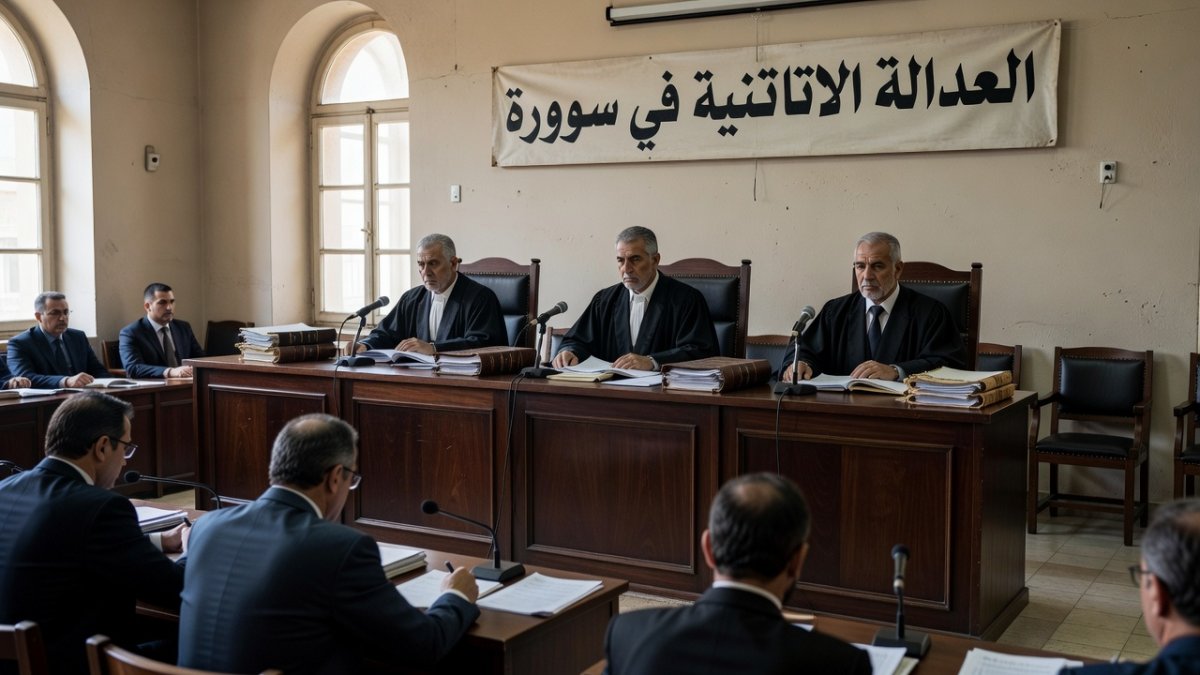
Transitional justice proceedings in Damascus. (Global 1 News)
Strategic Calculus for Key Regional Actors
Gulf states seek a predictable Syria that does not export instability or serve as a renewed arena for Iranian influence. Turkey's priority remains border security and influence over Sunni Arab factions inside Syria. Iran's diminished position after Assad's fall has already altered the balance of the so-called Axis of Resistance, with ripple effects on Lebanese and Iraqi dynamics. Israel's primary concern centers on preventing hostile forces from consolidating near the Golan Heights. Each actor therefore has an interest in seeing Damascus avoid vigilante violence that could reignite civil conflict or create power vacuums.
Embedding Accountability in State Institutions
The transitional government's challenge lies in building judicial capacity fast enough to meet public expectations without sacrificing legal standards. Formal trials, asset recovery mechanisms, and vetting procedures for security personnel offer pathways that reduce incentives for private revenge. If implemented effectively, these measures could support broader Arab-Israeli normalization efforts by demonstrating that Syria is moving toward stable governance rather than renewed sectarian conflict. Conversely, any perception that the state cannot control retribution risks drawing in external spoilers and complicating energy and reconstruction deals currently under discussion with Gulf investors.
By Malik Hassan, Staff Writer
This article was produced with AI-assisted research and editorial support. Reporting is based on sources cited in the article.
What's Your Reaction?
 Like
0
Like
0
 Dislike
0
Dislike
0
 Love
0
Love
0
 Funny
0
Funny
0
 Wow
0
Wow
0
 Sad
0
Sad
0
 Angry
0
Angry
0

Middle East Correspondent at Global1.News. Based in Beirut, covering politics, conflict, energy, and society across the Middle East. Brings context and depth to a region often reduced to headlines.















Comments (0)