
Stela 46: Oldest Maya Long Count Date Found in Campeche
Stela 46: Oldest Maya Long Count Date Found in Campeche Stela 46 at El Palmar in Campeche reveals the oldest Maya Long Count date from 180 CE, 112 years before Tikal. See how 3D scans and conservation connect ancient history to Mexican communities today. **Keywords:** Stela 46, El Palmar Campeche, Maya Long Count, oldest Maya date, 180 CE, Ajaw K'al Ubaah, Museo de Arquitectura
A Monument from the Heart of Campeche
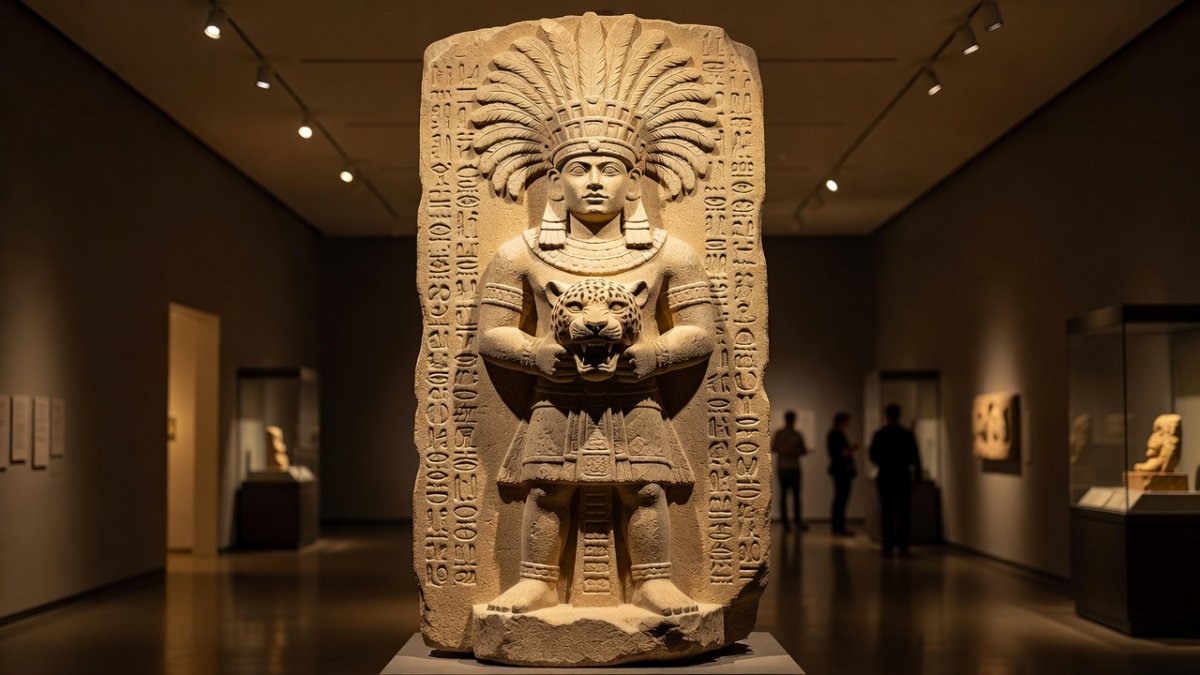
The limestone stela discovered years ago at the El Palmar archaeological site continues to speak to us today. Standing nearly three meters tall, this carved block carries the earliest known Long Count date recorded anywhere in the Maya Lowlands. The date corresponds to August 31, 180 CE, placing it 112 years before the previous earliest example at Tikal in Guatemala.
Families living in the colonias around Campeche and the surrounding rural communities have long felt a quiet pride in the region’s ancient heritage. News of this refined reading of Stela 46 strengthens that connection, reminding people that the sophisticated traditions of their ancestors took root even earlier than textbooks once suggested.
The Ruler and the Ritual Carved in Stone
The main face of the monument shows a sovereign wearing a feathered headdress. He holds what appears to be a jaguar head, an image the ancient Maya linked to the underworld and expressions of power. Researchers using new scans identified the ruler as Ajaw K’al Ubaah, who came to power in 131 CE. Forty-nine years later he performed a royal ritual in front of the stela and ordered the events recorded, including the Long Count inscription 8.7.0.0.0.
This direct link between a specific king, a ritual act, and an absolute calendar date shows how early Maya leaders used time itself to affirm their authority. For residents of Campeche today, the story echoes the way community leaders still mark important moments with public ceremonies that tie past and present together.
How Modern Technology Revealed What Eyes Could Not
Stela 46 was moved to a storage facility in 1985 to protect it from looters. Scholars had noticed early inscriptions, yet erosion made the glyphs difficult to read with ordinary methods. Only after photogrammetry and high-resolution 3D scanning, accurate to a tenth of a millimeter, could researchers illuminate the surface from multiple angles and recover the hidden details.
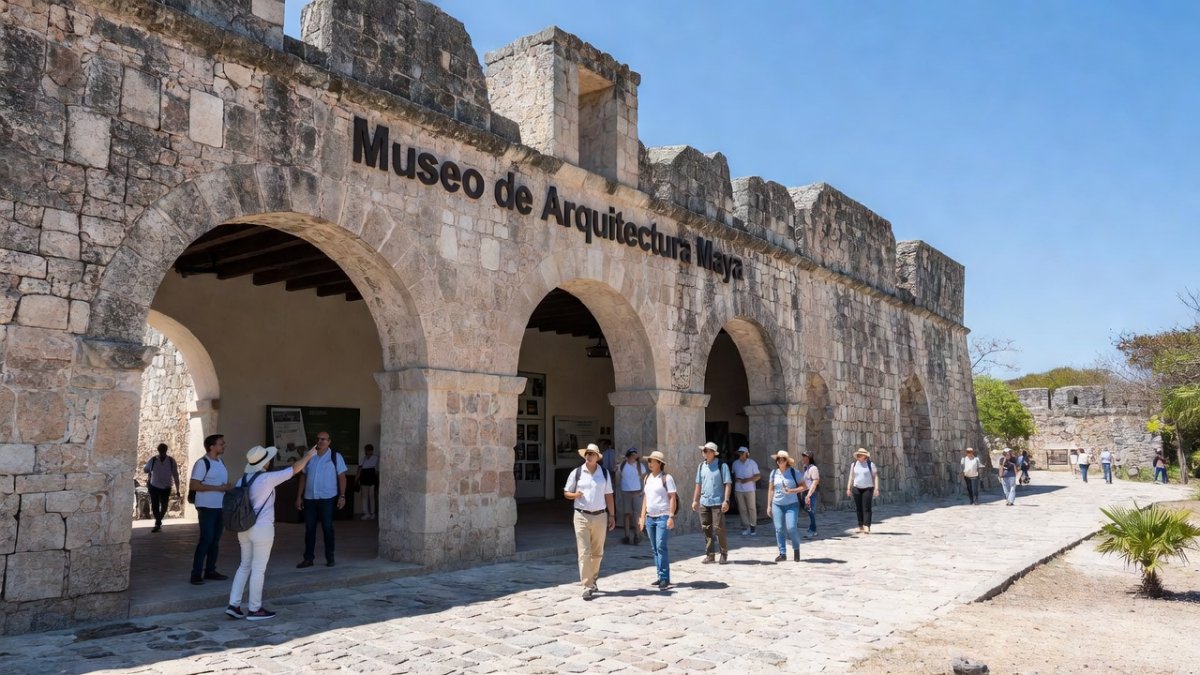
The findings appeared in the journal Ancient Mesoamerica on June 5. After careful conservation work, the stela went on permanent display at the Museo de Arquitectura Maya inside Baluarte de la Soledad in January. Visitors from nearby pueblos and from farther away can now stand before the stone and sense the weight of those early centuries.
Reconsidering the Timeline of Maya Authority
The Long Count is a non-repeating system that counts days from a mythical starting point corresponding to August 11, 3114 BCE. On Stela 46 the calendar is tied directly to royal succession and ritual, demonstrating that complex writing and established dynastic lines existed in the Maya Lowlands during the first centuries of our era.
Previously, many accounts placed the full development of these institutions later. The new reading from El Palmar invites historians to adjust that view without rushing to firm conclusions. State authorities in Campeche and federal cultural institutions continue to support further study at the site, where many other stelae still await detailed examination.
Why This Matters to Families in Campeche Today
Archaeological discoveries like this one reach beyond academic circles. They touch the daily lives of people who work in tourism, teach in local schools, or maintain ejido lands near the ruins. When children in Campeche learn that their region holds the oldest recorded Long Count date in the Maya Lowlands, the lesson carries a special resonance.
Community guides often share stories of how the jaguar and the feathered headdress still appear in local crafts and festivals. The stela’s presence in the city museum gives residents a tangible link to those symbols, reinforcing a sense of continuity that strengthens cultural identity amid modern economic pressures.
Preservation Efforts and Future Visits
The decision to move Stela 46 in 1985 and the later investment in 3D documentation reflect ongoing commitments by Campeche authorities and national heritage agencies. These steps protect the monument while making its message accessible to wider audiences.
Travelers arriving at the Museo de Arquitectura Maya encounter the stela in a setting designed for reflection. School groups from surrounding municipalities frequently visit, and the experience often sparks conversations at home about the deep roots of Mexican history. Such moments help keep traditional knowledge alive across generations.
Looking Ahead with Quiet Pride
Stela 46 does not close the book on Maya history; it opens a new chapter that researchers will explore for years to come. For the people of Campeche, the monument stands as a reminder that their land has been a center of organized society and artistic achievement for nearly two millennia.
As more visitors arrive and local communities continue to share their heritage, the story of Ajaw K’al Ubaah and the date of August 31, 180 CE becomes part of a living conversation between past and present. That conversation belongs to everyone who calls this corner of Mexico home.
Tags: Stela 46, El Palmar, Maya Long Count, Campeche archaeology, Mexican heritage, ancient calendar, 3D scanning, Museo de Arquitectura Maya
By Rosa Martinez, Staff Writer
This article was produced with AI-assisted research and editorial support. Reporting is based on sources cited in the article.
What's Your Reaction?
 Like
0
Like
0
 Dislike
0
Dislike
0
 Love
0
Love
0
 Funny
0
Funny
0
 Wow
0
Wow
0
 Sad
0
Sad
0
 Angry
0
Angry
0

Latin America/Andes Correspondent at Global1.News. Based in Bogota, covering politics, environment, energy, and social movements across the Andean region. Passionate about environmental journalism and communities protecting their land.















Comments (0)