
Springboks 80-31 Barbarians: Season Opener in Gqeberha
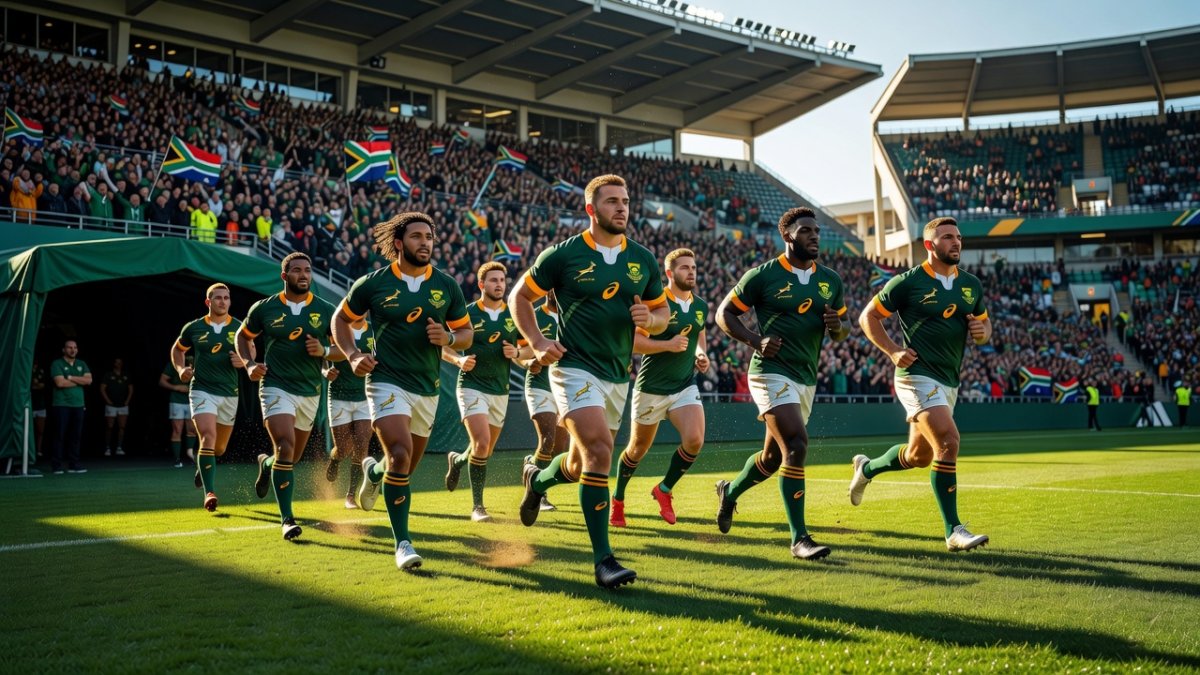
Springboks Ignite 2026 Season with Gqeberha Double-Header Glory The air in Gqeberha carried that unmistakable Eastern Cape rugby electricity on 20 June 2026. Nelson Mandela Bay Stadium, hosting its first Springboks match in years, pulsed with a full house that sang, danced and waved flags in the winter sun. This double-header was never just two games. It was a homecoming, a sta
Springboks Ignite 2026 Season with Gqeberha Double-Header Glory
The air in Gqeberha carried that unmistakable Eastern Cape rugby electricity on 20 June 2026. Nelson Mandela Bay Stadium, hosting its first Springboks match in years, pulsed with a full house that sang, danced and waved flags in the winter sun. This double-header was never just two games. It was a homecoming, a statement of intent for the 2026 season and a love letter to the province that has given South African rugby so many warriors.
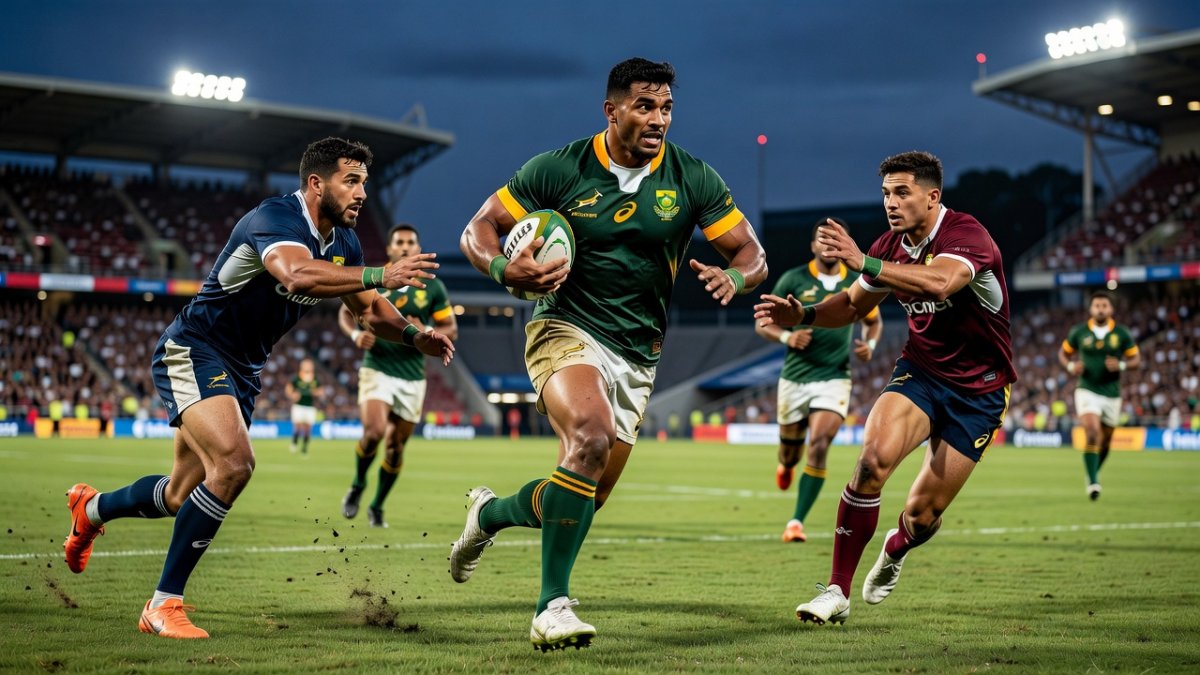
From the moment the teams ran out, the crowd knew they were witnessing history. The Springboks delivered an 80-31 masterclass against the Barbarians, scoring twelve tries in a display that blended power, speed and sheer joy. The Barbarians, true to their spirit, kept the contest open and entertaining, forcing the Boks to play at a high tempo from the first whistle. Yet the result was never in doubt once the green machine found its rhythm.
What made the afternoon special was the context. This was the official start of a campaign that will include Rugby Championship battles, an end-of-year tour and the long build towards the 2027 World Cup. Rassie Erasmus used the occasion to blend World Cup winners with fresh faces, sending a clear message about depth and succession. The Eastern Cape crowd, proud of their rugby roots stretching back generations, roared every try as if it belonged to them personally.
The significance stretched beyond the scoreboard. Gqeberha has long been a cradle of talent, producing players who carry the fighting spirit of the province into every jersey. Seeing the stadium packed again reminded everyone why transformation and grassroots work matter. Youngsters in the stands saw role models who looked like them, spoke like them and played with the same fire. This double-header was rugby at its most South African: inclusive, passionate and unapologetically ambitious.
Springboks at Nelson Mandela Bay Stadium, Gqeberha (Global 1 News)
Springbok Try-Fest Lights Up Nelson Mandela Bay
Twelve tries in one afternoon tells its own story, but the manner in which the Springboks scored them revealed the depth of this squad. Edwill van der Merwe claimed the headlines with a hat-trick that combined finishing class with intelligent running lines. His first came from a sweeping backline move that exploited space on the edge, the second from a clever inside ball and the third from a powerful finish under the posts. Van der Merwe’s performance showed why he has become such a trusted finisher in the green and gold.
Pieter-Steph du Toit reminded everyone why he remains one of the most complete forwards in world rugby. His try came from a trademark lineout drive that the Barbarians simply could not stop. Jasper Wiese barrelled over from close range, bringing his trademark physicality that has become a hallmark of Bok forward play. Riley Norton, one of the new caps, announced himself with a powerful carry that ended with him grounding the ball despite heavy contact.
Cheslin Kolbe’s try was pure magic, a chip-and-chase that left defenders grasping at air. JJ Kotze and Faf de Klerk added scores that highlighted the halfback depth, while Jesse Kriel and Andre Esterhuizen showed the midfield strength that has defined recent Bok success. Zachary Porthen, another fresh face, capped a memorable debut with a try that brought the crowd to its feet. The Barbarians played their part, keeping the game open and forcing the Boks to execute under pressure, yet the clinical finishing proved decisive.
Each try carried its own story of preparation and execution. The variety of scoring methods, from driving mauls to wide attacks, demonstrated the tactical flexibility Erasmus demands. For the Eastern Cape faithful, watching this exhibition felt like a masterclass in modern rugby delivered on home soil.
Kolbe Masterclass Anchors the Bok Victory
Cheslin Kolbe’s contribution went far beyond his 18 points from nine conversions. The diminutive wing orchestrated much of the Springboks’ attacking shape, using his vision to create space for teammates even when he was not the finisher. His goal-kicking was metronomic, slotting nine out of ten attempts with the kind of composure that turns pressure into routine.
Every conversion carried extra meaning. Kolbe’s accuracy kept the scoreboard ticking and the momentum firmly with the Boks. When the Barbarians threatened to mount a comeback, his restarts and territorial kicking pinned them back. His own try, a moment of individual brilliance, summed up his influence on the game.
Off the ball, Kolbe’s work rate remains unmatched. He tracked back in defence, made crucial tackles and organised the back three with the authority of a senior statesman. For a player who has already achieved so much, this performance showed he is still evolving. The Gqeberha crowd sang his name after every successful kick, recognising a player who embodies the fighting spirit of South African rugby.
Vusi Moyo's single conversion added to the narrative of emerging talent. The kicking duties were shared, giving younger players valuable experience in a high-stakes environment. Kolbe's masterclass was not just about points; it was about leadership and the quiet authority that turns good teams into great ones.
Match action from Springboks v Barbarians in Gqeberha (Global 1 News)
SA A Showcase Depth in Dominant 40-0 Win
The curtain-raiser between SA A and Zimbabwe Sables delivered exactly what the selectors hoped for. A 40-0 clean sheet against a determined Zimbabwe side underlined the frightening depth in South African rugby. Even after a second-half red card reduced the SA A team to fourteen men, the dominance never wavered. The young forwards maintained their set-piece control while the backs continued to create opportunities.
This performance spoke volumes about the talent pipeline. Players who may one day wear the full Springbok jersey were given a platform to show their quality. The clean sheet, achieved despite the numerical disadvantage, highlighted the defensive organisation and physical conditioning that runs through the system. Zimbabwe fought hard, but the gap in preparation and execution was clear.
For Eastern Cape rugby supporters, the match carried extra significance. Many of the SA A players have roots in the province’s strong school and club structures. Seeing them dominate on the big stage reinforced the message that transformation is working. The next generation is not just coming through; it is already performing at a high level.
The result also served as a reminder of the broader African rugby story. While the Sables showed spirit, the contest illustrated the investment and structures that have made South Africa a global powerhouse. SA A’s victory was clinical, professional and deeply encouraging for the seasons ahead.
Rassie Erasmus Blends Experience with Youth for 2027
Rassie Erasmus has always believed in the power of mixing seasoned World Cup winners with hungry new caps. This double-header was the perfect illustration of that philosophy. Veterans like Pieter-Steph du Toit and Cheslin Kolbe provided leadership and calm, while players such as Riley Norton and Zachary Porthen received their first taste of senior international rugby in front of a passionate home crowd.
The selection was never about sentiment. Erasmus chose a squad that could deliver a statement result while blooding talent for the long road to 2027. The Barbarians match allowed the coach to test combinations that will be needed during the Rugby Championship and beyond. Every player knew their role, and the execution reflected hours of preparation.
Transformation remains central to Erasmus’s vision. The squad reflected the diversity of modern South Africa, with players from every background contributing to the victory. This approach is not just morally right; it makes the team stronger. Different perspectives and experiences create a resilient unit capable of adapting under pressure.
The method also builds buy-in across the country. When young players from the Eastern Cape see themselves represented at the highest level, they dream bigger. Erasmus understands that the 2027 World Cup will be won not just by the fifteen on the field, but by the entire ecosystem that supports them. This double-header was one important step on that journey.
Gqeberha Double-Header Signals Bright Future for SA Rugby
The Eastern Cape has always punched above its weight in South African rugby. From schoolboy fields to professional stadiums, the province produces players who carry a special fire. The return of Test rugby to Nelson Mandela Bay Stadium felt like a long-overdue celebration of that heritage. The full crowd, the singing, the pride on every face, all of it reminded us why this region remains vital to the game’s soul.
Transformation was visible everywhere. The Springboks and SA A squads showed what is possible when opportunity meets talent. Youngsters in the stands could see themselves on the field, not as outsiders but as rightful heirs to the jersey. This is the real legacy of the double-header: a living example that South African rugby belongs to everyone.
Looking ahead, the 2026 season promises plenty. The Rugby Championship will test this squad’s depth, while the end-of-year tour will provide further opportunities for emerging players. The road to 2027 is long, but performances like these build the confidence and cohesion needed for the ultimate prize.
Most importantly, the fans left the stadium believing. They saw twelve tries, a clean sheet and a coach who understands both history and the future. They saw their province honoured and their game thriving. In Gqeberha on that June afternoon, South African rugby felt alive, united and ready for whatever comes next. The green machine is rolling, and the Eastern Cape helped set it in motion.
By Dante Williams, Staff Writer
This article was produced with AI-assisted research and editorial support. Reporting is based on sources cited in the article.
What's Your Reaction?
 Like
0
Like
0
 Dislike
0
Dislike
0
 Love
0
Love
0
 Funny
0
Funny
0
 Wow
0
Wow
0
 Sad
0
Sad
0
 Angry
0
Angry
0

West Africa/Sahel Correspondent at Global1.News. Dakar-based journalist covering politics, security, climate, and development across Francophone and Anglophone West Africa. Tells the stories of a region undergoing profound transformation.









Comments (0)