
South Korea Has Diversified Some Critical Minerals. The Hardest Dependencies Remain.
The Export Boom Conceals Strategic Vulnerabilities South Korea recorded $85.9 billion in goods exports during April 2026, marking a 48 percent increase from the previous year. Semiconductors alone surpassed $30 billion for the second straight month, underscoring the vitality of industries centered on advanced displays and electric vehicle batteries. These sectors form the backb
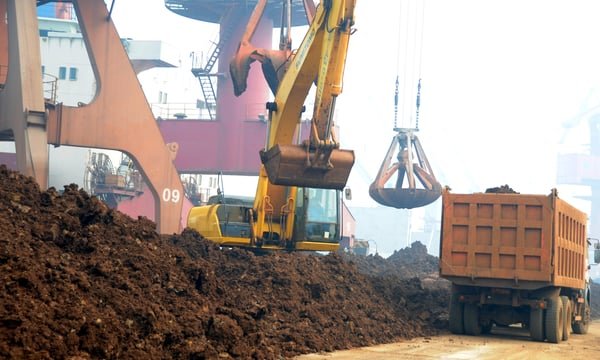
The Export Boom Conceals Strategic Vulnerabilities
South Korea recorded $85.9 billion in goods exports during April 2026, marking a 48 percent increase from the previous year. Semiconductors alone surpassed $30 billion for the second straight month, underscoring the vitality of industries centered on advanced displays and electric vehicle batteries. These sectors form the backbone of the country's export economy and involve major chaebol groups whose global competitiveness depends on uninterrupted access to specialized inputs.
Yet the upstream foundation supporting this performance remains narrowly concentrated. Trade statistics compiled through the Korea Mineral Import Statistics system reveal that several critical minerals continue to arrive predominantly from a single source. This pattern creates exposure that extends beyond Korean firms to allied economies reliant on Korean components.
KOMIS Data Reveals a Bifurcated Supply Landscape
The complete 2025 dataset from KOMIS provides the most detailed view available of South Korea's critical mineral sourcing patterns. For six minerals essential to semiconductors, displays, and battery technologies, China's share of Korean imports in 2025 ranged between 14.8 percent and 94.2 percent. The Korea Institute of Geoscience and Mineral Resources has previously assessed South Korea's net import reliance on critical minerals at over 99.7 percent, confirming that the central policy question concerns supplier diversity rather than the necessity of imports themselves.
Analysis of these figures shows neither uniform success nor outright failure. Instead, the data separate minerals that experienced measurable diversification from those where concentration intensified. This divergence carries direct implications for Korean industrial planning and for the resilience of supply chains feeding into United States and allied manufacturing networks.
Diversification Following Chinese Export Controls
Clear shifts occurred in minerals subject to Chinese export restrictions announced in summer 2023 and tightened the following year. Gallium imports from China fell from 76.3 percent in 2023 to 26.0 percent in 2025, with Germany, the United States, and Japan increasing their shares. Germanium sourcing changed even more markedly, as Canada rose to supply 70.7 percent while China's portion declined to 14.8 percent from 59.3 percent two years earlier.
Antimony followed a comparable trajectory after September 2024 controls, with China's share dropping from 69.0 percent in 2024 to 27.2 percent in 2025 and Thailand becoming the leading supplier. These adjustments demonstrate that Korean importers responded to explicit Chinese policy signals by activating alternative procurement routes. The pattern aligns with broader Korean efforts to reduce single-country exposure through strengthened ties with partners in North America and Europe.
Deepening Concentration Where Controls Were Absent
In contrast, minerals without recent Chinese export restrictions exhibited rising dependence. Indium imports from China increased from 86.0 percent in 2015 to 94.2 percent in 2025. Graphite dependence grew from 82.4 percent to 87.2 percent over the same decade, while tungsten rose from 55.7 percent to 71.8 percent. These trends indicate that, absent external pressure, Korean supply chains defaulted toward established Chinese suppliers offering scale and cost advantages.
The distinction between the two groups of minerals points to a reactive rather than proactive diversification dynamic. Korean firms adjusted sourcing primarily after Beijing introduced controls, rather than in anticipation of potential disruptions. This approach leaves industries vulnerable to sudden policy changes affecting indium, graphite, or tungsten, where current concentration levels exceed those observed for gallium and germanium prior to their respective controls.
Implications for Korean Economic Security and Allied Networks
The concentration in indium, graphite, and tungsten directly affects Korean display manufacturers and battery producers whose output supports downstream assembly in the United States and other partner countries. Any future Chinese export measures on these materials would therefore transmit shocks through integrated supply chains rather than remaining confined to Korean territory. Historical precedents in Korean industrial policy, including responses to earlier rare-earth tensions, suggest that sustained government coordination with chaebol groups will be required to accelerate alternative sourcing.
Inter-Korean dynamics add another layer of consideration. While direct mineral trade across the peninsula remains negligible, regional stability influences broader Northeast Asian logistics and investment decisions that could support diversification projects in third countries. Korean foreign policy has increasingly framed critical minerals as an element of economic security diplomacy, linking domestic industrial needs to alliance commitments.
Strategic Requirements for Future Resilience
The KOMIS evidence indicates that South Korea cannot rely on crisis-driven adjustments alone. Advance planning for minerals still heavily sourced from China would reduce the scale of potential disruption compared with the relatively contained effects seen after the gallium and germanium measures. Such planning encompasses investment in overseas mining partnerships, expanded recycling capacity, and regulatory frameworks that encourage long-term supplier contracts with non-Chinese producers.
Because Korean semiconductor and battery exports integrate into wider allied production systems, the diversification challenge extends to collective economic security discussions. Coordinated approaches among Korea, the United States, Japan, and European partners could distribute the costs of building redundant supply routes while preserving the technological leadership these minerals enable.
By Prof. David Park, Staff Writer
This article was produced with AI-assisted research and editorial support. Reporting is based on sources cited in the article.
What's Your Reaction?
 Like
0
Like
0
 Dislike
0
Dislike
0
 Love
0
Love
0
 Funny
0
Funny
0
 Wow
0
Wow
0
 Sad
0
Sad
0
 Angry
0
Angry
0

East Asia/Technology Correspondent at Global1.News. Seoul-based voice covering Korean politics, technology, business, and culture. Analyzes how technology and geopolitics intersect across East Asia.













Comments (0)